Source: Wikimedia Commons
Albosignatus Goliath Beetle
AdvancedGoliathus albosignatus
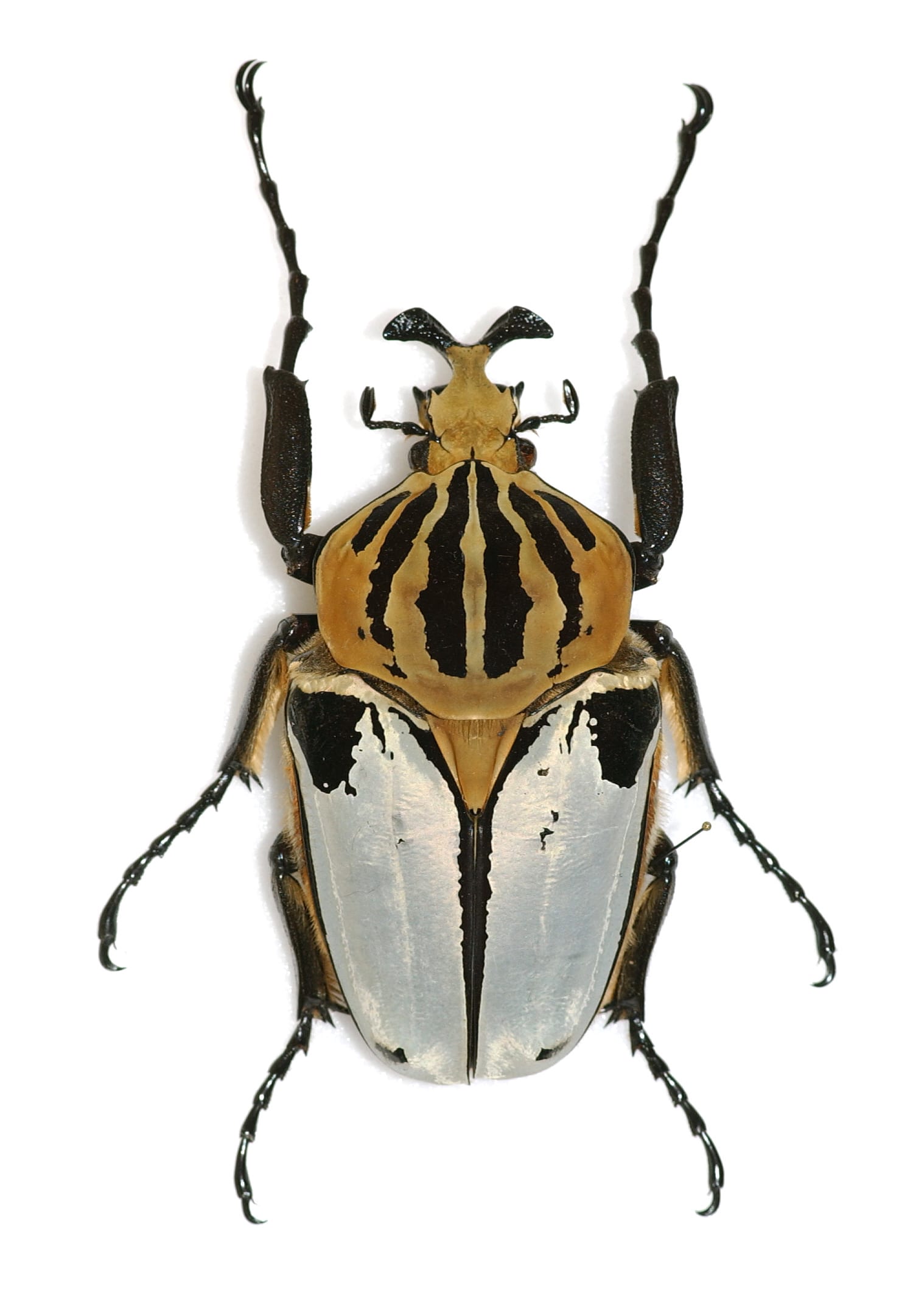
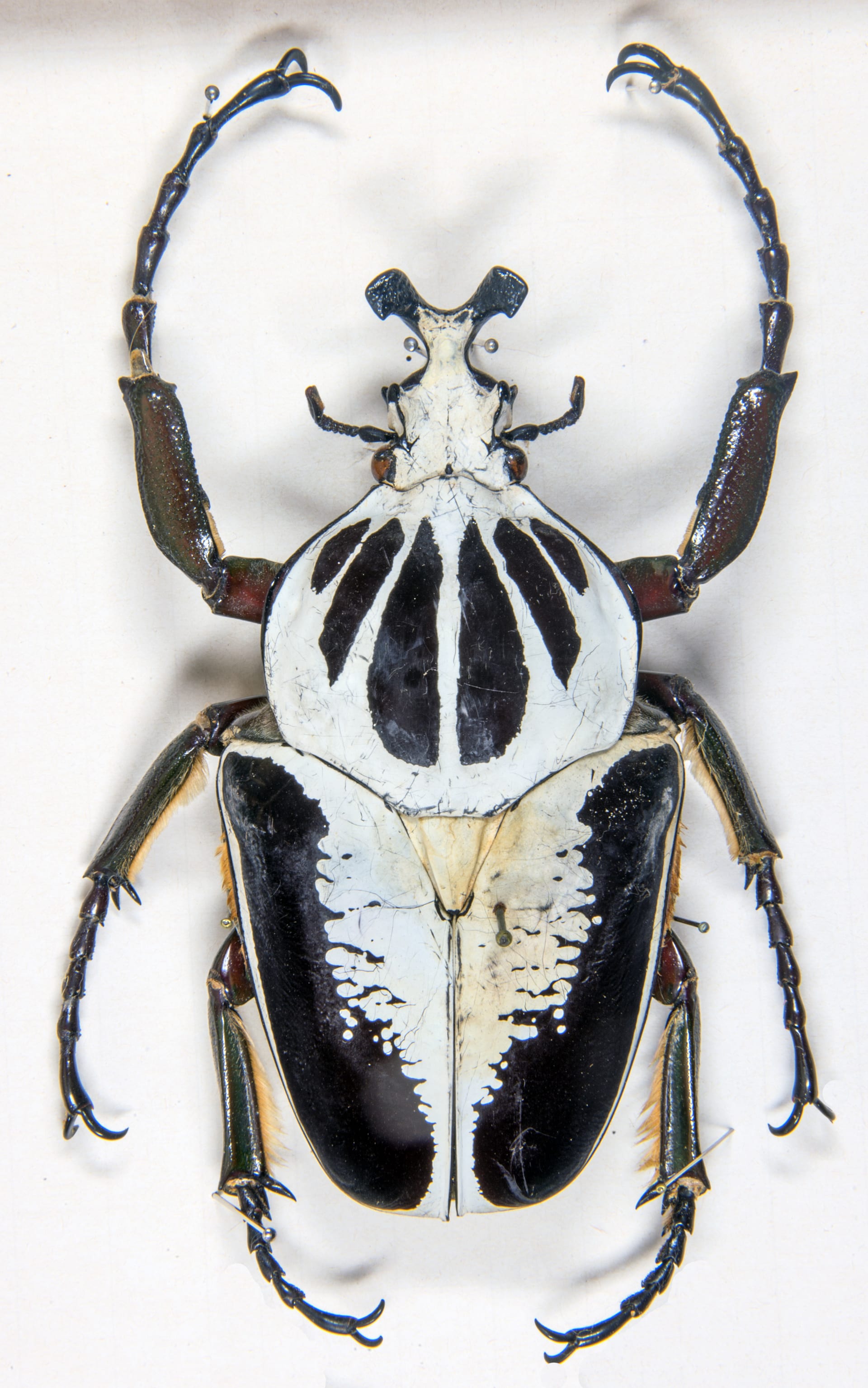
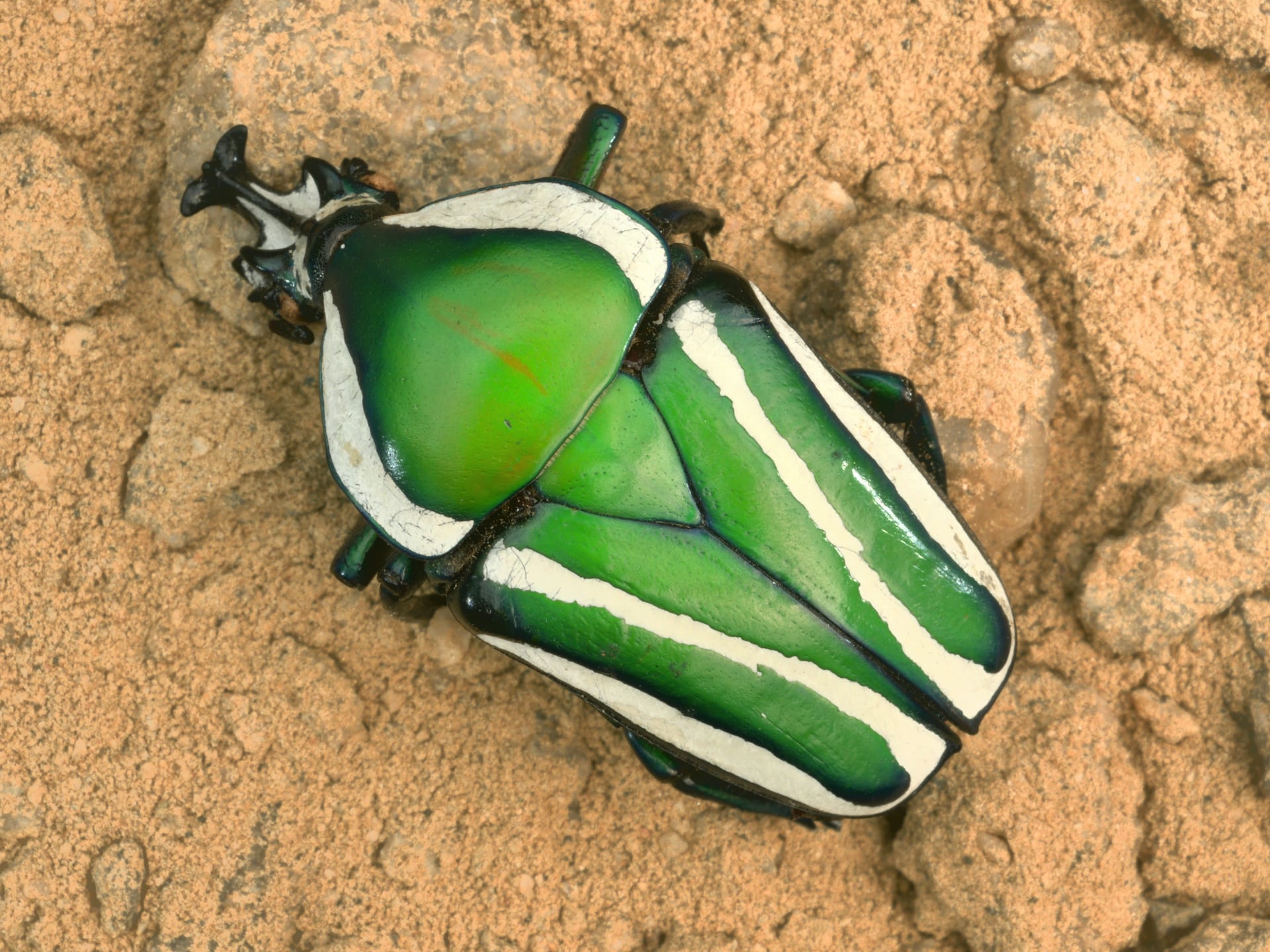
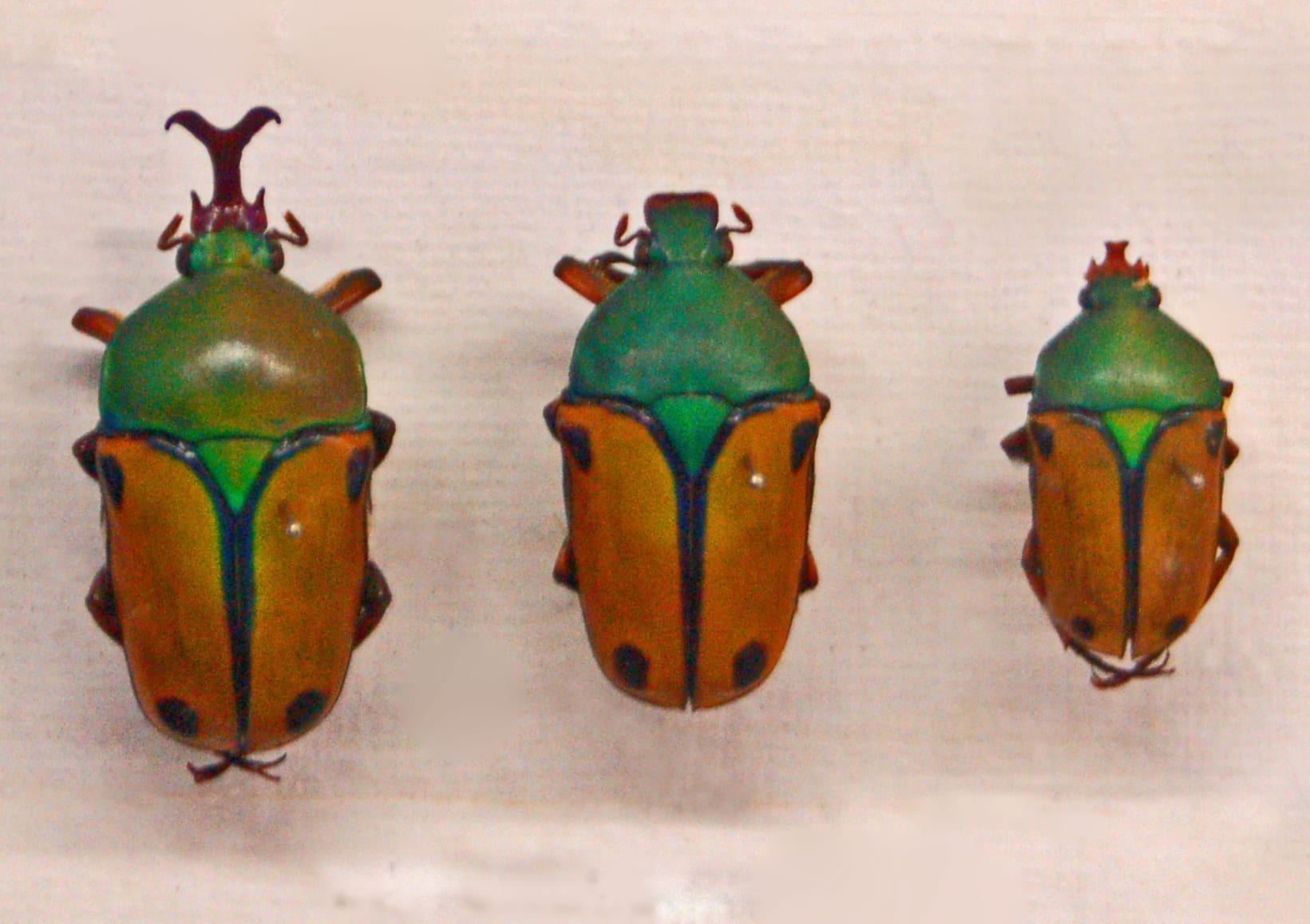
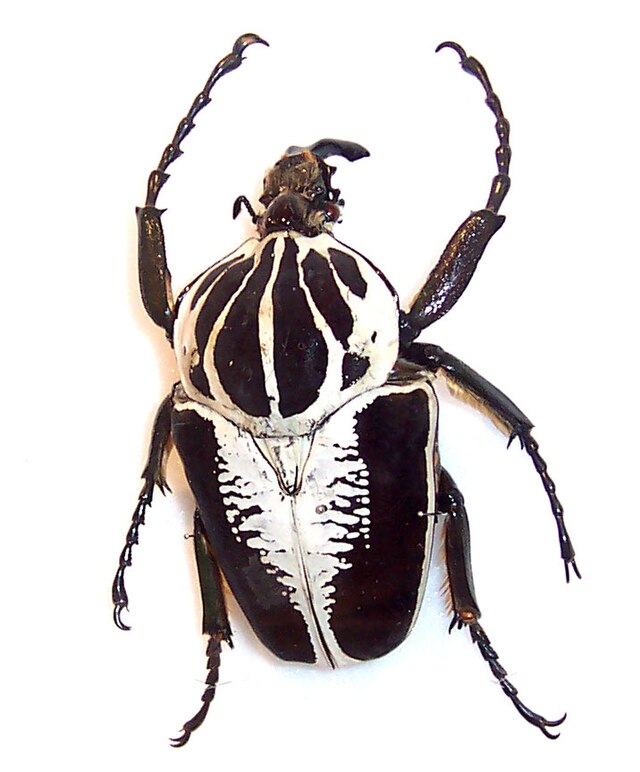
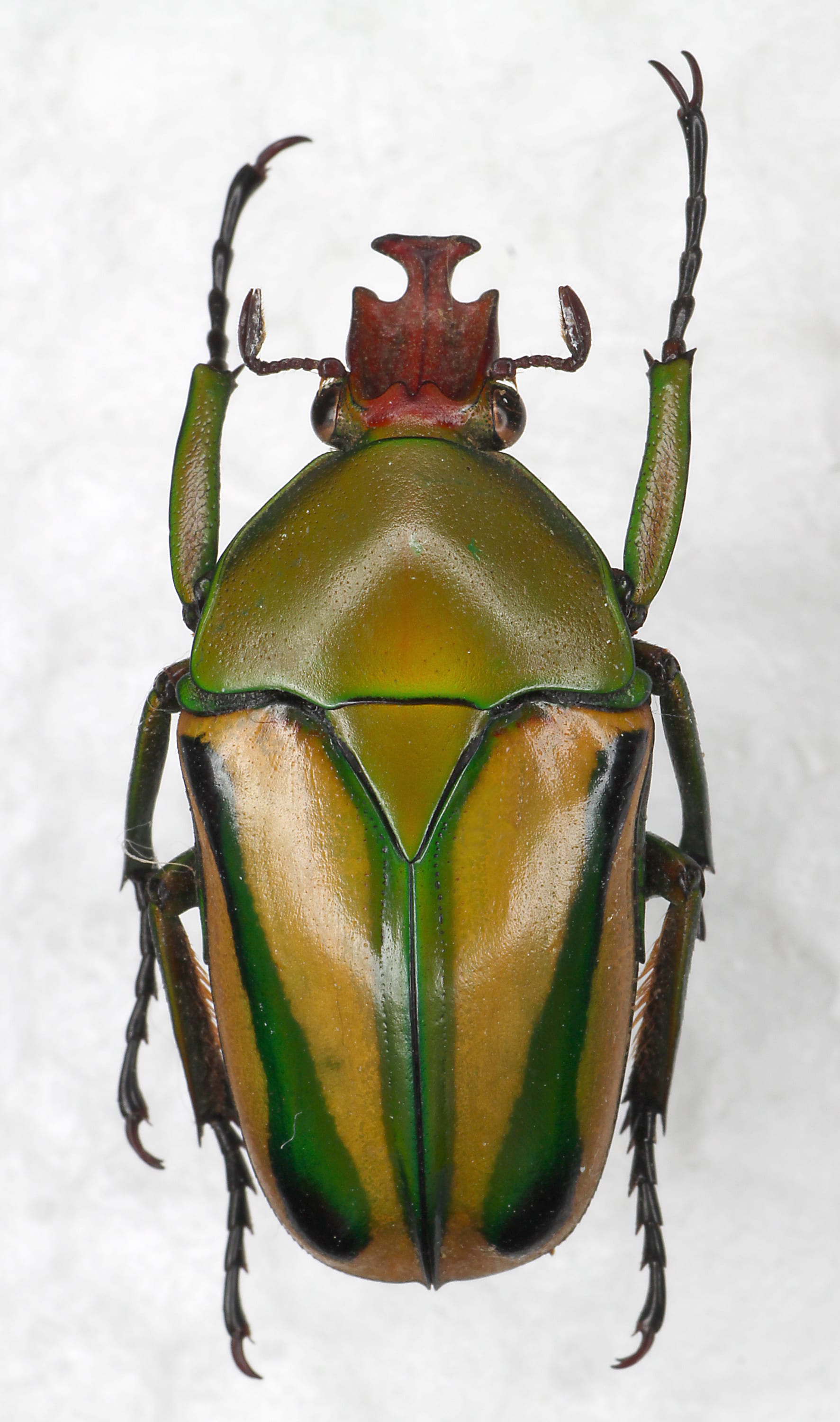
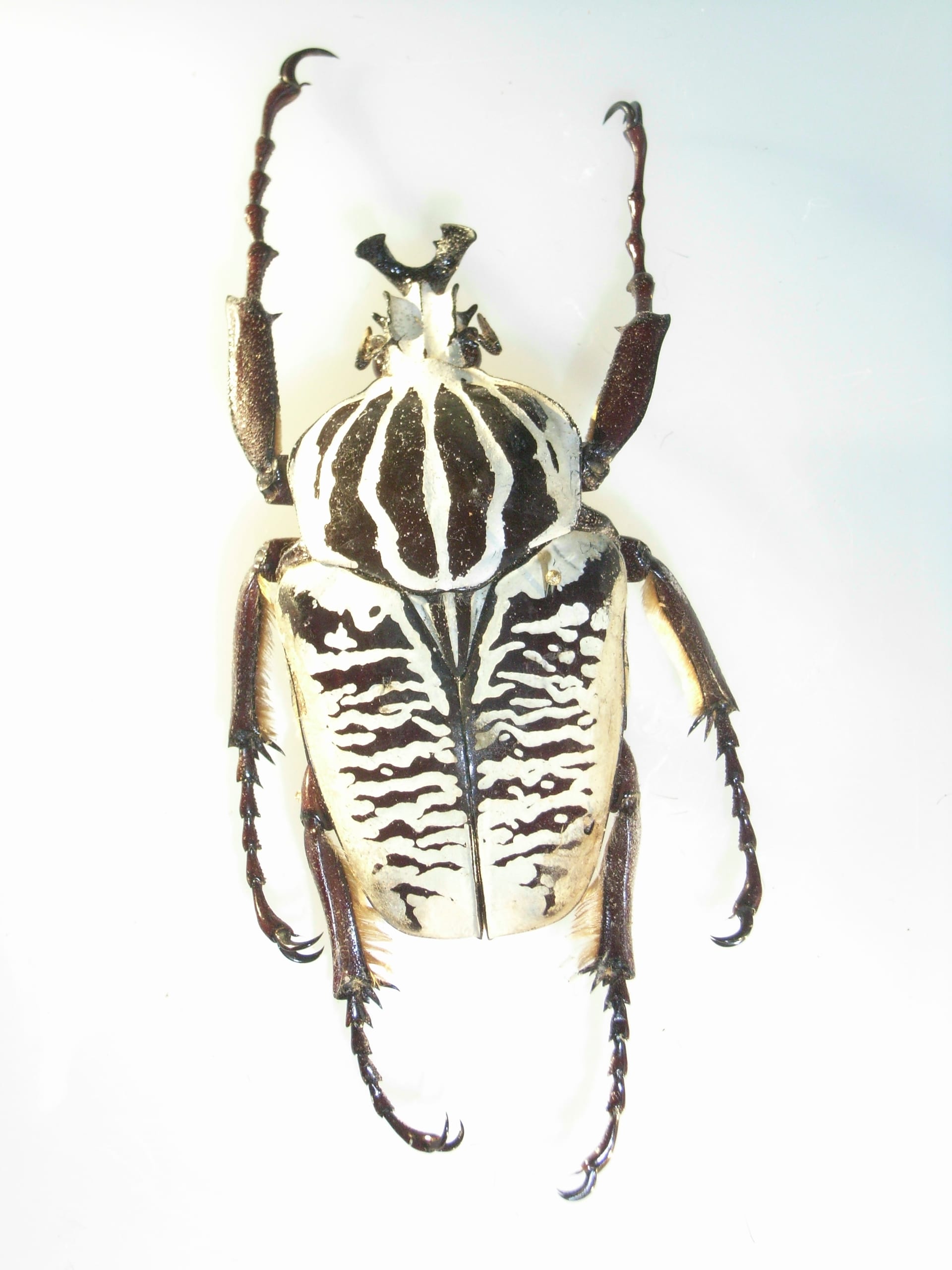
The smallest Goliathus and the only one confined to the subtropical part of Africa. Uneven black bands run across the elytra, and the male's head horn, widened into a hammer shape at the tip, separates it from the other species.
Difficulty
Advanced
Temperature
20〜28℃
Lifespan
Adults 4-6 months
Size
Males 45-70mm, females 40-50mm
Humidity
60〜80%
Diet
Adults feed on acacia sap; larvae need a high-protein medium
About
Goliathus albosignatus, described by Boheman in 1857, is the only member of its genus restricted to subtropical southern Africa. Males measure 45-70 mm and females 40-50 mm, making it the smallest Goliathus. The uneven black bands across the elytra and the hammer-shaped tip of the male head horn identify it, and a barcoding study published in 2020 also placed it apart within the genus. Its larvae develop in hyrax dung, which is known in no other goliath beetle, while adults drink acacia sap and gather on marula trees. Two subspecies are recognised, the nominate form and ssp. kirkianus, and GBIF holds most records from Malawi (71), Zimbabwe (46) and South Africa (38).
Source: Wikipedia (CC BY-SA 4.0)
Lifespan of the Albosignatus Goliath Beetle
The Albosignatus Goliath Beetle lives Adults 4-6 months.
Size of the Albosignatus Goliath Beetle
The Albosignatus Goliath Beetle grows to Males 45-70mm, females 40-50mm.
Basic Info
Origin
Southern Africa (Malawi, Zimbabwe, South Africa, Tanzania, Mozambique, Zambia)
Lifespan
Adults 4-6 months
Size
Males 45-70mm, females 40-50mm
Temperature
20〜28℃
Care Specifications
SolitaryBreeding: Hard
Sources: Goliathus albosignatus - Wikipedia (EN; size, ranges and sizes of the two subspecies, development in hyrax dung) / Ben's Beetle Breeding Pages - Goliathus albosignatus kirkianus (smallest of the genus, the easiest Goliathus to breed but still difficult) / Ben's Beetle Breeding Pages - Breeding Goliathus (cannibalistic larvae, protein feeding, temperature cycles, losses at pupation) / GBIF occurrence records for Goliathus albosignatus (counts by country) / Goliathus - Wikipedia (JA; Japanese names for the genus, morphology, Japanese names of the species)
References & Sources
Edited & verified by: BreederDirect editorial team
The taxonomic, regulatory, and husbandry data on this page are compiled and verified against the authoritative primary sources below.
Primary sources
- Wikipedia
- Ministry of the Environment, Invasive Species Act: "Guidance for Those Importing Live Insects in Scarabaeoidea"
- CITES Appendix (checklist.cites.org)
- Ben's Beetle Breeding Pages - Goliathus albosignatus kirkianus (smallest of the genus, the easiest Goliathus to breed but still difficult)
- Ben's Beetle Breeding Pages - Breeding Goliathus (cannibalistic larvae, protein feeding, temperature cycles, losses at pupation)
- GBIF occurrence records for Goliathus albosignatus (counts by country)
- Goliathus - Wikipedia (JA; Japanese names for the genus, morphology, Japanese names of the species)
- GBIF
Taxonomy & Authority
Accepted name: Goliathus albosignatus Boheman, 1857
Authority databases: GBIF
Nomenclature follows global taxonomic authority databases.
Regulations & Conservation Status
Not CITES-listed
Plant Protection Act: When importing live specimens of Scarabaeoidea (including rhinoceros beetles, stag beetles, flower beetles, etc.), a species identification certificate issued by the exporting country government agency or equivalent must be attached in accordance with the Invasive Species Act (import ports are limited to Narita, Chubu, Kansai, Fukuoka, and Kagoshima airports). This species itself is not a designated invasive species, and import is possible upon submission of the certificate.
Sources: Ministry of the Environment, Invasive Species Act: "Guidance for Those Importing Live Insects in Scarabaeoidea" / CITES Appendix (checklist.cites.org)
Regulations may change. Always verify the latest information with the relevant authorities.
Albosignatus Goliath Beetle Listings
Loading latest listingsFind listings for this species