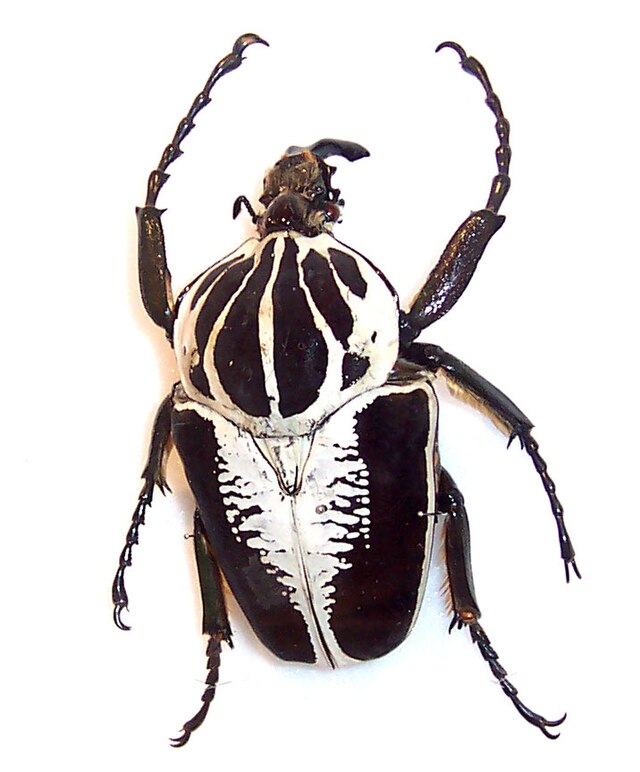
Source: Wikimedia Commons
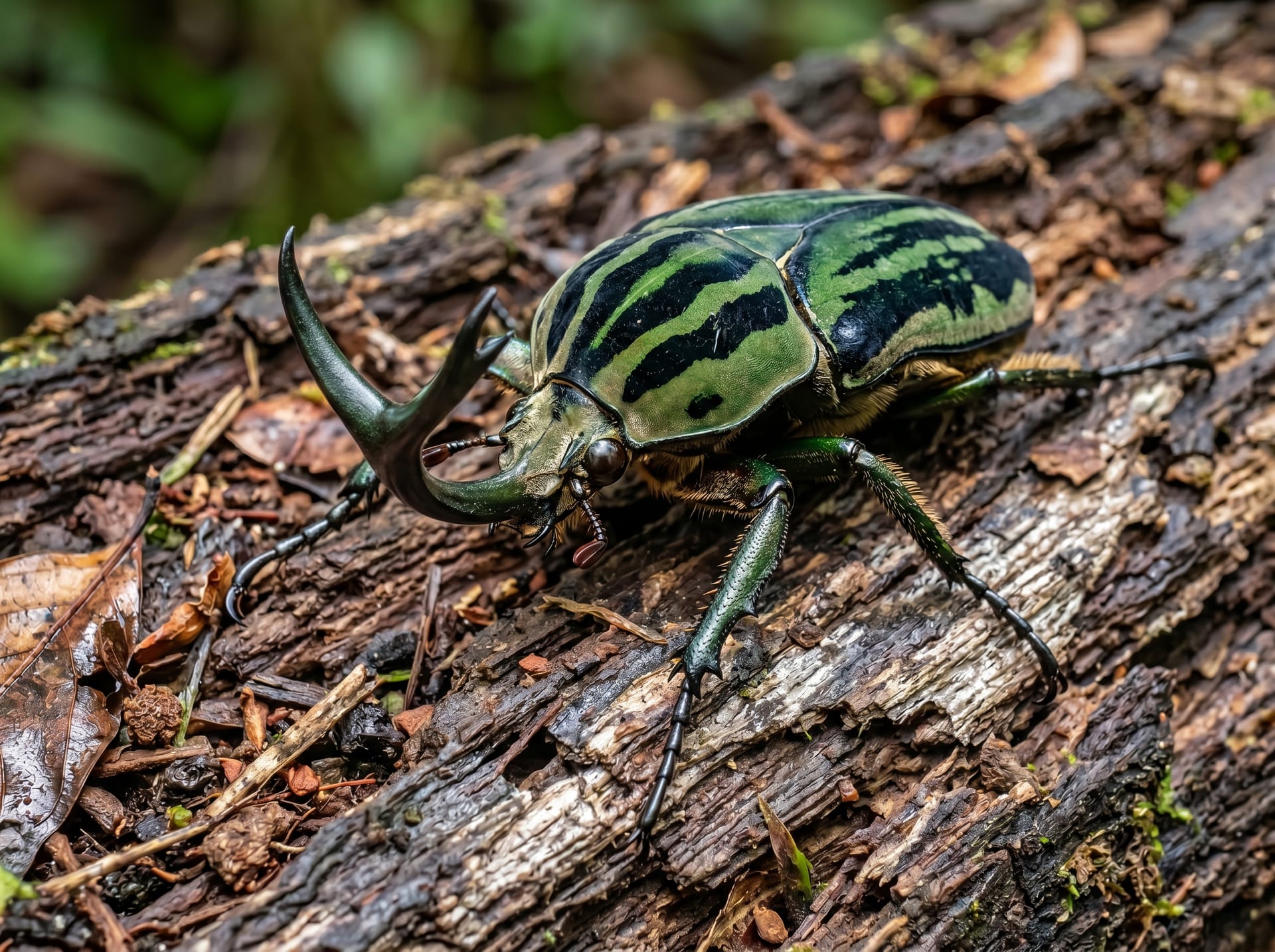
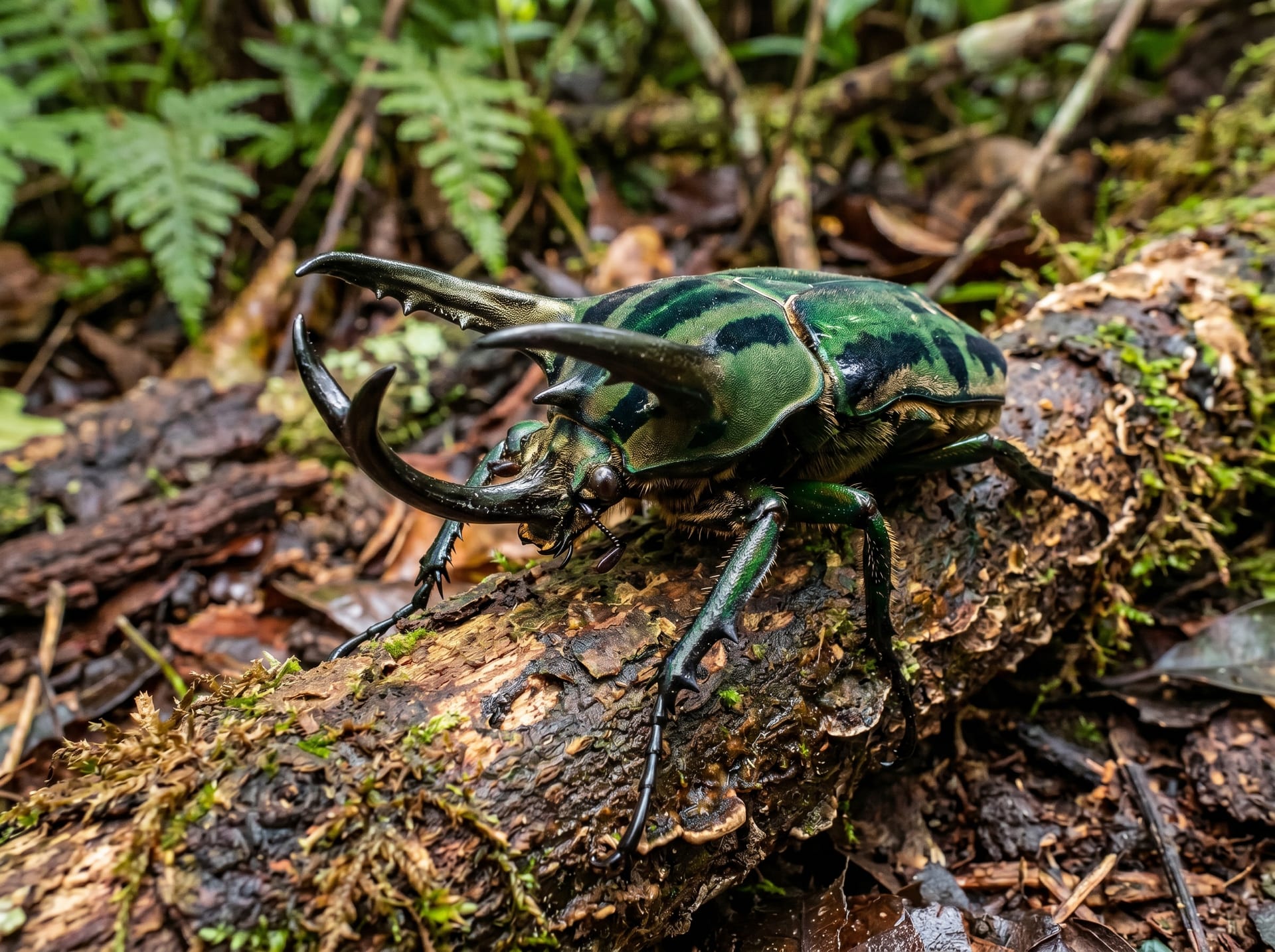
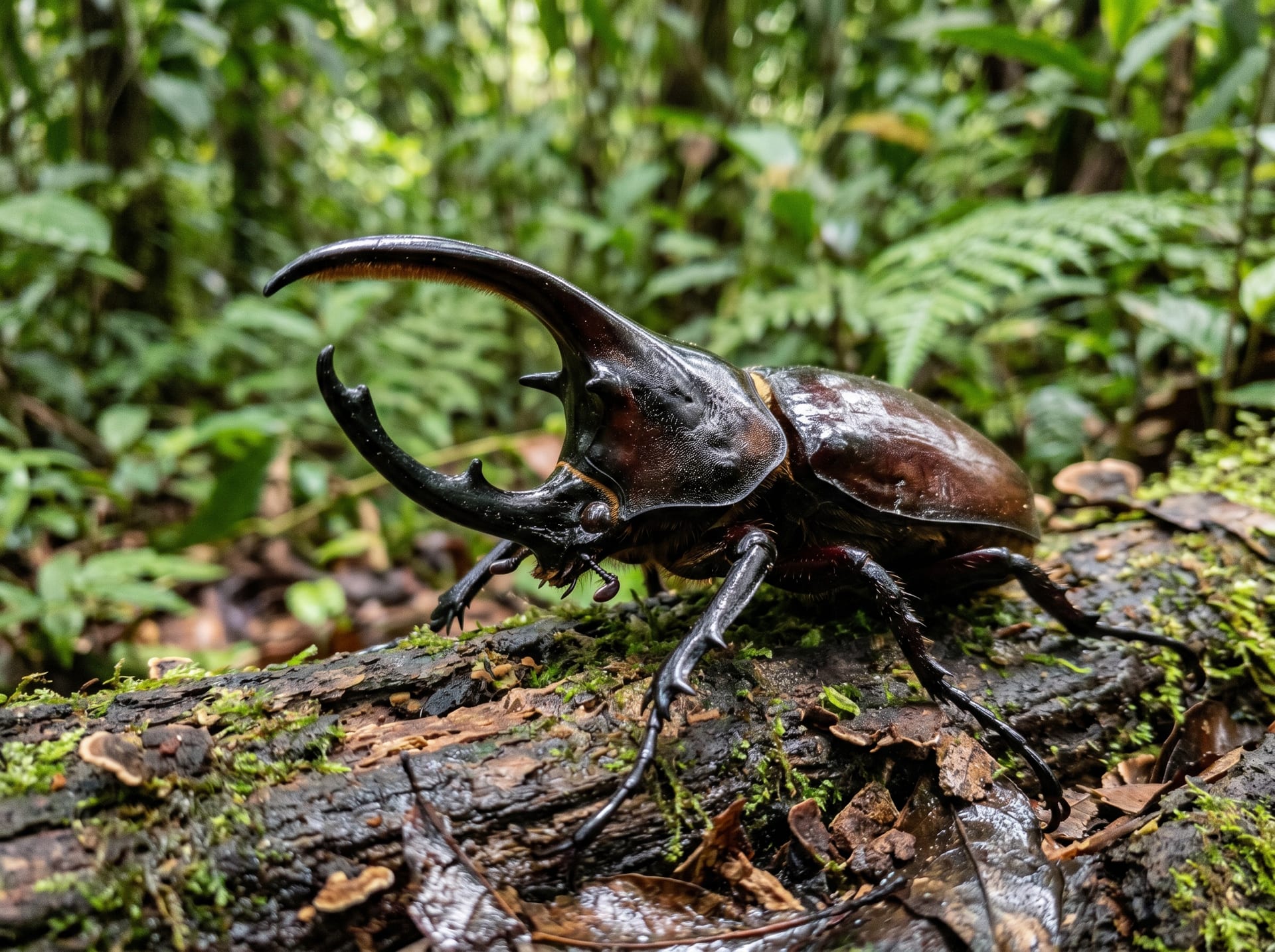
Goliath Beetle
AdvancedGoliathus goliatus
One of the world's largest flower chafers from Africa. Weight reaches the maximum class among insects.
Difficulty
Advanced
Temperature
20〜28℃
Lifespan
Adult 3-6 months
Size
60-110mm
Humidity
60〜80%
Diet
Insect jelly, Banana
About
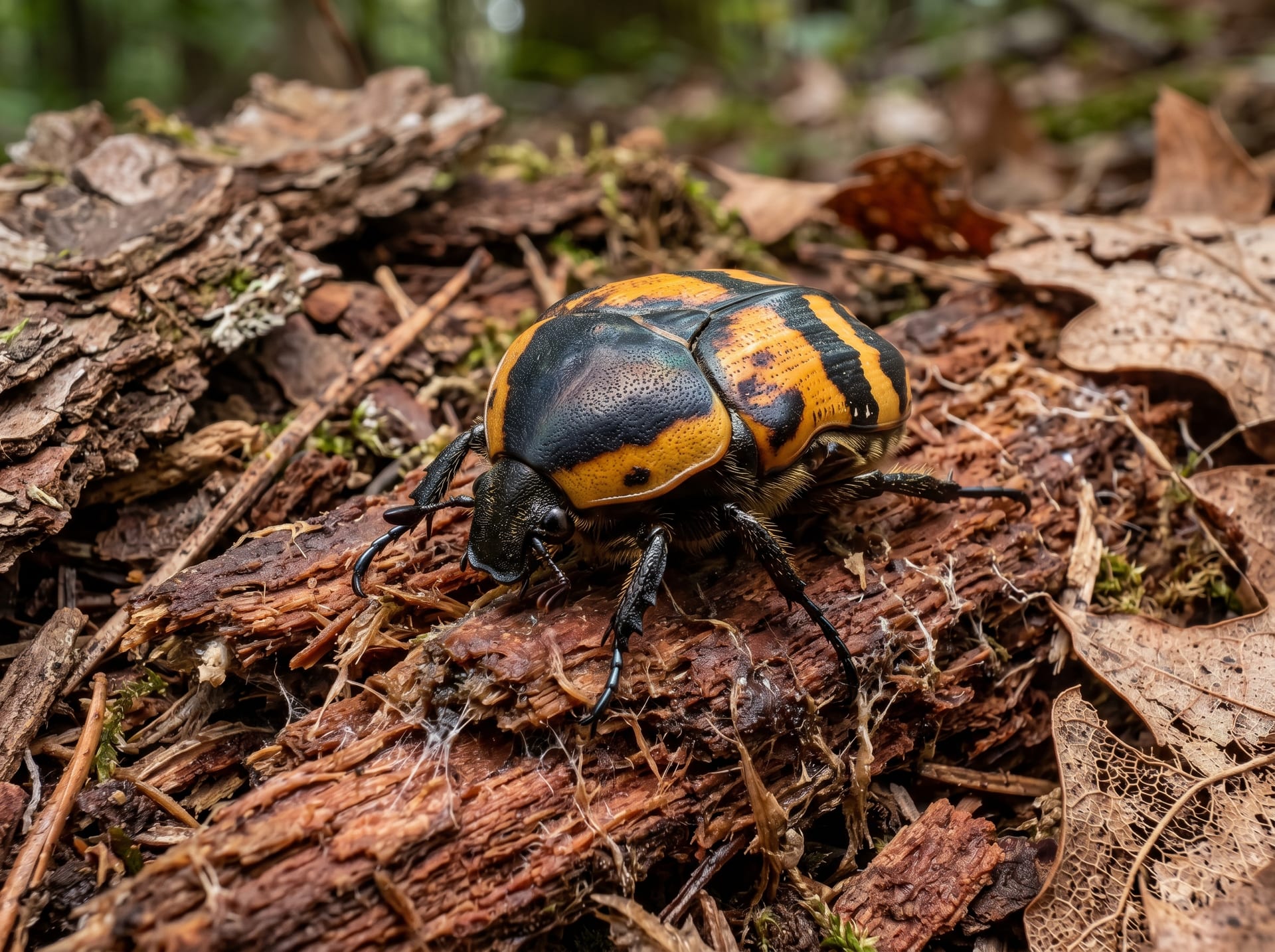
The Goliath beetles are any of the six species in the genus Goliathus. Goliath beetles are among the largest insects on Earth, if measured in terms of size, bulk and weight. They are members of subfamily Cetoniinae, within the family Scarabaeidae. Goliath beetles can be found in many of Africa's tropical forests, where they feed primarily on tree sap and fruit. Little appears to be known of the larval cycle in the wild, but in captivity, Goliathus beetles have been successfully reared from egg to adult using protein-rich foods, such as commercial cat and dog food. The females range from a dark chestnut brown to silky white, but the males are normally brown/white/black or black/white. Goliath beetles, while not currently evaluated on the IUCN Red List, are facing growing conservation challenges across their African range due to habitat loss, over-collection for the international pet trade, and the potential impacts of climate change.
Source: Wikipedia (CC BY-SA 4.0)
Lifespan of the Goliath Beetle
The Goliath Beetle lives Adult 3-6 months.
Size of the Goliath Beetle
The Goliath Beetle grows to 60-110mm.
Goliath beetles measure from 6-11 centimeters for males and 5-8 centimeters for females, as adults, and can reach weights of up to 80–100 grams (2.8–3.5 oz) in the larval stage, though the adults are only about half this weight.
Basic Info
Origin
tropical rainforests of central and western Africa
Lifespan
Adult 3-6 months
References & Sources
Edited & verified by: BreederDirect editorial team
The taxonomic, regulatory, and husbandry data on this page are compiled and verified against the authoritative primary sources below.
Taxonomy & Authority
Accepted name: Goliathus goliatus (Linnaeus, 1771)
Synonyms: Scarabaeus goliatus Linnaeus, 1771
Authority databases: GBIF
Nomenclature follows global taxonomic authority databases.
Regulations & Conservation Status
Not CITES-listed
Plant Protection Act: When importing live specimens of Scarabaeoidea (including rhinoceros beetles, stag beetles, flower beetles, etc.), a species identification certificate issued by the exporting country government agency or equivalent must be attached in accordance with the Invasive Species Act (import ports are limited to Narita, Chubu, Kansai, Fukuoka, and Kagoshima airports). This species itself is not a designated invasive species, and import is possible upon submission of the certificate.
Sources: Ministry of the Environment, Invasive Species Act: "Guidance for Those Importing Live Insects in Scarabaeoidea" / CITES Appendix (checklist.cites.org)
Regulations may change. Always verify the latest information with the relevant authorities.
Goliath Beetle Listings
Loading latest listingsFind listings for this species