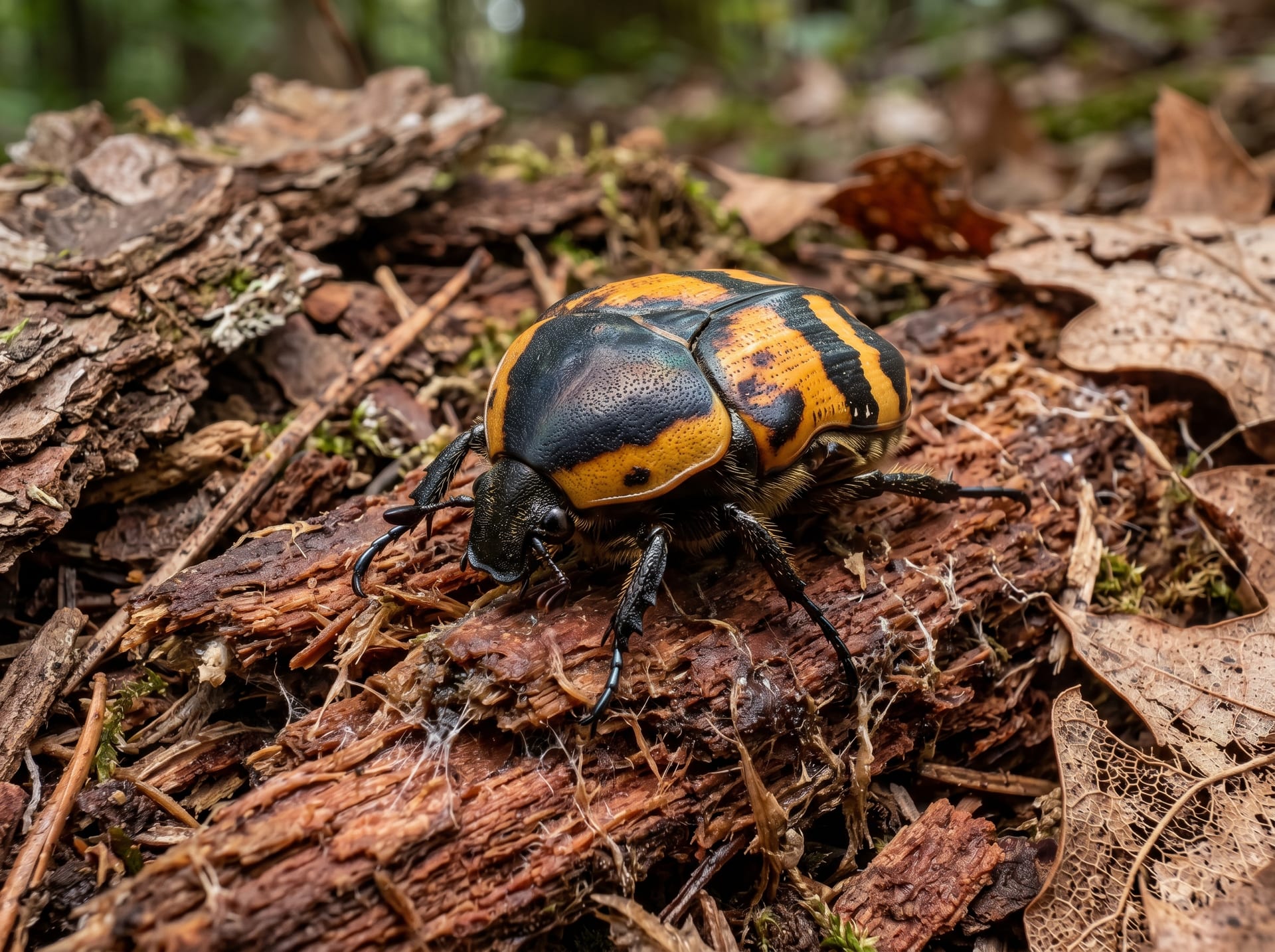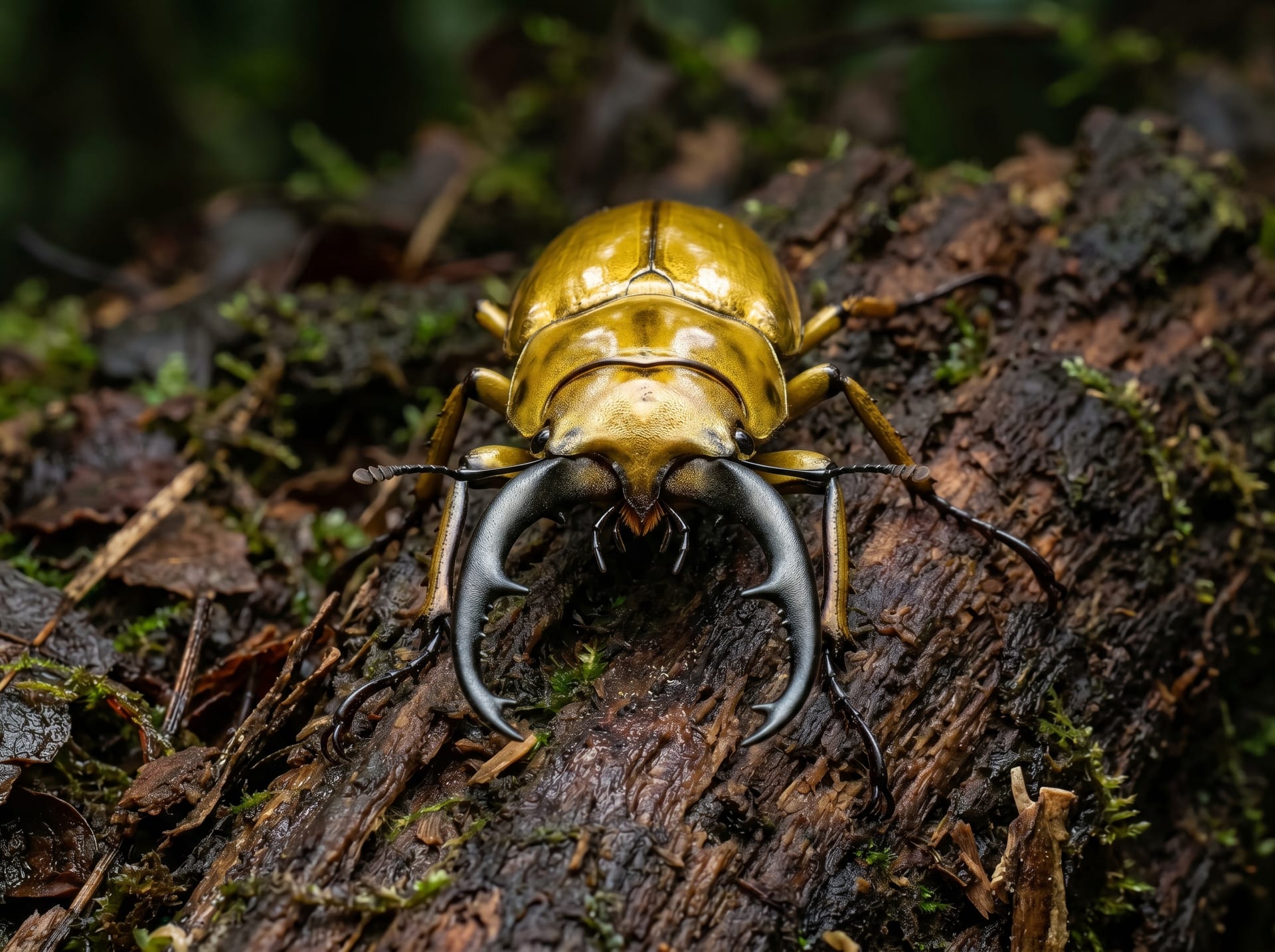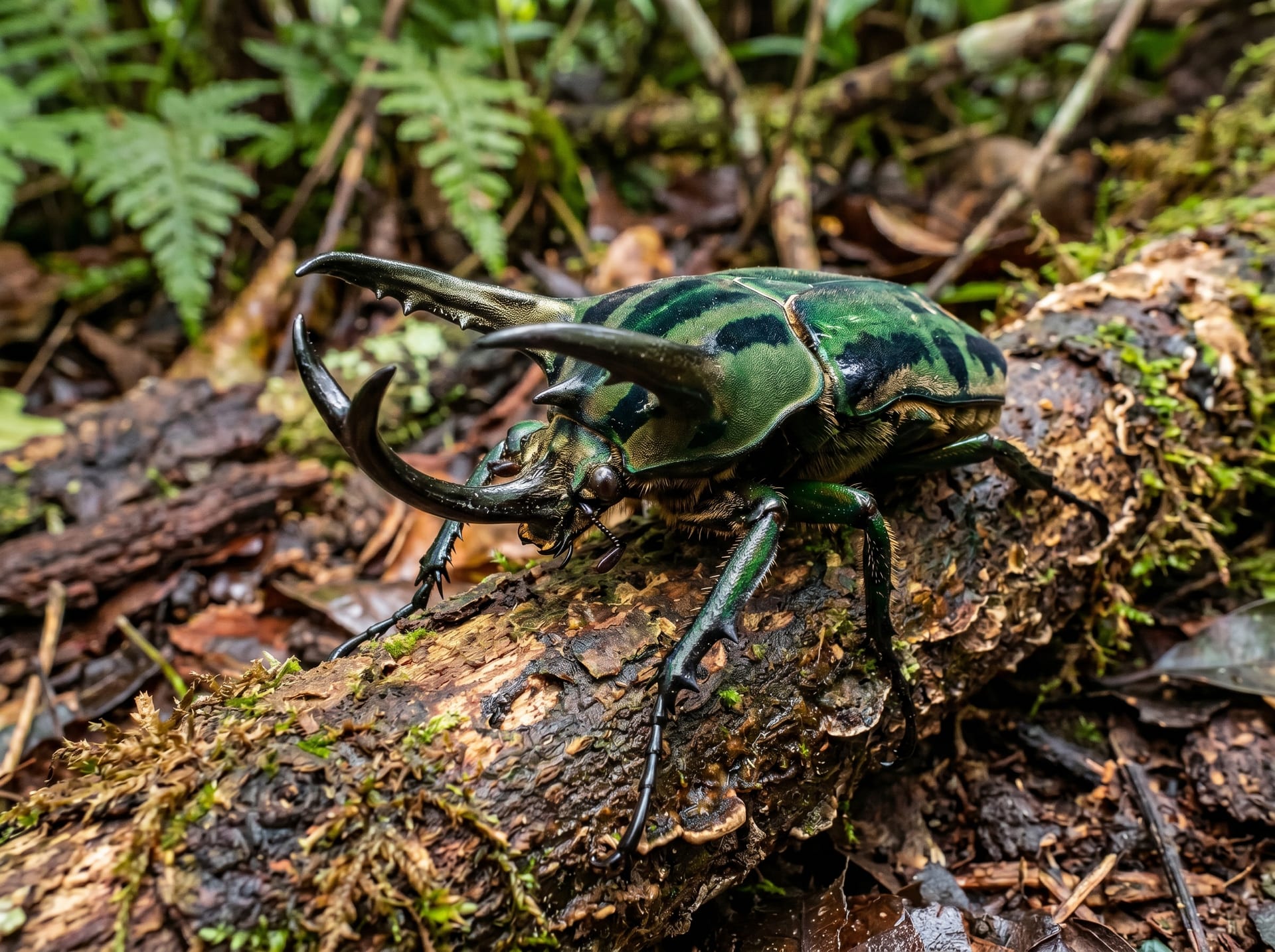
AI-generated image
Giant Flower Beetle
IntermediateMecynorrhina torquata
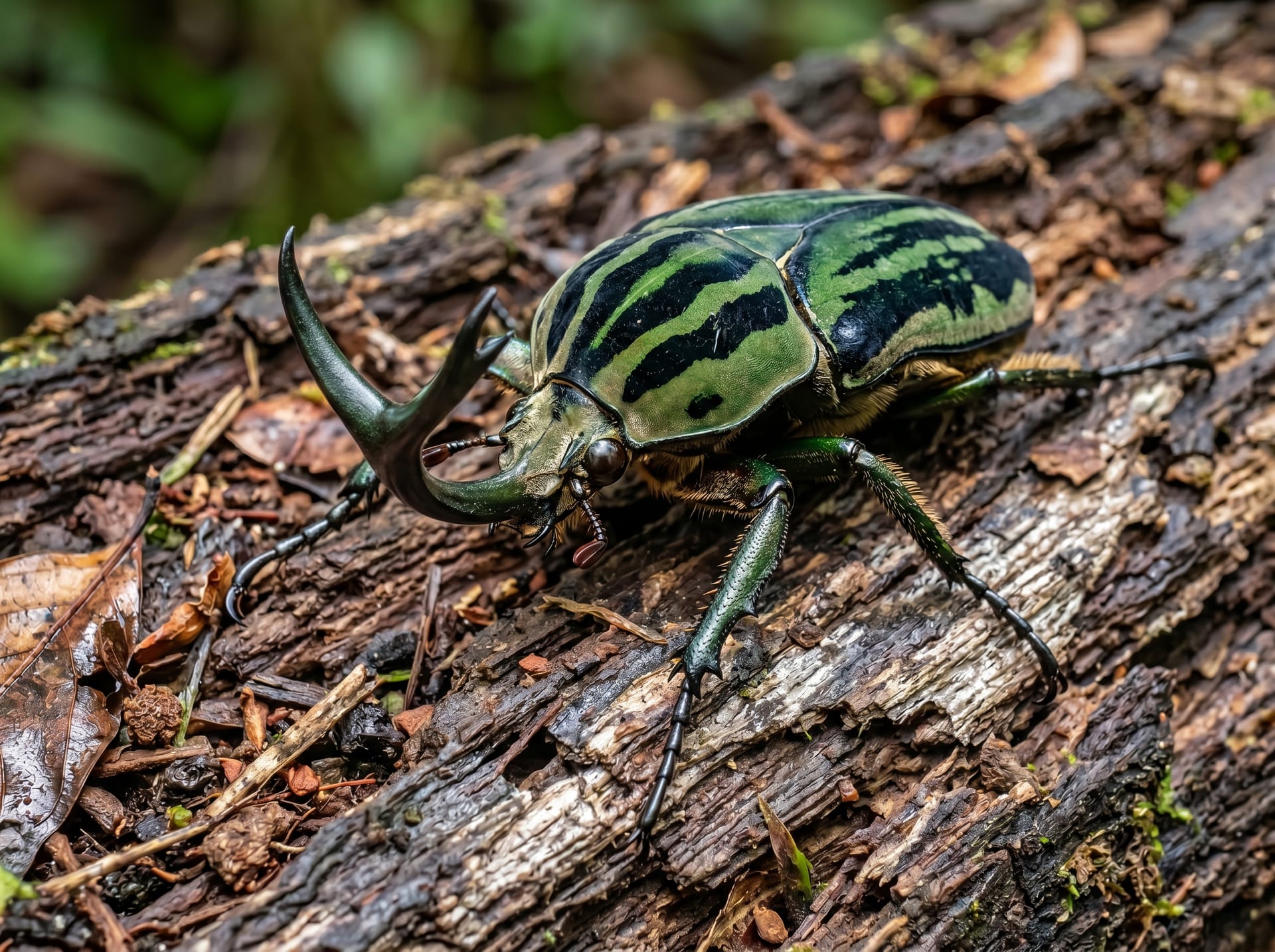
Large flower beetle from Africa. Beautiful metallic green to brown sheen. Males have forked head horn. Impressive in flight. Larval rearing relatively easy.
Difficulty
Intermediate
Temperature
22〜28℃
Lifespan
Adult 3-6 months / Larva 8-12 months
Size
50-85mm
Humidity
60〜80%
Diet
Jelly, banana (adult) / Fermented mat + leaf litter (larva)
About
Mecynorrhina torquata is a large flower beetle of African tropical forests, prized for a metallic sheen ranging from green to brown. Males bear a forked cephalic horn, and the beetle is impressive in flight. It is among the largest flower beetles in the world. Husbandry uses a medium enclosure, with adults fed insect jelly and fruit. Fermented substrate is used for oviposition, and larvae are reared in leaf litter or fermented substrate. Both adults and larvae are relatively easy to keep, and breeding is achievable. With variation in color and horn shape, it is a popular, highly ornamental and collectible species.
Source: Wikipedia (CC BY-SA 4.0)
Lifespan of the Giant Flower Beetle
The Giant Flower Beetle lives Adult 3-6 months / Larva 8-12 months.
Size of the Giant Flower Beetle
The Giant Flower Beetle grows to 50-85mm.
Temperature & humidity for the Giant Flower Beetle
The ideal temperature for the Giant Flower Beetle is 22〜28℃.
Basic Info
Origin
Africa
Lifespan
Adult 3-6 months / Larva 8-12 months
Size
50-85mm
References & Sources
Edited & verified by: BreederDirect editorial team
The taxonomic, regulatory, and husbandry data on this page are compiled and verified against the authoritative primary sources below.
Taxonomy & Authority
Accepted name: Mecynorrhina torquata (Drury, 1782)
Synonyms: Mecynorrhina torquata, Scarabaeus torquatus Drury, 1782
Authority databases: GBIF
Nomenclature follows global taxonomic authority databases.
Regulations & Conservation Status
Not CITES-listed
Plant Protection Act: When importing live specimens of Scarabaeoidea (including rhinoceros beetles, stag beetles, flower beetles, etc.), a species identification certificate issued by the exporting country government agency or equivalent must be attached in accordance with the Invasive Species Act (import ports are limited to Narita, Chubu, Kansai, Fukuoka, and Kagoshima airports). This species itself is not a designated invasive species, and import is possible upon submission of the certificate.
Sources: Ministry of the Environment, Invasive Species Act: "Guidance for Those Importing Live Insects in Scarabaeoidea" / CITES Appendix (checklist.cites.org)
Regulations may change. Always verify the latest information with the relevant authorities.
Giant Flower Beetle Listings
Loading latest listingsFind listings for this species