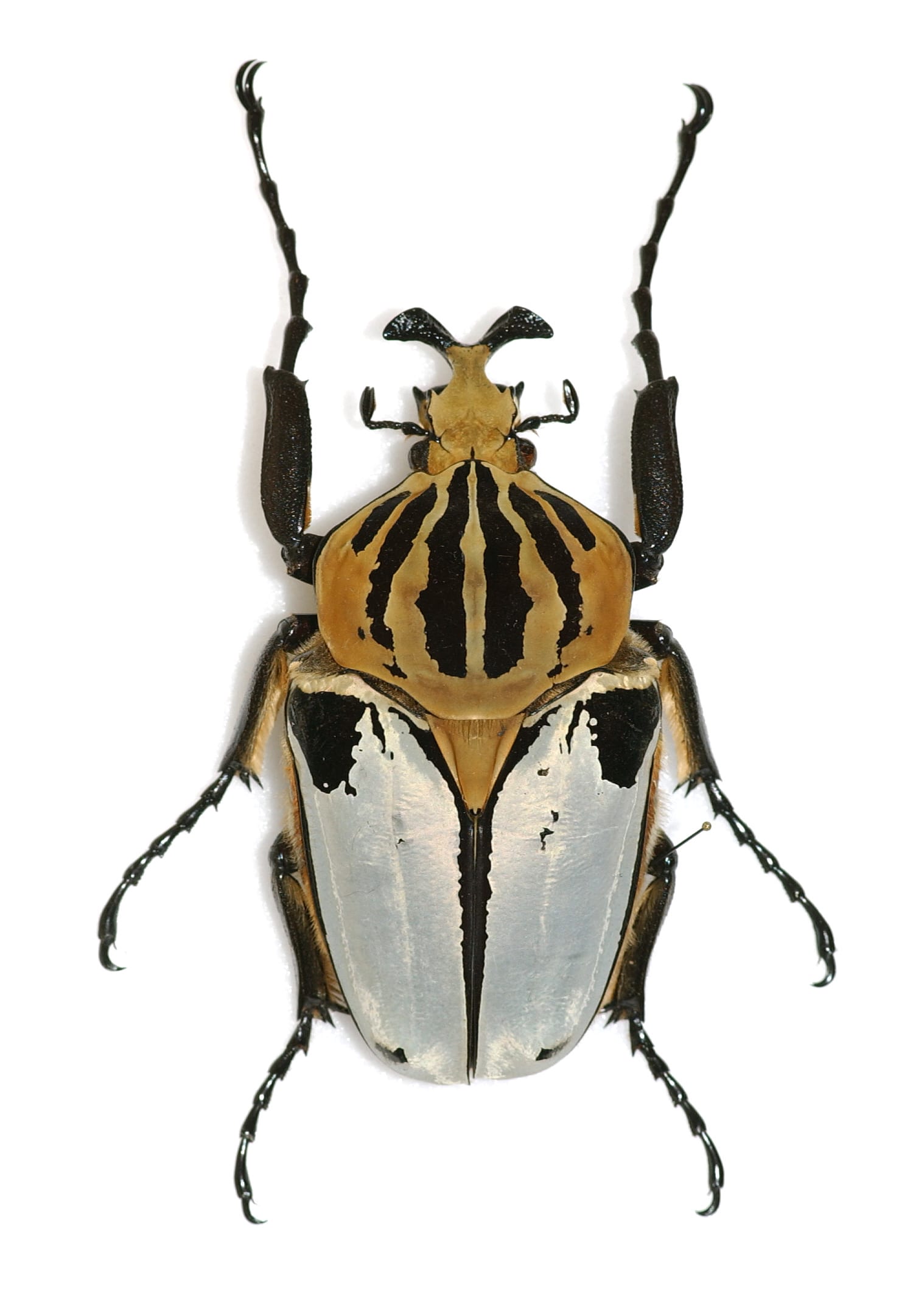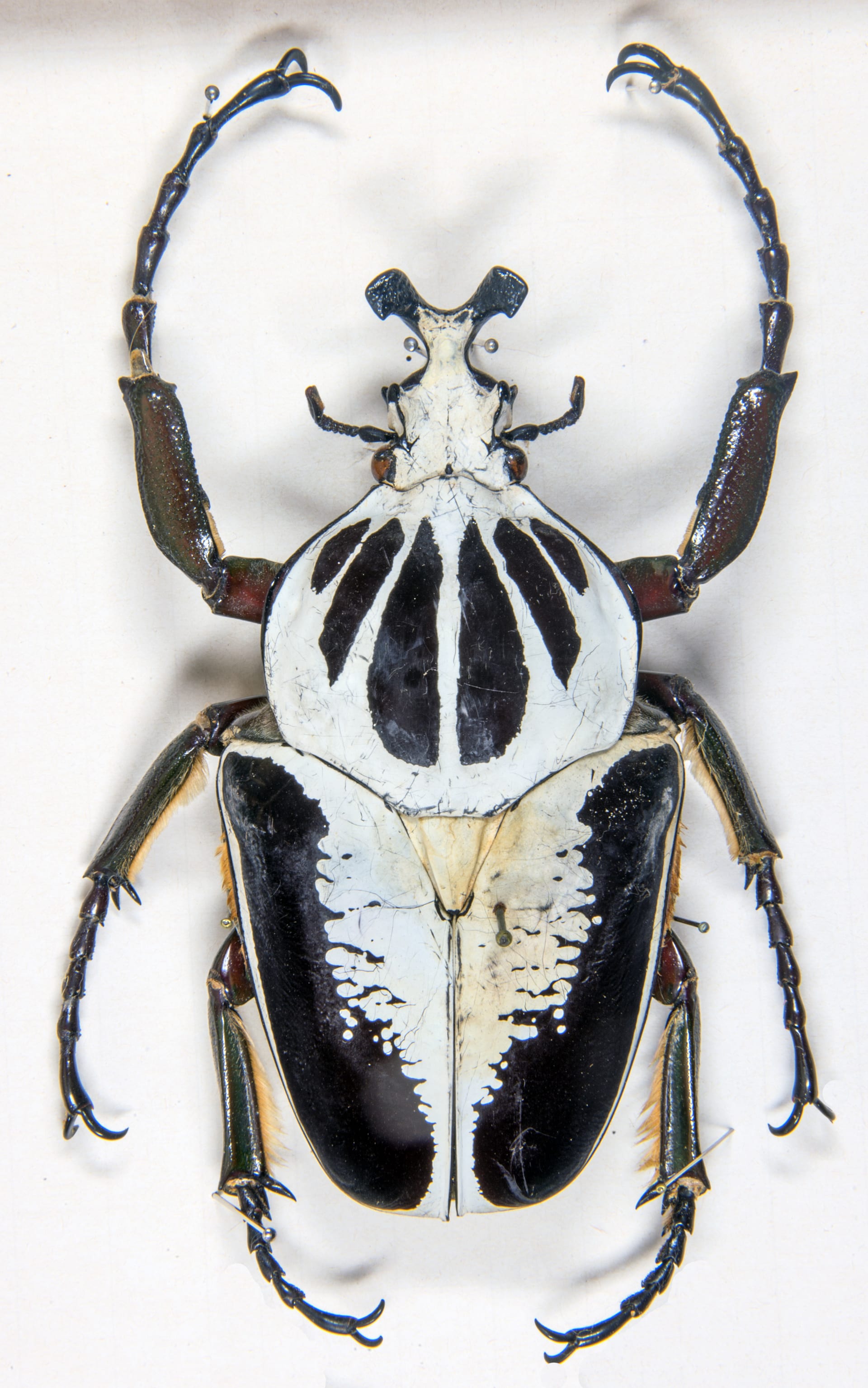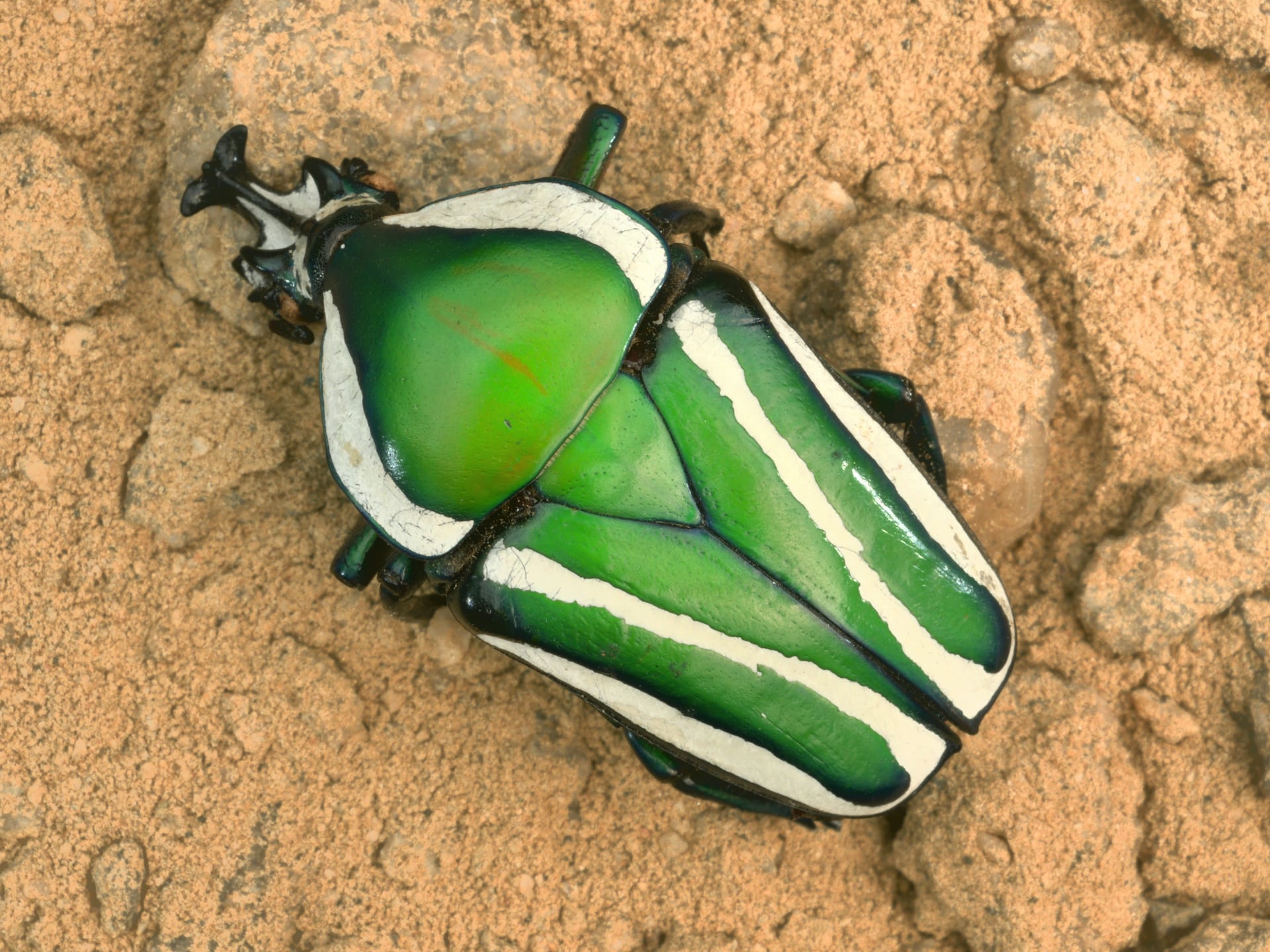
Source: Wikimedia Commons
Derby's Flower Beetle
BeginnerDicronorhina derbyana
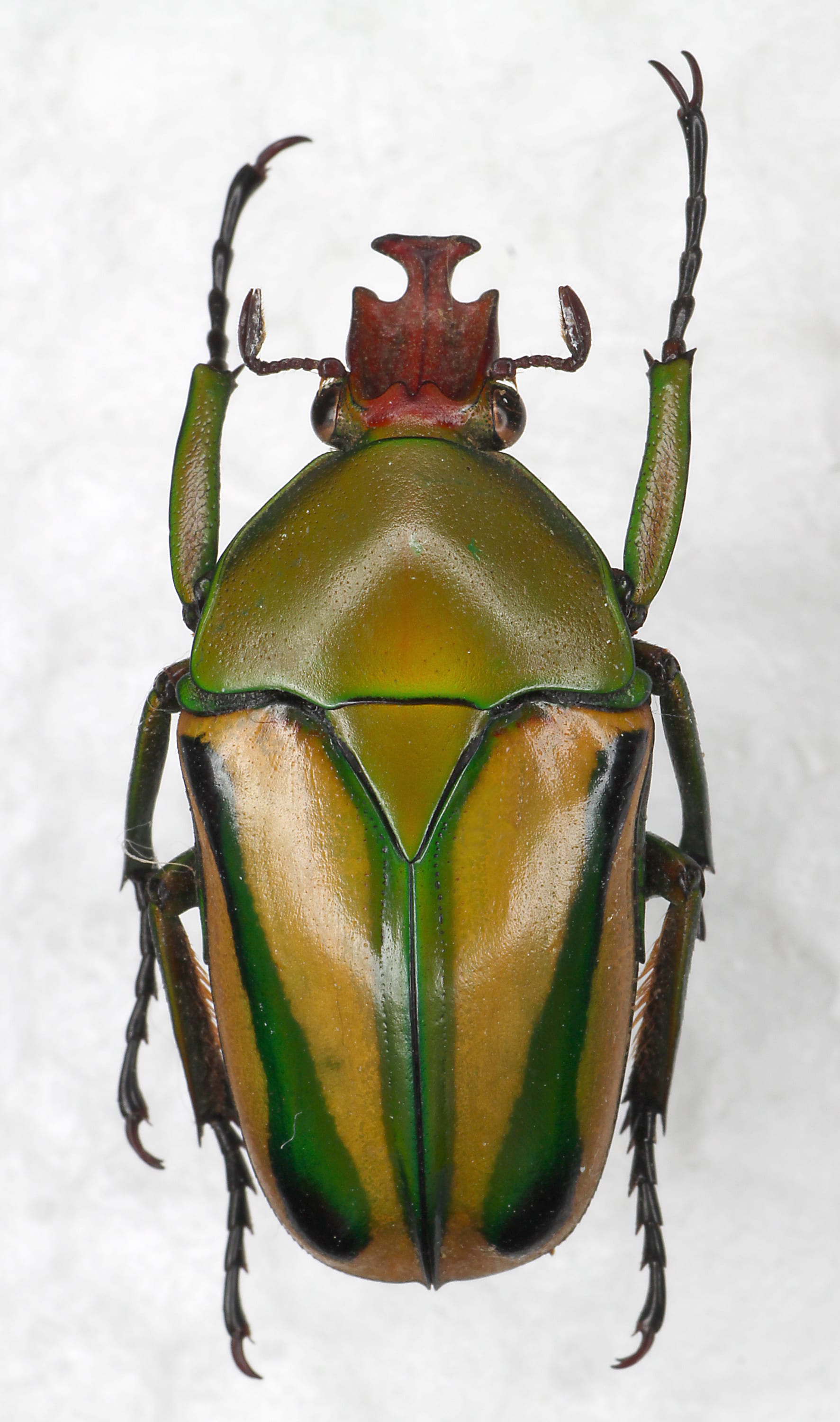
An east and southern African flower beetle, metallic green with white stripes, the male carrying a flat T-shaped horn on the head. It breeds readily and is treated as an entry-level species among the exotic flower beetles.
Difficulty
Beginner
Temperature
25〜26℃
Lifespan
2-4 months as an adult
Size
Males 40-50mm, females 35-38mm
Humidity
60〜80%
Diet
Adults take beetle jelly and fruit; larvae feed on fermented substrate
About
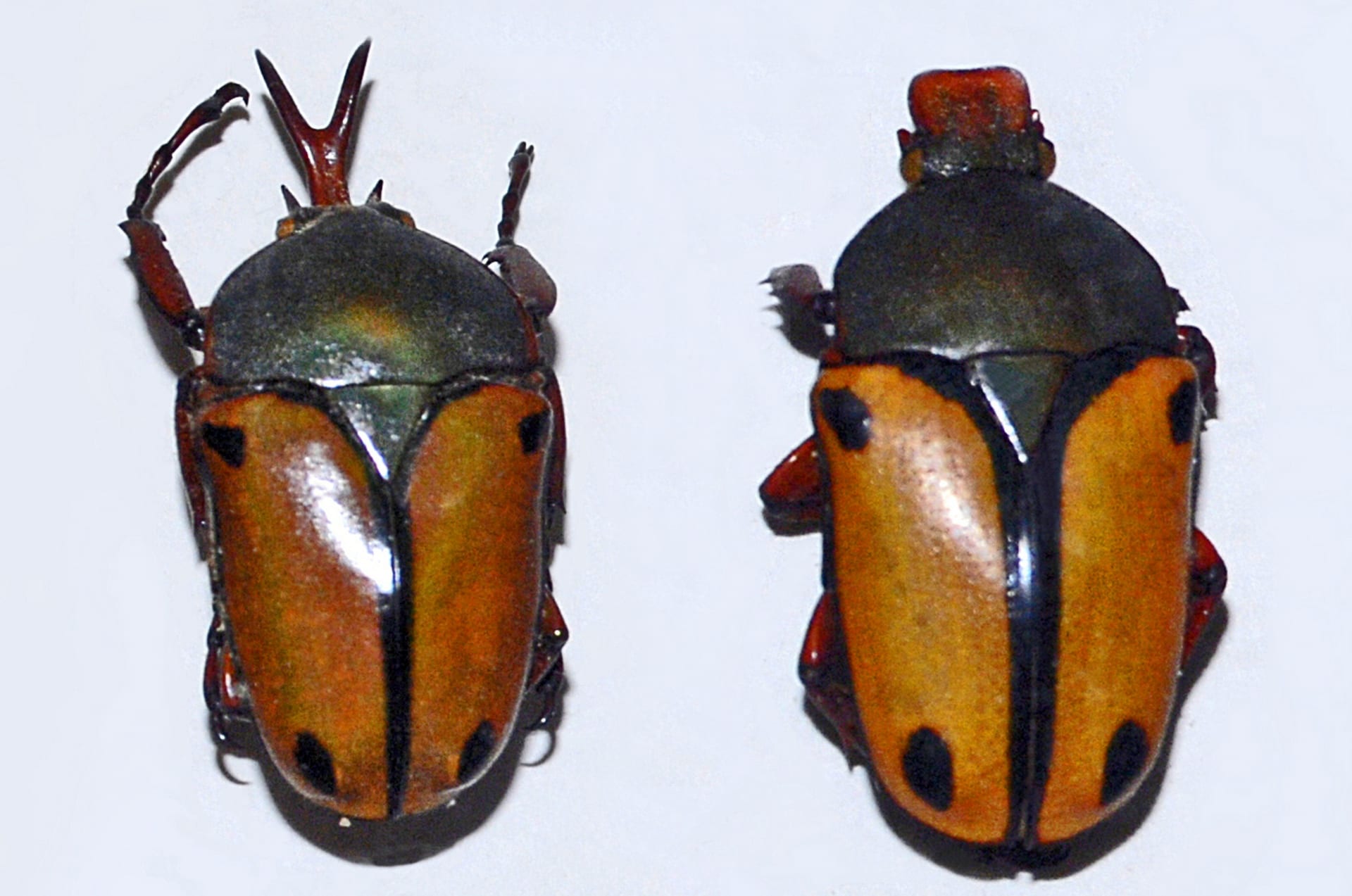
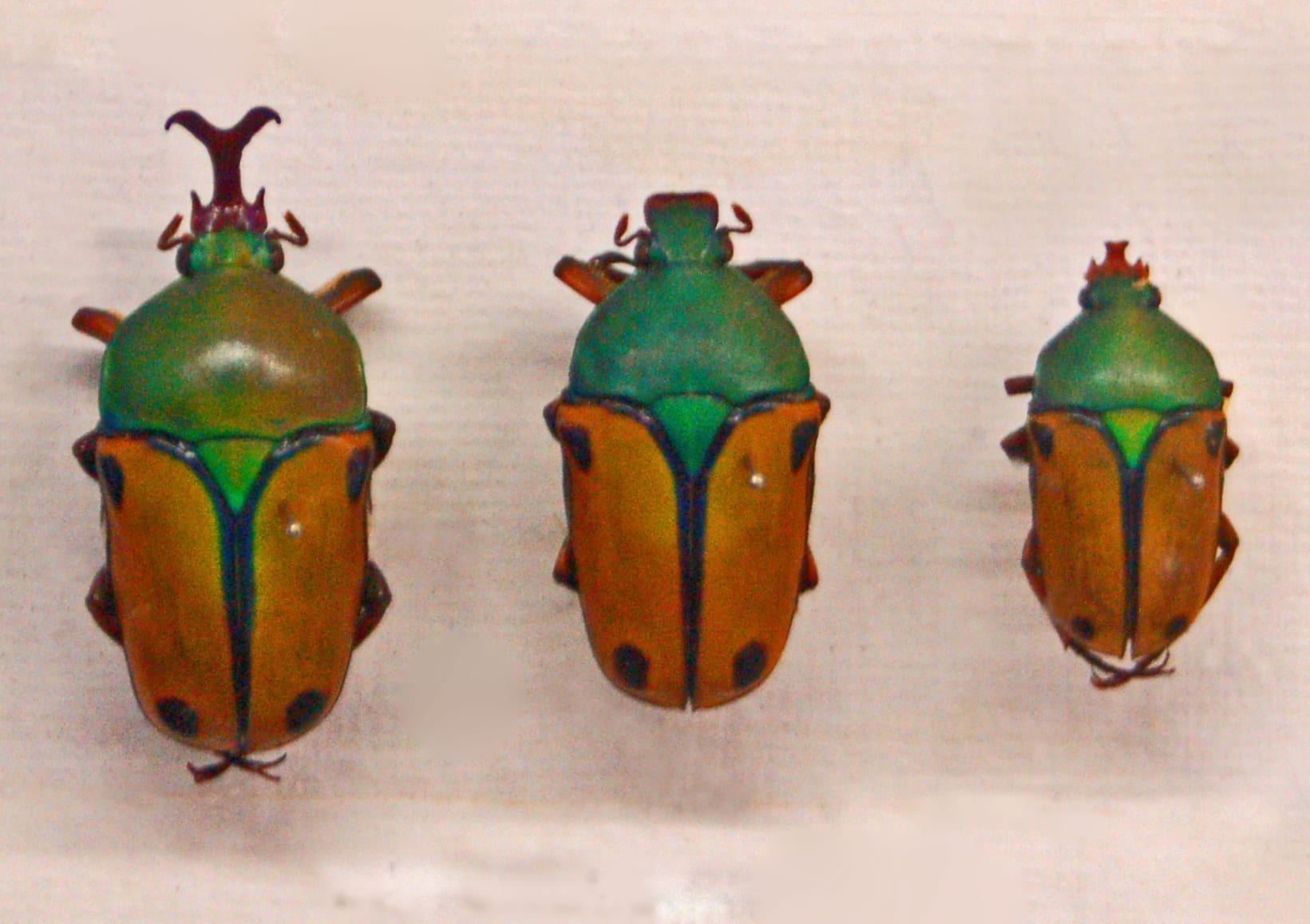
Dicronorhina derbyana is a flower beetle of east and southern Africa. The English Wikipedia calls it the smallest of its genus and gives males as 40-50 mm and females as 35-38 mm. Colour varies a good deal between subspecies: layardi is metallic green with white stripes, while conradsi is maroon with a blue sheen. Males carry a flat, T-shaped horn on the head. A female lays up to about 200 eggs, the full life cycle takes 8-9 months and adults live 3-4 months. The Japanese keeper blog Takuneko reports rearing at about 26C, with losses increasing below 20C, adult life of 2-4 months and a larval period of 8-12 months. Ben's Beetle Breeding Pages rates it an easy beginners species and advises lowering the humidity during pupation.
Source: Wikipedia (CC BY-SA 4.0)
Lifespan of the Derby's Flower Beetle
The Derby's Flower Beetle lives 2-4 months as an adult.
Size of the Derby's Flower Beetle
The Derby's Flower Beetle grows to Males 40-50mm, females 35-38mm.
Temperature & humidity for the Derby's Flower Beetle
The ideal temperature for the Derby's Flower Beetle is 25〜26℃.
Basic Info
Origin
East and southern Africa (South Africa, Tanzania, Malawi, Zimbabwe, Namibia, Botswana, Zambia, Kenya)
Lifespan
2-4 months as an adult
Care Specifications
SolitaryBreeding: Easy
Sources: Dicronorhina derbyana - Wikipedia (EN; size, T-shaped male horn, clutch size, 8-9 month life cycle, adult lifespan, six subspecies) / Takuneko blog - keeping Dicronorhina derbyana (about 26C, losses below 20C, adults 2-4 months, about 200 eggs, larval period 8-12 months, one larva per litre, JA) / Ben's Beetle Breeding Pages - Dicronorrhina derbyana layardi (rated a beginners species; reduce humidity at pupation) / GBIF occurrence records for Dicronorhina derbyana (counts by country)
References & Sources
Edited & verified by: BreederDirect editorial team
The taxonomic, regulatory, and husbandry data on this page are compiled and verified against the authoritative primary sources below.
Primary sources
- Wikipedia
- Ministry of the Environment, Invasive Species Act: "Guidance for Those Importing Live Insects in Scarabaeoidea"
- CITES Appendix (checklist.cites.org)
- Takuneko blog - keeping Dicronorhina derbyana (about 26C, losses below 20C, adults 2-4 months, about 200 eggs, larval period 8-12 months, one larva per litre, JA)
- Ben's Beetle Breeding Pages - Dicronorrhina derbyana layardi (rated a beginners species; reduce humidity at pupation)
- GBIF occurrence records for Dicronorhina derbyana (counts by country)
- GBIF
Taxonomy & Authority
Accepted name: Dicronorhina derbyana Westwood, 1842
Synonyms: Dicronorrhina derbyana
Authority databases: GBIF
Nomenclature follows global taxonomic authority databases.
Regulations & Conservation Status
Not CITES-listed
Plant Protection Act: When importing live specimens of Scarabaeoidea (including rhinoceros beetles, stag beetles, flower beetles, etc.), a species identification certificate issued by the exporting country government agency or equivalent must be attached in accordance with the Invasive Species Act (import ports are limited to Narita, Chubu, Kansai, Fukuoka, and Kagoshima airports). This species itself is not a designated invasive species, and import is possible upon submission of the certificate.
Sources: Ministry of the Environment, Invasive Species Act: "Guidance for Those Importing Live Insects in Scarabaeoidea" / CITES Appendix (checklist.cites.org)
Regulations may change. Always verify the latest information with the relevant authorities.
Derby's Flower Beetle Listings
Loading latest listingsFind listings for this species