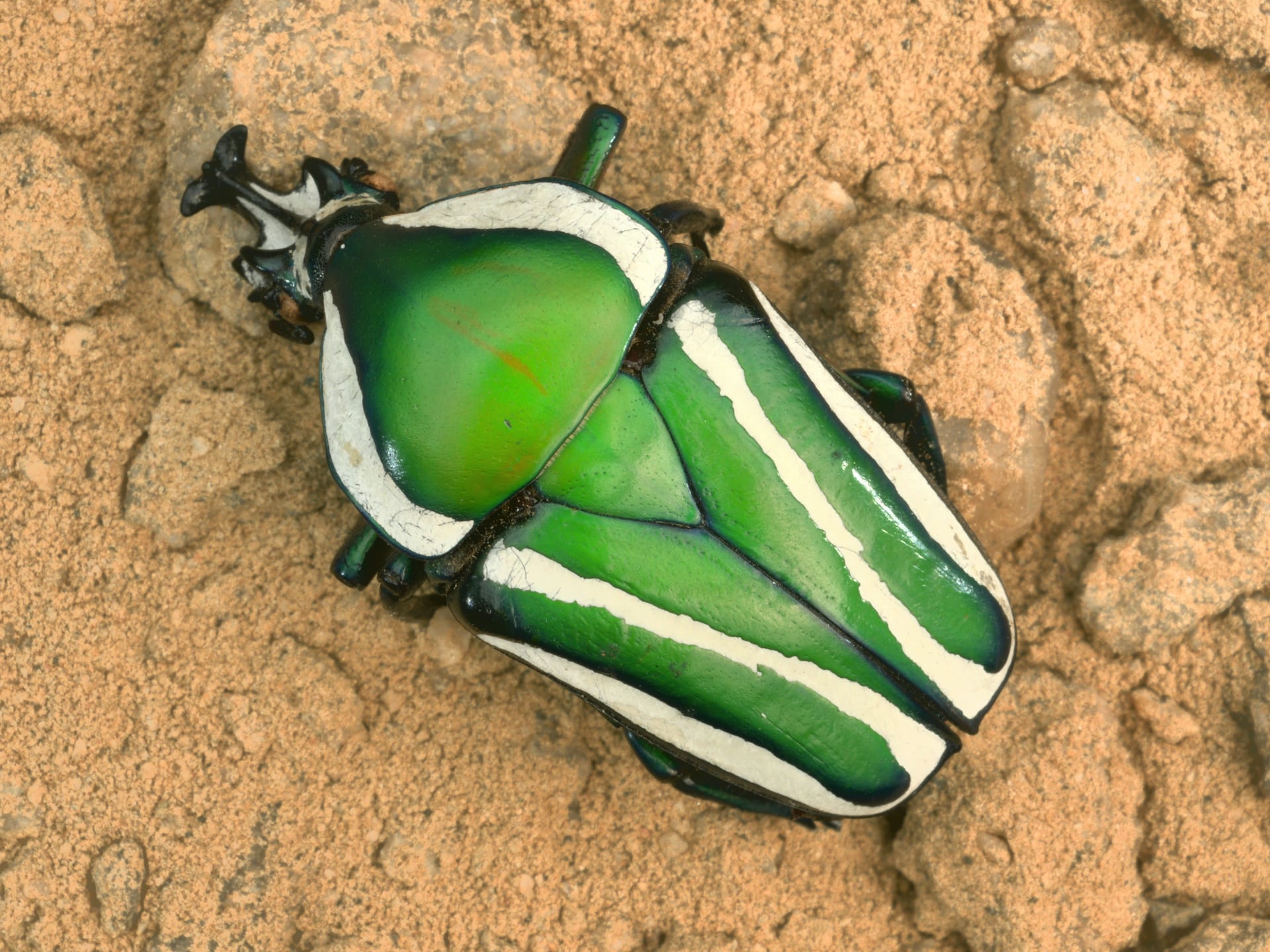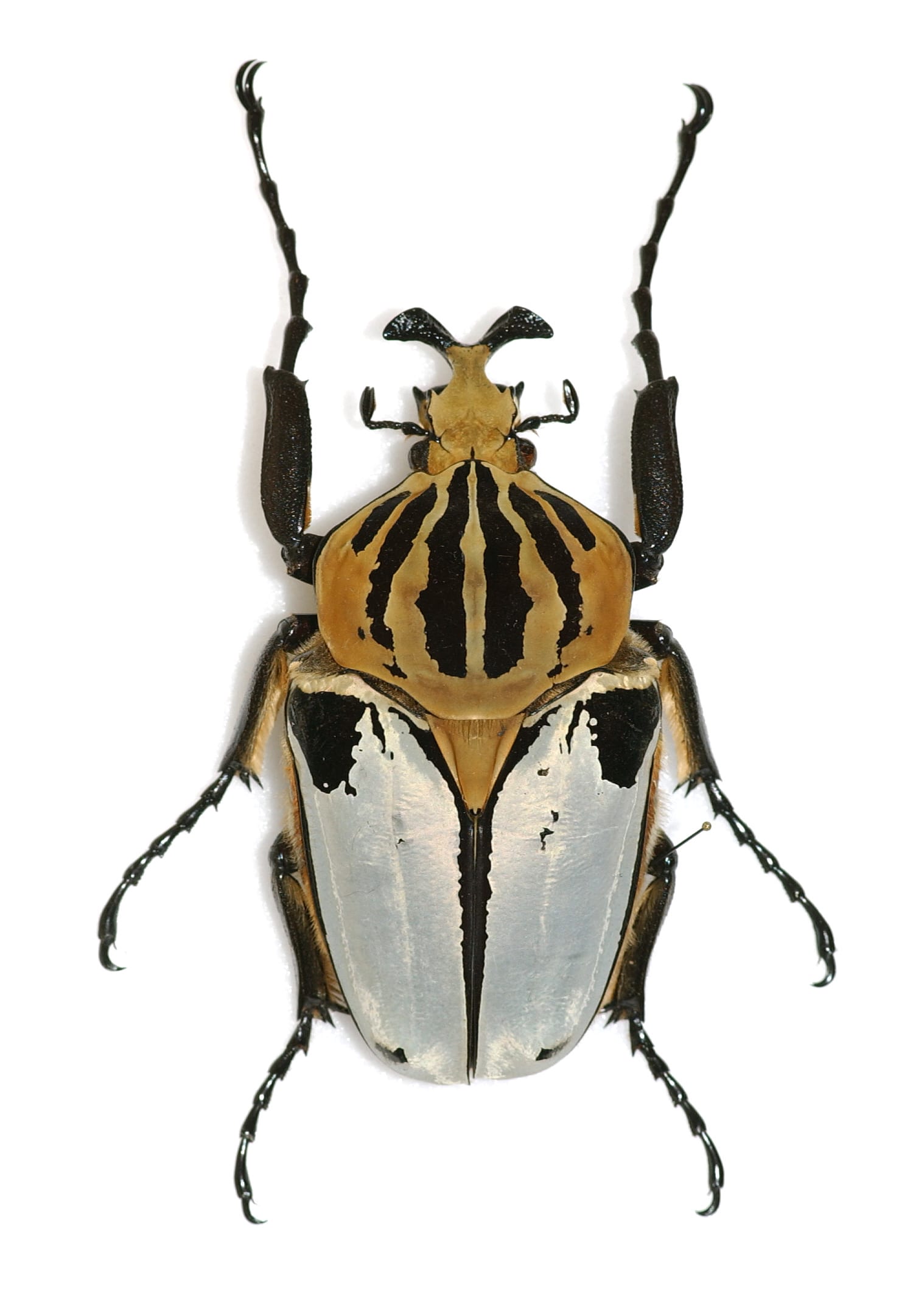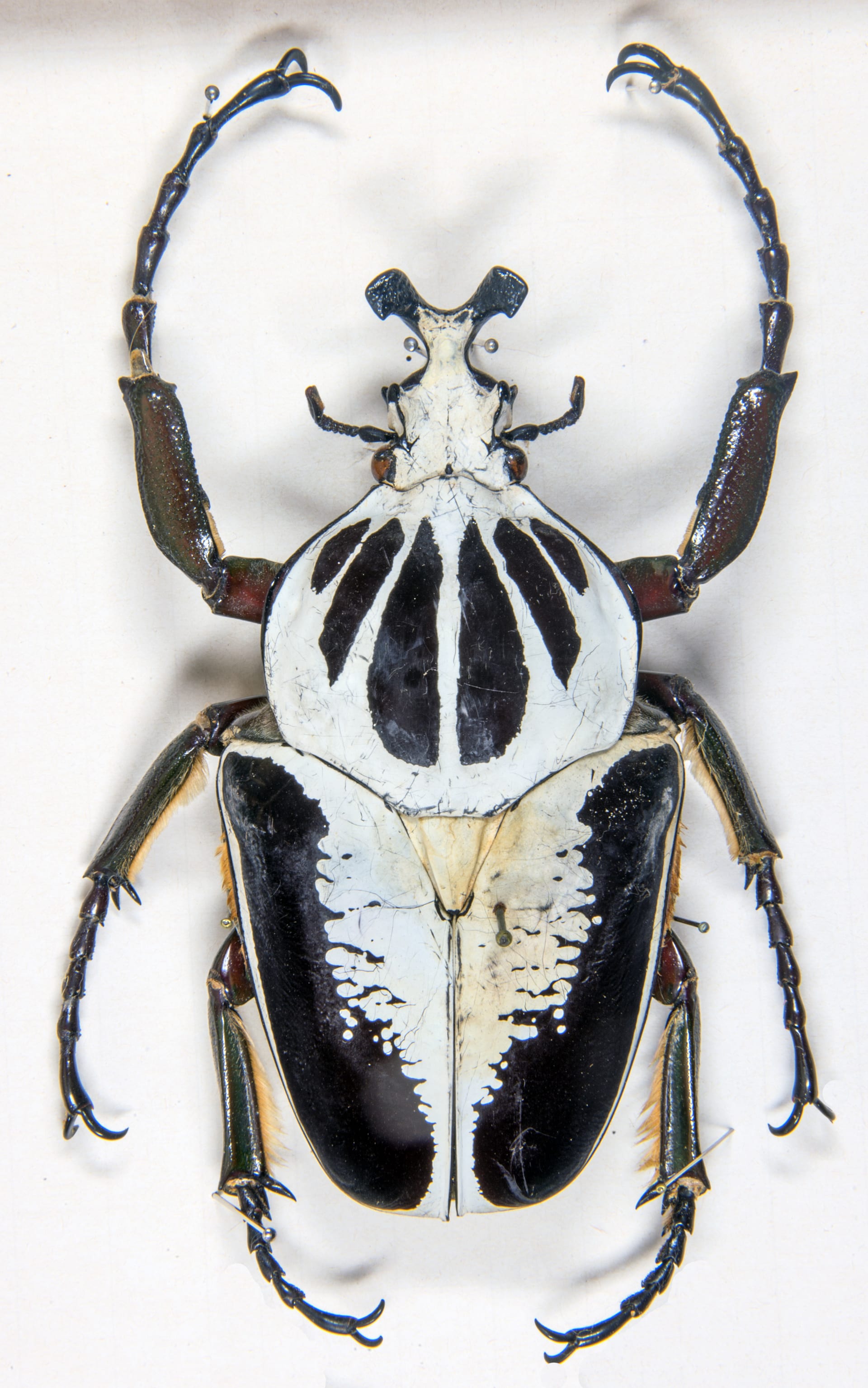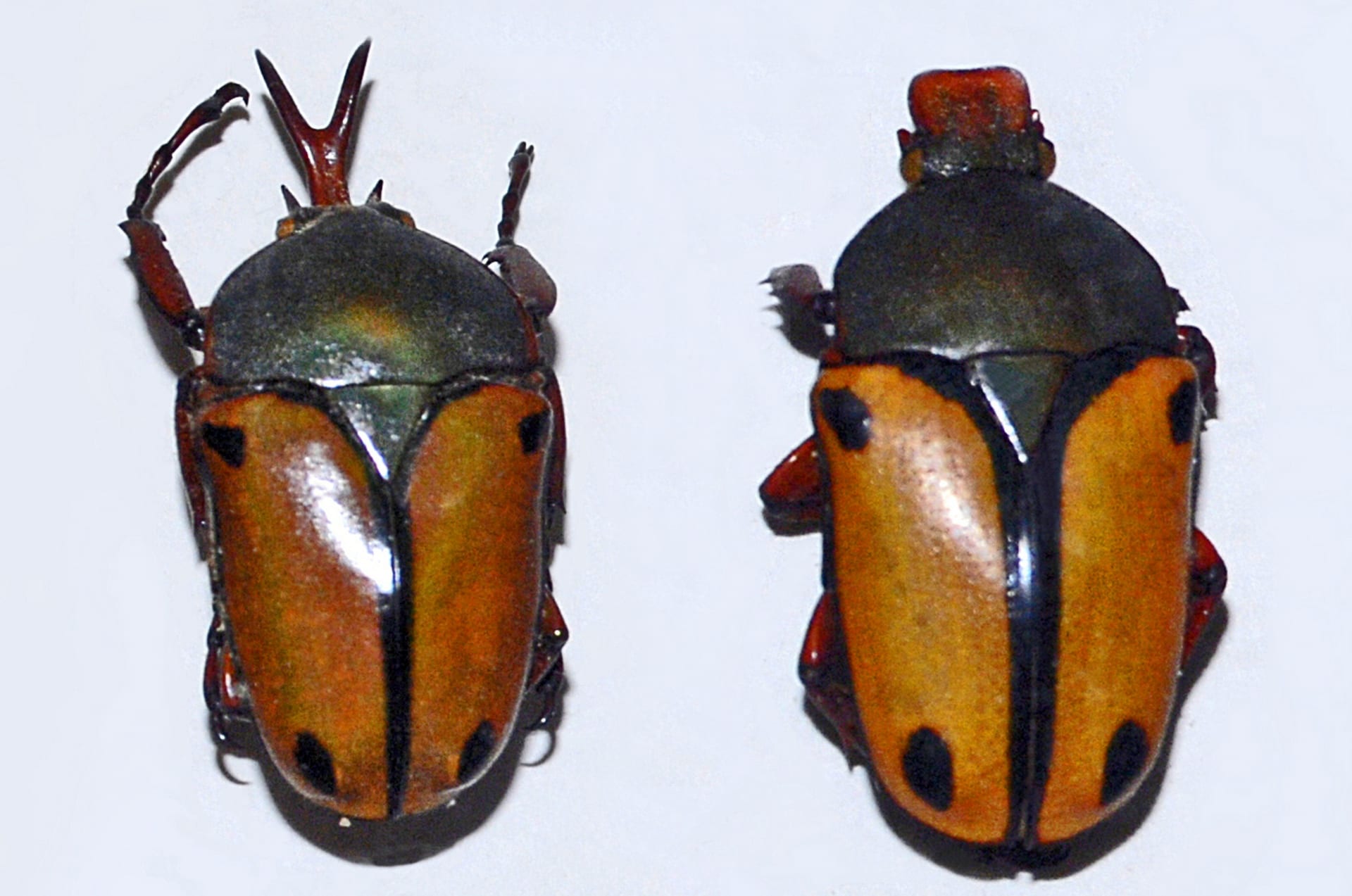
Source: Wikimedia Commons
Smith's Flower Beetle
BeginnerEudicella smithii
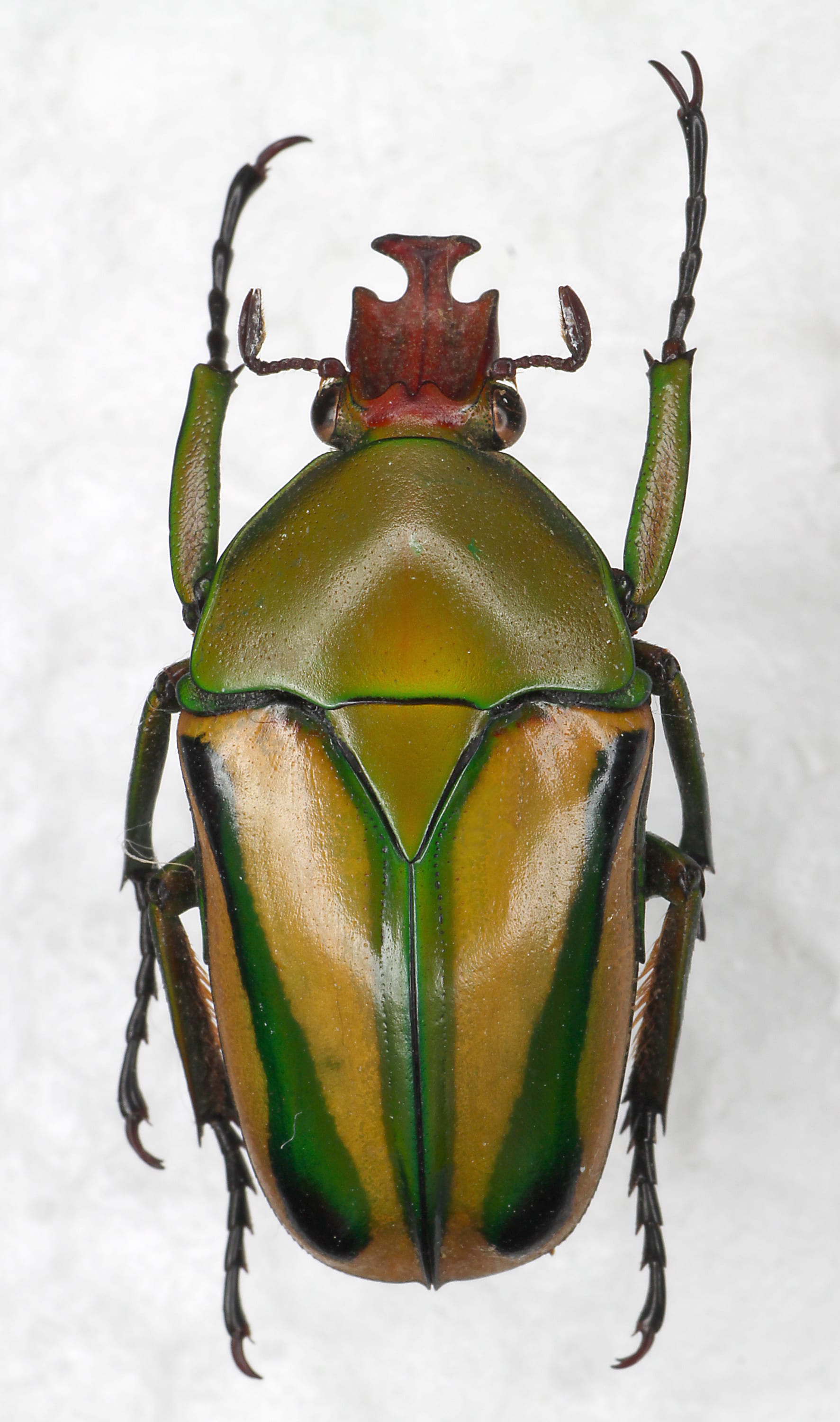
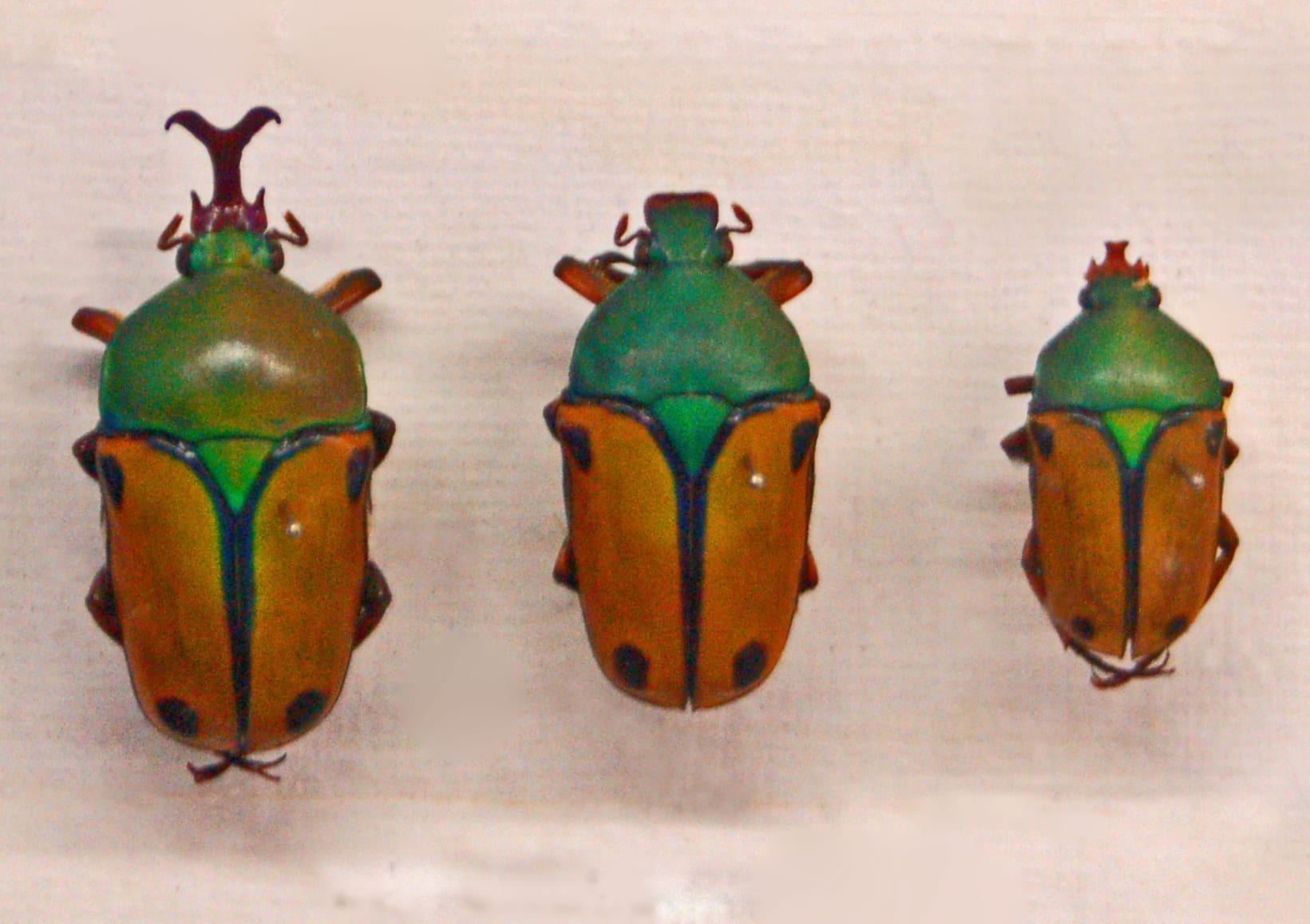
An east and southern African flower beetle whose jade-green head and thorax contrast with brown elytra. Males carry a reddish, Y-shaped horn. It breeds readily and is treated as an entry-level species.
Difficulty
Beginner
Temperature
20〜28℃
Lifespan
Adults 3-5 months
Size
20-40mm
Humidity
60〜80%
Diet
Adults take fruit and beetle jelly; larvae feed on rotten wood and leaf litter
About
Eudicella smithi is a widespread Afrotropical flower beetle. It measures 20-40 mm and its range includes South Africa, the Democratic Republic of the Congo, Rwanda, Uganda, Tanzania, Kenya and Malawi, and GBIF records agree, with South Africa (56), the DRC (27) and Rwanda (27) leading. The jade-green metallic sheen of the head and pronotum set against brown elytra is what the beetle is known for, and the English name jade-headed buffalo beetle comes from it. Males carry the forked, Y-shaped horn common to the genus, and the shape of the fork is one of the characters used to tell the species apart. Ben's Beetle Breeding Pages rates Eudicella an easy entry-level genus in which laying through to pupation can all take place in one mix of rotten wood and leaves.
Source: Wikipedia (CC BY-SA 4.0)
Lifespan of the Smith's Flower Beetle
The Smith's Flower Beetle lives Adults 3-5 months.
Size of the Smith's Flower Beetle
The Smith's Flower Beetle grows to 20-40mm.
Basic Info
Origin
East and southern Africa (South Africa, Democratic Republic of the Congo, Rwanda, Uganda, Tanzania, Zimbabwe, Kenya, Malawi, Burundi and neighbouring countries)
Lifespan
Adults 3-5 months
Size
20-40mm
Temperature
20〜28℃
Care Specifications
SolitaryBreeding: Easy
Sources: Eudicella smithii - Wikipedia (ES; 20-40 mm, Afrotropical range countries) / Eudicella tetraspilota - Wikipedia (DE; 25-40 mm, 50-70 eggs, larvae 5-6 months at 25-27C, adults about 3 months, the De Palma 2009 revision) / Ben's Beetle Breeding Pages - Eudicella smithi bertherandi (East Africa, very easy to breed, rotten wood and leaf substrate) / GBIF occurrence records for Eudicella smithii (counts by country)
References & Sources
Edited & verified by: BreederDirect editorial team
The taxonomic, regulatory, and husbandry data on this page are compiled and verified against the authoritative primary sources below.
Primary sources
- Wikipedia
- Ministry of the Environment, Invasive Species Act: "Guidance for Those Importing Live Insects in Scarabaeoidea"
- CITES Appendix (checklist.cites.org)
- Eudicella tetraspilota - Wikipedia (DE; 25-40 mm, 50-70 eggs, larvae 5-6 months at 25-27C, adults about 3 months, the De Palma 2009 revision)
- Ben's Beetle Breeding Pages - Eudicella smithi bertherandi (East Africa, very easy to breed, rotten wood and leaf substrate)
- GBIF occurrence records for Eudicella smithii (counts by country)
- GBIF
Taxonomy & Authority
Accepted name: Eudicella smithii (MacLeay, 1838)
Synonyms: Eudicella smithii (MacLeay, 1838), Eudicella smithi
Authority databases: GBIF
Nomenclature follows global taxonomic authority databases.
Regulations & Conservation Status
Not CITES-listed
Plant Protection Act: When importing live specimens of Scarabaeoidea (including rhinoceros beetles, stag beetles, flower beetles, etc.), a species identification certificate issued by the exporting country government agency or equivalent must be attached in accordance with the Invasive Species Act (import ports are limited to Narita, Chubu, Kansai, Fukuoka, and Kagoshima airports). This species itself is not a designated invasive species, and import is possible upon submission of the certificate.
Sources: Ministry of the Environment, Invasive Species Act: "Guidance for Those Importing Live Insects in Scarabaeoidea" / CITES Appendix (checklist.cites.org)
Regulations may change. Always verify the latest information with the relevant authorities.
Smith's Flower Beetle Listings
Loading latest listingsFind listings for this species