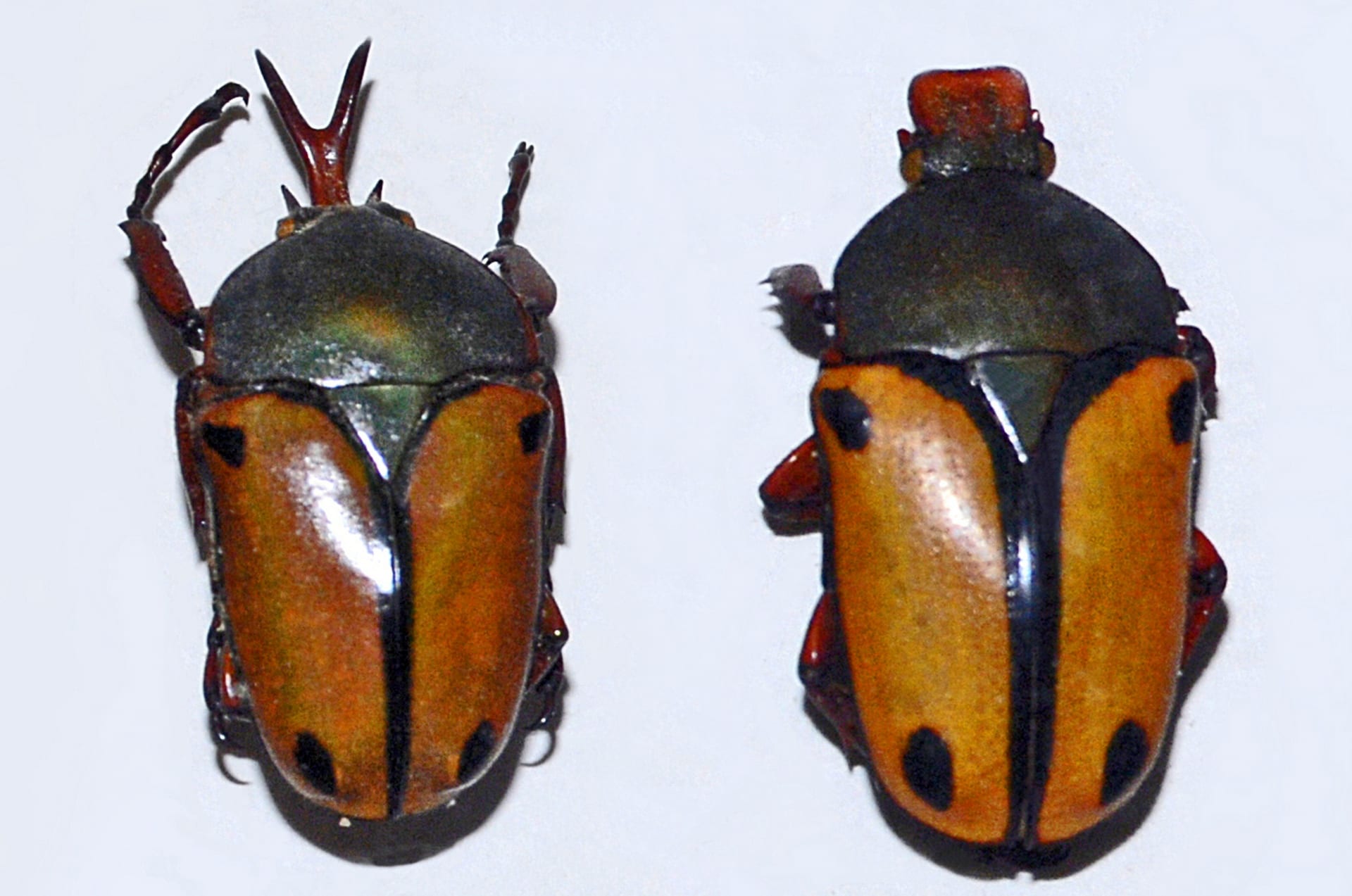
 © Hectonichus / CC BY-SA 3.0
Smith's Flower Beetle
Smith's Flower Beetle is a striking flower chafer native to East and Southern Africa, with a jewel-green head and thorax that contrast beautifully against its brown elytra. Males carry a bold, reddish Y-shaped horn that adds to their eye-catching look. Generally calm and easy to handle, this species is also known for breeding readily across generations, which is why it's often recommended as a first foreign flower beetle for newcomers to the hobby. Rated beginner-friendly in care difficulty, adults reach about 20 to 40mm — a manageable size that makes daily care and observation easy.
View Smith's Flower Beetle encyclopedia →0% commission on your first sales!Register by September 30, 2026 and your first 2 sales are commission-free!
Breeder Wanted!
List on BreederDirect and sell directly to customers nationwide!
6 Transparency Standards You Can Trust
When listing Insects, Breeders disclose the following. We guarantee transparency on growth stage and breeding unit.
- Life Stage Clarity
- Generation Info
- Real Photos
- Breeding Unit
- Country of Origin
- Body Length (mm)
Browse all 296 breeds
Verified breeders wanted for Insects
Breeders are signing up now ahead of launch. Subscribe to be notified when new listings go live.
Getting alerts is free with a member account. When new listings match your saved search, we'll notify you by email and in-app.
Browse other categories
Verified breeders (preview)
Smith's Flower Beetle key facts
- Care level
- Beginner-friendly
- Lifespan
- Adults 3-5 months
- Size
- 20-40mm
- Diet
- Adults take fruit and beetle jelly; larvae feed on rotten wood and leaf litter
- Temperature & Humidity
- It ranges widely through the tropics and subtropics, and the basic rule is to keep the substrate from drying out completely.
- Breeding & Egg-laying
- Eggs are laid into a mix of rotten wood and leaves. The larvae show little cannibalism and pupate in the same substrate, so a laying set can be left intact and the brood raised in it. The size of the male horn is said to reflect how well the larvae were kept and fed.
- Cohabitation
- Larvae can be kept together, though individual containers give steadier results if large adults are the aim. Adult males fight with their horns, so keep them apart except for pairing.
- Lifespan & Rearing Period
- Records under this name are limited, so use as a guide the 5-6 months of larval life and about three months as an adult given by treatments that follow De Palma in placing this beetle in Eudicella tetraspilota.
- Health & Notes
- The taxonomy has been unsettled and different populations have circulated under the same name smithi. Do not cross beetles that carry no locality data. Importing live stock requires the species identification certificate demanded for Scarabaeoidea.
About Smith's Flower Beetle
Smith's Flower Beetle care guide: an East/Southern African flower chafer with a jewel-green thorax and the male's signature Y-shaped horn. Easy to breed and beginner-friendly.
7 things to know before welcoming a Smith's Flower Beetle
1Easy to Keep
Considered easy to breed across generations, this species is often treated as a starter for keeping foreign flower beetles for the first time, with a beginner-friendly care rating.
2Striking Coloration
The head and thorax shine a jewel green that contrasts beautifully with the brown elytra. The glossy coloring makes it a rewarding beetle to simply watch.
3Male's Horn
Males have a distinctive reddish, Y-shaped horn that females lack, making the sexes easy to tell apart at a glance.
4Adult Size
Adults grow to roughly 20-40mm, a manageable size among flower beetles that makes observation and planning enclosure space easier.
5Native Range
This flower chafer comes from East and Southern Africa. Keeping that origin in mind, providing a warm, stable environment is the basic starting point for care.
6Calm Temperament
It has a relatively calm nature and doesn't move about aggressively. Handled gently, it's easy to observe and photograph.
7Before You Bring One Home
Basic supplies — an enclosure with insect mat substrate, a climbing branch or perch, and insect jelly for adult feeding — are worth preparing in advance.
Frequently asked questions about Smith's Flower Beetle
- Q.Can beginners keep this species?
- A.Yes, Smith's Flower Beetle is rated as beginner-friendly in care difficulty. It also breeds relatively easily across generations and is often treated as a starter species for foreign flower beetles.
- Q.How can I tell males from females?
- A.Males have a reddish, Y-shaped horn, while females don't have this horn, so the sexes can be told apart by its presence or absence.
- Q.How big does it get?
- A.Adults reach about 20 to 40mm, a manageable size among flower beetles.
- Q.Is this species covered by CITES?
- A.Smith's Flower Beetle is not subject to CITES.
- Q.What does it look like?
- A.It has a jewel-green head and thorax that contrast with brown elytra, and males also carry a reddish Y-shaped horn.
Useful tools for Smith's Flower Beetle care
Learn more about Smith's Flower Beetle in the encyclopedia
View Smith's Flower Beetle encyclopedia entry →
Care difficulty, lifespan, size and diet — all basics covered.
More in this category
Can't find the one you're looking for?
Post your wishes for free and breeders with matching animals will contact you with introductions.