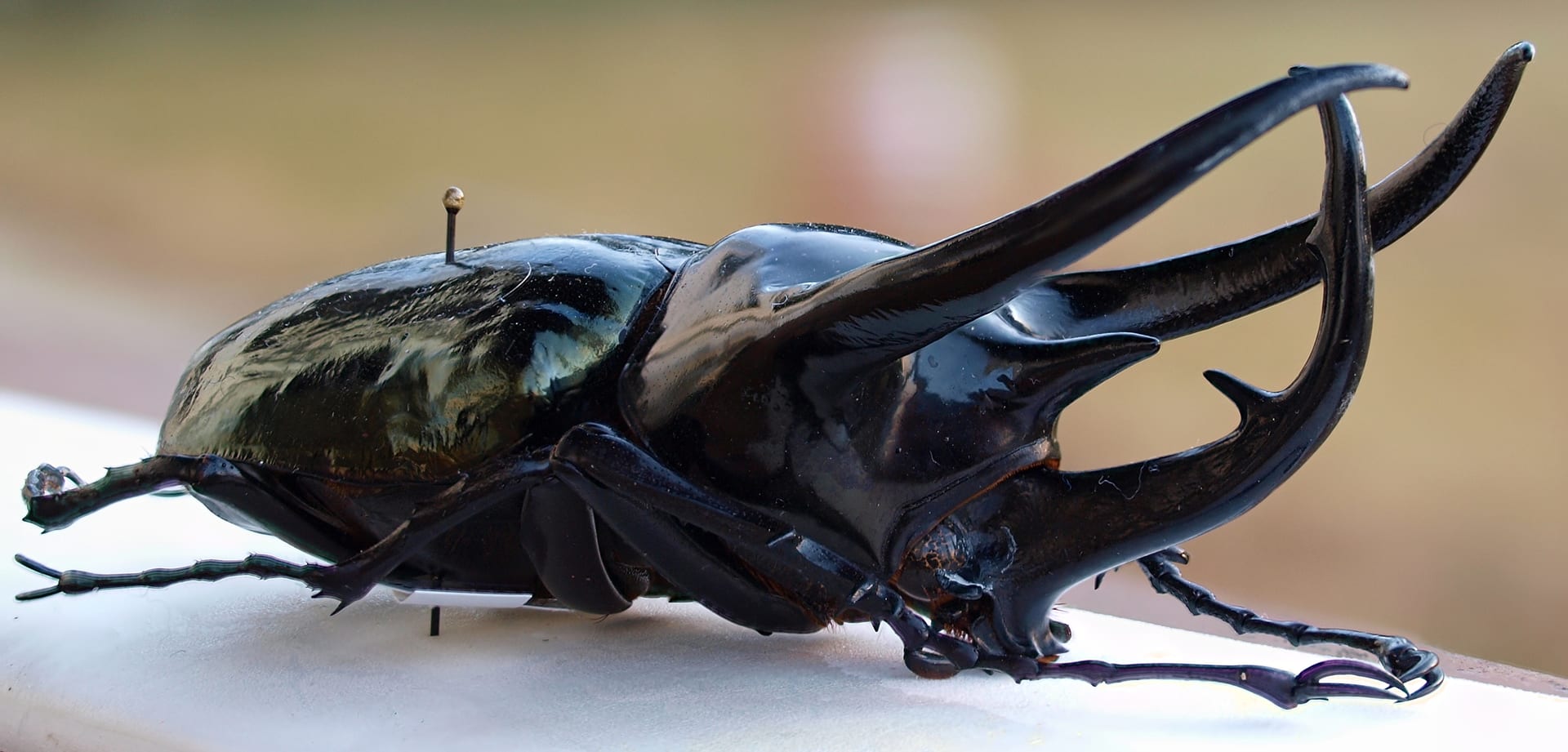
 © JohnSka / CC BY-SA 3.0
Caucasus Beetle (belangeri)
The Caucasus Beetle (belangeri) is a continental subspecies of the Caucasus rhinoceros beetle, found across the Indochinese Peninsula and Langkawi Island. With a head horn, thoracic horn, and tail horn, it ranks among Asia's largest beetles, and its slightly thick, gently curved thoracic horn gives it a strikingly powerful look. Males are extremely aggressive toward rivals, so housing needs careful planning, but that fighting spirit and imposing presence are part of what makes keeping this beetle so rewarding. Because it is sensitive to high heat, it is considered an intermediate-level species, and steady temperature control is the key to a long, healthy life.
View Caucasus Beetle (belangeri) encyclopedia →0% commission on your first sales!Register by September 30, 2026 and your first 2 sales are commission-free!
Breeder Wanted!
List on BreederDirect and sell directly to customers nationwide!
6 Transparency Standards You Can Trust
When listing Insects, Breeders disclose the following. We guarantee transparency on growth stage and breeding unit.
- Life Stage Clarity
- Generation Info
- Real Photos
- Breeding Unit
- Country of Origin
- Body Length (mm)
Browse all 296 breeds
Verified breeders wanted for Insects
Breeders are signing up now ahead of launch. Subscribe to be notified when new listings go live.
Getting alerts is free with a member account. When new listings match your saved search, we'll notify you by email and in-app.
Browse other categories
Verified breeders (preview)
Caucasus Beetle (belangeri) key facts
- Care level
- Intermediate
- Lifespan
- Adults 3-4 months, larvae 1-2 years
- Size
- Males 55-127mm, females 55-65mm
- Temperature
- 20〜25℃
- Diet
- Beetle jelly (adults), fermented flake soil (larvae)
- Temperature & Humidity
- A highland species that dislikes heat: Wikipedia recommends 15-20C, specialist shops about 25C. Keep at 20-25C under air conditioning in summer.
- Breeding & Egg-laying
- Adults mature about two months after eclosion; expect 50-80 eggs per set in well-fermented substrate. Eggs handled early often fail, so collect as larvae.
- Cohabitation
- Aggressive enough to kill rival males and even unreceptive females. House both sexes singly and pair only briefly under observation.
- Lifespan & Rearing Period
- Adults live 3-4 months in captivity and larvae 1-2 years. About two months after activity begins, ageing signs such as tarsal loss appear.
- Health & Notes
- The rear edge of the pronotum is blade-like and can cut a finger; larvae also bite hard. Imports are traded with a species-name certificate.
About Caucasus Beetle (belangeri)
A continental subspecies of the Caucasus beetle native to Indochina and Langkawi Island, among Asia's largest three-horned beetles with a thick, gently curved thoracic horn. Highly aggressive and heat-sensitive, it suits intermediate-level keepers.
7 things to know before welcoming a Caucasus Beetle (belangeri)
1Temperature Control Is Key
Because this beetle is sensitive to high temperatures, keep a close eye on heat levels during summer. House it in a cool indoor spot with air conditioning, away from direct sunlight.
2Three Impressive Horns
With a head horn, thoracic horn, and tail horn, this is one of Asia's largest beetles, with the largest males reaching up to 127mm. The thoracic horn is notably thick and gently curved.
3Extremely Aggressive Males
Males are extremely territorial and will fight fiercely if housed together, often resulting in serious injury. As a rule, adult males should be kept individually.
4Larval Stage Lasts 1-2 Years
The larval stage typically lasts one to two years before pupation. Duration varies with substrate conditions and temperature, so patience is needed while raising them.
5Short Adult Lifespan
Adult lifespan is relatively short, around three to four months. Given this limited window, plan ahead for observation or breeding activities.
6Intermediate Difficulty Level
Because of its temperature sensitivity and aggressive temperament, this species suits intermediate keepers best. First-time beetle keepers should learn the basics of care beforehand.
7Prepare Before Bringing One Home
Prepare a rearing case with a thermometer and a cool space that can handle hot weather in advance. Since males need solitary housing, have separate cases and a climbing log ready.
Frequently asked questions about Caucasus Beetle (belangeri)
- Q.How is this different from the standard Caucasus beetle?
- A.This is a continental subspecies of the Caucasus beetle, found across the Indochinese Peninsula and Langkawi Island. It is known for a somewhat thick, gently curved thoracic horn.
- Q.Can multiple males be kept together?
- A.Males are extremely aggressive toward each other, and housing them together can lead to serious injury. It's generally recommended to keep each male in its own separate enclosure.
- Q.How large does this beetle grow?
- A.Males typically reach 55 to 127mm, while females reach around 55 to 65mm. Individual variation is significant, and rearing conditions can also affect final size.
- Q.How long does it take from larva to adult?
- A.The larval stage lasts around one to two years, while the adult lifespan is about three to four months. The larval period is long compared to the relatively short adult stage.
- Q.It's said to be aggressive — is it dangerous to handle?
- A.Its aggression is mainly directed at other males of the same species, and it does not typically attack people on its own. Still, its strong mandibles and horns mean you should handle it carefully to avoid getting pinched.
Useful tools for Caucasus Beetle (belangeri) care
Learn more about Caucasus Beetle (belangeri) in the encyclopedia
View Caucasus Beetle (belangeri) encyclopedia entry →
Care difficulty, lifespan, size and diet — all basics covered.
Caucasus Beetle (belangeri) related articles
Complete Guide to Raising Caucasus Beetles | Lifespan, Larval Period, Temperature, and Breeding Tips
Complete guide to raising Caucasus beetles. Learn lifespan and larval period estimates, adult and larval housing and temperature management, breeding tips, and how they differ from Atlas beetles—a complete guide to raising the world's most powerful beetles.
Imported Beetle Comparison Guide|Breeding and Appeal of Caucasus Beetles, Atlas Beetles, and Giant Beetles
Compare the differences between Caucasus and Atlas beetles (horn protrusions, body color, size, price, larval period) in a table, and explain how to distinguish them and which to choose. Also introduces difficulty levels and larval rearing methods for large imported beetles, including Elephant beetles.
Atlas Beetle Care Guide | How to Raise the Southeast Asian Rhinoceros Beetle with Three Horns
Guide to raising the large Southeast Asian rhinoceros beetle "Atlas Beetle (Chalcosoma atlas)". Explains the differences from Caucasus Beetles, fermented substrate management for larvae, temperature and humidity settings, adult lifespan and tips for activation, and detailed larval management techniques to maximize size.
More in this category
Can't find the one you're looking for?
Post your wishes for free and breeders with matching animals will contact you with introductions.