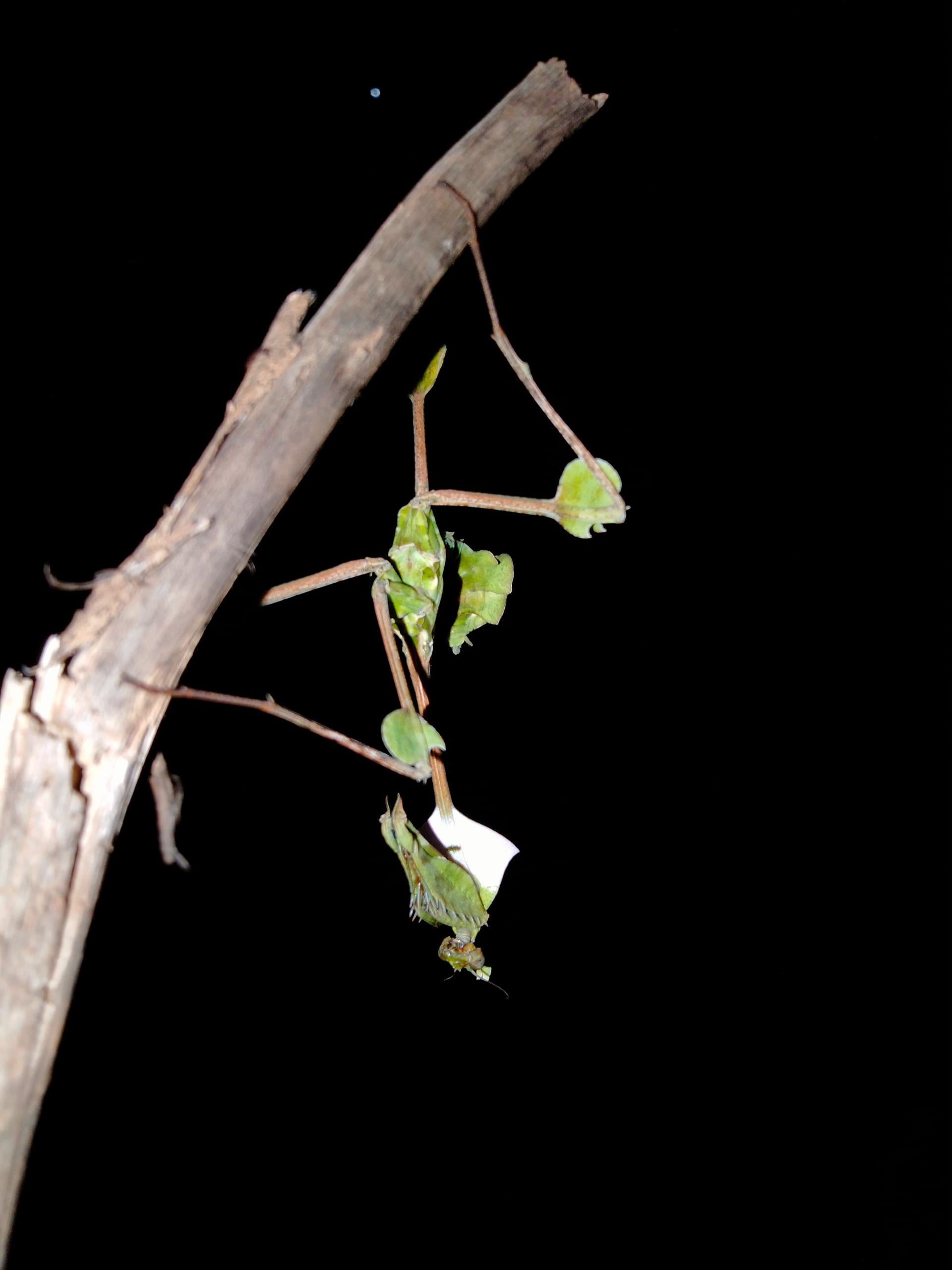
 © Vijayanrajapuram / CC BY-SA 4.0
Wandering Violin Mantis
The Wandering Violin Mantis is a large, slender praying mantis native to India and Sri Lanka, named for the leaf-like flanges along its body that give it a violin-shaped silhouette. Unlike most solitary mantises, it has a famously calm temperament and can often be housed in small groups. That said, it demands high heat around 35°C, dry air, and a diet built around flies, making it a species best suited to experienced insect keepers rather than beginners.
View Wandering Violin Mantis encyclopedia →0% commission on your first sales!Register by September 30, 2026 and your first 2 sales are commission-free!
Breeder Wanted!
List on BreederDirect and sell directly to customers nationwide!
6 Transparency Standards You Can Trust
When listing Insects, Breeders disclose the following. We guarantee transparency on growth stage and breeding unit.
- Life Stage Clarity
- Generation Info
- Real Photos
- Breeding Unit
- Country of Origin
- Body Length (mm)
Browse all 296 breeds
Verified breeders wanted for Insects
Breeders are signing up now ahead of launch. Subscribe to be notified when new listings go live.
Getting alerts is free with a member account. When new listings match your saved search, we'll notify you by email and in-app.
Browse other categories
Verified breeders (preview)
Wandering Violin Mantis key facts
- Care level
- Advanced
- Lifespan
- Adults 3-5 months
- Size
- Females about 10cm, males about 9cm (up to 11cm)
- Temperature
- Diet
- Flying insects only such as flies and moths (fruit flies for nymphs)
- Temperature & Humidity
- 30-40C by day, ideally around 35C, best achieved with a heat bulb; nights may drop to about 20C. Keep humidity low, misting every three days in a mesh cage or once a week in glass.
- Breeding & Egg-laying
- Pairs housed together mate on their own once adult for at least two weeks. A female stores sperm from one mating for all later oothecae. Each holds 30-40 eggs; raise humidity slightly before hatching, which takes 4-7 weeks.
- Cohabitation
- Preferring flying prey and low in aggression, it is one of the few species that can live in groups for life when well fed. Cannibalism can still occur when hungry, especially among young nymphs.
- Lifespan & Rearing Period
- Sensitive to temperature, food quality and humidity, it is hard even to rear to adulthood.
- Health & Notes
- Feed only live flies (fruit flies for nymphs, house flies later) every day or two. Tweezer-feeding crickets is said to cause ill health, and too many flies in the cage stress the mantis.
About Wandering Violin Mantis
The Wandering Violin Mantis is a large, docile mantis from India and Sri Lanka with leaf-like body flanges. It can be kept in groups but needs high heat, dry air, and fly feeding, making it best suited to experienced keepers.
7 things to know before welcoming a Wandering Violin Mantis
1Maintain Heat and Dryness
Wandering Violin Mantises thrive in hot, dry conditions around 35°C. Use a heat panel to keep temperatures stable, and choose a well-ventilated enclosure to prevent excess humidity.
2Feed It Flies
Its preferred food is flies, such as fruit flies or houseflies, rather than crickets or other common feeder insects. Set up a reliable supply of flies before bringing one home, since consistent feeding is essential.
3Choose a Tall Enclosure
With its long, slender, leaf-like body, this mantis does best in a tall enclosure furnished with branches or plants for climbing. Make sure there is enough vertical space for it to hang safely while molting.
4Communal Housing Is Possible
Unusually for a mantis, this species has a calm temperament and can sometimes be housed together in groups. Even so, the risk of cannibalism is not zero, so monitor feeding levels and individual condition closely.
5Handle Molting with Care
Being large-bodied yet delicate, this mantis is prone to fatal molting accidents. Provide ample height, secure climbing surfaces, and stable temperature and humidity, and avoid disturbing the enclosure during a molt.
6Use a Dry Substrate
Since this species dislikes excess moisture, a quick-drying substrate is better than a highly water-retentive one like sphagnum moss. Mist lightly to leave a few droplets on the body and leaves, and avoid letting the substrate stay damp.
7Best Suited to Experienced Keepers
Because it requires sustained high heat, low humidity, and a steady supply of flies, this mantis suits keepers who already have some insect-keeping experience. Before bringing one home, set up a thermometer, hygrometer, and feeding supplies in advance.
Frequently asked questions about Wandering Violin Mantis
- Q.Can beginners keep a Wandering Violin Mantis?
- A.This species requires stable high heat and a steady supply of flies, so it is generally considered suited to experienced keepers rather than beginners. It is a good idea to gain some basic insect-keeping experience first.
- Q.Can it be housed with other mantises?
- A.This is one of the few mantis species known for a calm temperament that allows communal housing. Still, the risk of cannibalism is not zero, so keep an eye on feeding amounts, group size, and enclosure space.
- Q.Can I feed it crickets instead of flies?
- A.It tends to respond better to flies than to crickets, so flies are typically used as its main food. It is best to set up a reliable way to supply flies before bringing one home.
- Q.How big does it grow?
- A.Adults typically reach about 10 cm for females and 9 cm for males, with some individuals growing up to 11 cm. Because of its slender shape, it needs more vertical space than its length alone might suggest.
- Q.Can I handle it?
- A.Despite its calm nature, its large, delicate body means excessive handling can cause injury or molting problems. It is best to enjoy watching it and keep direct handling to a minimum.
Useful tools for Wandering Violin Mantis care
Learn more about Wandering Violin Mantis in the encyclopedia
View Wandering Violin Mantis encyclopedia entry →
Care difficulty, lifespan, size and diet — all basics covered.
More in this category
Can't find the one you're looking for?
Post your wishes for free and breeders with matching animals will contact you with introductions.