Source: Wikimedia Commons
Wandering Violin Mantis
AdvancedGongylus gongylodes
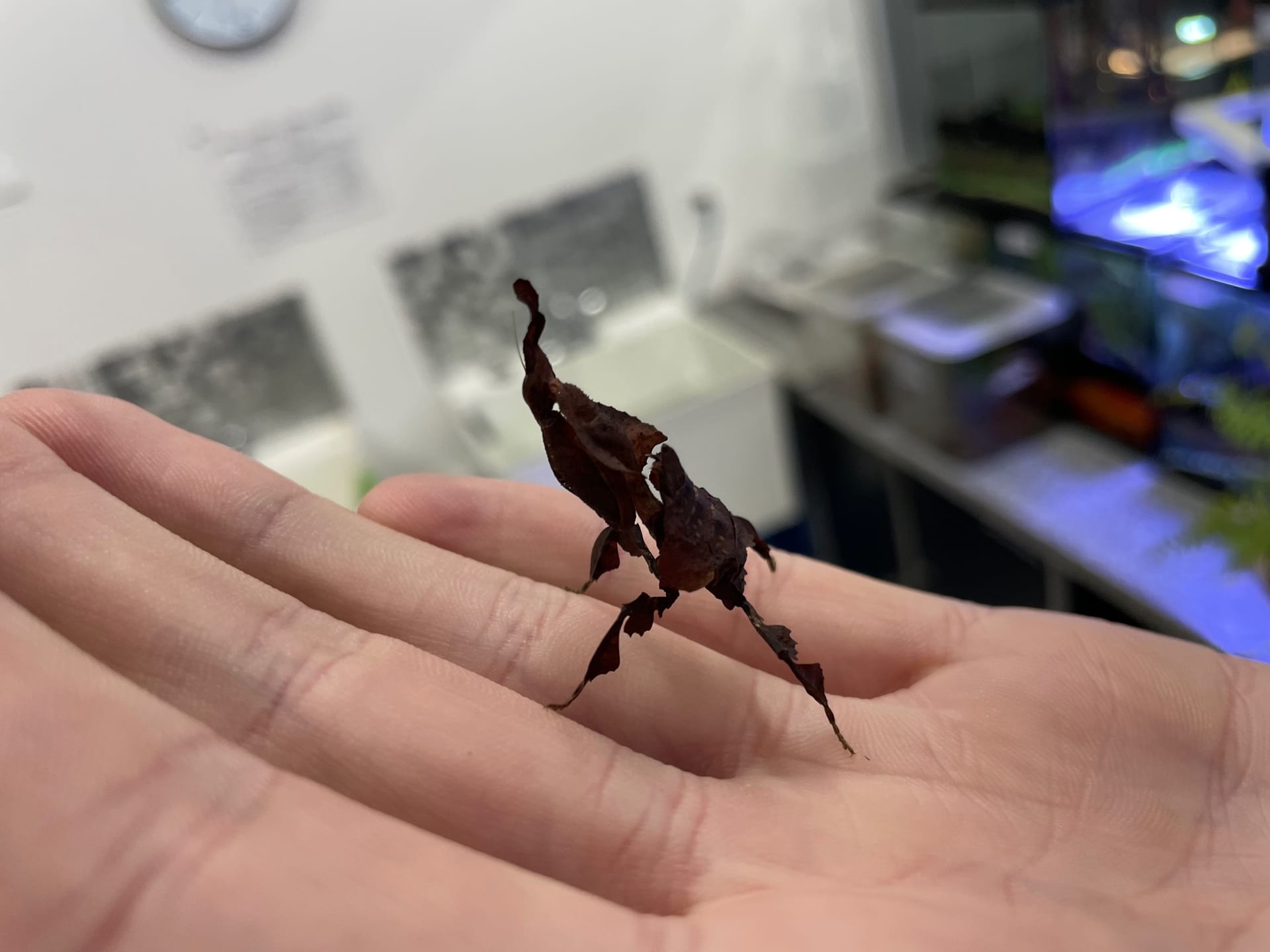
A long, slender large species from India and Sri Lanka named for its violin-like outline with dead-leaf lobes. Gentle enough to keep in groups, but it needs heat around 35C, dry air and a diet of flies, making it demanding.
Difficulty
Advanced
Lifespan
Adults 3-5 months
Size
Females about 10cm, males about 9cm (up to 11cm)
Humidity
60〜80%
Diet
Flying insects only such as flies and moths (fruit flies for nymphs)
About
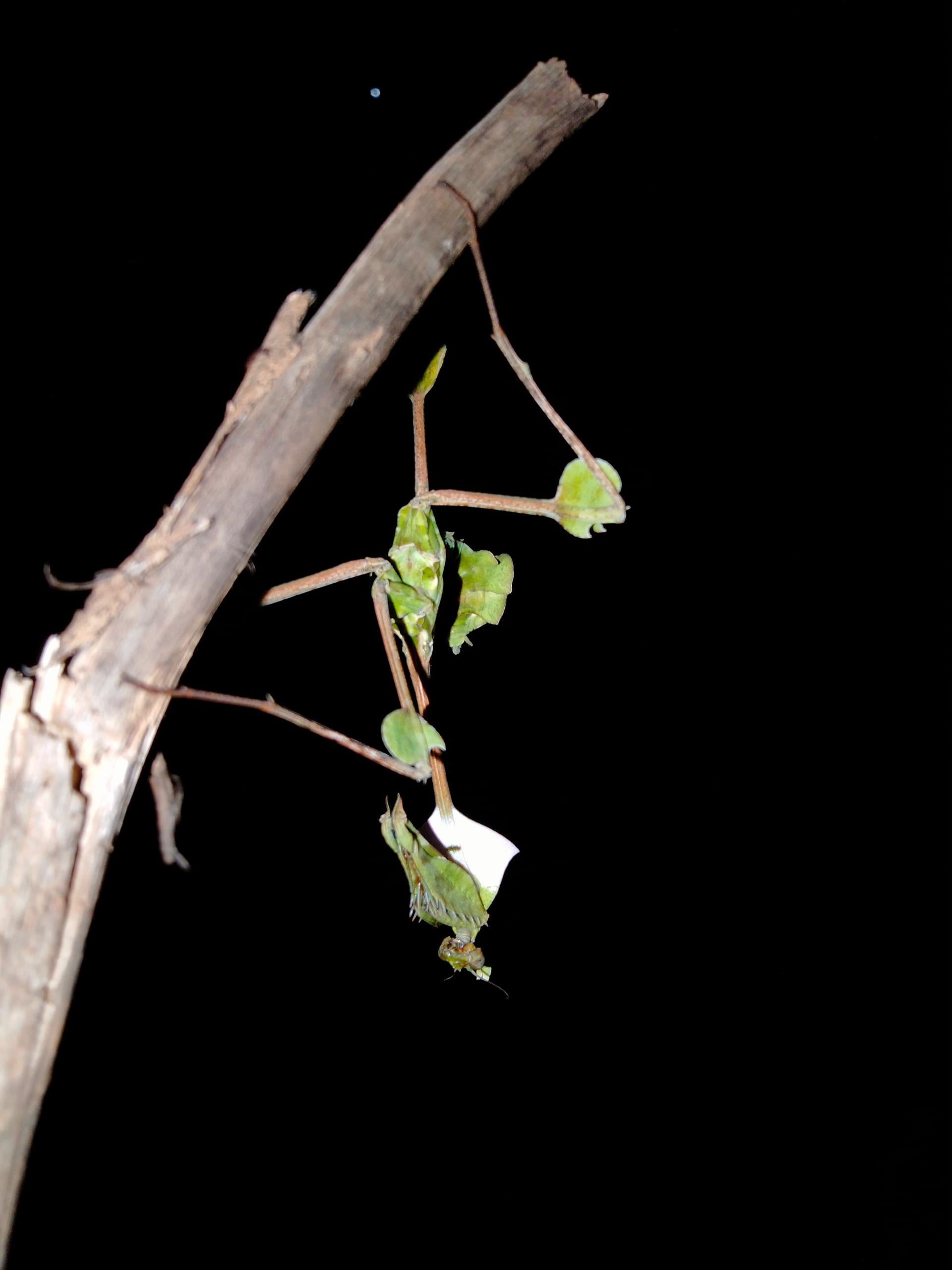
The wandering violin mantis (Gongylus gongylodes) is a large empusid centred on southern India and Sri Lanka, reaching up to 11cm, with adult females about 10cm and males about 9cm. The extremely thin body and legs carry dead-leaf lobes, and with the abdomen as body and the narrow thorax as neck the outline suggests a violin. It is known for swaying back and forth like a twig in the wind, and adults raise the forelegs to show black and pink spots when threatened. It feeds exclusively on flying insects, snatching flies and moths from the air; ground prey such as crickets is said to harm it and should not be offered. Aggression is low, so with ample food it can live in groups for life and breeding is straightforward, yet it is sensitive to temperature, food quality and humidity and hard to rear to adulthood. Heat with a bulb to 30-40C by day (35C ideal) and let it fall to about 20C at night. Keep humidity low, misting every three days in mesh cages or weekly in glass. Adult males have large feathery antennae and can fly. An ootheca holds 30-40 eggs and hatches in four to seven weeks.
Source: Wikipedia (CC BY-SA 4.0)
Lifespan of the Wandering Violin Mantis
The Wandering Violin Mantis lives Adults 3-5 months.
Size of the Wandering Violin Mantis
The Wandering Violin Mantis grows to Females about 10cm, males about 9cm (up to 11cm).
Basic Info
Origin
Southern India and Sri Lanka (also recorded from Myanmar, Thailand and Java)
Lifespan
Adults 3-5 months
Care Specifications
PeacefulGroupBreeding: Moderate
Sources: Keeping Insects - Wandering Violin Mantis / Gongylus gongylodes - Wikipedia (EN)
References & Sources
Edited & verified by: BreederDirect editorial team
The taxonomic, regulatory, and husbandry data on this page are compiled and verified against the authoritative primary sources below.
Taxonomy & Authority
Accepted name: Gongylus gongylodes (Linnaeus, 1758)
Authority databases: GBIF
Nomenclature follows global taxonomic authority databases.
Regulations & Conservation Status
Not CITES-listed
Sources: CITES Appendix (checklist.cites.org)
Regulations may change. Always verify the latest information with the relevant authorities.
Wandering Violin Mantis Listings
Loading latest listingsFind listings for this species