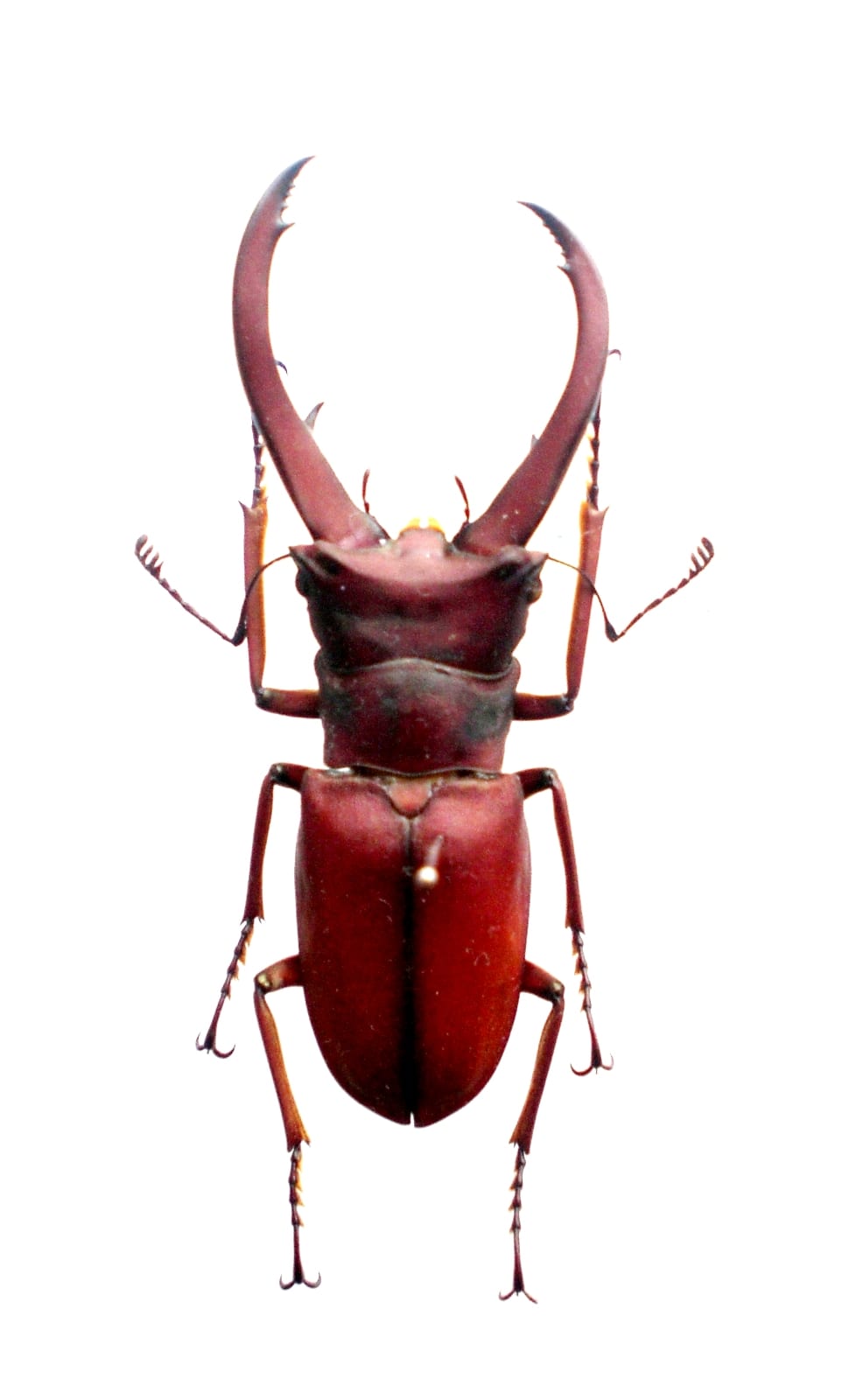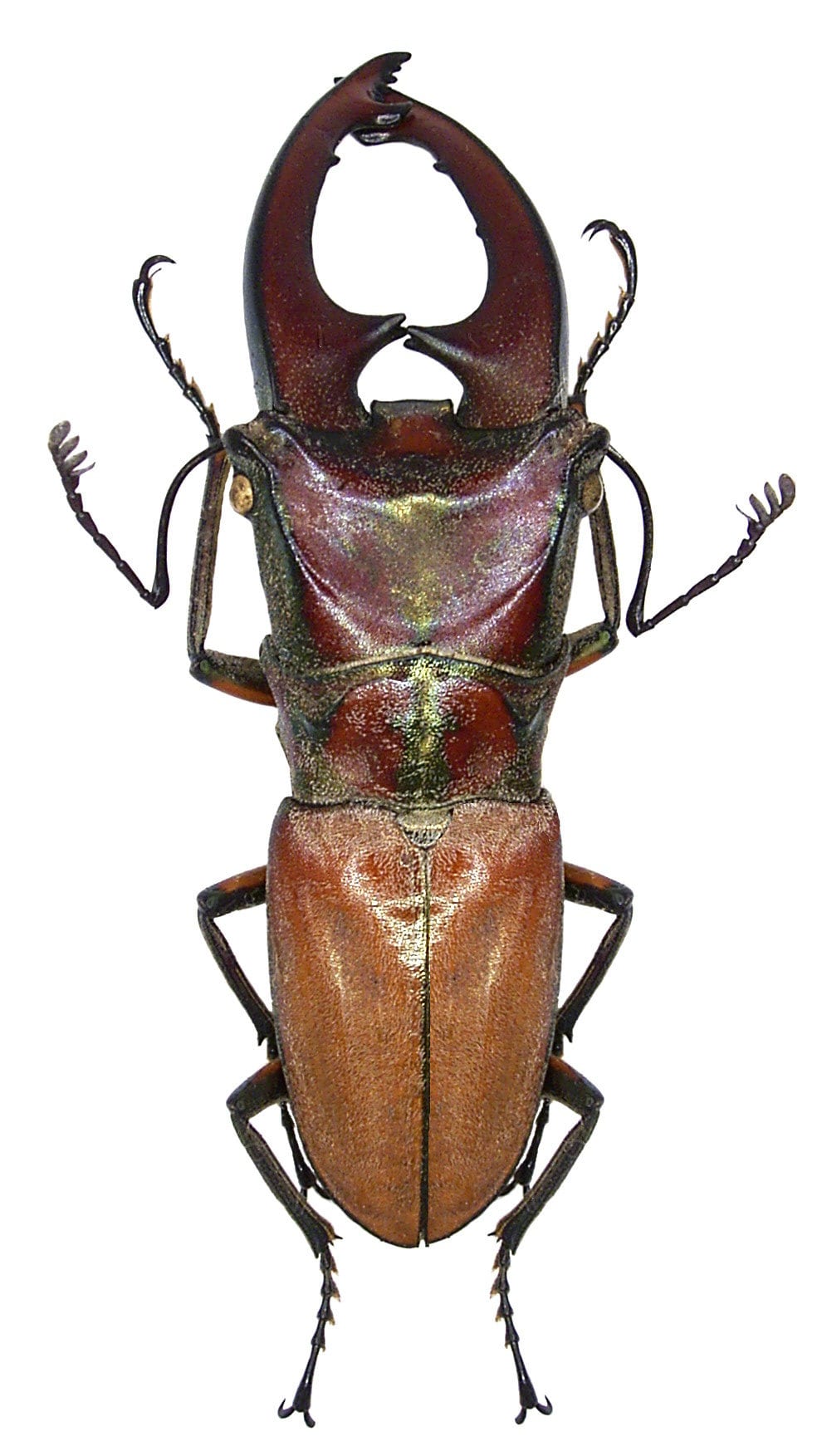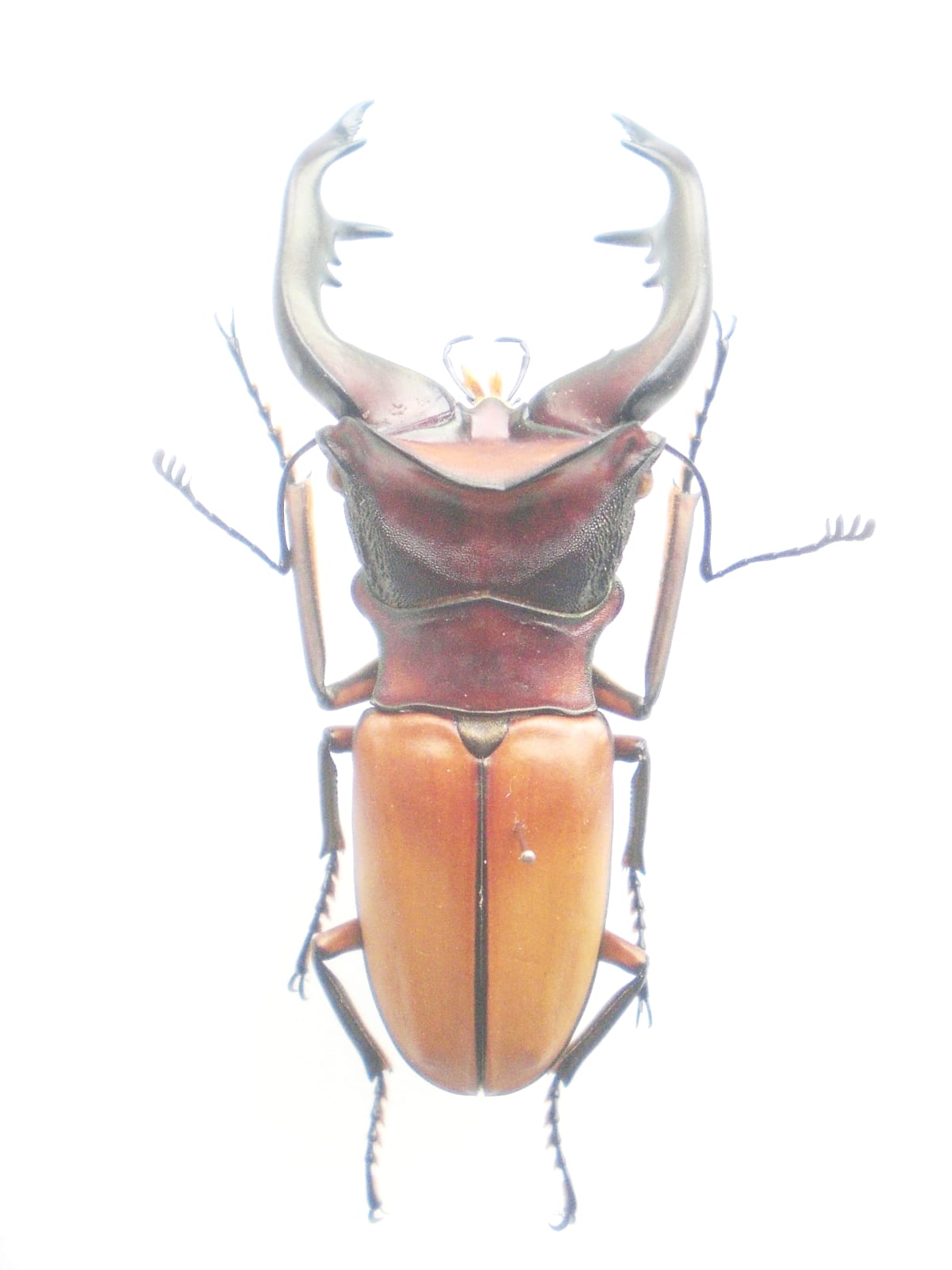
Source: Wikimedia Commons
Alagar's Long-jawed Stag Beetle
AdvancedCyclommatus alagari
A Cyclommatus from the highlands of Palawan in the Philippines. It looks unlike the rest of the genus, recalling a Lucanus or a saw stag instead. It wants cool conditions around 18-24 C and suits experienced keepers.
Difficulty
Advanced
Temperature
18〜24℃
Lifespan
Adults 3-4 months
Size
Males 23.3-74.5 mm (wild record 74.0 mm; the captive record is 69.2 mm) / females 21.0-26.1 mm
Humidity
60〜80%
Diet
Beetle jelly (in the wild it visits flowers of herbaceous plants)
About
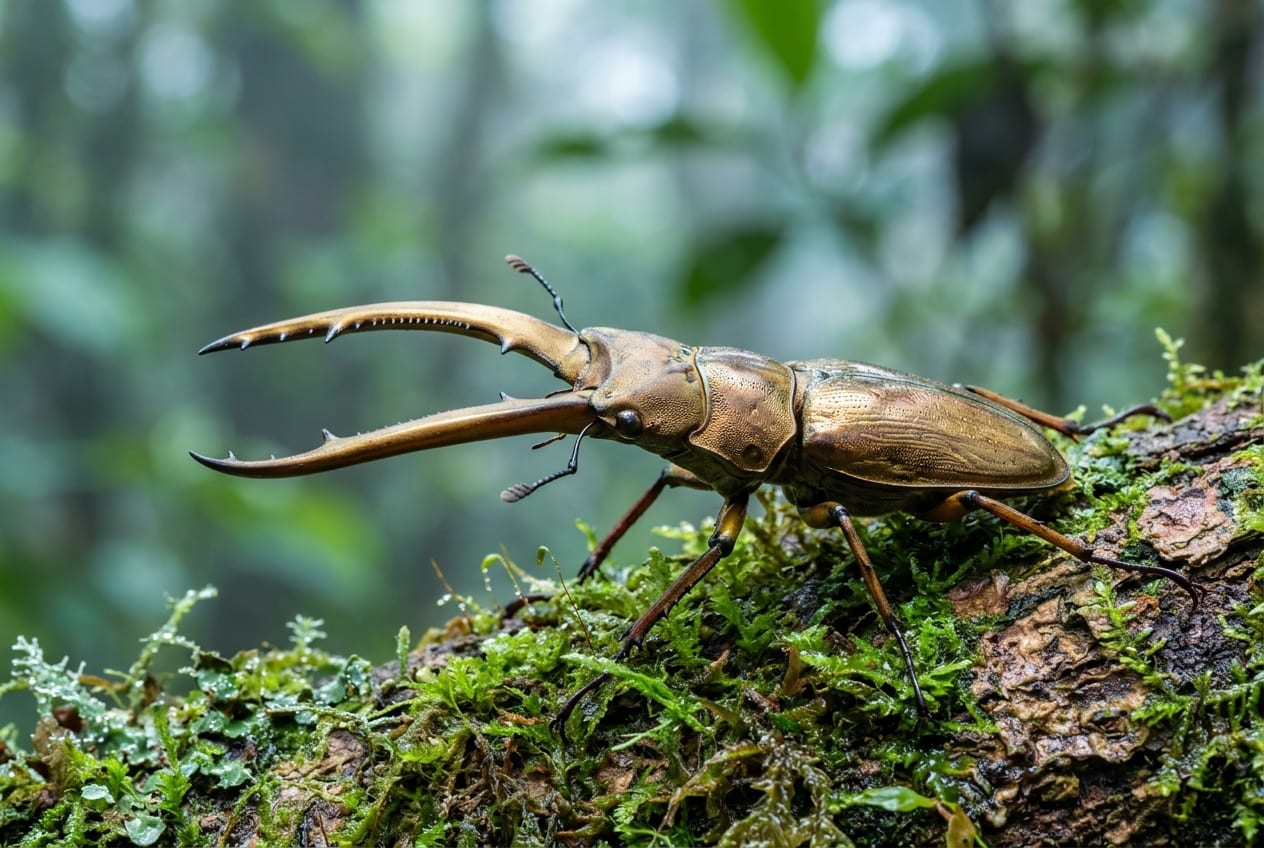
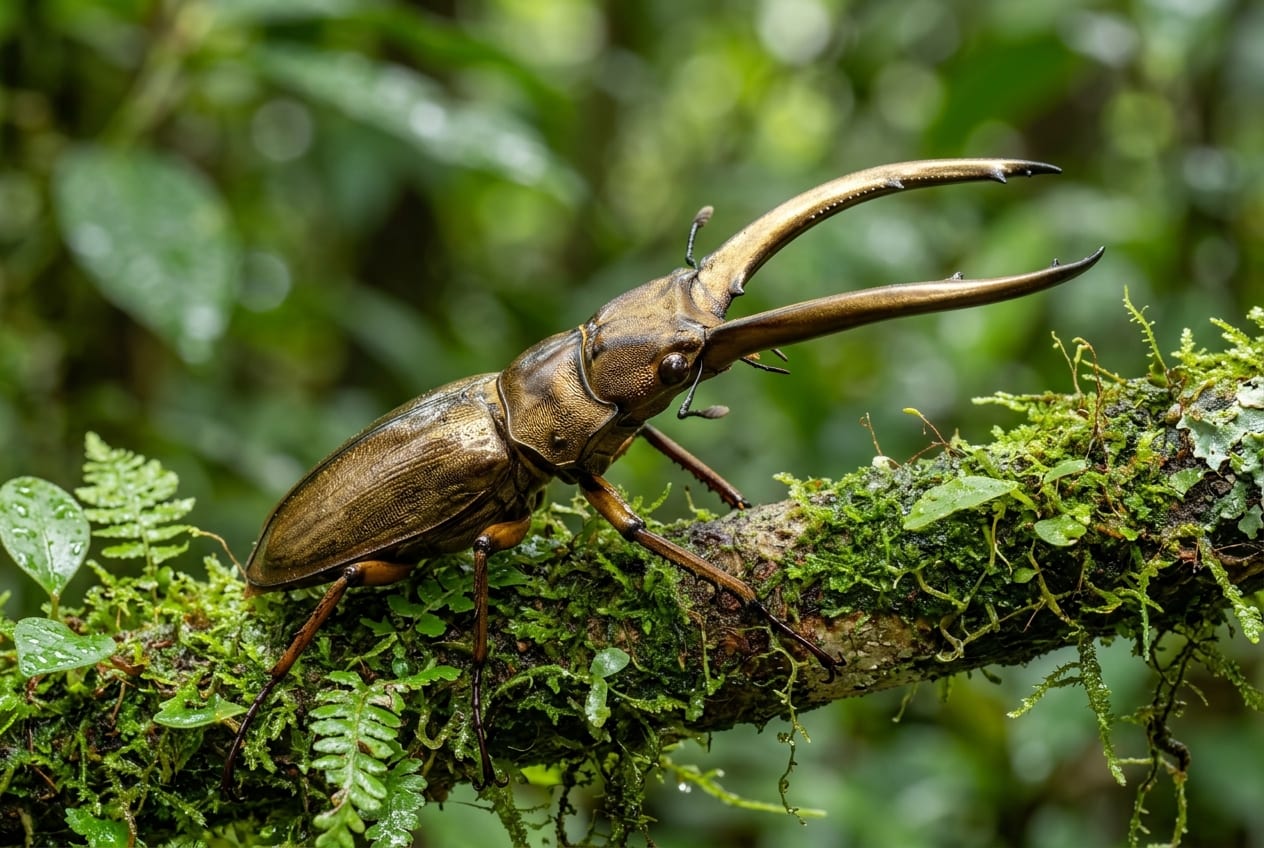
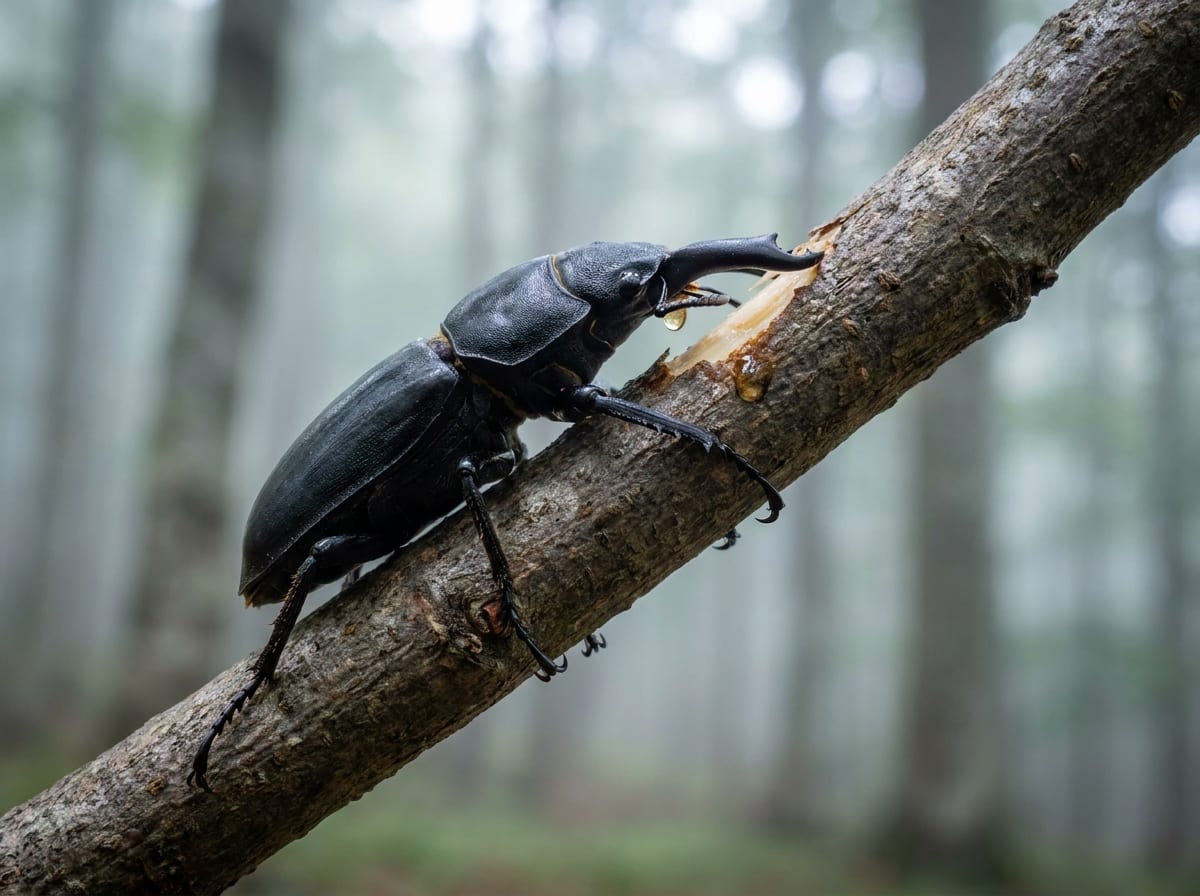
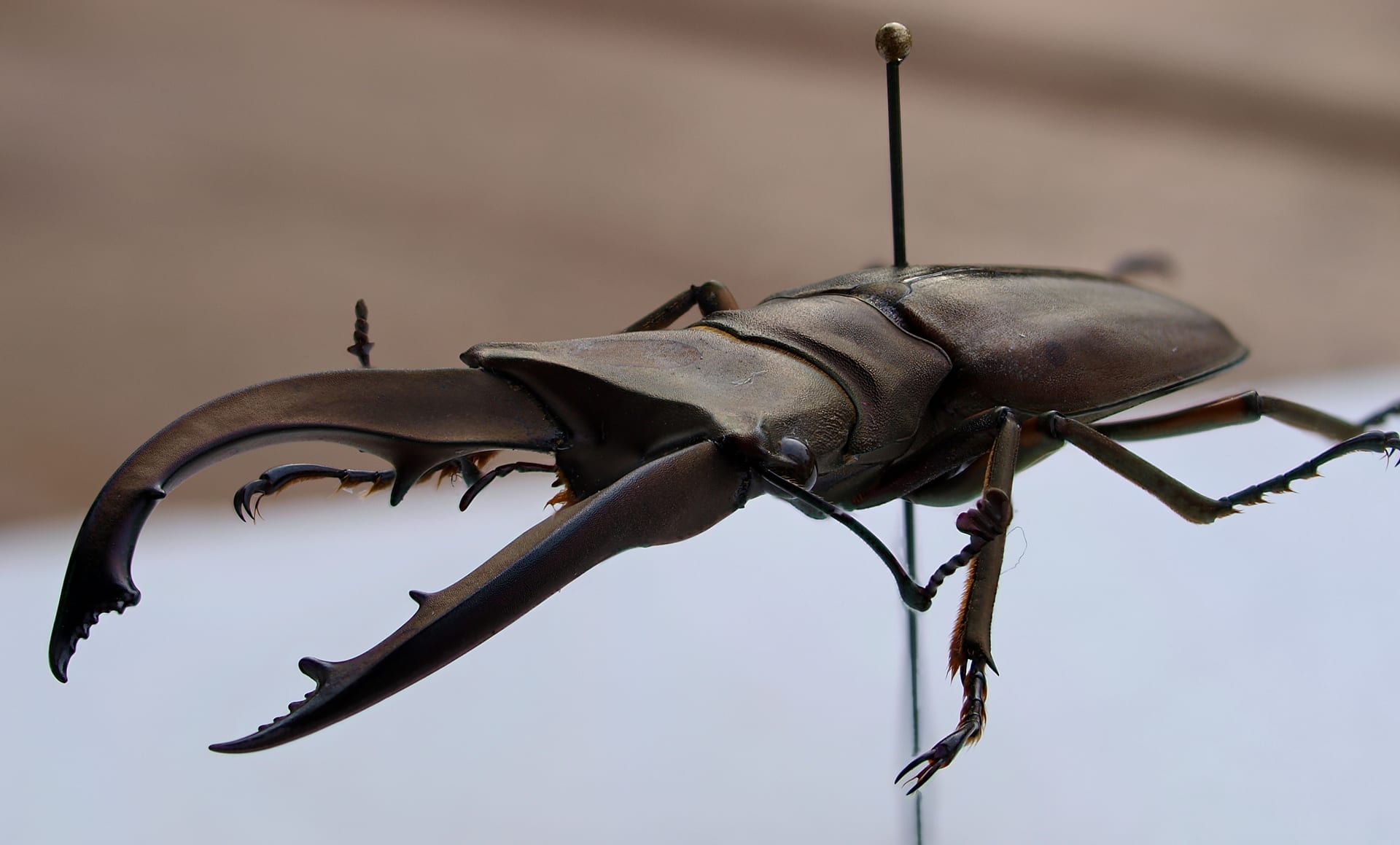
Alagar's long-jawed stag (Cyclommatus alagari) was described in 1968 from Palawan in the Philippines; males run 23.3-74.5 mm and females 21.0-26.1 mm. Unlike most of the genus with their drawn-out mandibles, it recalls a Lucanus or a saw stag, and major males that carry an extra tooth on the first inner tooth are especially prized. It is a cool-loving montane species: keep it at 18-24 C, or 16-18 C to grow it large, and set the egg-laying box at around 16 C with more moisture than usual. Adults live three to four months and mature one to two months after emergence, so pair them once they start feeding. Larvae are usually reared on fully fermented substrate in 800 cc containers and take nine to twelve months. The high-altitude members of Cyclommatus are the difficult ones for both eggs and larvae, and this species is cited as a prime example.
Source: Wikipedia (CC BY-SA 4.0)
Lifespan of the Alagar's Long-jawed Stag Beetle
The Alagar's Long-jawed Stag Beetle lives Adults 3-4 months.
Size of the Alagar's Long-jawed Stag Beetle
The Alagar's Long-jawed Stag Beetle grows to Males 23.3-74.5 mm (wild record 74.0 mm; the captive record is 69.2 mm) / females 21.0-26.1 mm.
Temperature & humidity for the Alagar's Long-jawed Stag Beetle
The ideal temperature for the Alagar's Long-jawed Stag Beetle is 18〜24℃.
Basic Info
Origin
Palawan, the Philippines
Lifespan
Care Specifications
PeacefulSolitaryBreeding: Hard
Sources: stag&rhino - How to keep Cyclommatus alagari (locality, temperature, size, maturation, lifespan, egg-laying set, larval rearing, larval period) / BEETLE SCHOOL - Rearing Cyclommatus (egg-laying set, larval rearing, larval period, adult lifespan, breeding cautions) / Cyclommatus - Wikipedia (JA)
Breeding Records & Localities
Captive record (♂)
69.2 mm
Wild record (♂)
74 mm
Record source: BE-KUWA 2025 edition (Alagar, captive 69.2 mm, 関 将司 2024 / wild 74.0 mm; projected maximum 77 mm. Smallest record 23.3 mm, 今枝良祐 2025; literature minimum 30.3 mm)
Notable localities
Palawan (the Philippines)
A 2022 care write-up put the captive ceiling at around 60 mm, but the FY2025 BE-KUWA list has since certified 69.2 mm, set in 2024.
Generation codes
- WD
- Wild-caught
- WF1
- Offspring of a wild-caught female
- F1〜
- Captive generations (same locality)
- CBF1
- Cross-locality captive-bred (reset)
Sources: BE-KUWA Certified Breeding Records (Mushi-sha, FY2025 edition PDF, JA) / stag&rhino - How to keep Cyclommatus alagari (locality, temperature, size, maturation, lifespan, egg-laying set, larval rearing, larval period)
References & Sources
Edited & verified by: BreederDirect editorial team
The taxonomic, regulatory, and husbandry data on this page are compiled and verified against the authoritative primary sources below.
Primary sources
- Wikipedia
- Ministry of the Environment, Invasive Species Act: "Guidance for Those Importing Live Insects in Scarabaeoidea"
- CITES Appendix (checklist.cites.org)
- stag&rhino - How to keep Cyclommatus alagari (locality, temperature, size, maturation, lifespan, egg-laying set, larval rearing, larval period)
- BEETLE SCHOOL - Rearing Cyclommatus (egg-laying set, larval rearing, larval period, adult lifespan, breeding cautions)
- BE-KUWA Certified Breeding Records (Mushi-sha, FY2025 edition PDF, JA)
- GBIF
Taxonomy & Authority
Accepted name: Cyclommatus alagari de Lisle, 1968
Authority databases: GBIF
Nomenclature follows global taxonomic authority databases.
Regulations & Conservation Status
Not CITES-listed
Plant Protection Act: When importing live specimens of Scarabaeoidea (including rhinoceros beetles, stag beetles, flower beetles, etc.), a species identification certificate issued by the exporting country government agency or equivalent must be attached in accordance with the Invasive Species Act (import ports are limited to Narita, Chubu, Kansai, Fukuoka, and Kagoshima airports). This species itself is not a designated invasive species, and import is possible upon submission of the certificate.
Sources: Ministry of the Environment, Invasive Species Act: "Guidance for Those Importing Live Insects in Scarabaeoidea" / CITES Appendix (checklist.cites.org)
Regulations may change. Always verify the latest information with the relevant authorities.
Alagar's Long-jawed Stag Beetle Listings
Loading latest listingsFind listings for this species