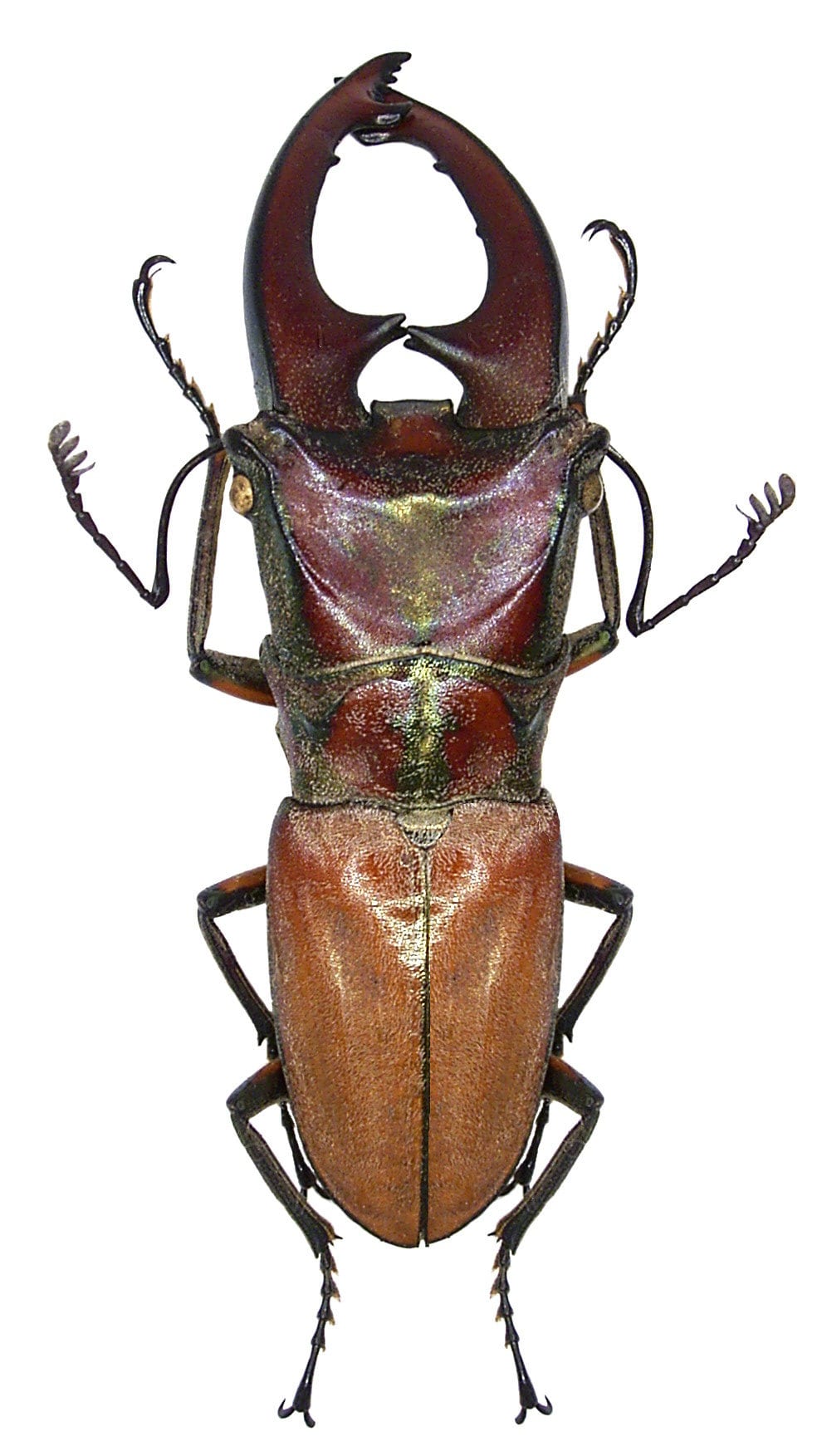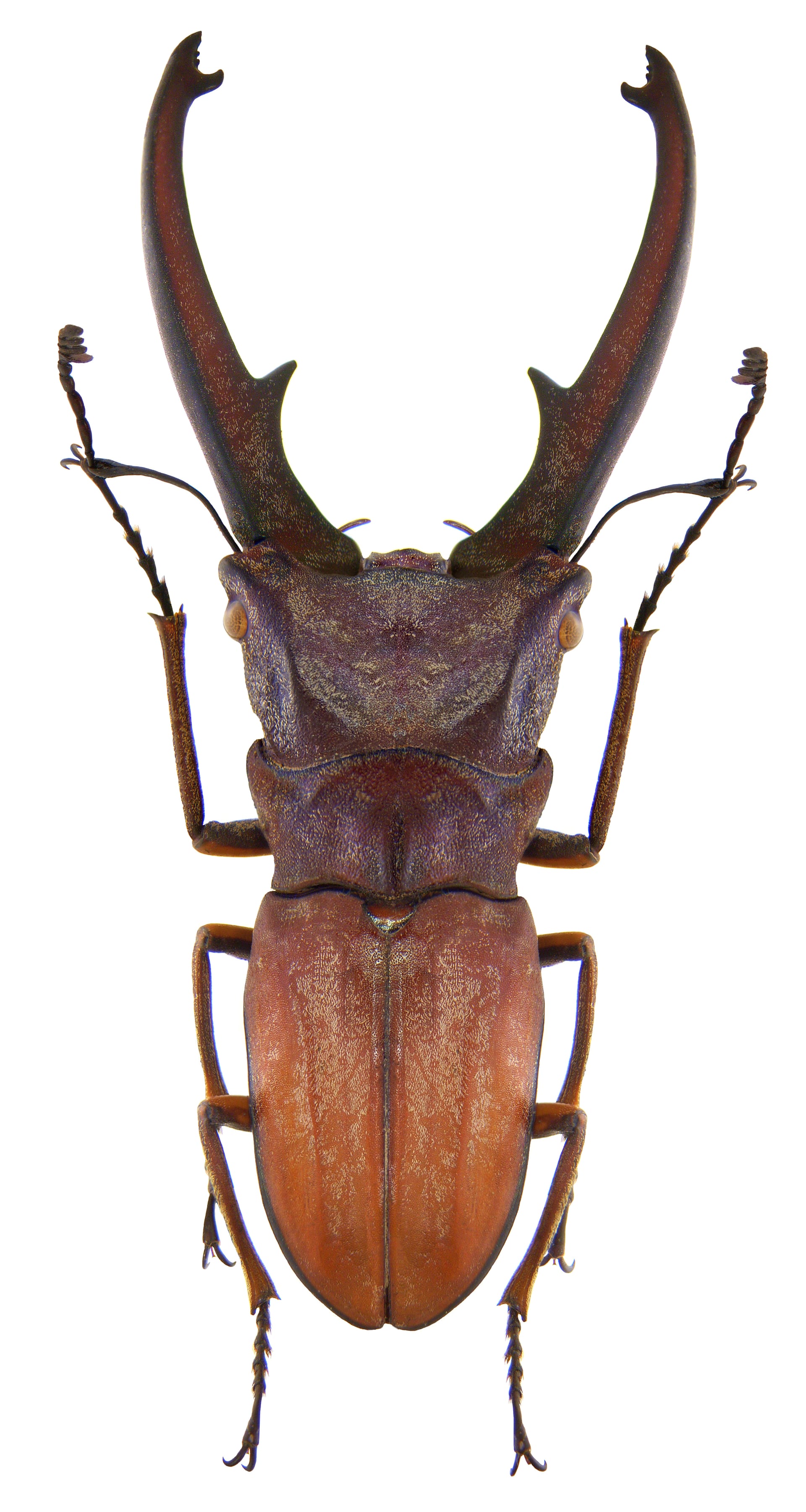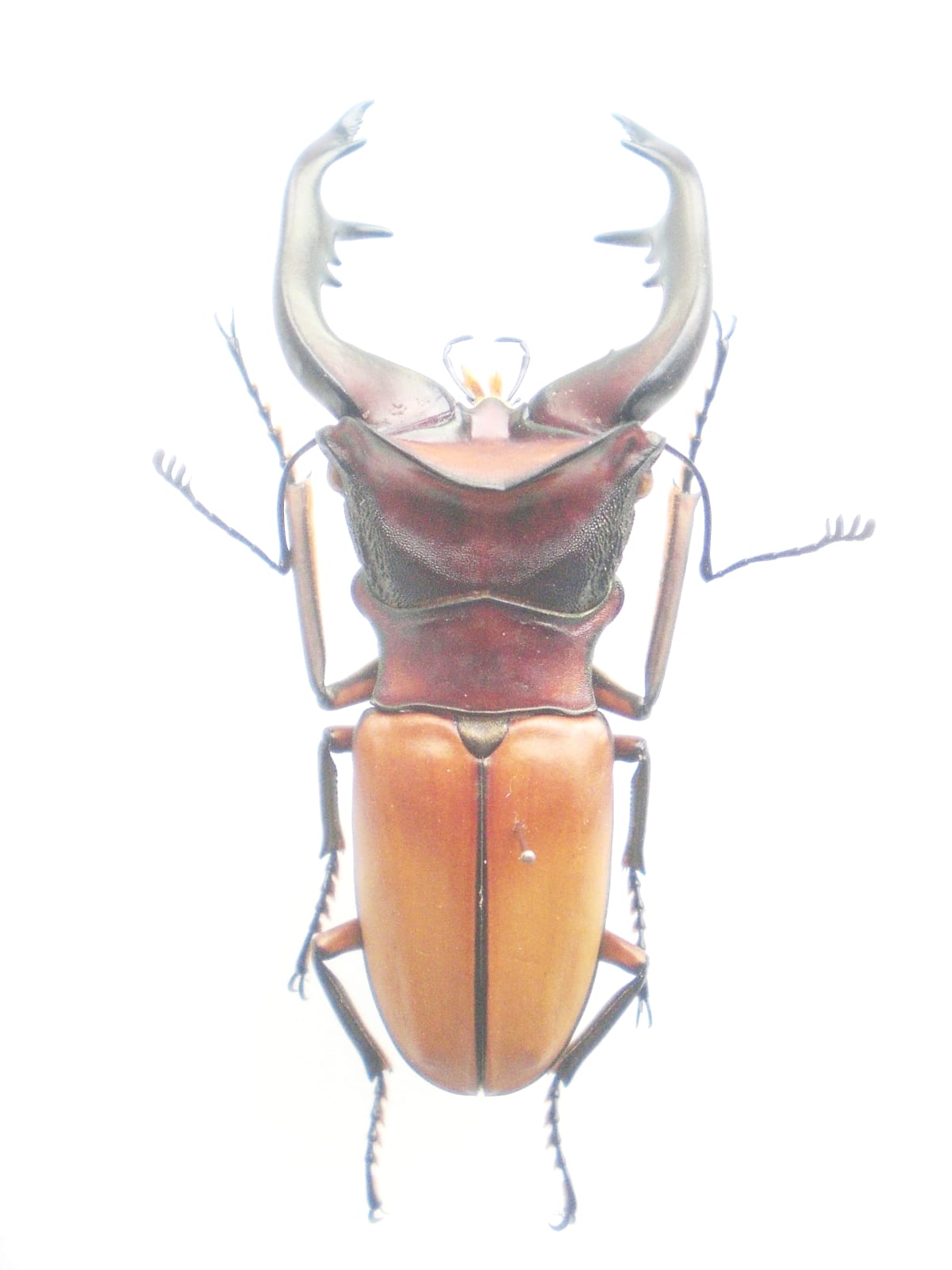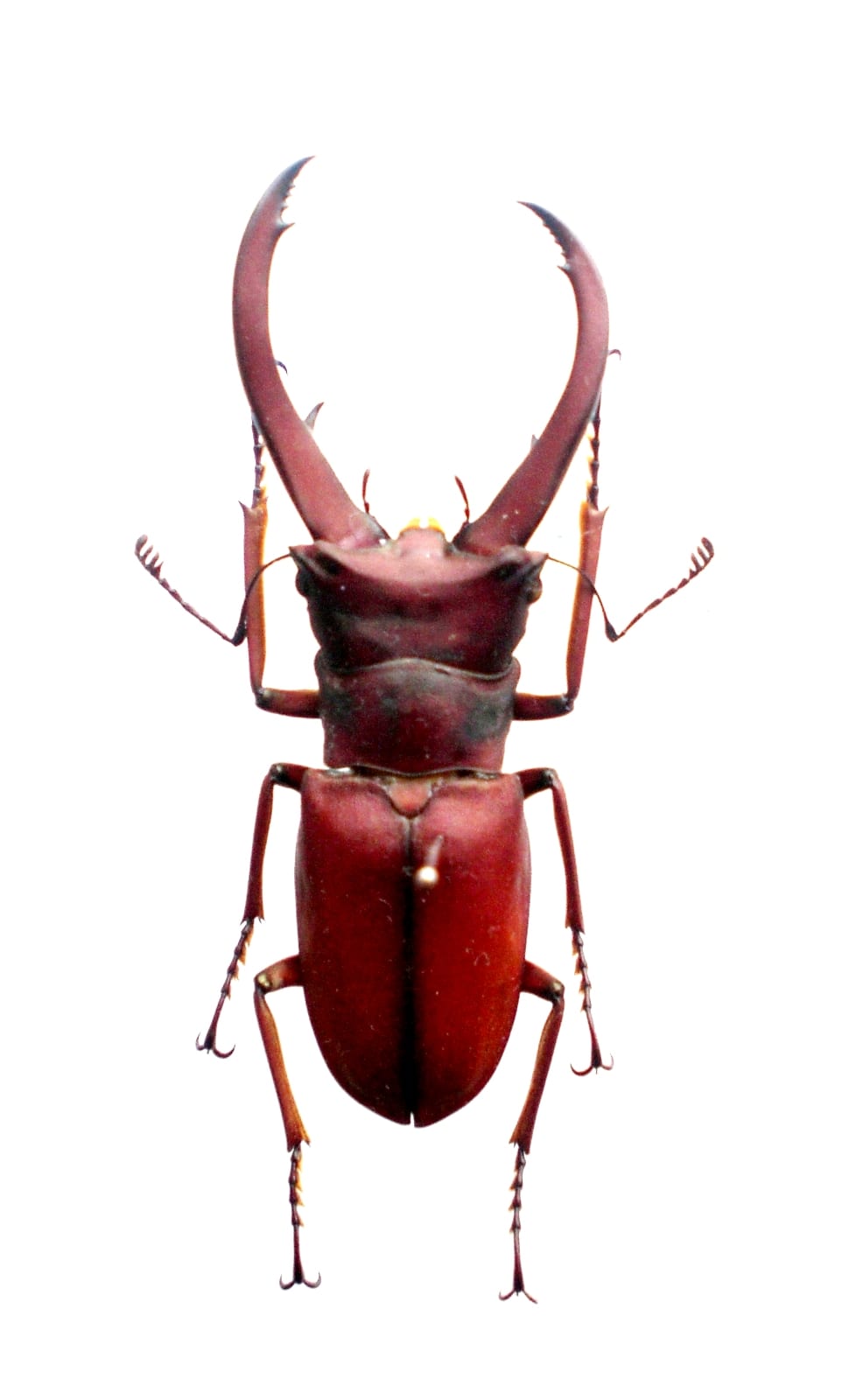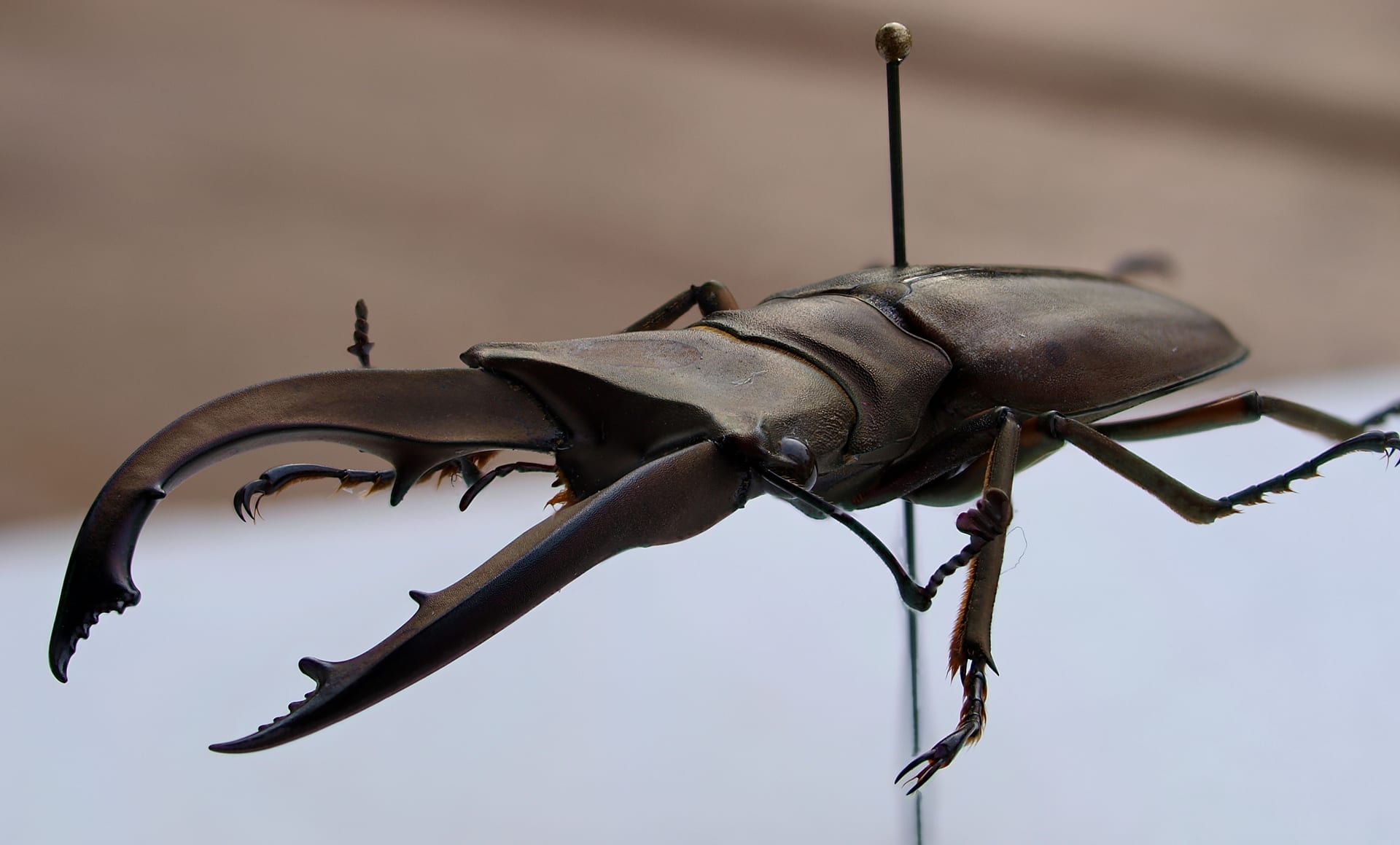
Source: Wikimedia Commons
Eximius Long-jawed Stag Beetle
AdvancedCyclommatus eximius
A medium-sized Cyclommatus from New Guinea, described in 1909, with a wild record of 67.0 mm. Its captive record has stood since 2007, and both trade and breeding information are thin.
Difficulty
Advanced
Temperature
20〜28℃
Lifespan
Adults 4-6 months (typical for the genus)
Size
Males up to 67.0 mm (wild record; the captive record is 63.6 mm)
Humidity
60〜80%
Diet
Beetle jelly (in the wild it visits flowers of herbaceous plants)
About
The eximius long-jawed stag (Cyclommatus eximius) was described in 1909 from New Guinea, and the specimen records in GBIF divide between Indonesian New Guinea and Papua New Guinea. BE-KUWA gives a wild record of 67.0 mm, a captive record of 63.6 mm and a projected maximum of 72 mm, making it a medium-sized member of the genus. The captive record has stood since 2007, and the species reaches the trade far less often than the imperator or pulchellus of the same island. Care follows the genus: a firmly packed set with a soft log buried in fine fermented substrate. Cyclommatus above all dislike condensation inside the box, so keep it cool and well ventilated. Larvae do not take to fungus bottles and are grown in containers of firmly packed fermented substrate.
Source: Wikipedia (CC BY-SA 4.0)
Lifespan of the Eximius Long-jawed Stag Beetle
The Eximius Long-jawed Stag Beetle lives Adults 4-6 months (typical for the genus).
Size of the Eximius Long-jawed Stag Beetle
The Eximius Long-jawed Stag Beetle grows to Males up to 67.0 mm (wild record; the captive record is 63.6 mm).
Basic Info
Origin
New Guinea (Indonesian New Guinea and Papua New Guinea)
Lifespan
Adults 4-6 months (typical for the genus)
Size
Males up to 67.0 mm (wild record; the captive record is 63.6 mm)
Temperature
Care Specifications
Breeding Records & Localities
Captive record (♂)
63.6 mm
Wild record (♂)
67 mm
Record source: BE-KUWA 2025 edition (Eximius, captive 63.6 mm, 上野浩樹 2007 / wild 67.0 mm; projected maximum 72 mm)
Notable localities
Indonesian New GuineaPapua New Guinea
The captive record dates from 2007 and has not been updated. BE-KUWA carries no smallest-specimen record for this species.
Generation codes
- WD
- Wild-caught
- WF1
- Offspring of a wild-caught female
- F1〜
- Captive generations (same locality)
- CBF1
- Cross-locality captive-bred (reset)
Sources: BE-KUWA Certified Breeding Records (Mushi-sha, FY2025 edition PDF, JA) / GBIF Backbone Taxonomy - Cyclommatus eximius Möllenkamp, 1909
References & Sources
Edited & verified by: BreederDirect editorial team
The taxonomic, regulatory, and husbandry data on this page are compiled and verified against the authoritative primary sources below.
Primary sources
- Wikipedia
- Ministry of the Environment, Invasive Species Act: "Guidance for Those Importing Live Insects in Scarabaeoidea"
- CITES Appendix (checklist.cites.org)
- BEETLE SCHOOL - Rearing Cyclommatus (egg-laying set, larval rearing, larval period, adult lifespan, breeding cautions)
- GBIF Backbone Taxonomy - Cyclommatus eximius Möllenkamp, 1909
- BE-KUWA Certified Breeding Records (Mushi-sha, FY2025 edition PDF, JA)
Taxonomy & Authority
Accepted name: Cyclommatus eximius Möllenkamp, 1909
Authority databases: GBIF
Nomenclature follows global taxonomic authority databases.
Regulations & Conservation Status
Not CITES-listed
Plant Protection Act: When importing live specimens of Scarabaeoidea (including rhinoceros beetles, stag beetles, flower beetles, etc.), a species identification certificate issued by the exporting country government agency or equivalent must be attached in accordance with the Invasive Species Act (import ports are limited to Narita, Chubu, Kansai, Fukuoka, and Kagoshima airports). This species itself is not a designated invasive species, and import is possible upon submission of the certificate.
Sources: Ministry of the Environment, Invasive Species Act: "Guidance for Those Importing Live Insects in Scarabaeoidea" / CITES Appendix (checklist.cites.org)
Regulations may change. Always verify the latest information with the relevant authorities.
Eximius Long-jawed Stag Beetle Listings
Loading latest listingsFind listings for this species