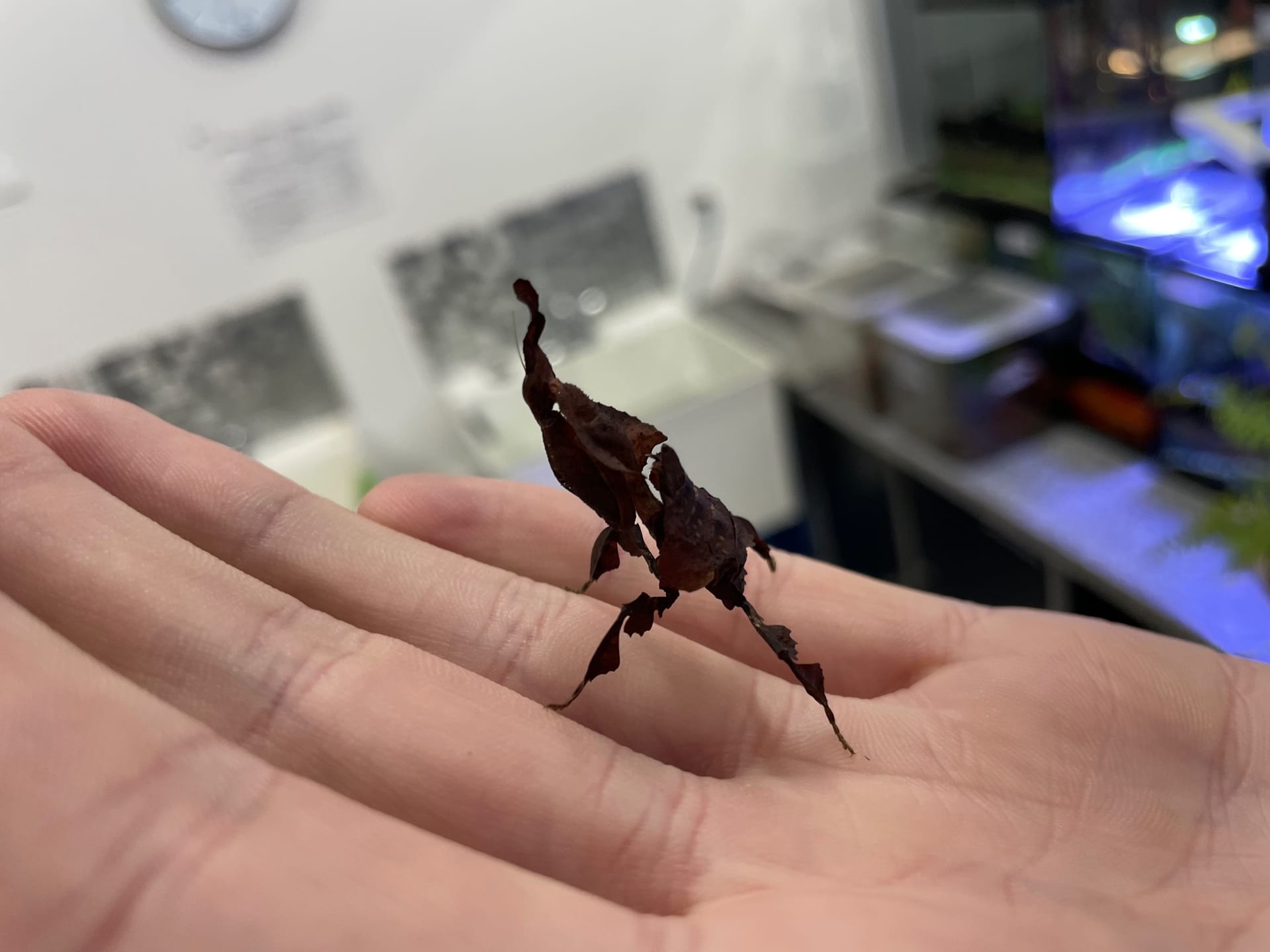
Source: Wikimedia Commons
Ghost Mantis
BeginnerPhyllocrania paradoxa
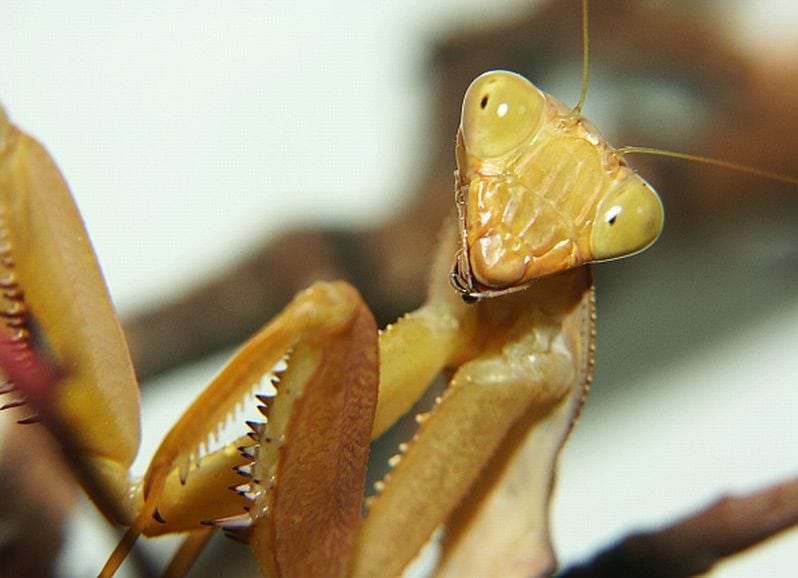
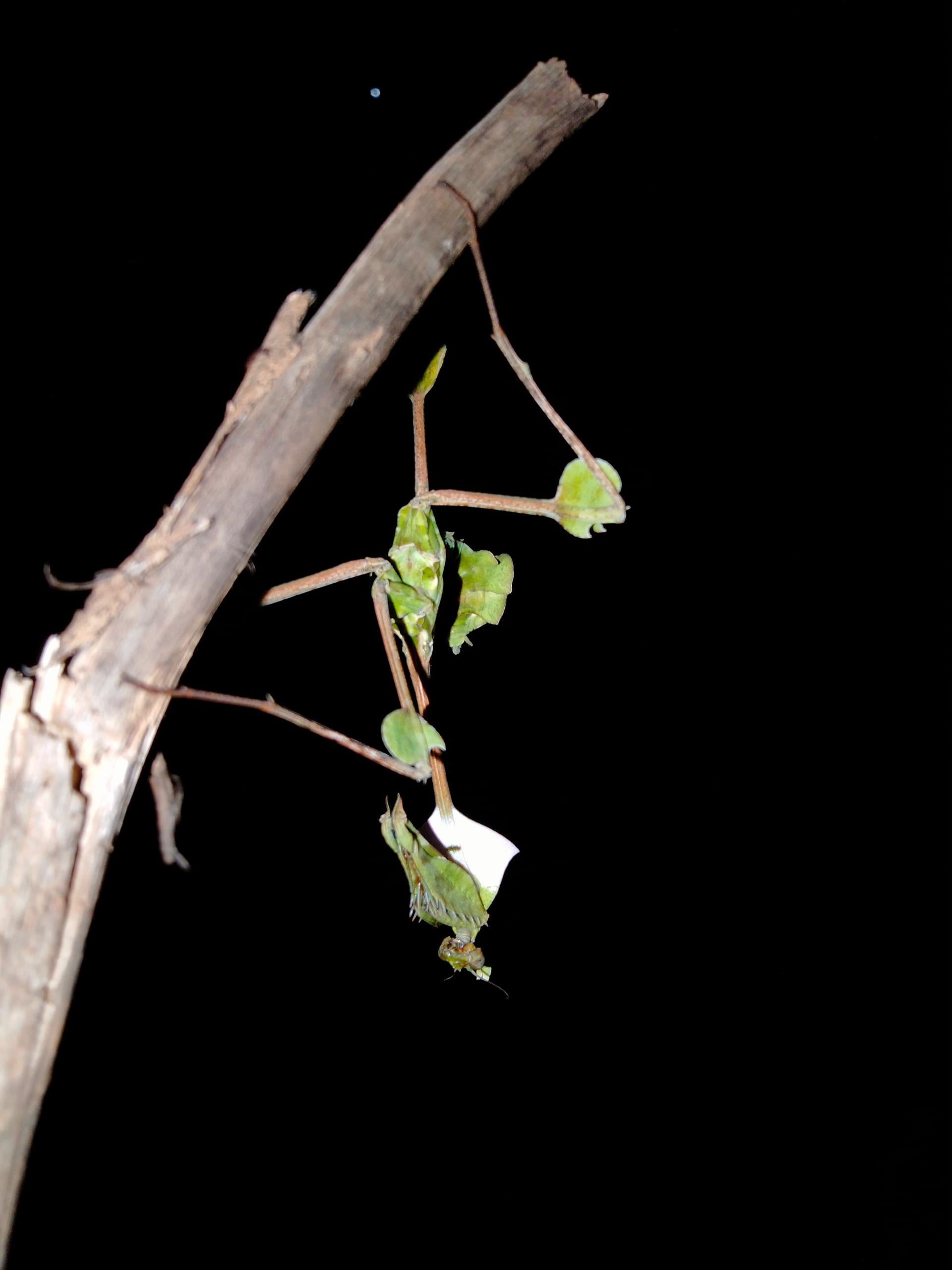
A small species of about 5cm from much of Africa and Madagascar. Its dead-leaf body and head crest are distinctive; it is calm and rarely cannibalistic, so it can be kept in groups. Easy to keep and a standard beginner species.
Difficulty
Beginner
Temperature
26℃
Lifespan
Adults 4-6 months
Size
About 4.5-5cm
Humidity
60〜90%
Diet
Mainly flies, plus small crickets and grasshoppers (fruit flies for nymphs)
About
The ghost mantis (Phyllocrania paradoxa) is a small hymenopodid, 45-50mm long, found in dry bushland across much of Africa from Angola to South Africa, Kenya and Madagascar. An elongated head crest, a flattened extended prothorax, leaf-like lobes on the legs and pigment shading that reads as leaf creases on the wings make it resemble a dry dead leaf. Colour ranges from almost black to greenish grey and changes with each moult depending on light and humidity. First and second instar nymphs are black ant mimics, and large nymphs and adult females play dead when threatened. A quiet sit-and-wait predator that prefers flying prey, it is far less cannibalistic than other mantises, so several can share a cage if food is never short. Males mature after six moults and females after seven, and an ootheca yields up to 36 nymphs. Easy care and steady supply have made it the standard beginner exotic mantis.
Source: Wikipedia (CC BY-SA 4.0)
Lifespan of the Ghost Mantis
The Ghost Mantis lives Adults 4-6 months.
Size of the Ghost Mantis
The Ghost Mantis grows to About 4.5-5cm.
Temperature & humidity for the Ghost Mantis
The ideal temperature for the Ghost Mantis is 26℃. Ideal humidity is 60〜90%.
Keep at around 26C with humidity of 60-90%, misting about five times a week.
Basic Info
Origin
Much of continental Africa (Angola, Ghana, Kenya, Tanzania, South Africa and others) and Madagascar
Care Specifications
PeacefulGroup
Sources: Keeping Insects - Ghost mantis / Phyllocrania paradoxa - Wikipedia (EN)
References & Sources
Edited & verified by: BreederDirect editorial team
The taxonomic, regulatory, and husbandry data on this page are compiled and verified against the authoritative primary sources below.
Taxonomy & Authority
Accepted name: Phyllocrania paradoxa Burmeister, 1838
Authority databases: GBIF
Nomenclature follows global taxonomic authority databases.
Regulations & Conservation Status
Not CITES-listed
Sources: CITES Appendix (checklist.cites.org)
Regulations may change. Always verify the latest information with the relevant authorities.
Ghost Mantis Listings
Loading latest listingsFind listings for this species