Source: Wikimedia Commons
African Mantis (lineola)
BeginnerSphodromantis lineola
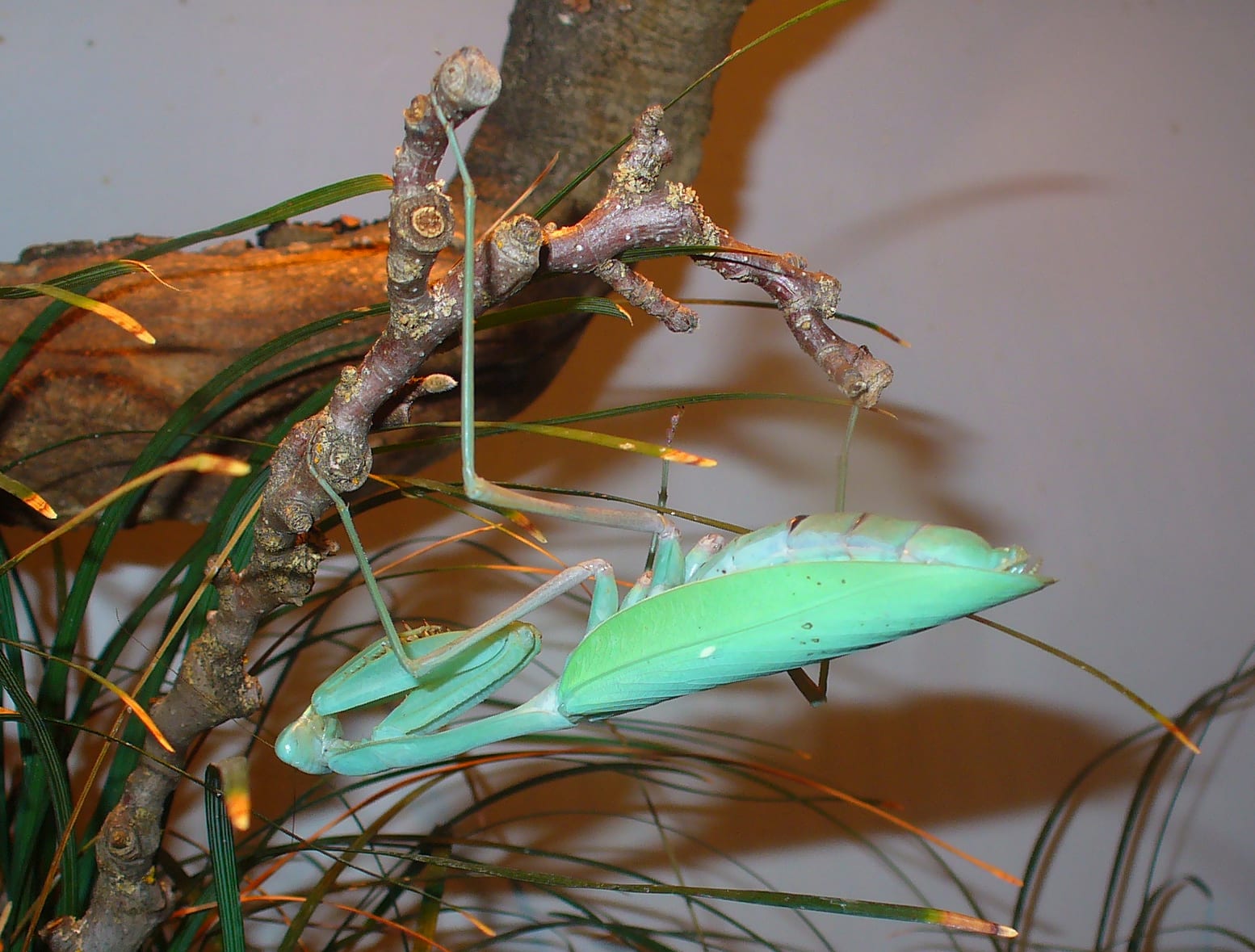
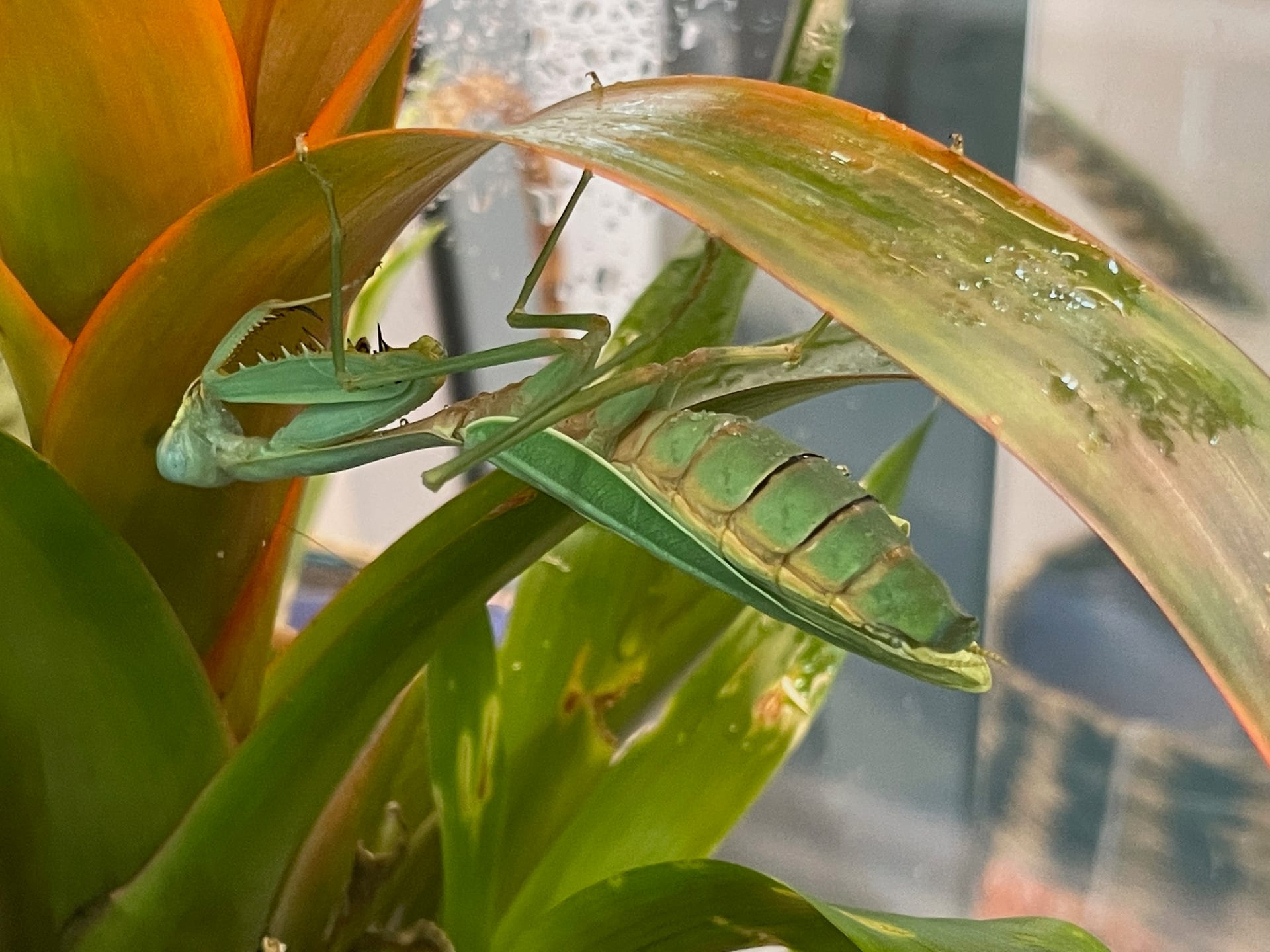
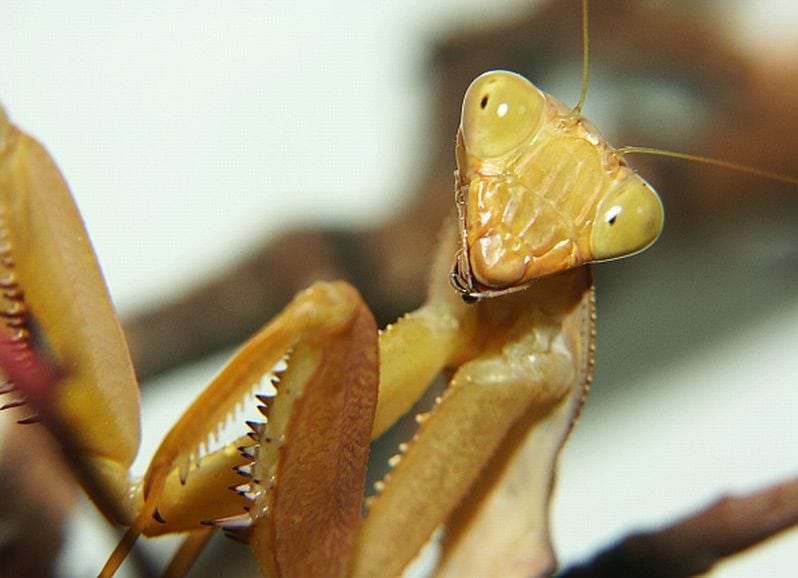
A large, fierce mantis from sub-Saharan Africa. Females reach about 8cm; usually green, with brown forms that may have purple eyes. Easy to keep and unfussy about food, it is also a model insect in vision research.
Difficulty
Beginner
Temperature
25℃
Lifespan
Adults 3-6 months
Size
Females about 8cm, males 6-7cm
Humidity
50〜60%
Diet
Crickets, locusts, flies and similar (fruit flies for nymphs)
About
The African mantis (Sphodromantis lineola) is a large mantid widespread in sub-Saharan Africa. It is usually green, but beige and brown forms occur and brown individuals may show purple compound eyes. It is told from the related S. baccettii by the absence of blue-black spots on the forearms. Females are about 8cm with wings reaching the end of the abdomen; males are 6-7cm, slimmer, with wings slightly longer than the body, and both carry a yellowish spot on the wings. A fierce hunter that chases prey once spotted, the female handles very large food. In threat it raises the wings and swings the forelegs sideways to show eyespots. Keep at about 25C, 22-30C being acceptable, with nights above 17C. Strongly cannibalistic, it is housed singly from the fourth instar. Mating is possible 2-4 weeks after the final moult: pair with a well-fed female and remove the male as soon as the hours-long mating ends. It is one of the most studied mantises in motion detection and stereo vision research and the species in which a mantis sex pheromone was first indicated.
Source: Wikipedia (CC BY-SA 4.0)
Lifespan of the African Mantis (lineola)
The African Mantis (lineola) lives Adults 3-6 months.
Size of the African Mantis (lineola)
The African Mantis (lineola) grows to Females about 8cm, males 6-7cm.
Temperature & humidity for the African Mantis (lineola)
The ideal temperature for the African Mantis (lineola) is 25℃. Ideal humidity is 50〜60%.
Humidity of 50-60% suffices, misting about twice a week for drinking.
Basic Info
Care Specifications
AggressiveSolitary
Sources: Keeping Insects - African Mantis / Sphodromantis lineola - Wikipedia (EN)
References & Sources
Edited & verified by: BreederDirect editorial team
The taxonomic, regulatory, and husbandry data on this page are compiled and verified against the authoritative primary sources below.
Taxonomy & Authority
Accepted name: Sphodromantis lineola Burmeister, 1838
Authority databases: GBIF
Nomenclature follows global taxonomic authority databases.
Regulations & Conservation Status
Not CITES-listed
Sources: CITES Appendix (checklist.cites.org)
Regulations may change. Always verify the latest information with the relevant authorities.
African Mantis (lineola) Listings
Loading latest listingsFind listings for this species