Source: Wikimedia Commons
Giant Rainforest Mantis
BeginnerHierodula majuscula
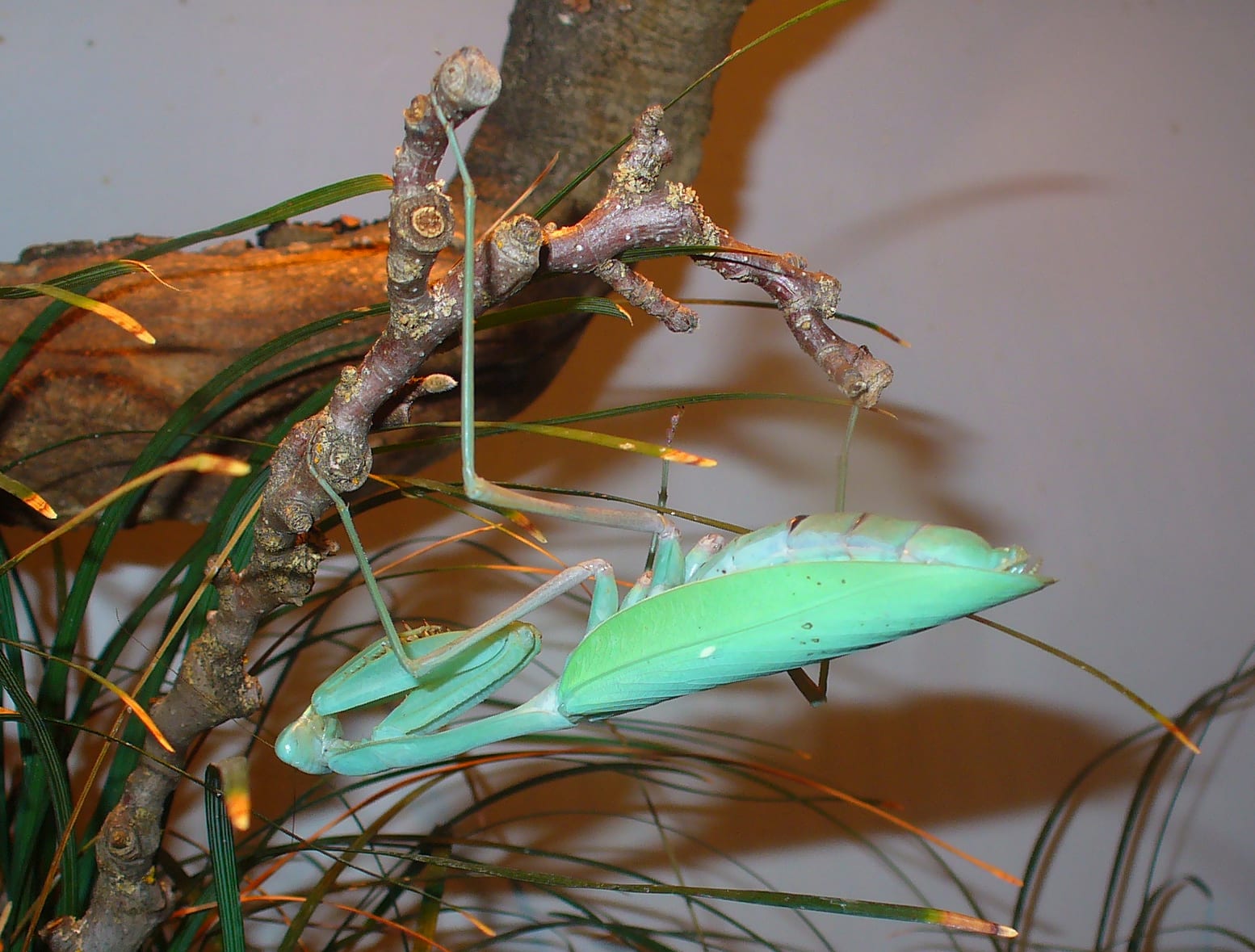
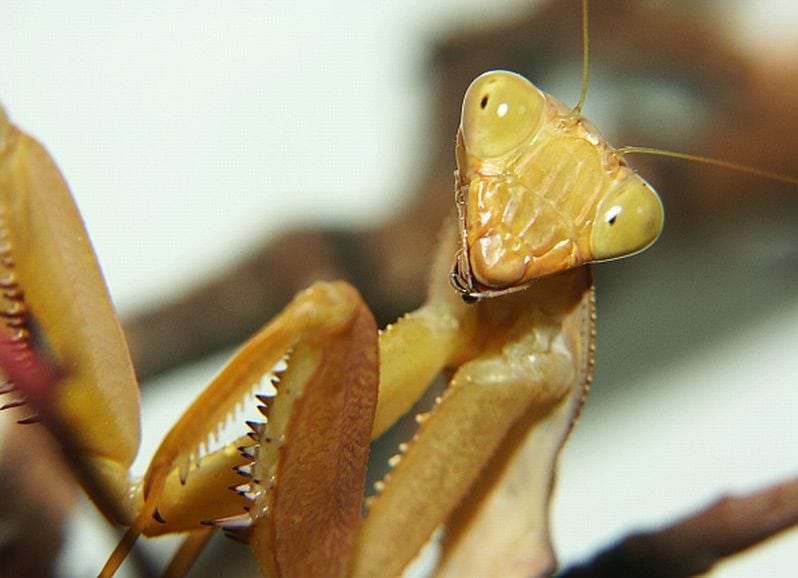
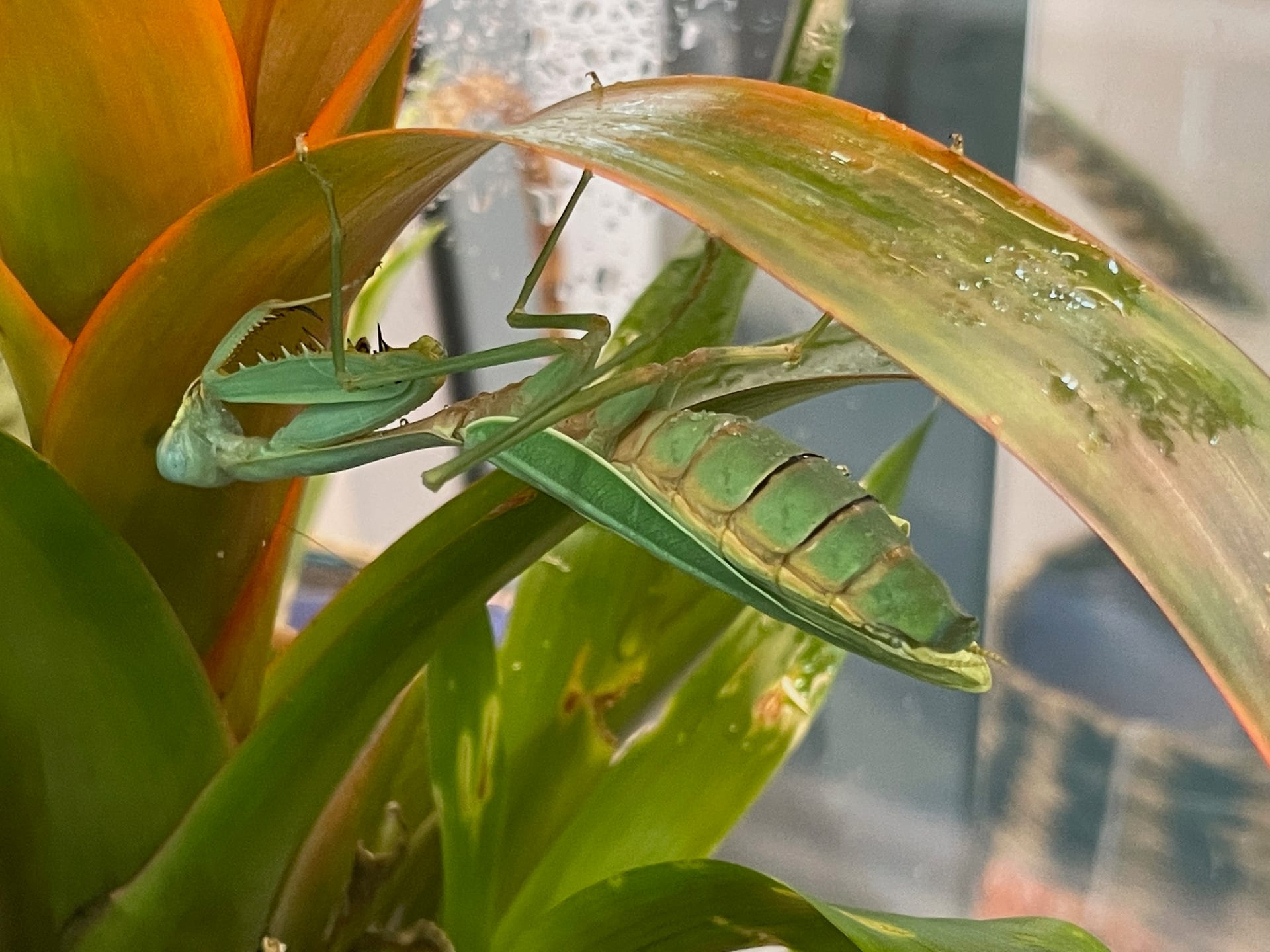
One of Australia's largest mantises, from the rainforests of the tropical north. A green giant of 7-11cm total length with an occasional bright yellow form. Hardy and handleable; traded stock is captive bred.
Difficulty
Beginner
Temperature
24〜30℃
Lifespan
About one year
Size
Total length 7-11cm (body length up to about 70mm)
Humidity
60〜80%
Diet
Live crickets, flies and roaches
About
The giant rainforest mantis (Hierodula majuscula) is a large Hierodula of rainforest and adjacent habitats along coastal northern Australia. Total length from eye to wing tip is 7-11cm, ranking among the largest mantises. It is usually green, with an occasional bright yellow form. Prey includes stick insects, grasshoppers, crickets, flies and other mantises, as well as spiders and occasionally geckos, frogs and juvenile snakes. Keep at 24-30C; it survives at 18-24C but grows more slowly. Feed crickets or flies once or twice a week, enough to keep the abdomen plump. Females often eat the male during mating and a headless male continues to mate. An ootheca follows 20-40 days after mating and hatches 100-200 nymphs after 40-50 days. It can be handled, though adults may grab a finger mistaking it for prey. Wild stock is not exported from Australia, so captive-bred individuals are what is traded.
Source: Wikipedia (CC BY-SA 4.0)
Lifespan of the Giant Rainforest Mantis
Lifespan is about a year.
Size of the Giant Rainforest Mantis
The Giant Rainforest Mantis grows to Total length 7-11cm (body length up to about 70mm).
Temperature & humidity for the Giant Rainforest Mantis
The ideal temperature for the Giant Rainforest Mantis is 24〜30℃. Ideal humidity is 60〜80%.
Hold humidity at 60-80% with daily misting.
Basic Info
Origin
Rainforests of coastal northern Australia (around Cairns, Queensland and elsewhere)
Care Specifications
Semi-aggressiveSolitary
Sources: Minibeast Wildlife - Care guide: Giant Rainforest Mantid, Hierodula majuscula (PDF) / Hierodula majuscula - Wikipedia (EN)
References & Sources
Edited & verified by: BreederDirect editorial team
The taxonomic, regulatory, and husbandry data on this page are compiled and verified against the authoritative primary sources below.
Taxonomy & Authority
Accepted name: Hierodula majuscula Tindale, 1923
Synonyms: Parhierodula majuscula
Authority databases: GBIF
Nomenclature follows global taxonomic authority databases.
Regulations & Conservation Status
Not CITES-listed
Sources: CITES Appendix (checklist.cites.org)
Regulations may change. Always verify the latest information with the relevant authorities.
Giant Rainforest Mantis Listings
Loading latest listingsFind listings for this species