Source: Wikimedia Commons
Giant Prickly Stick Insect
IntermediateExtatosoma tiaratum
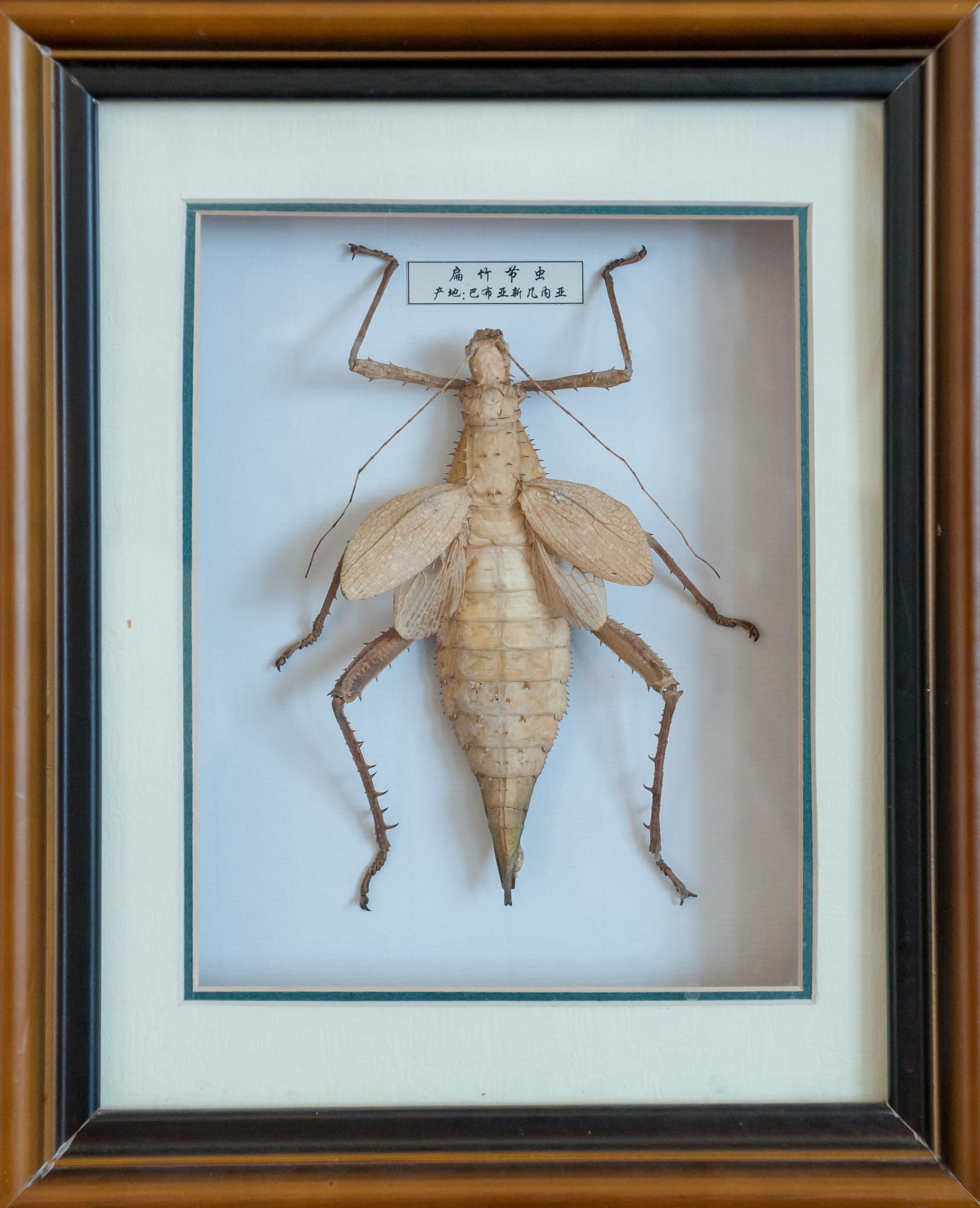
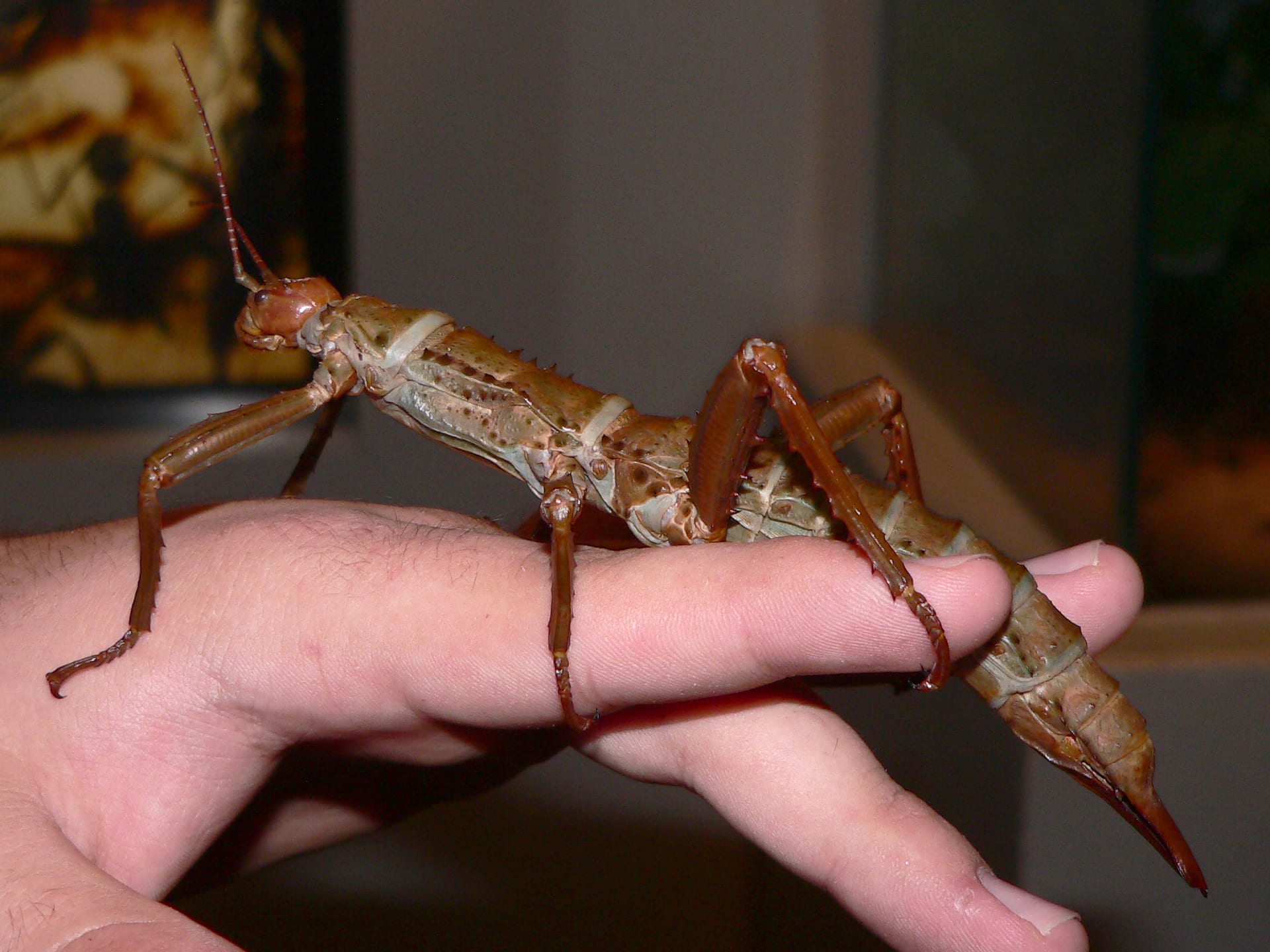
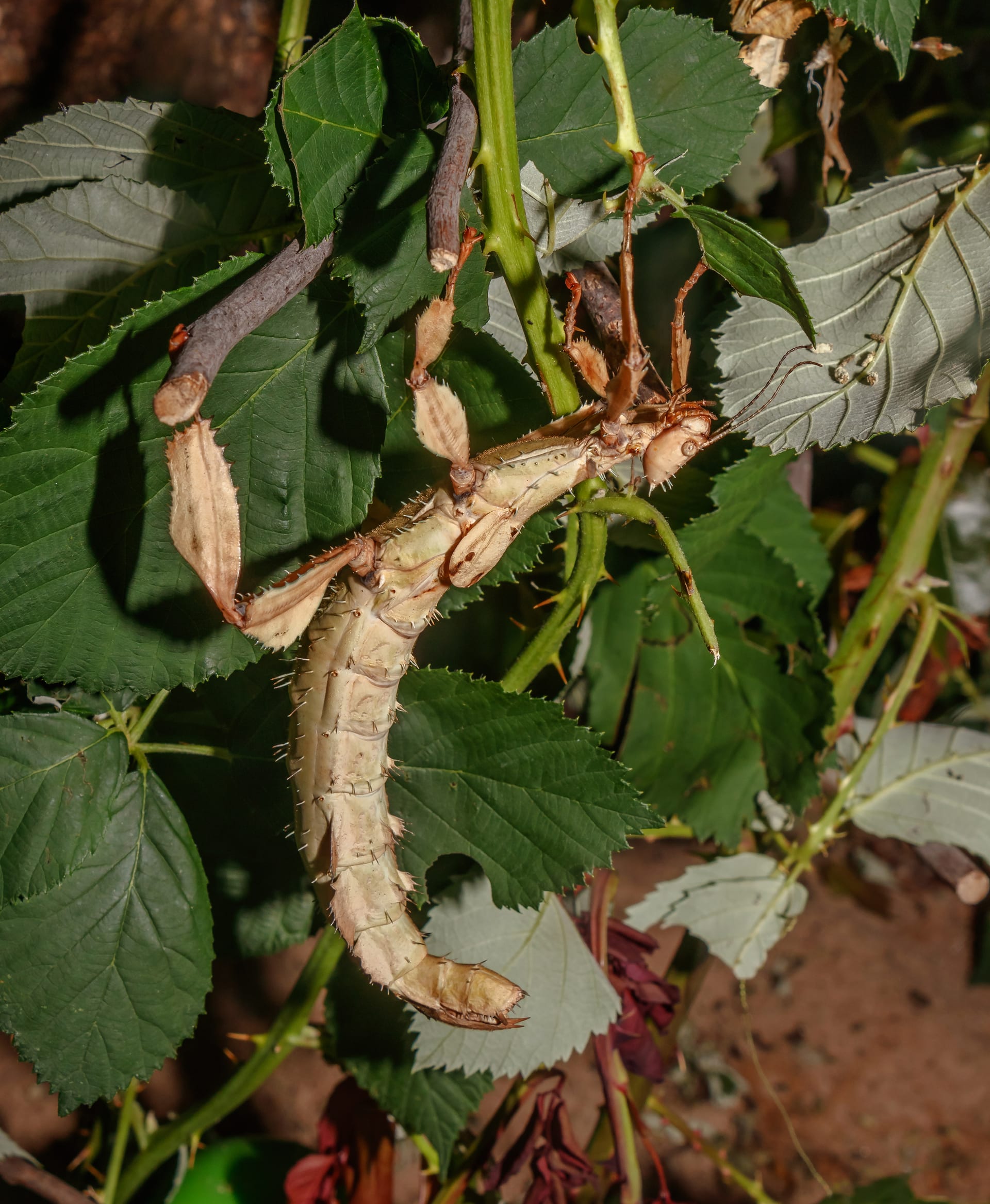
A large stick insect endemic to Australian rainforest. Females reach about 20cm and are covered in thorn-like spikes, while males are slender at about 11cm and fly readily. Newly hatched nymphs mimic ants.
Difficulty
Intermediate
Temperature
20〜28℃
Lifespan
Adult females 6 months to 1 year / adult males 2-4 months
Size
Females about 20cm, males about 11cm
Humidity
60〜80%
Diet
The leaves of broadleaf trees such as eucalyptus
About
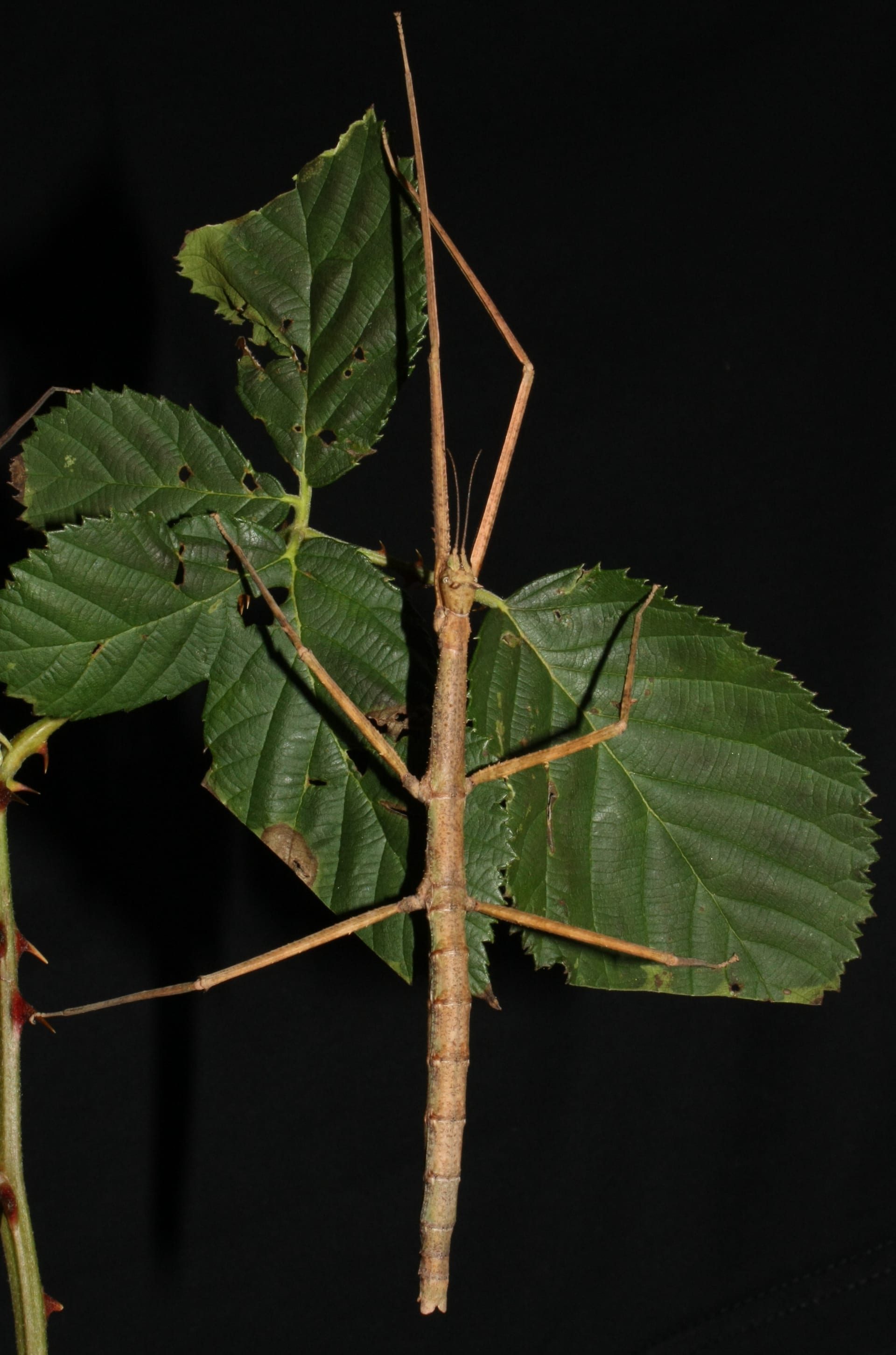
Extatosoma tiaratum is a large stick insect endemic to Australian rainforest. Most of its range lies in eastern New South Wales and eastern Queensland, with one old record from eastern Victoria and records from South Australia where it may have been introduced. Females are covered in thorn-like spikes for defence and camouflage, their long, rounded bodies reaching about 20cm; their wings are too small for flight. Males are small and slender at about 11cm and lack the thorny growths except around the face, but have long wings and fly readily. Both sexes, when threatened, raise the abdomen in a scorpion-like pose and fold the hind legs back to grip; the sharp spines on those legs can puncture human skin deeply. Adults make clicking sounds and release a defensive odour reminiscent of toffee. Colour varies widely between individuals, from brown and green to reddish, cream and white.
Source: Wikipedia (CC BY-SA 4.0)
Lifespan of the Giant Prickly Stick Insect
The Giant Prickly Stick Insect lives Adult females 6 months to 1 year / adult males 2-4 months.
Size of the Giant Prickly Stick Insect
The Giant Prickly Stick Insect grows to Females about 20cm, males about 11cm.
Basic Info
Origin
Australia (rainforest chiefly in eastern New South Wales and eastern Queensland)
Lifespan
Adult females 6 months to 1 year / adult males 2-4 months
Size
Females about 20cm, males about 11cm
Care Specifications
PeacefulSolitaryBreeding: Moderate
Sources: Wikipedia (en): Extatosoma tiaratum / GBIF: Extatosoma tiaratum (Macleay, 1826) / Stick insects - Wikipedia (JA); life cycle and lifespan / Plant Protection Station, MAFF Japan: import of insects and microorganisms
References & Sources
Edited & verified by: BreederDirect editorial team
The taxonomic, regulatory, and husbandry data on this page are compiled and verified against the authoritative primary sources below.
Taxonomy & Authority
Accepted name: Extatosoma tiaratum (Macleay, 1826)
Authority databases: GBIF
Nomenclature follows global taxonomic authority databases.
Regulations & Conservation Status
Not CITES-listed
Plant Protection Act: The import of insects, foreign stick insects included, is regulated under Japan's Plant Protection Act, and whether a given species may enter depends on the country it comes from. What circulates in Japan is captive-bred stock.
Sources: CITES Appendix (checklist.cites.org) / Plant Protection Station, MAFF Japan: import of insects and microorganisms
Regulations may change. Always verify the latest information with the relevant authorities.
Giant Prickly Stick Insect Listings
Loading latest listingsFind listings for this species