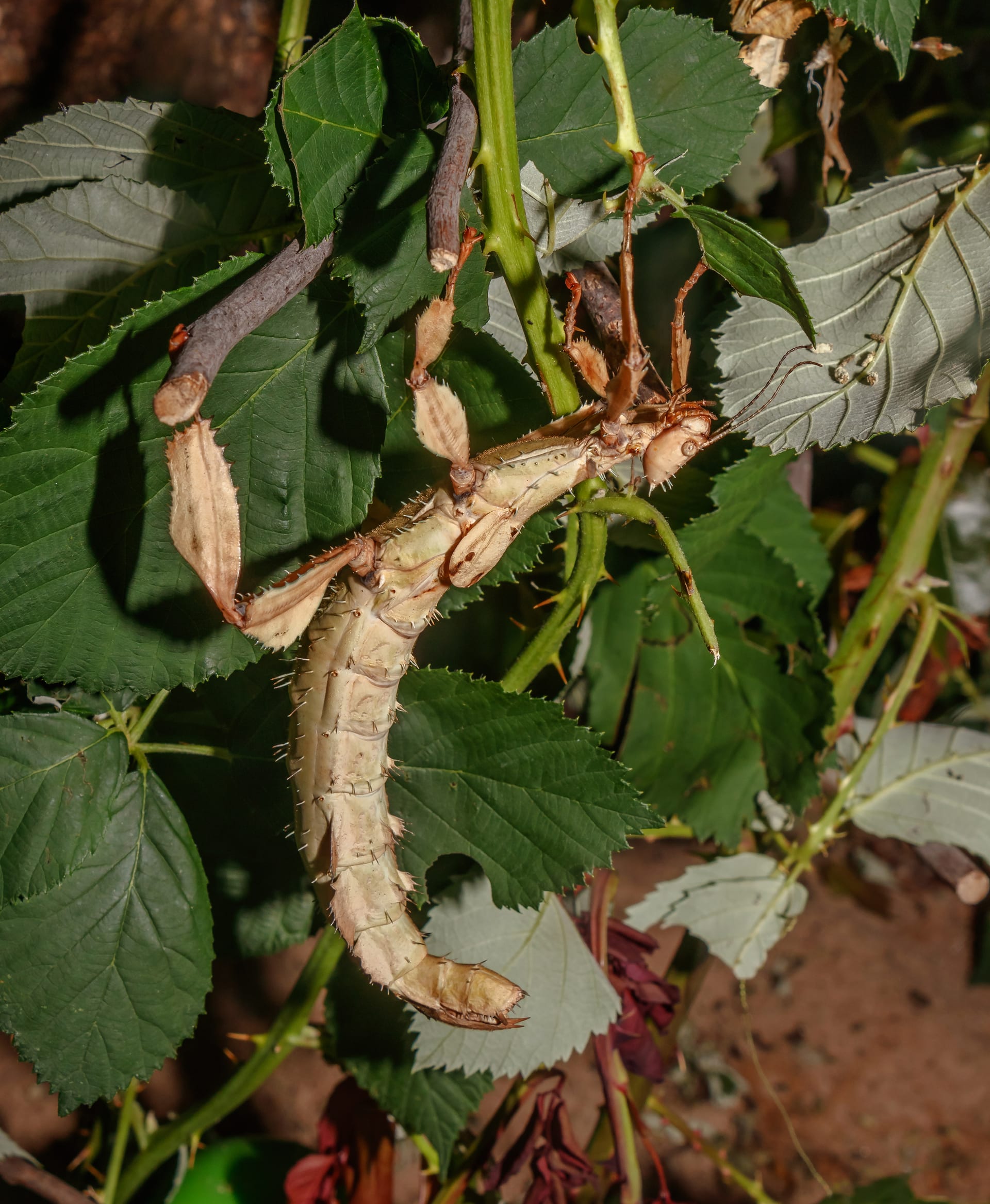
 © H. Zell / CC BY-SA 3.0
Giant Prickly Stick Insect
Native to Australia's tropical rainforests, this large, striking stick insect is best known for its spiny, bark-like camouflage. Females can reach about 20 cm in length and are covered head to tail in thorn-like projections, blending almost seamlessly into foliage when still, while the slimmer males top out around 11 cm and are strong, active fliers. Newly hatched nymphs are reddish in color and mimic ants in both appearance and movement, adding another layer of fascination as the insect transforms through its life stages. Their calm, unhurried nature makes them a rewarding species for keepers who enjoy quiet, attentive care.
View Giant Prickly Stick Insect encyclopedia →0% commission on your first sales!Register by September 30, 2026 and your first 2 sales are commission-free!
Breeder Wanted!
List on BreederDirect and sell directly to customers nationwide!
6 Transparency Standards You Can Trust
When listing Insects, Breeders disclose the following. We guarantee transparency on growth stage and breeding unit.
- Life Stage Clarity
- Generation Info
- Real Photos
- Breeding Unit
- Country of Origin
- Body Length (mm)
Browse all 296 breeds
Verified breeders wanted for Insects
Breeders are signing up now ahead of launch. Subscribe to be notified when new listings go live.
Getting alerts is free with a member account. When new listings match your saved search, we'll notify you by email and in-app.
Browse other categories
Verified breeders (preview)
Giant Prickly Stick Insect key facts
- Care level
- Intermediate
- Lifespan
- Adult females 6 months to 1 year / adult males 2-4 months
- Size
- Females about 20cm, males about 11cm
- Diet
- The leaves of broadleaf trees such as eucalyptus
- Temperature & Humidity
- It comes from rainforest in eastern Australia, so mist the enclosure to keep it from drying out. Females reach about 20cm, so the container must be more than twice that in height for moulting.
- Breeding & Egg-laying
- As with most phasmids the eggs resemble plant seeds and drop into the substrate in captivity. Newly hatched nymphs mimic the Australian ant genus Leptomyrmex, with an orange head, a white collar and a black body behind, an aposematic pattern. Where most adult stick insects are famously slow, these nymphs are quick and active.
- Cohabitation
- It is placid, and several of the same species can share an enclosure. Being touched during a moult easily spoils it, so give the container height and plenty of footholds. Mind the spines on the hind legs when handling, and never force a hold on an insect in its threat pose.
- Lifespan & Rearing Period
- Across stick insects as a whole, most species mature in a few months through five or six moults and live from a few months to at most three years.
- Health & Notes
- The import of insects, foreign stick insects included, is regulated under Japan's Plant Protection Act, and whether a given species may enter depends on the country it comes from. What circulates in Japan is captive-bred stock, so buy from a clear source and never let one loose outdoors. The eggs look like plant seeds, so always check the substrate for them before discarding it.
About Giant Prickly Stick Insect
A guide to the Giant Prickly Stick Insect: females reach about 20cm and males about 11cm and fly well. Covers its spiny camouflage, ant-mimicking nymphs, care difficulty, and what to know before bringing one home.
7 things to know before welcoming a Giant Prickly Stick Insect
1A master of spiny camouflage
The thorn-like projections covering its entire body let it blend convincingly into twigs and bark. Because it moves so slowly, it can be almost impossible to spot while at rest.
2Females and males look very different
Females are stocky, reach about 20 cm, and show off prominent spines, while males are slender, about 11 cm, and fly readily on their wings. The difference between the sexes is striking, so it's worth knowing this before you bring one home.
3Nymphs disguise themselves as ants
Just after hatching, nymphs take on a reddish color and ant-like movements to help protect themselves from predators. Watching them gradually change into their adult form as they grow is part of the enjoyment of keeping this species.
4Best suited to keepers with some experience
While not an especially delicate species, it does require solid basics such as temperature and humidity control and a steady supply of food plants. It suits keepers with some prior insect-keeping experience rather than a very first insect.
5Needs a tall, roomy enclosure
Because it grows quite large, provide an enclosure with enough height and space for molting and for spreading its wings. A cramped setup can lead to problems during molting.
6Line up food plants in advance
As a plant-eating species, it needs a steady, ongoing supply of suitable food plants. It's reassuring to secure a reliable source before bringing one home.
7A calm species suited to quiet observation
It is calm and moves very little, staying still for most of the day. This is an insect better suited to quiet observation than to active handling.
Frequently asked questions about Giant Prickly Stick Insect
- Q.How large does it grow?
- A.Females are a large species reaching about 20 cm in length. Males are smaller, growing to around 11 cm.
- Q.Is it venomous or safe to touch?
- A.Its body is covered in spiny projections, so it should always be handled gently to avoid stressing the animal. If you're unsure about handling, it's fine to simply observe rather than touch it.
- Q.What do the nymphs look like?
- A.Freshly hatched nymphs closely resemble ants in both color and movement, which is thought to be a defense against predators. As they grow, they gradually take on the spiny appearance of the adult form.
- Q.Is this species suitable for beginners?
- A.Its care level is considered intermediate, so having a basic grasp of temperature, humidity, and food-plant supply is helpful. It's best to gain some insect-keeping experience before taking one on.
- Q.Are there any international trade restrictions?
- A.The Giant Prickly Stick Insect is not listed under CITES.
Useful tools for Giant Prickly Stick Insect care
Learn more about Giant Prickly Stick Insect in the encyclopedia
View Giant Prickly Stick Insect encyclopedia entry →
Care difficulty, lifespan, size and diet — all basics covered.
More in this category
Can't find the one you're looking for?
Post your wishes for free and breeders with matching animals will contact you with introductions.