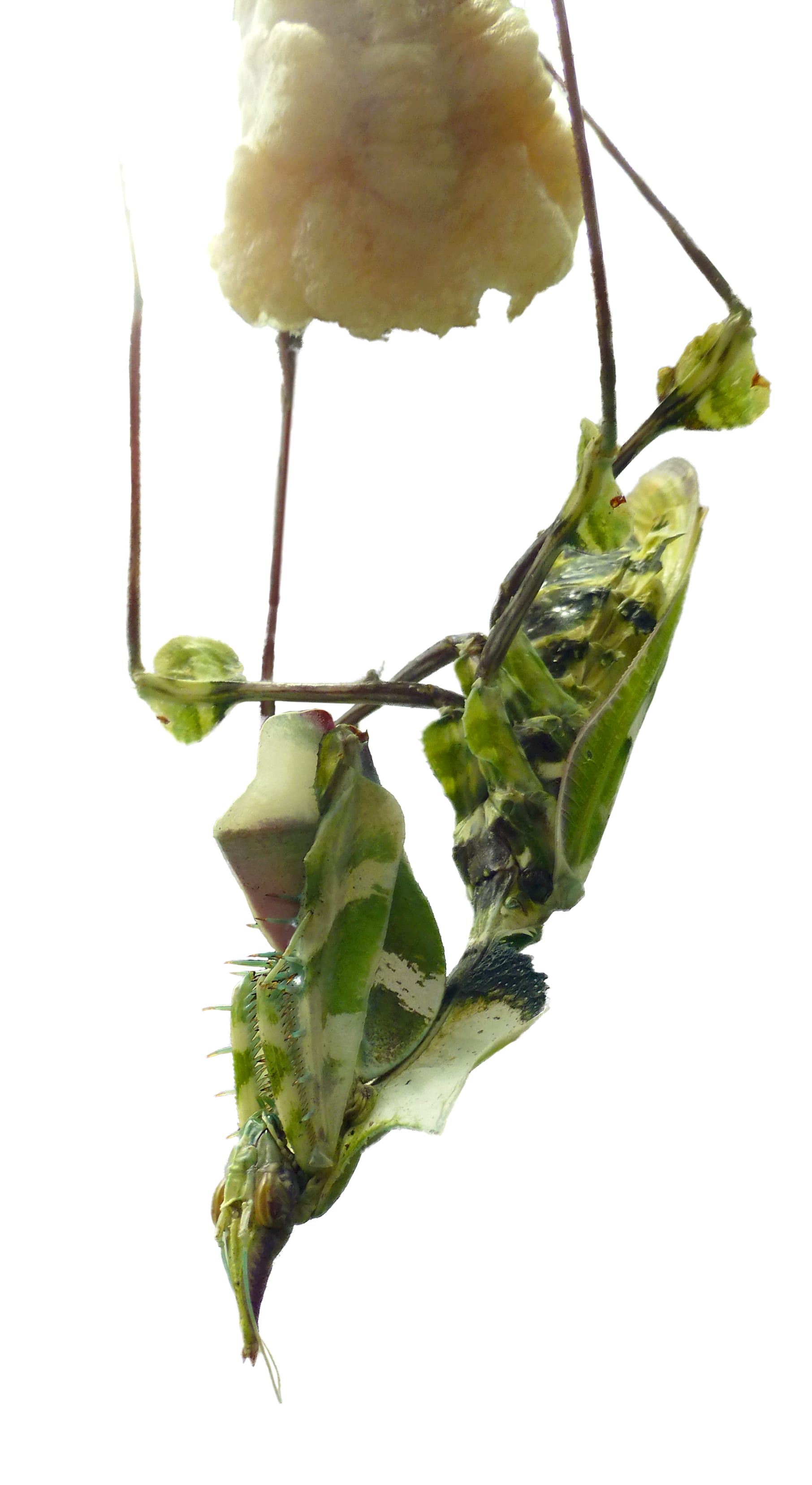
 © Amada44 / CC BY-SA 3.0
Devil's Flower Mantis
The Devil's Flower Mantis, native to East Africa, ranks among the largest of all flower-mimicking mantis species. Adults display a striking white-and-green striped pattern, and when startled, they dramatically flare their forelegs and wings to reveal vivid red, blue, and purple warning coloration — a sharp contrast to their usual flower-like camouflage. That combination of elegant mimicry and dramatic defensive display makes it one of the most captivating mantises to keep. At the same time, it demands careful management of high heat, humidity, and airflow, along with a picky diet limited to flies, making it a species best suited to experienced keepers.
View Devil's Flower Mantis encyclopedia →0% commission on your first sales!Register by September 30, 2026 and your first 2 sales are commission-free!
Breeder Wanted!
List on BreederDirect and sell directly to customers nationwide!
6 Transparency Standards You Can Trust
When listing Insects, Breeders disclose the following. We guarantee transparency on growth stage and breeding unit.
- Life Stage Clarity
- Generation Info
- Real Photos
- Breeding Unit
- Country of Origin
- Body Length (mm)
Browse all 296 breeds
Verified breeders wanted for Insects
Breeders are signing up now ahead of launch. Subscribe to be notified when new listings go live.
Getting alerts is free with a member account. When new listings match your saved search, we'll notify you by email and in-app.
Browse other categories
Verified breeders (preview)
Devil's Flower Mantis key facts
- Care level
- Advanced
- Lifespan
- About 12 months (typical)
- Size
- Females about 13cm, males about 10cm
- Temperature
- Diet
- Flying insects only such as flies and moths (fruit flies for nymphs)
- Temperature & Humidity
- Keep 32-40C by day (around 35C) with a bulb and let it drop to about 20C at night. Maintain high humidity with strong ventilation: open the cage by day and mist in the evening.
- Breeding & Egg-laying
- Mature 2-4 weeks after the final moult. Females lay several oothecae at 2-3 week intervals, each with 10-50 eggs hatching in about 50 days. In captivity the female often eats the male's head during mating.
- Cohabitation
- Because it hunts only flying prey, cannibalism is relatively rare and groups can share a large cage. Adults will eat nymphs of their own species, so move the parents before the ootheca hatches.
- Lifespan & Rearing Period
- Lifespan is typically about 12 months. Males mature after about seven moults and females after eight; growth speed depends on temperature and humidity.
- Health & Notes
- Feed only flies and moths, never crickets. Do not leave it without prey for more than two days, but do not crowd the cage either. It cannot climb glass, so provide mesh, branches and dry leaves. Moulting failure is the main cause of death.
About Devil's Flower Mantis
Native to East Africa, this is among the largest flower-mimicking mantis species, with striking white-green wings and a vivid red-blue-purple threat display. It requires precise heat, humidity, and a fly-only diet — best suited to experienced keepers.
7 things to know before welcoming a Devil's Flower Mantis
1High Heat and Humidity Required
This species needs conditions close to its native East African tropical habitat — high temperature and humidity paired with good airflow to prevent stagnant air. Daily monitoring matters, since poor climate control quickly affects its health.
2Diet Limited to Flies
This species is a notoriously picky eater that generally accepts only flies as prey. It often refuses crickets and other common feeder insects, so a reliable supply of flies is essential — one of the main reasons it's considered one of the hardest mantis species to keep.
3One of the Largest Mimics
Females grow to about 13 cm and males to about 10 cm, making this one of the largest flower-mimicking mantis species. Its appearance changes considerably through development, so nymphs and adults look strikingly different.
4Vivid Threat Display
Hidden red, blue, and purple coloring on the forelegs and wing undersides is revealed in a dramatic display when the mantis feels threatened. The contrast with its everyday white-and-green pattern makes for a memorable sight.
5Lifespan of About a Year
Adult lifespan is roughly 12 months as a general guideline. As with most mantises, its life cycle is short, so keepers see molting and reproduction milestones unfold over a compressed timeframe.
6Molting Risk to Watch
Improper temperature, humidity, or inadequate perching surfaces can lead to failed molts, with later-stage molts especially risky as the mantis grows larger. Providing tall enclosure space and secure grip points helps reduce this risk.
7Prepare Supplies in Advance
A tall enclosure, a thermometer/hygrometer, misting equipment, and adequate ventilation should all be set up before bringing one home. It's also worth confirming how you'll source and manage a steady supply of flies beforehand.
Frequently asked questions about Devil's Flower Mantis
- Q.Is this mantis suitable for beginners?
- A.The Devil's Flower Mantis is considered an advanced-level species. It requires precise heat and humidity management along with a fly-only diet, so it's best attempted after gaining experience with mantis or insect keeping.
- Q.Can it eat anything besides flies?
- A.This species is a notoriously picky eater that mostly refuses anything other than flies. Common feeder insects like crickets are often rejected, so securing a steady supply of flies before bringing one home is essential.
- Q.How large does it grow?
- A.Adults reach about 13 cm for females and about 10 cm for males. That makes it one of the largest flower-mimicking mantis species in the world.
- Q.How long does it live?
- A.Adult lifespan is roughly 12 months as a general guideline. Like most mantises, its overall life cycle is relatively short.
- Q.Does it often show its threat display?
- A.When startled or disturbed, it may spread its forelegs and wings to reveal vivid red, blue, and purple coloring as a threat display. This contrasts sharply with its usual calm, flower-like appearance, making the display especially striking.
Useful tools for Devil's Flower Mantis care
Learn more about Devil's Flower Mantis in the encyclopedia
View Devil's Flower Mantis encyclopedia entry →
Care difficulty, lifespan, size and diet — all basics covered.
More in this category
Can't find the one you're looking for?
Post your wishes for free and breeders with matching animals will contact you with introductions.