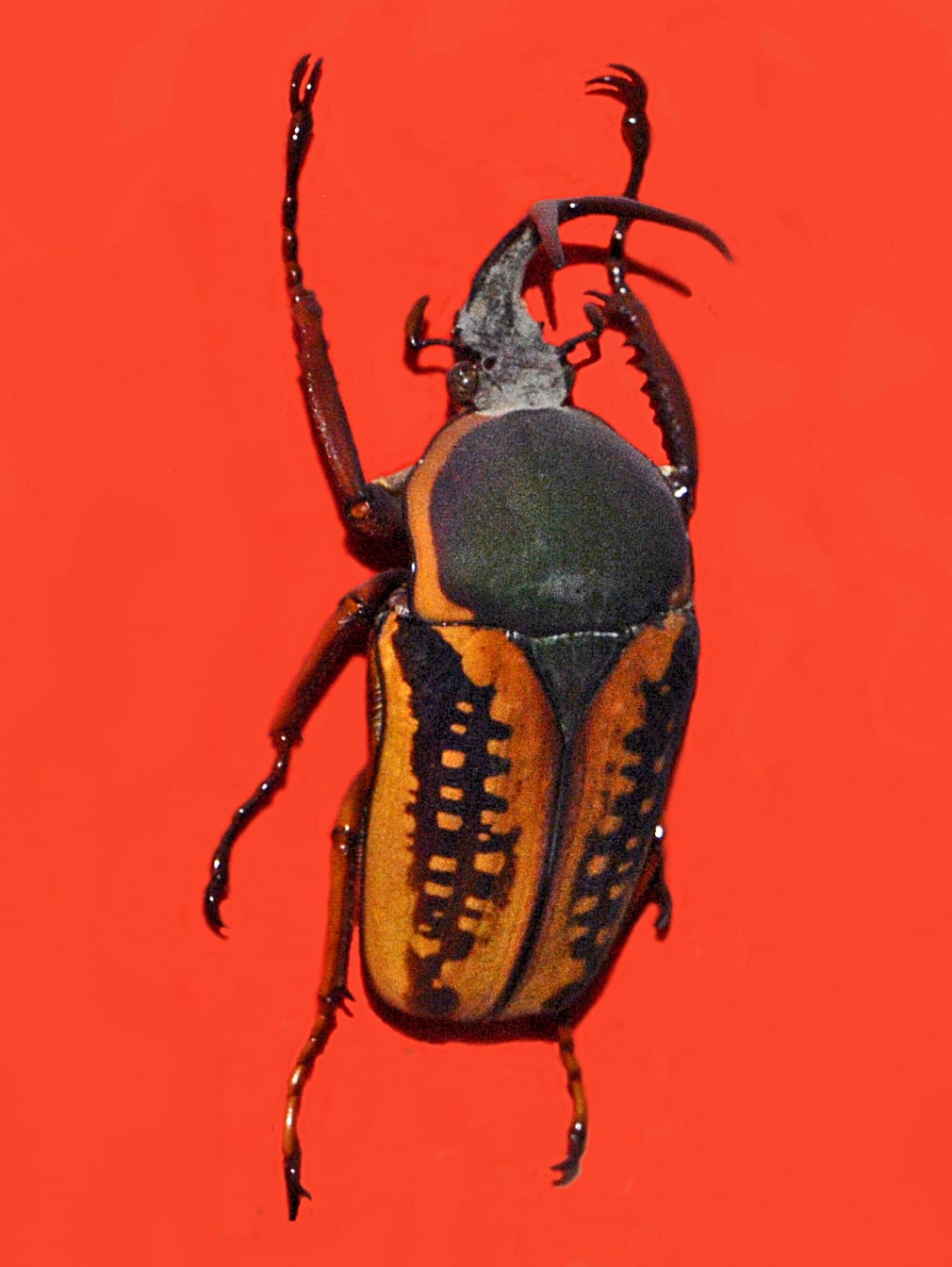
 © Hectonichus / CC BY-SA 3.0
Harris' Flower Beetle
Harris' Flower Beetle is native to a range stretching from Central to East Africa, with adults reaching 30 to 50mm in length. Its biggest draw is the shimmering color of its elytra: depending on the subspecies, the thorax can be reddish-brown or green, while the wing covers show shades of green, blue, or dark brown, sometimes marked with white or yellow patches. Males carry a long horn projecting forward from the head, giving them a striking, powerful profile that's prized among collectors. Larvae develop slowly underground, and adults feed on insect jelly and similar foods. Considered an intermediate-level species, it rewards keepers who get the basics right with a long and engaging relationship.
View Harris' Flower Beetle encyclopedia →0% commission on your first sales!Register by September 30, 2026 and your first 2 sales are commission-free!
Breeder Wanted!
List on BreederDirect and sell directly to customers nationwide!
6 Transparency Standards You Can Trust
When listing Insects, Breeders disclose the following. We guarantee transparency on growth stage and breeding unit.
- Life Stage Clarity
- Generation Info
- Real Photos
- Breeding Unit
- Country of Origin
- Body Length (mm)
Browse all 296 breeds
Verified breeders wanted for Insects
Breeders are signing up now ahead of launch. Subscribe to be notified when new listings go live.
Getting alerts is free with a member account. When new listings match your saved search, we'll notify you by email and in-app.
Browse other categories
Verified breeders (preview)
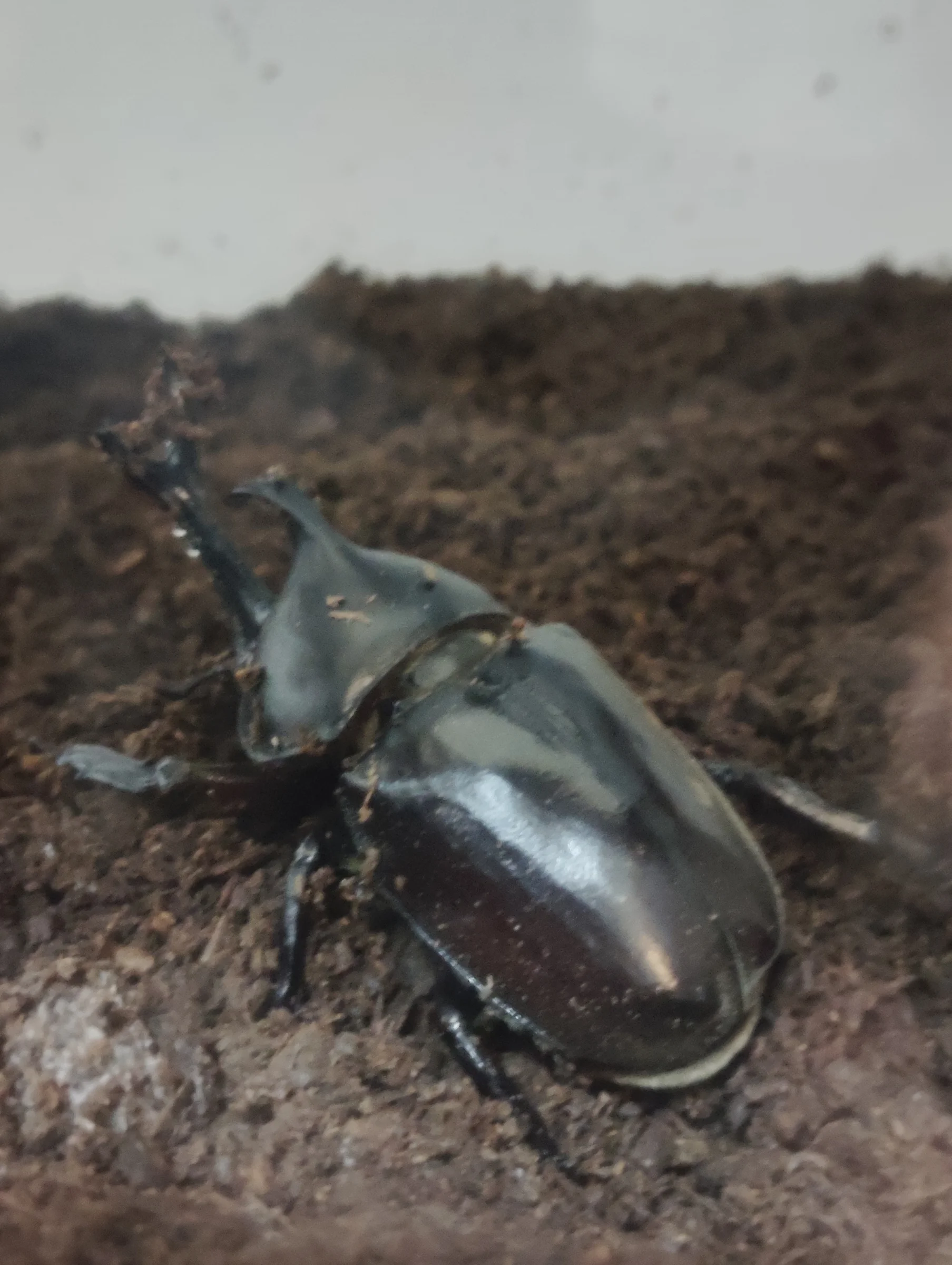
Harris' Flower Beetle key facts
- Care level
- Intermediate
- Lifespan
- Adults 6 months to 1 year
- Size
- 30-50 mm
- Diet
- Fruit, tree sap and beetle jelly
- Temperature & Humidity
- It comes from African rainforest, so keep it at room temperature with the substrate moist, and let it run slightly drier through pupation.
- Breeding & Egg-laying
- Larvae grow on a substrate of rotten wood and leaves or on flake soil. Silkworm powder, cat food, Gammarus and similar additives can be used to push for larger beetles, but they readily bring mites and mould. No measured figures for clutch size or larval period have been published for this species.
- Cohabitation
- Males fight with their horns, so keep adults singly and put a pair together only for breeding. Larvae can be raised communally, but crowding at pupation leads to failures.
- Lifespan & Rearing Period
- In the congener Mecynorhina torquata, larval periods of twelve months to two years have been reported.
- Health & Notes
- Importing live beetles requires the species identification certificate demanded for live Scarabaeoidea. Because the subspecies differ so much in colour, choose stock with a stated locality or subspecies and do not breed different subspecies together.
About Harris' Flower Beetle
A flower beetle native to Central and East Africa, 30-50mm as an adult. Prized for its metallic coloring, which varies by subspecies, and the male's long horn. Best suited to intermediate keepers.
7 things to know before welcoming a Harris' Flower Beetle
1Larvae Grow Slowly Underground
Larvae grow inside humus-rich substrate. Both dryness and overwatering stress them, so check the moisture level of the mat regularly.
2Prefers Warm Conditions
Originating from warm regions of Africa, both larvae and adults are sensitive to sudden temperature drops. Provide seasonal heating so the enclosure doesn't get too cold.
3Insect Jelly Is the Staple Food
Commercial insect jelly forms the core of the adult diet, and they also readily take ripe fruit like banana. Keep the feeding dish clean and remove leftovers promptly.
4Keep Males Separately
Males may fight using the horn on their heads, so housing multiple males together can lead to clashes. If you do combine them, watch their behavior closely.
5Manage Humidity to Prevent Mold
Overly damp substrate invites mold and fungus gnats. Ensure good ventilation in the enclosure and check the mat's condition regularly to keep things clean.
6Handle the Legs with Care
Flower beetles have sharp claws on their legs and can scratch bare skin when handled. Support the thorax or elytra gently when lifting them to reduce stress on the beetle.
7Check Movement and Appearance Before Bringing One Home
Before bringing one home, check that the legs and antennae are all intact and that the beetle moves briskly. Also look the enclosure and beetle over for any mites or other attached debris.
Frequently asked questions about Harris' Flower Beetle
- Q.How long do they live?
- A.It varies depending on the individual and how it's kept, so there's no single fixed answer. Keeping temperature and humidity stable, along with a clean enclosure, helps it live as long as possible.
- Q.Can a beginner keep this species?
- A.Harris' Flower Beetle is considered an intermediate-level species. Managing the larval substrate and temperature takes some know-how, so it's best attempted after you've gained some basic insect-keeping experience.
- Q.How can you tell males and females apart?
- A.Males have a long horn projecting forward from the head, while females have little to no horn at all. This difference in the head gives the two sexes a noticeably different look.
- Q.What should I watch for during winter?
- A.Since this species comes from warm regions, a sudden drop in winter temperature puts stress on it. Keep the enclosure heated and also check that the substrate doesn't dry out too much.
- Q.Is this species regulated under CITES?
- A.No, Harris' Flower Beetle is not subject to CITES.
Useful tools for Harris' Flower Beetle care
Learn more about Harris' Flower Beetle in the encyclopedia
View Harris' Flower Beetle encyclopedia entry →
Care difficulty, lifespan, size and diet — all basics covered.
More in this category
Can't find the one you're looking for?
Post your wishes for free and breeders with matching animals will contact you with introductions.