Source: Wikimedia Commons
Harris' Flower Beetle
IntermediateMegalorrhina harrisi
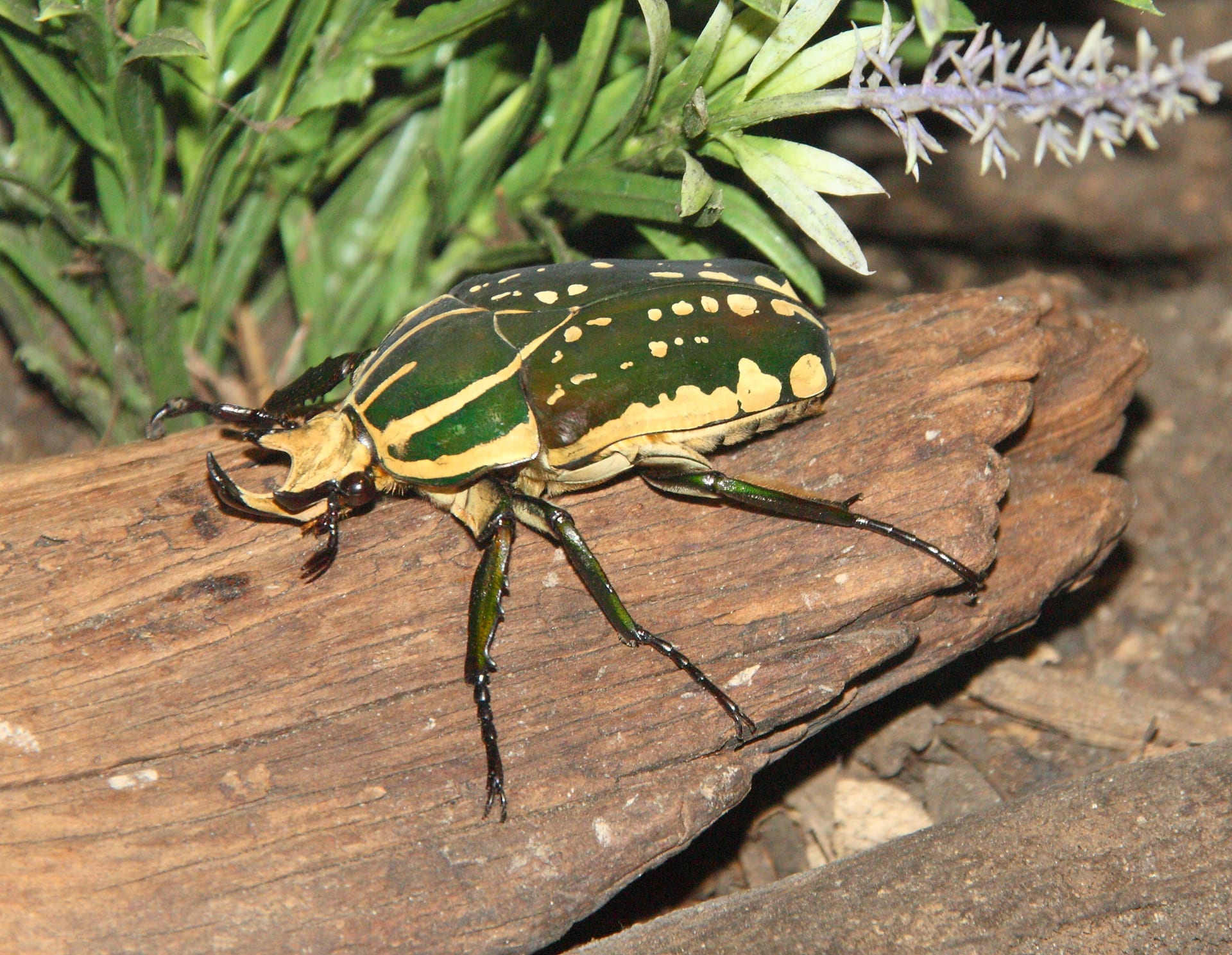
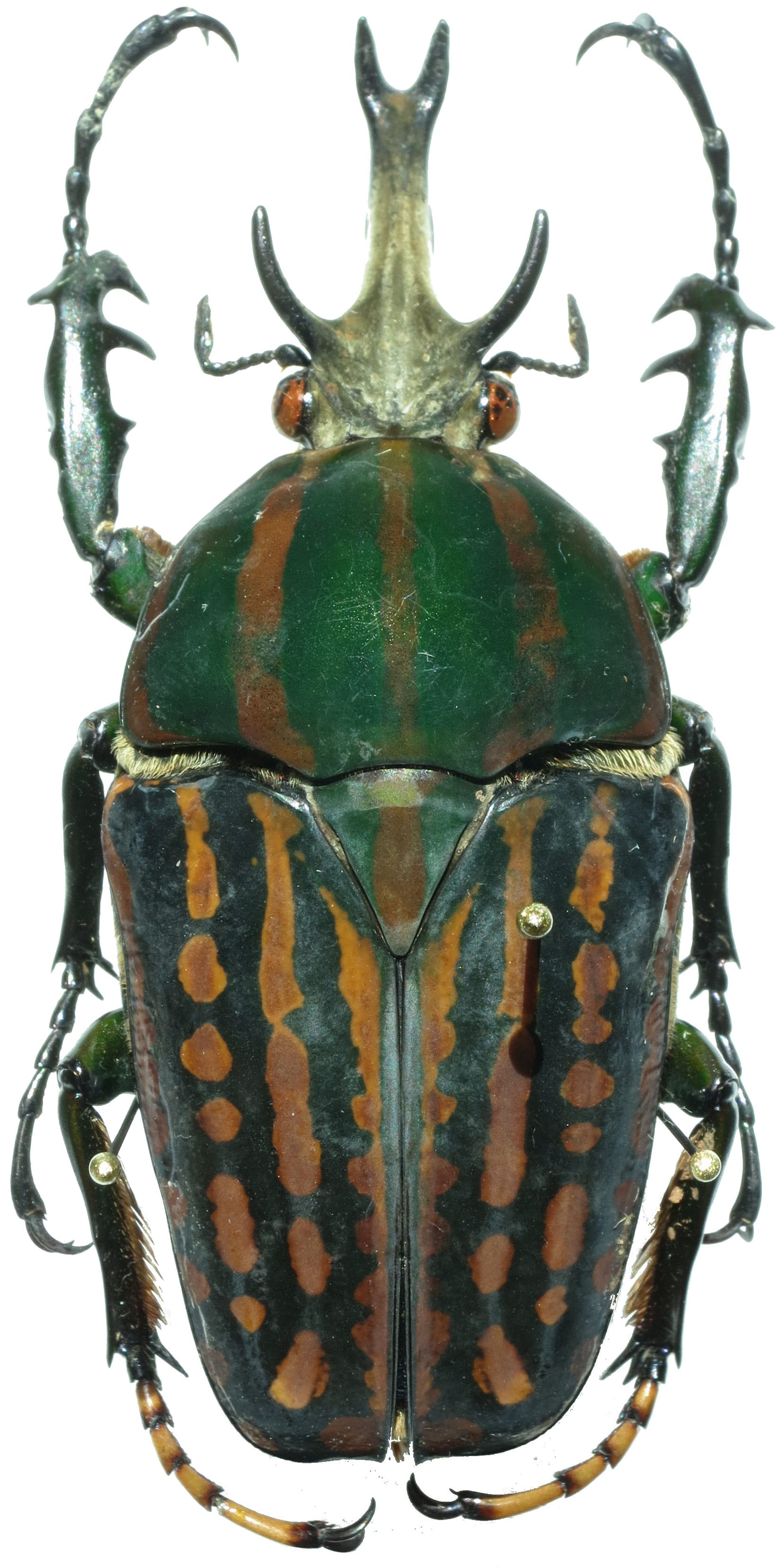
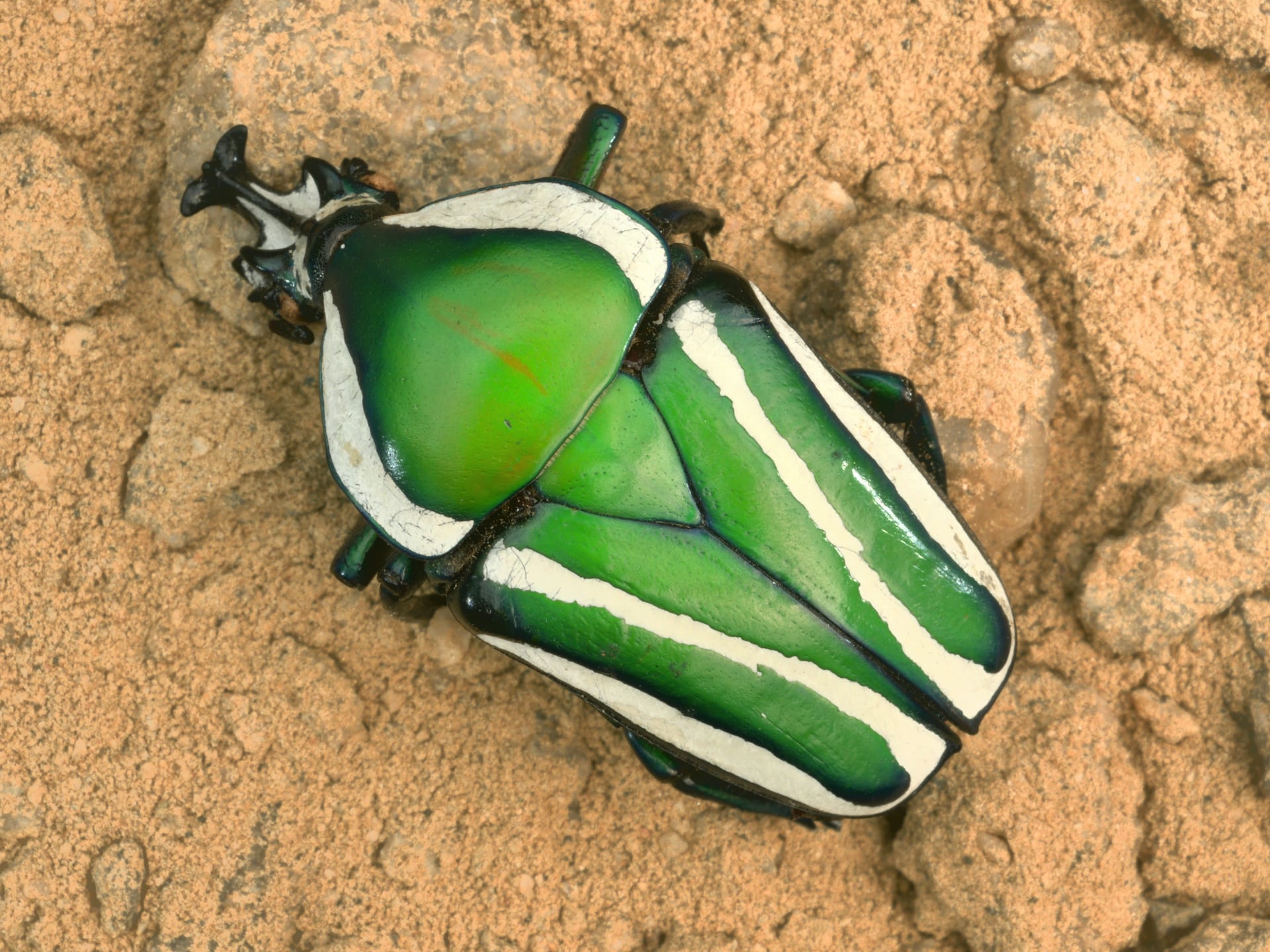
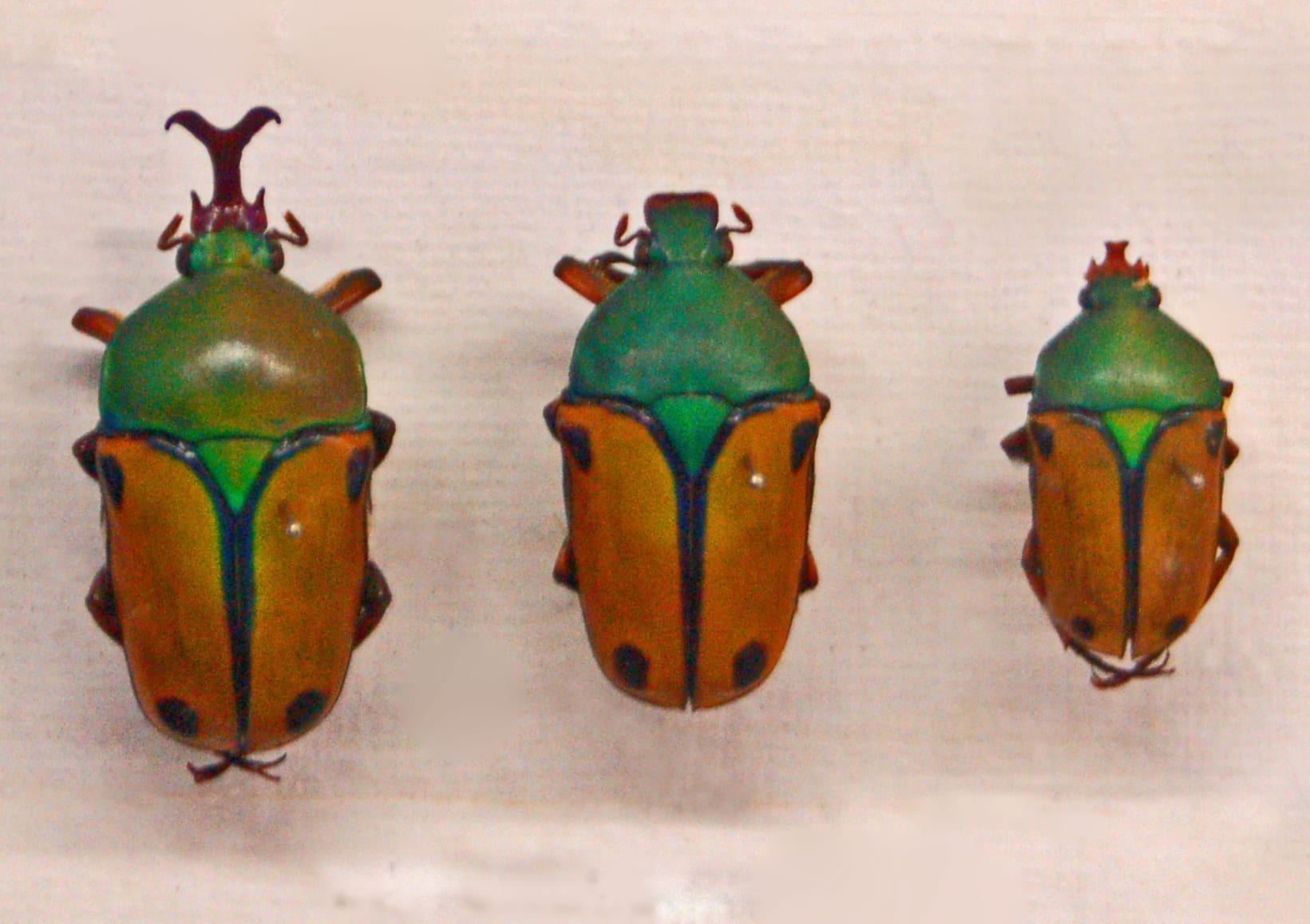
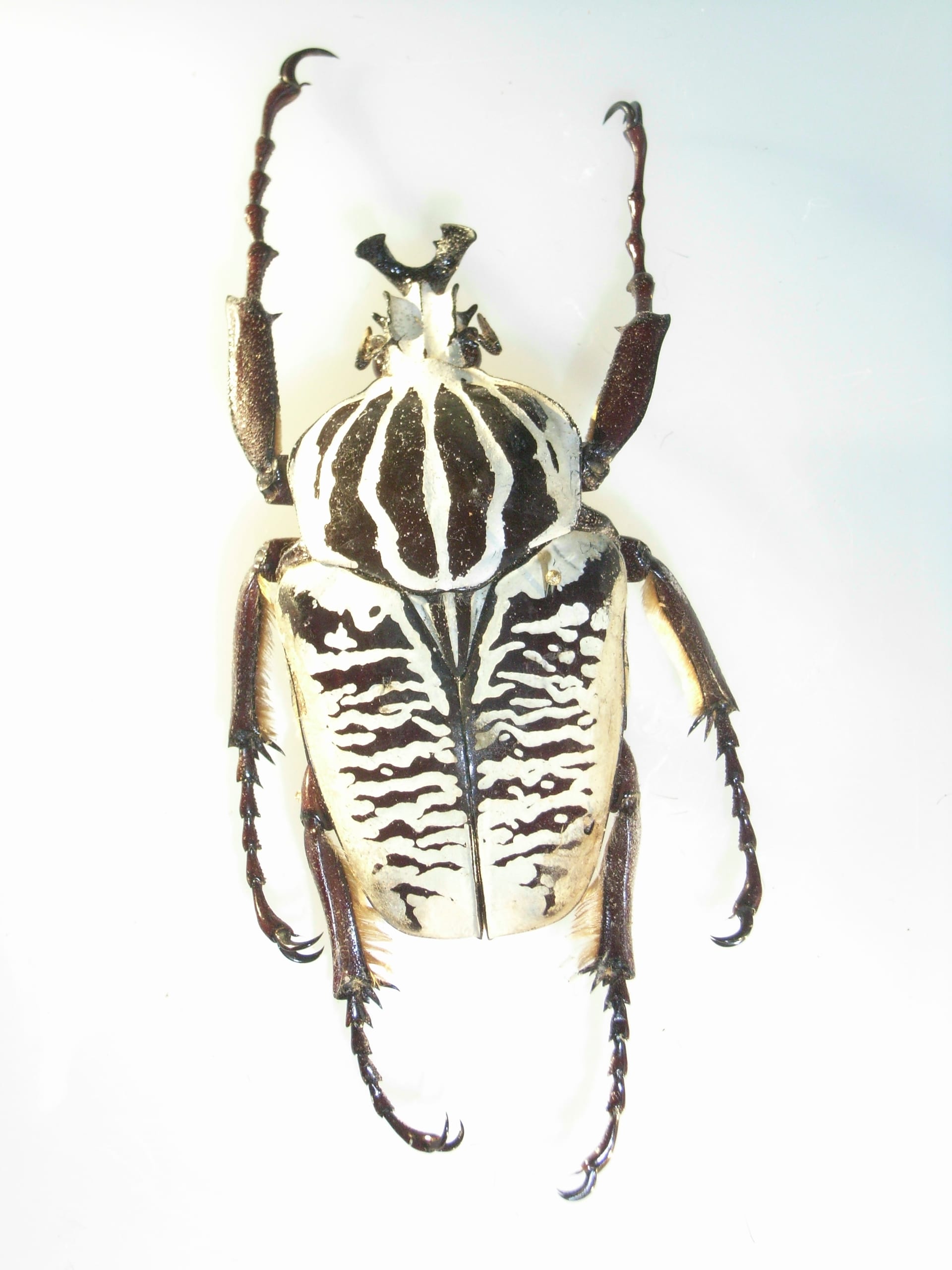
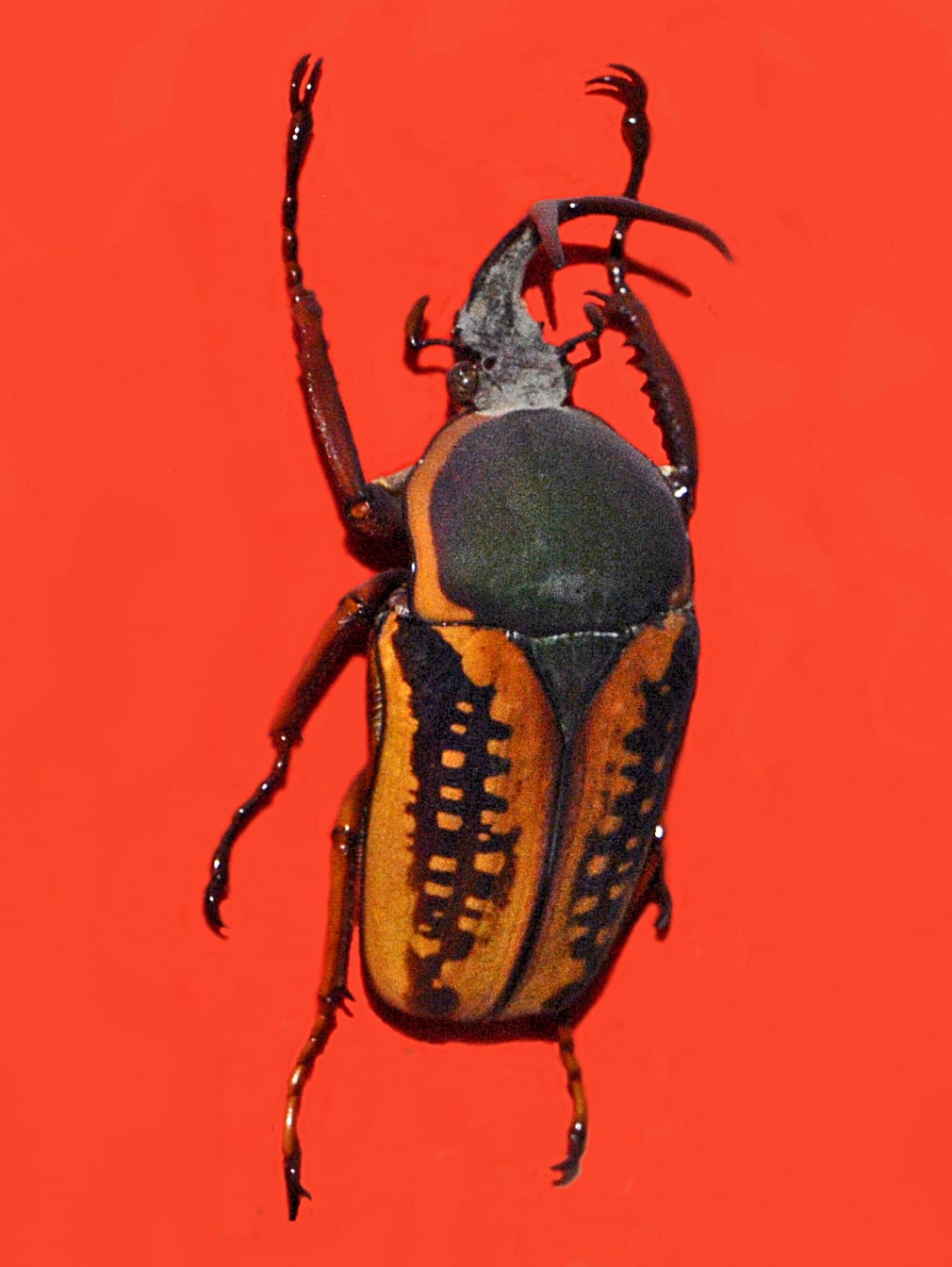
Colour varies a great deal between subspecies: the pronotum may be red-brown or greenish and the elytra greenish, bluish or dark brown with white or yellow markings. Males project long horns forward.
Difficulty
Intermediate
Temperature
20〜28℃
Lifespan
Adults 6 months to 1 year
Size
30-50 mm
Humidity
60〜80%
Diet
Fruit, tree sap and beetle jelly
About
Mecynorhina harrisii, long placed in Megalorhina, was described by Westwood in 1847 and measures 30-50 mm. Colour and pattern vary widely: depending on the subspecies the pronotum may be red-brown or greenish, while the elytra are greenish, bluish or dark brown with white or yellow spots and markings. Males project large horns forward. The range is given as Cameroon, Kenya, Tanzania and Uganda, and GBIF holds most records from the DR Congo and Tanzania, with further material from Cote d'Ivoire and Malawi. Six subspecies are recognised: eximia, eximioides, leptofurcata, peregrina, procera and schaueri. The 2010 revision by De Palma and Frantz reduced Megalorhina to a subgenus of Mecynorhina. Husbandry follows the rest of the genus, on a wood-and-leaf substrate with protein added.
Source: Wikipedia (CC BY-SA 4.0)
Lifespan of the Harris' Flower Beetle
The Harris' Flower Beetle lives Adults 6 months to 1 year.
Size of the Harris' Flower Beetle
The Harris' Flower Beetle grows to 30-50 mm.
Basic Info
Origin
Central and East Africa (DR Congo, Tanzania, Cote d'Ivoire, Cameroon, Kenya, Uganda and neighbouring countries)
Lifespan
Adults 6 months to 1 year
Size
30-50 mm
Temperature
20〜28℃
Care Specifications
SolitaryBreeding: Moderate
Sources: Mecynorhina harrisi - Wikipedia (EN; 30-50 mm, colour variation by subspecies, the male's forward-projecting horns, range in Cameroon, Kenya, Tanzania and Uganda, six subspecies) / Mecynorhina - Wikipedia (EN; Mecynorrhina is an invalid misspelling under the ICZN, Chelorrhina and Megalorhina are subgenera, five-subgenus arrangement) / GBIF species page for Mecynorhina harrisii (distribution and occurrence records by country) / Ben's Beetle Breeding Pages - Mecynorhina torquata poggei (congener in the same subgenus: prefers cooler temperatures, larval period 12 months to 2 years, flake soil, Gammarus and other protein additives)
Breeding Records & Localities
Notable localities
DR CongoTanzaniaCote d'IvoireCameroon
Regional subspecies
- Mecynorhina harrisi eximia — Africa
- Mecynorhina harrisi eximioides — Africa
- Mecynorhina harrisi leptofurcata — Africa
- Mecynorhina harrisi peregrina — Africa
- Mecynorhina harrisi procera — Africa
- Mecynorhina harrisi schaueri — Africa
The BE-KUWA certified records do not cover the Cetoniinae, so no record figure exists. The English Wikipedia lists six subspecies but gives no range for each, so no locality is assigned here.
Generation codes
- WD
- Wild-caught
- WF1
- Offspring of a wild-caught female
- F1〜
- Captive generations (same locality)
- CBF1
- Cross-locality captive-bred (reset)
References & Sources
Edited & verified by: BreederDirect editorial team
The taxonomic, regulatory, and husbandry data on this page are compiled and verified against the authoritative primary sources below.
Primary sources
- Wikipedia
- Ministry of the Environment, Invasive Species Act: "Guidance for Those Importing Live Insects in Scarabaeoidea"
- CITES Appendix (checklist.cites.org)
- Mecynorhina - Wikipedia (EN; Mecynorrhina is an invalid misspelling under the ICZN, Chelorrhina and Megalorhina are subgenera, five-subgenus arrangement)
- GBIF species page for Mecynorhina harrisii (distribution and occurrence records by country)
- Ben's Beetle Breeding Pages - Mecynorhina torquata poggei (congener in the same subgenus: prefers cooler temperatures, larval period 12 months to 2 years, flake soil, Gammarus and other protein additives)
- GBIF
Taxonomy & Authority
Accepted name: Megalorrhina harrisi (Westwood, 1847)
Synonyms: Mecynorhina harrisii (Westwood, 1847), Megalorhina harrisii Westwood, 1847
Authority databases: GBIF
Nomenclature follows global taxonomic authority databases.
Regulations & Conservation Status
Not CITES-listed
Plant Protection Act: When importing live specimens of Scarabaeoidea (including rhinoceros beetles, stag beetles, flower beetles, etc.), a species identification certificate issued by the exporting country government agency or equivalent must be attached in accordance with the Invasive Species Act (import ports are limited to Narita, Chubu, Kansai, Fukuoka, and Kagoshima airports). This species itself is not a designated invasive species, and import is possible upon submission of the certificate.
Sources: Ministry of the Environment, Invasive Species Act: "Guidance for Those Importing Live Insects in Scarabaeoidea" / CITES Appendix (checklist.cites.org)
Regulations may change. Always verify the latest information with the relevant authorities.
Harris' Flower Beetle Listings
Loading latest listingsFind listings for this species