Source: Wikimedia Commons
Polyphemus Flower Beetle
BeginnerMecynorrhina polyphemus
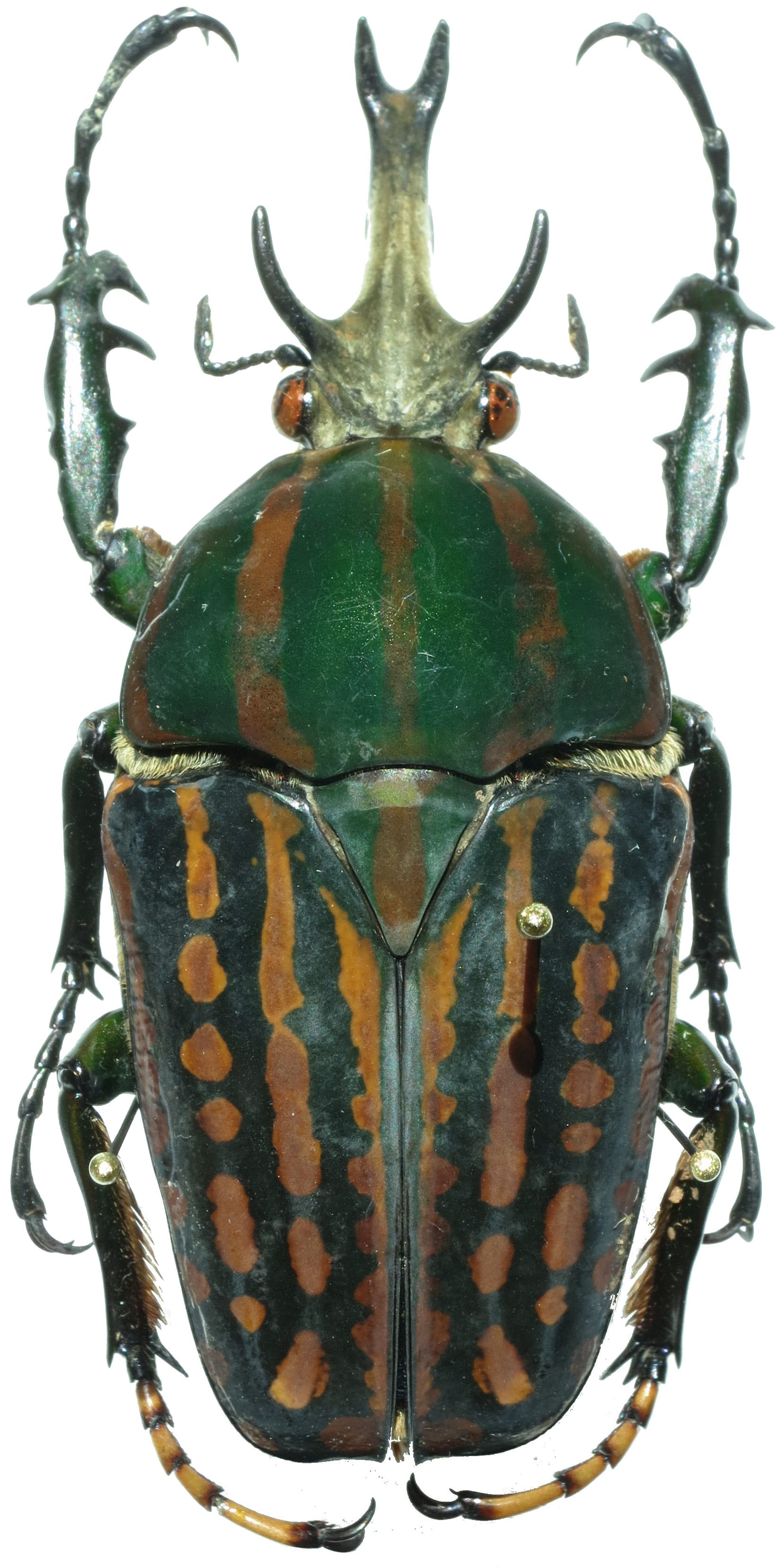
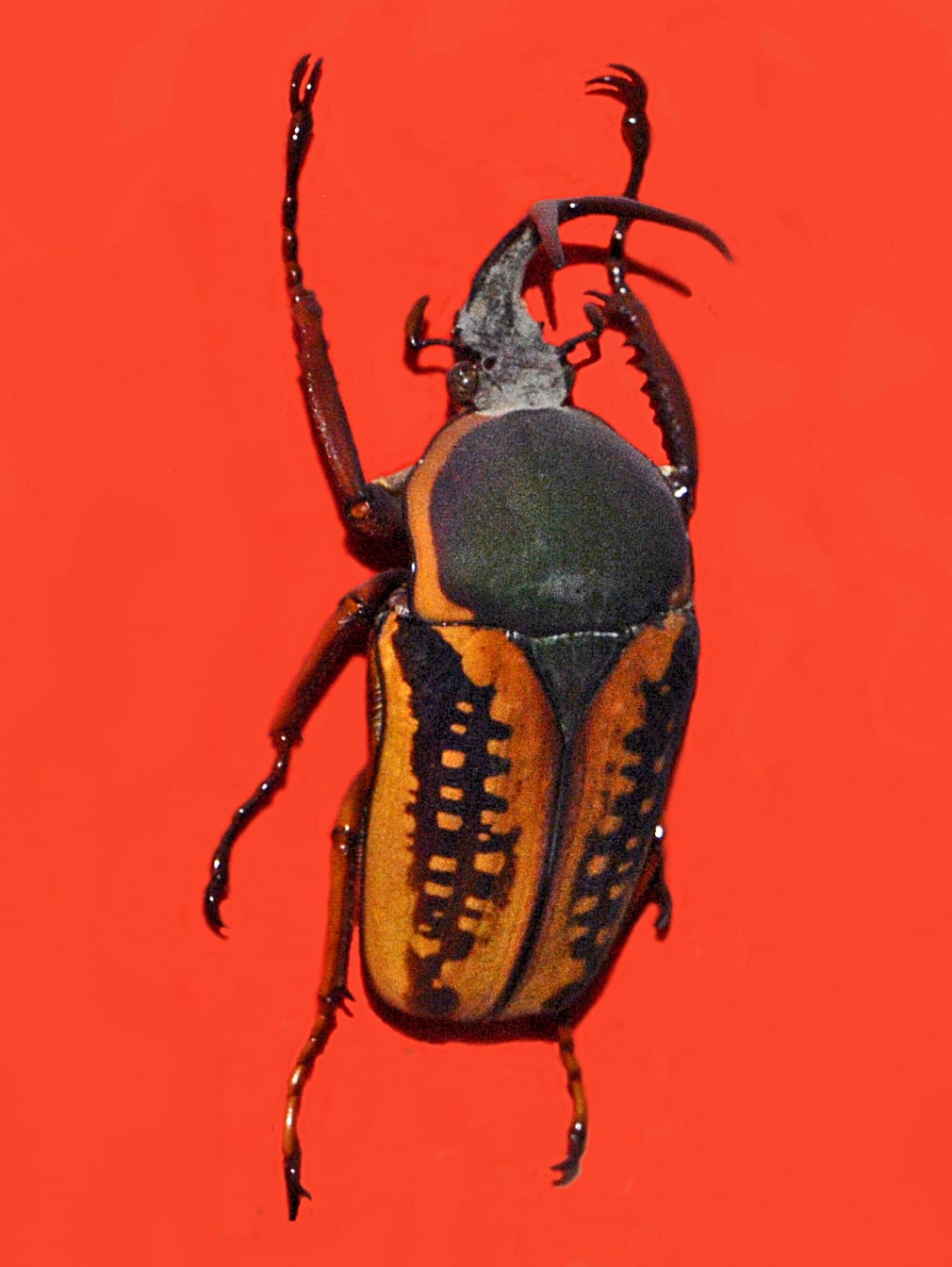
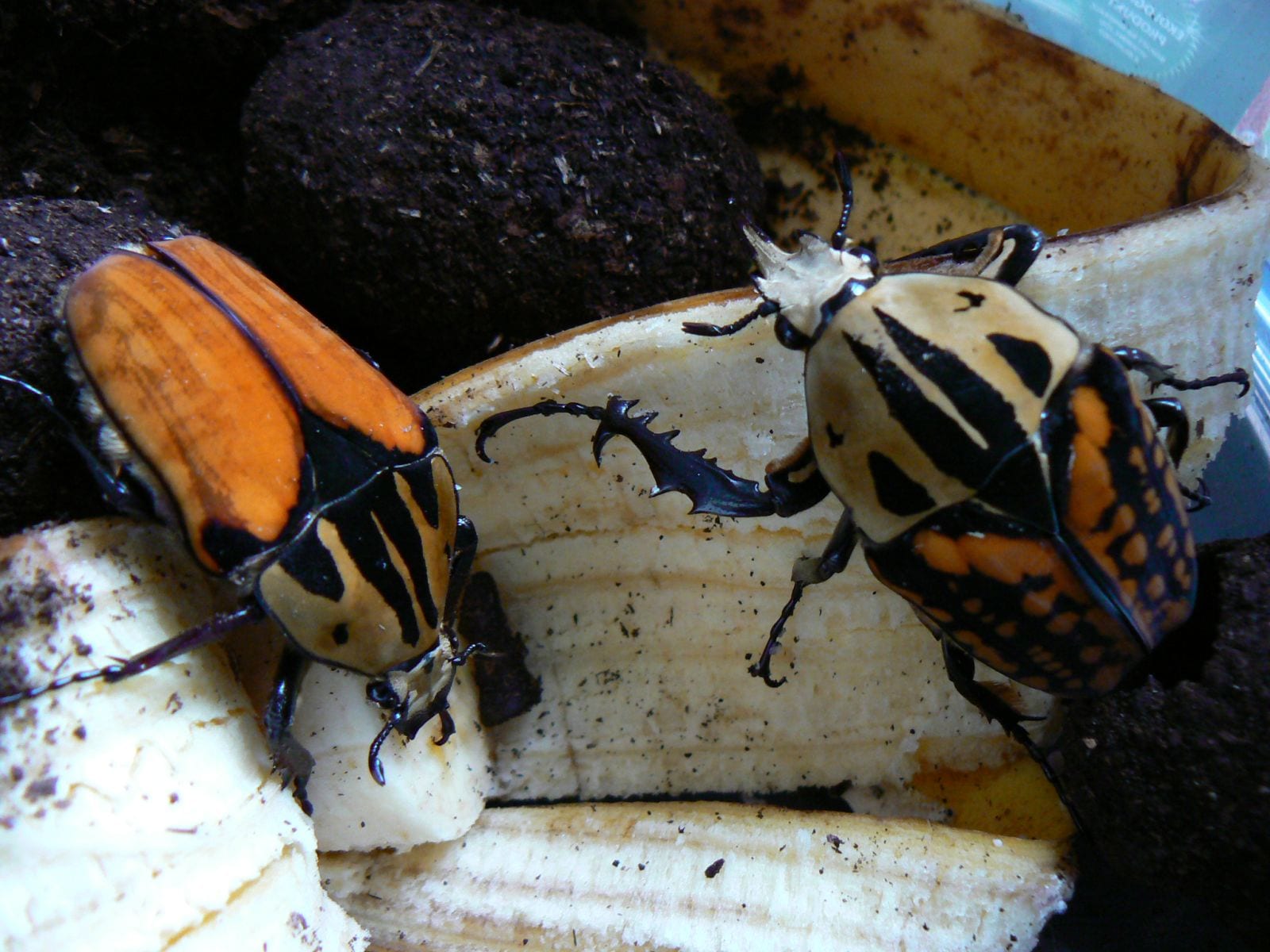
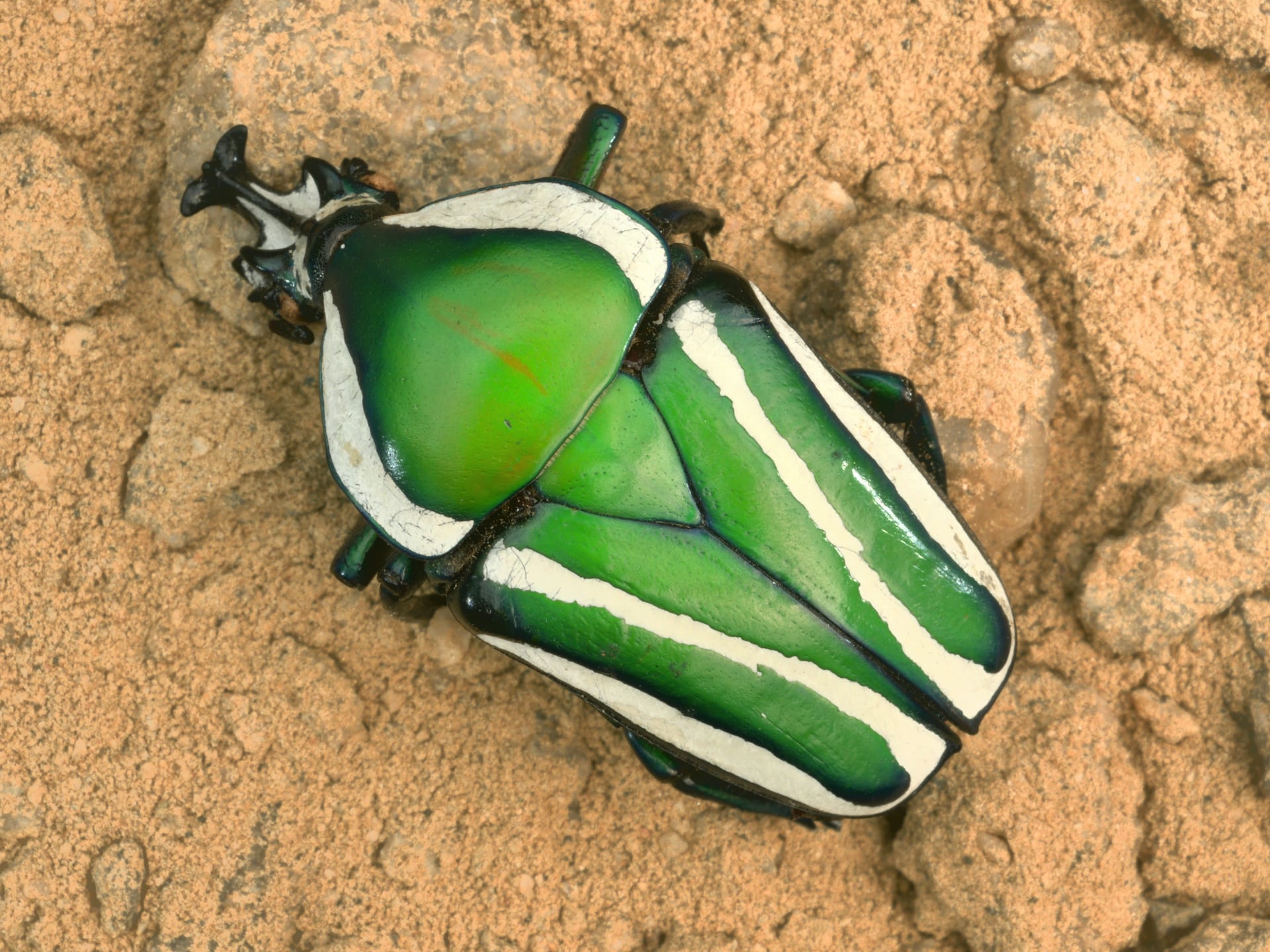
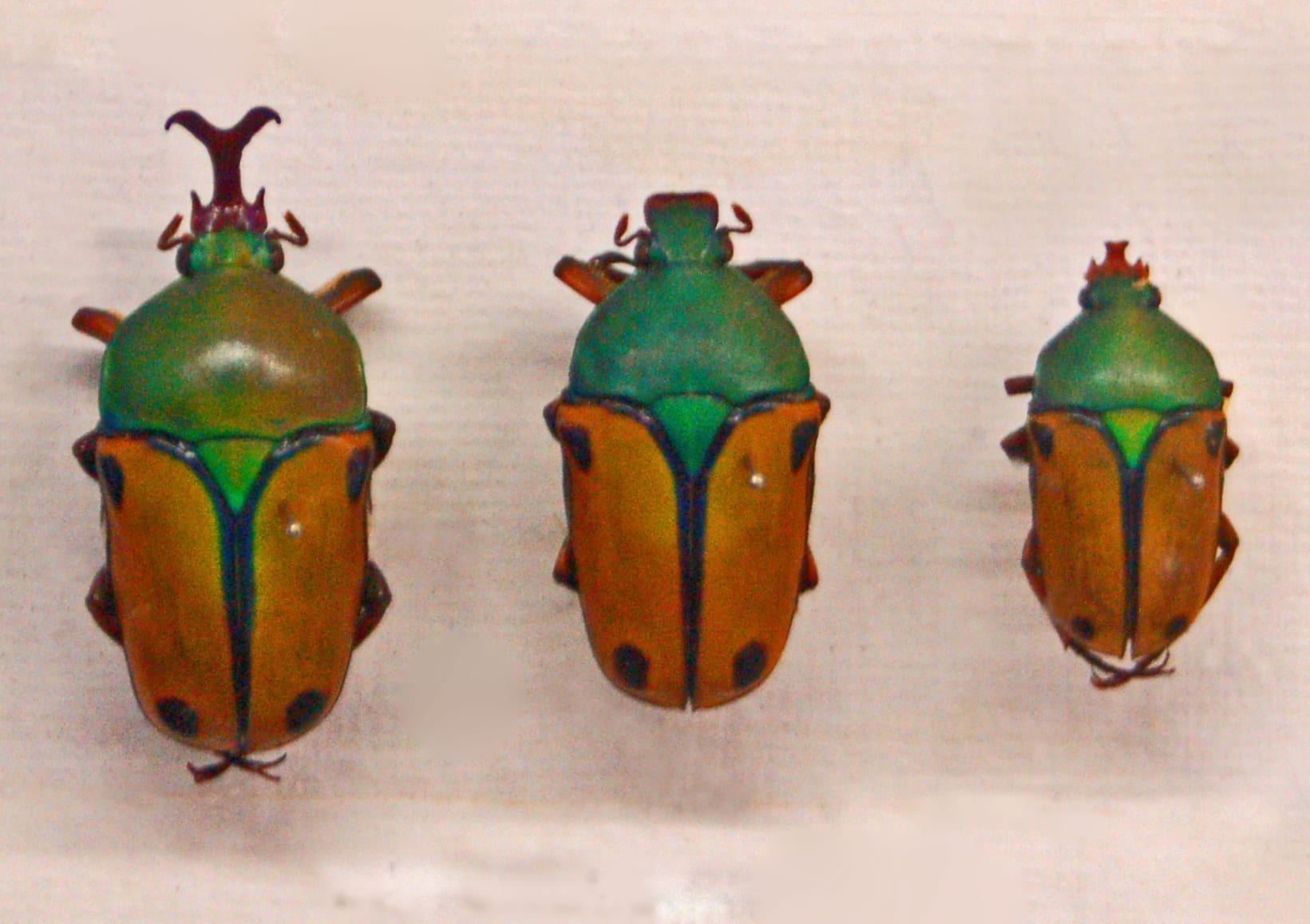
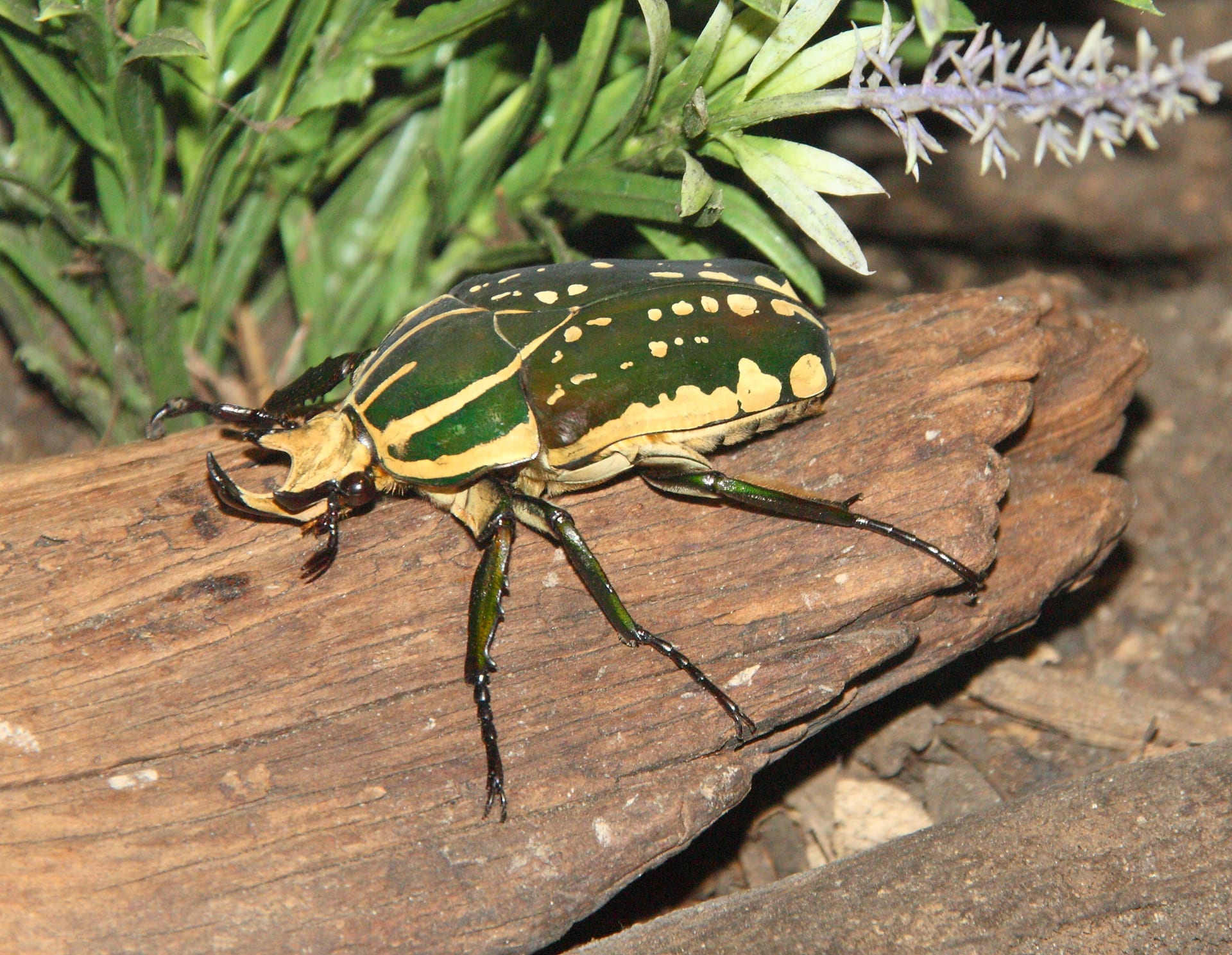
A large flower beetle of the rainforests from West to Central Africa. Males carry forward-projecting horns and velvety colouring, while the hornless females are glossy. Among flower beetles it is regarded as an easy species to breed on.
Difficulty
Beginner
Temperature
20〜28℃
Lifespan
Adults 3-6 months
Size
Males 35-80 mm / females 35-55 mm (nominate males 44-72 mm and females 41-50 mm; subspecies confluens males 42-80 mm and females 42-55 mm)
Humidity
60〜80%
Diet
Fruit, tree sap and beetle jelly
About
Mecynorhina polyphemus was described by Fabricius in 1781 and lives in dense tropical African forest, where it feeds freely on fruit and on sap running from wounds in trees. The sexes differ sharply: males carry horns and a flat, velvety finish, while the hornless females are glossy with prismatic colour. Males run 35-80 mm and females 35-55 mm. Larvae develop in decomposing log compost, and the third instar builds an ovoid cocoon attached to a firm surface, sometimes to the glass of the container, which lets the keeper watch the change. Beetlebreeding.ch rates it a very good beginners species and says larvae can be raised on a wood-and-leaf substrate. Additives such as silkworm powder or cat food can be used to push for larger beetles, but they readily bring mites and mould.
Source: Wikipedia (CC BY-SA 4.0)
Lifespan of the Polyphemus Flower Beetle
The Polyphemus Flower Beetle lives Adults 3-6 months.
Size of the Polyphemus Flower Beetle
The Polyphemus Flower Beetle grows to Males 35-80 mm / females 35-55 mm (nominate males 44-72 mm and females 41-50 mm; subspecies confluens males 42-80 mm and females 42-55 mm).
Basic Info
Origin
West and Central Africa (the nominate form in Cote d'Ivoire and Ghana; subspecies confluens in the DR Congo, Republic of the Congo, Cote d'Ivoire, Gabon and Uganda)
Lifespan
Adults 3-6 months
Size
Males 35-80 mm / females 35-55 mm (nominate males 44-72 mm and females 41-50 mm; subspecies confluens males 42-80 mm and females 42-55 mm)
Care Specifications
SolitaryBreeding: Easy
Sources: Mecynorhina polyphemus - Wikipedia (EN; size, dimorphism, feeding on fruit and sap, larvae in log compost, cocoon, ranges and sizes of the two subspecies) / Mecynorhina - Wikipedia (EN; Mecynorrhina is an invalid misspelling under the ICZN, Chelorrhina and Megalorhina are subgenera, five-subgenus arrangement) / Ben's Beetle Breeding Pages - Chelorrhina polyphemus confluens (rated a beginners species; wood-leaf substrate, additives, drier conditions at pupation, few eggs) / GBIF species page for Mecynorhina polyphemus (distribution and occurrence records by country)
Breeding Records & Localities
Notable localities
Cote d'IvoireGhanaDR CongoUganda
Regional subspecies
- Mecynorhina polyphemus polyphemus — Cote d'Ivoire and Ghana
- Mecynorhina polyphemus confluens — DR Congo, Republic of the Congo, Cote d'Ivoire, Gabon and Uganda
The BE-KUWA certified records cover stag beetles and rhinoceros beetles, not the Cetoniinae, so this species has no record there. The subspecies confluens was described by Kraatz in 1890.
Generation codes
- WD
- Wild-caught
- WF1
- Offspring of a wild-caught female
- F1〜
- Captive generations (same locality)
- CBF1
- Cross-locality captive-bred (reset)
Sources: Mecynorhina polyphemus - Wikipedia (EN; size, dimorphism, feeding on fruit and sap, larvae in log compost, cocoon, ranges and sizes of the two subspecies) / Ben's Beetle Breeding Pages - Chelorrhina polyphemus confluens (rated a beginners species; wood-leaf substrate, additives, drier conditions at pupation, few eggs)
References & Sources
Edited & verified by: BreederDirect editorial team
The taxonomic, regulatory, and husbandry data on this page are compiled and verified against the authoritative primary sources below.
Primary sources
- Wikipedia
- Ministry of the Environment, Invasive Species Act: "Guidance for Those Importing Live Insects in Scarabaeoidea"
- CITES Appendix (checklist.cites.org)
- Mecynorhina - Wikipedia (EN; Mecynorrhina is an invalid misspelling under the ICZN, Chelorrhina and Megalorhina are subgenera, five-subgenus arrangement)
- Ben's Beetle Breeding Pages - Chelorrhina polyphemus confluens (rated a beginners species; wood-leaf substrate, additives, drier conditions at pupation, few eggs)
- GBIF species page for Mecynorhina polyphemus (distribution and occurrence records by country)
Taxonomy & Authority
Accepted name: Mecynorrhina polyphemus (Fabricius, 1781)
Synonyms: Mecynorhina polyphemus (Fabricius, 1781), Chelorrhina polyphemus (Fabricius, 1781), Scarabaeus polyphemus Fabricius, 1781
Authority databases: GBIF
Nomenclature follows global taxonomic authority databases.
Regulations & Conservation Status
Not CITES-listed
Plant Protection Act: When importing live specimens of Scarabaeoidea (including rhinoceros beetles, stag beetles, flower beetles, etc.), a species identification certificate issued by the exporting country government agency or equivalent must be attached in accordance with the Invasive Species Act (import ports are limited to Narita, Chubu, Kansai, Fukuoka, and Kagoshima airports). This species itself is not a designated invasive species, and import is possible upon submission of the certificate.
Sources: Ministry of the Environment, Invasive Species Act: "Guidance for Those Importing Live Insects in Scarabaeoidea" / CITES Appendix (checklist.cites.org)
Regulations may change. Always verify the latest information with the relevant authorities.
Polyphemus Flower Beetle Listings
Loading latest listingsFind listings for this species