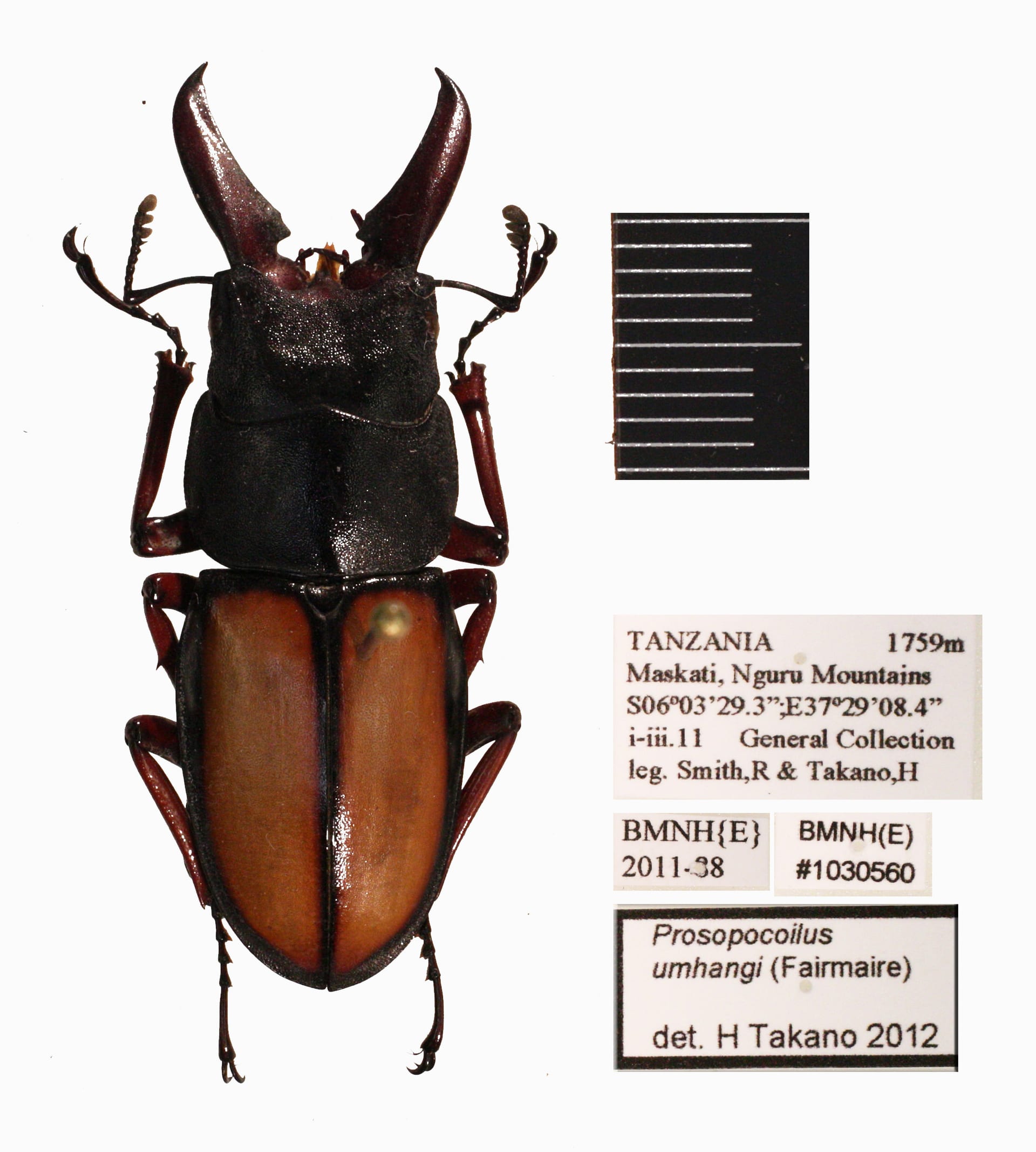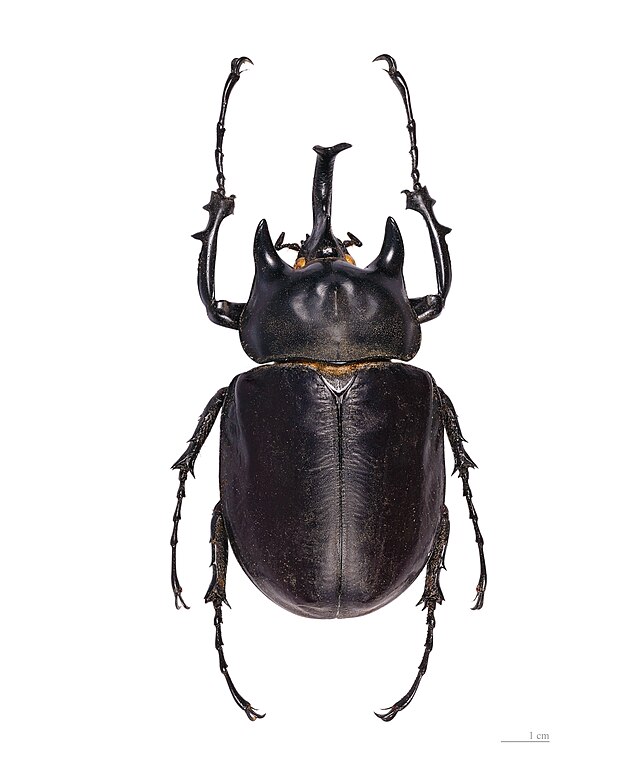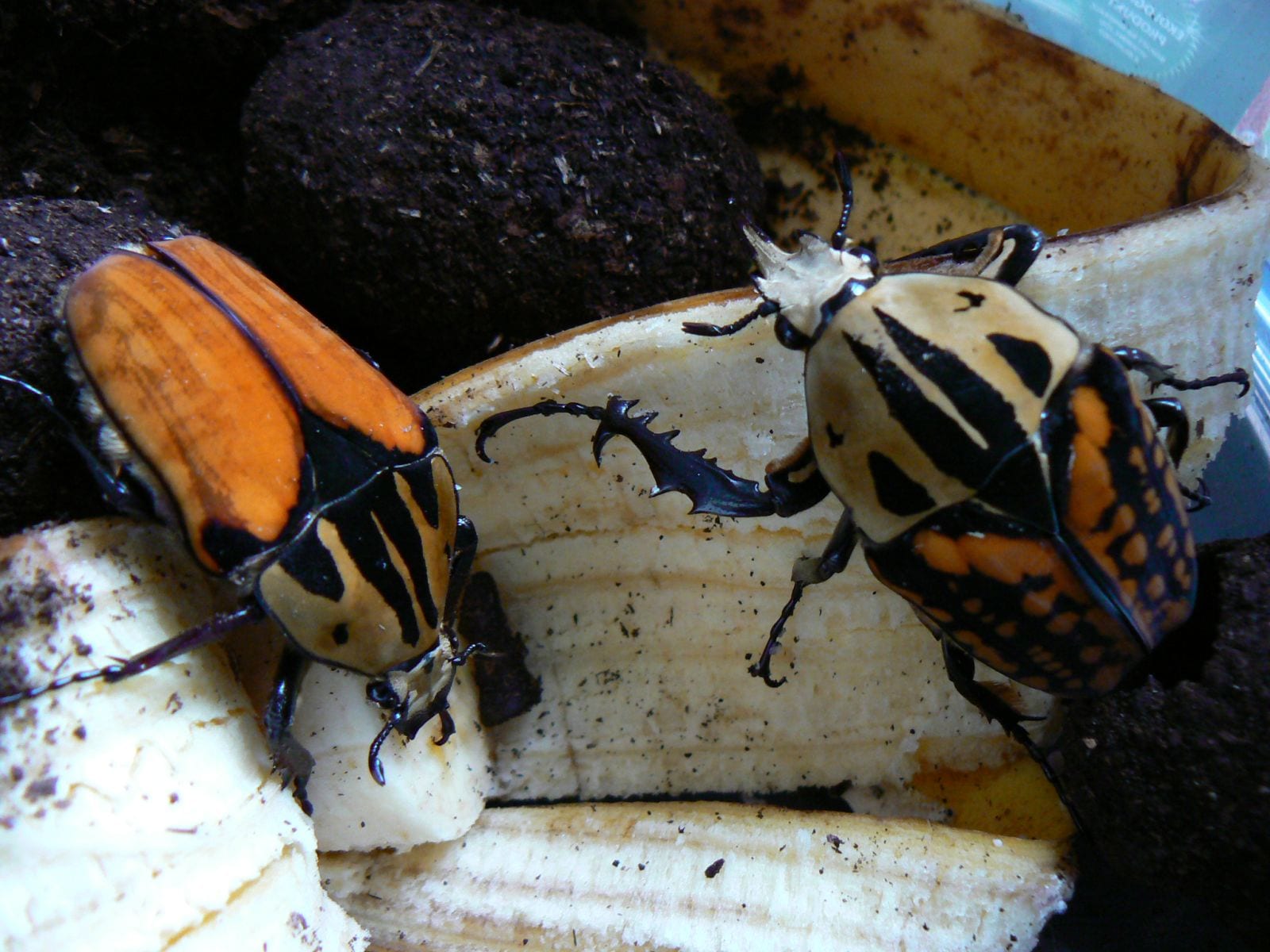
Source: Wikimedia Commons
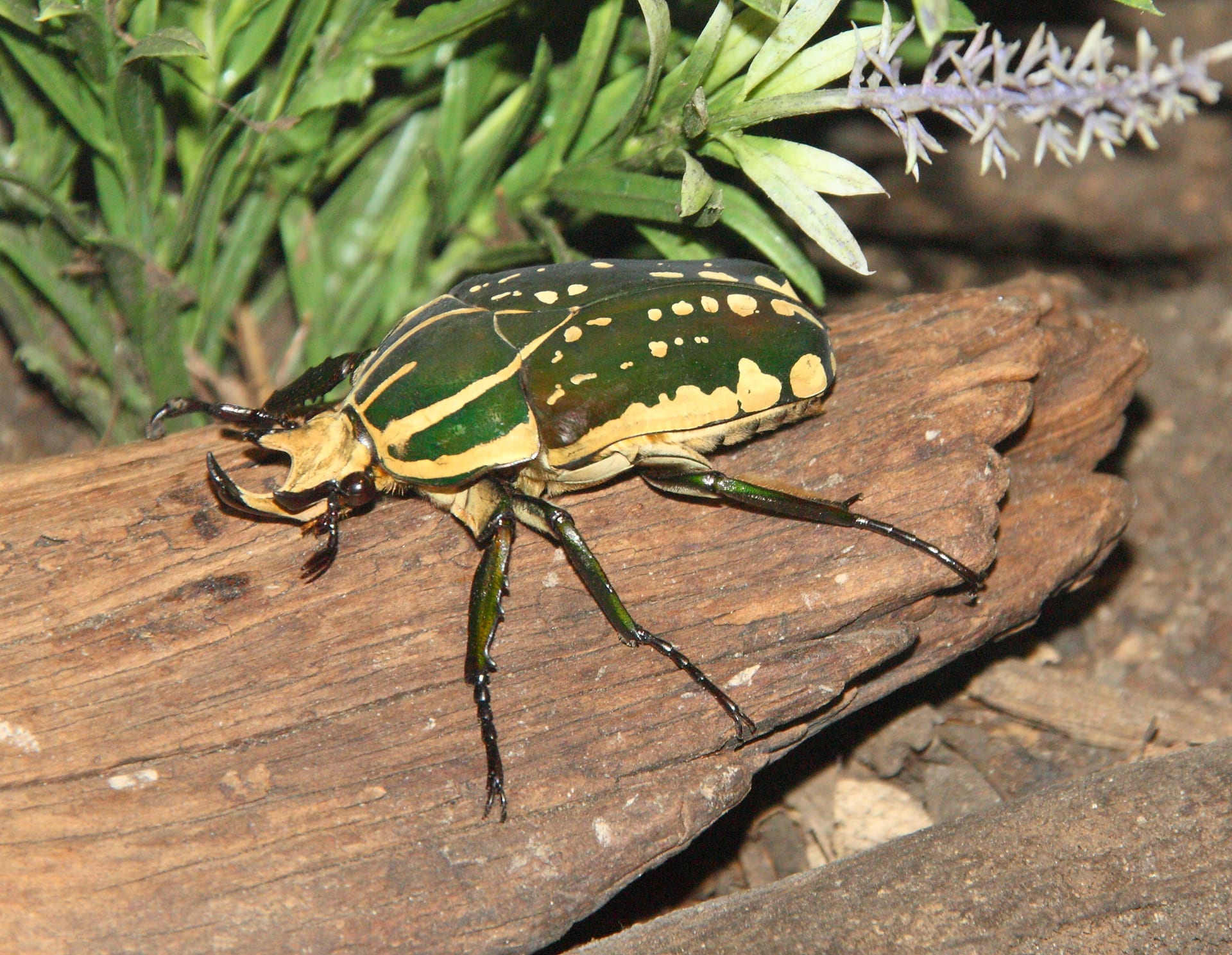
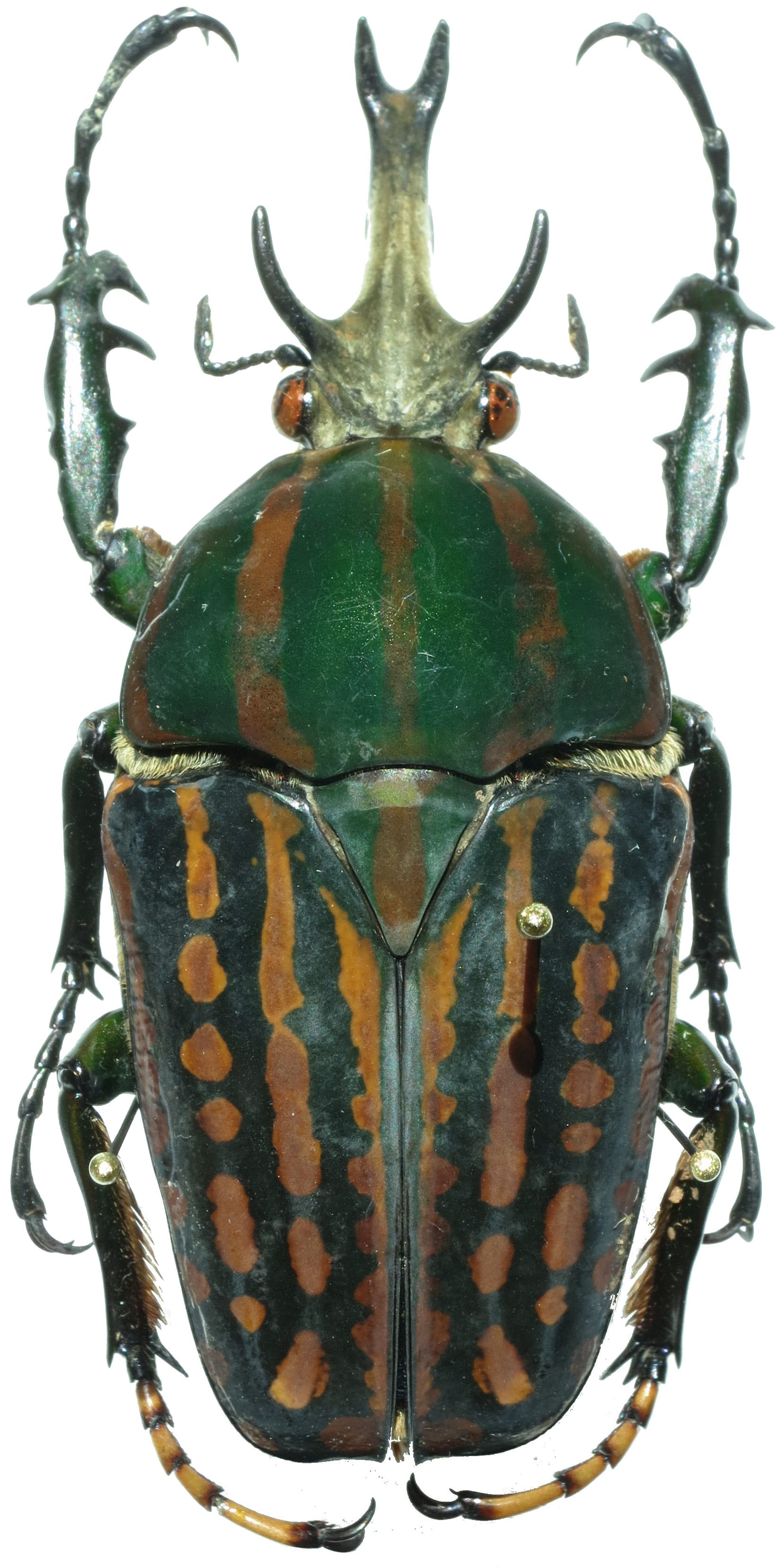
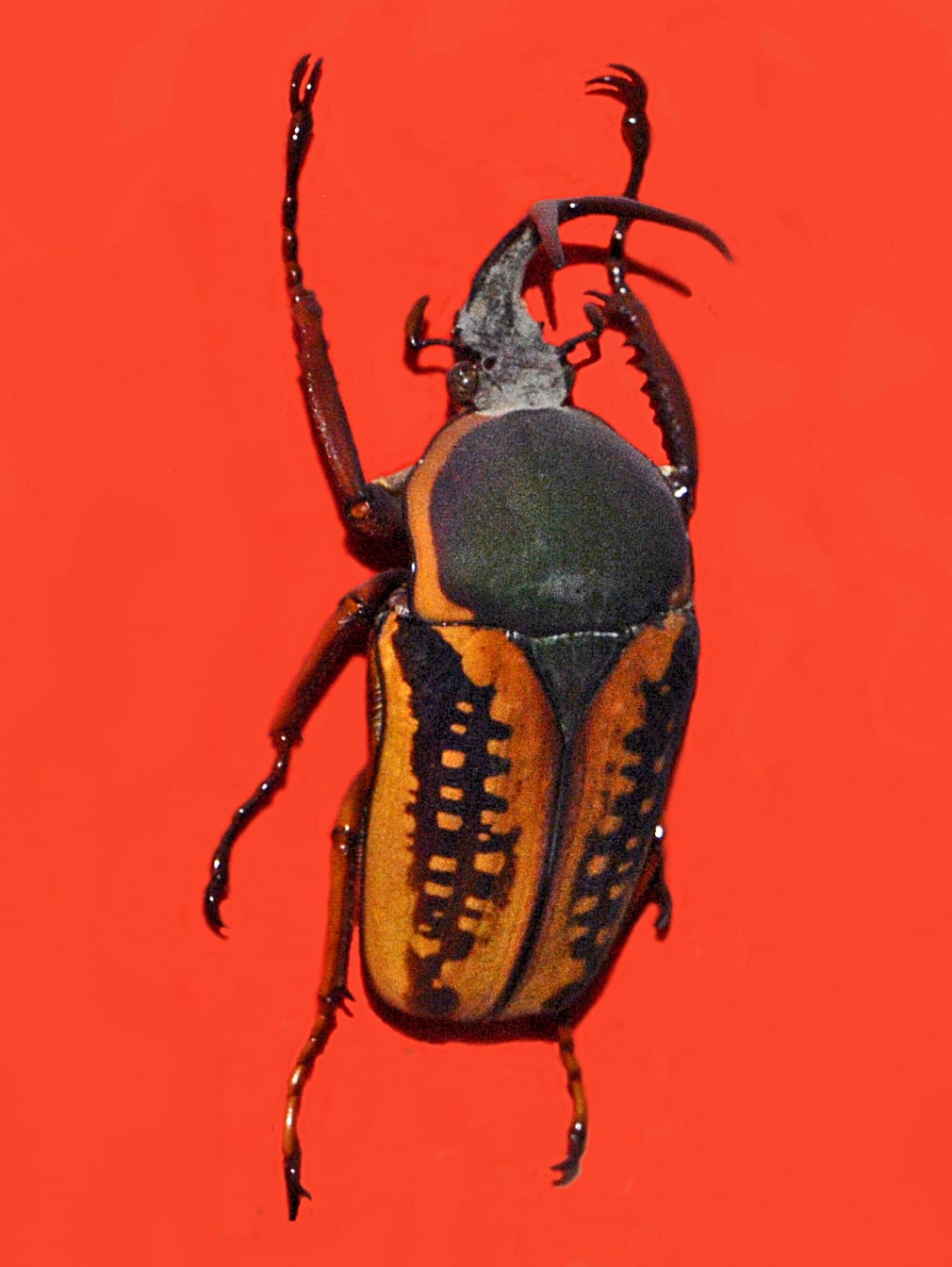
Oberthur's Flower Beetle
IntermediateMecynorrhina oberthuri
A large flower beetle from the forests of Tanzania. It was long thought the rarest species of its genus until it turned out to be common there, and many hobbyists now breed it. Males carry forward-projecting horns.
Difficulty
Intermediate
Temperature
20〜28℃
Lifespan
Adults 3-6 months
Humidity
60〜80%
Diet
Fruit, tree sap and beetle jelly
About
Mecynorhina oberthuri was described by Fairmaire in 1903 and was long taken for the rarest species of its genus. Jean-Pierre Lequeux then found that it is common in the forests of Tanzania, and it is now reared by many amateurs; GBIF records likewise cluster in Tanzania. It is placed in the subgenus Mecynorrhinella of Mecynorhina, alongside Mecynorhina torquata and Mecynorhina ugandensis. Husbandry follows the other species of that subgenus: beetlebreeding.ch reports of M. torquata that it profits from cooler temperatures, that larvae do well on flake soil, that protein additives such as Gammarus help, and that the larval period runs from twelve months to two years.
Source: Wikipedia (CC BY-SA 4.0)
Lifespan of the Oberthur's Flower Beetle
The Oberthur's Flower Beetle lives Adults 3-6 months.
Basic Info
Origin
East Africa (Tanzania)
Lifespan
Adults 3-6 months
Temperature
20〜28℃
Humidity
60〜80%
Diet
Fruit, tree sap and beetle jelly
Care Guide
Care Specifications
SolitaryBreeding: Moderate
Sources: Mecynorhina - Wikipedia (EN; Mecynorrhina is an invalid misspelling under the ICZN, Chelorrhina and Megalorhina are subgenera, five-subgenus arrangement) / GBIF species page for Mecynorhina oberthuri (distribution and occurrence records by country) / Ben's Beetle Breeding Pages - Mecynorhina torquata poggei (congener in the same subgenus: prefers cooler temperatures, larval period 12 months to 2 years, flake soil, Gammarus and other protein additives)
References & Sources
Edited & verified by: BreederDirect editorial team
The taxonomic, regulatory, and husbandry data on this page are compiled and verified against the authoritative primary sources below.
Primary sources
- Wikipedia
- Ministry of the Environment, Invasive Species Act: "Guidance for Those Importing Live Insects in Scarabaeoidea"
- CITES Appendix (checklist.cites.org)
- GBIF species page for Mecynorhina oberthuri (distribution and occurrence records by country)
- Ben's Beetle Breeding Pages - Mecynorhina torquata poggei (congener in the same subgenus: prefers cooler temperatures, larval period 12 months to 2 years, flake soil, Gammarus and other protein additives)
Taxonomy & Authority
Accepted name: Mecynorrhina oberthuri Fairmaire, 1903
Synonyms: Mecynorhina oberthuri Fairmaire, 1903, Mecynorhina oberthueri Fairmaire, 1903
Authority databases: GBIF
Nomenclature follows global taxonomic authority databases.
Regulations & Conservation Status
Not CITES-listed
Plant Protection Act: When importing live specimens of Scarabaeoidea (including rhinoceros beetles, stag beetles, flower beetles, etc.), a species identification certificate issued by the exporting country government agency or equivalent must be attached in accordance with the Invasive Species Act (import ports are limited to Narita, Chubu, Kansai, Fukuoka, and Kagoshima airports). This species itself is not a designated invasive species, and import is possible upon submission of the certificate.
Sources: Ministry of the Environment, Invasive Species Act: "Guidance for Those Importing Live Insects in Scarabaeoidea" / CITES Appendix (checklist.cites.org)
Regulations may change. Always verify the latest information with the relevant authorities.
Oberthur's Flower Beetle Listings
Loading latest listingsFind listings for this species