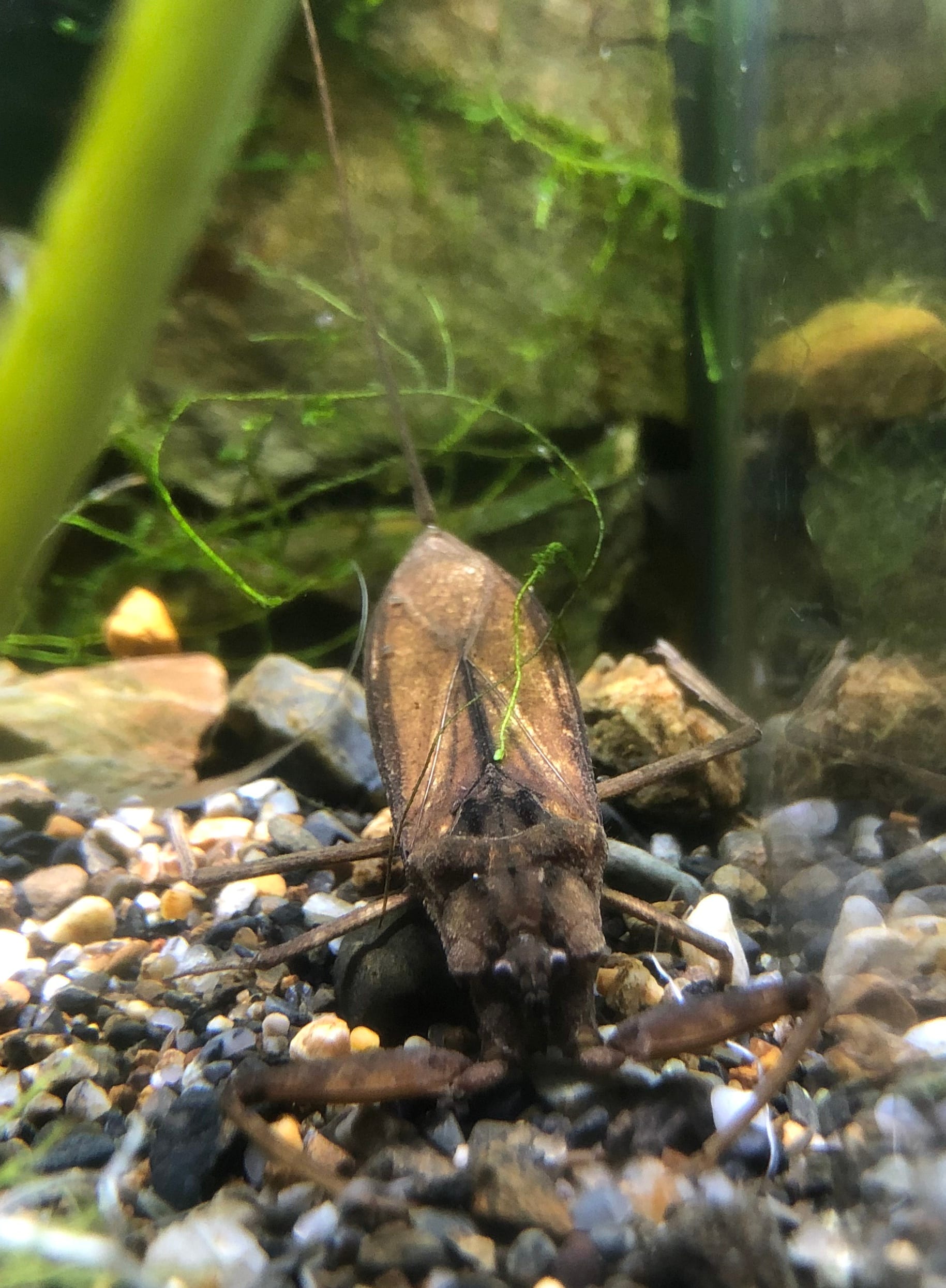
 © Totti / CC BY-SA 4.0
Water Scorpion
The water scorpion spends most of its time motionless among submerged plants or debris, extending the long breathing tube at the tip of its abdomen just above the water's surface while its raptorial front legs stay poised to ambush passing prey. Its Japanese name comes from the way it taps those front legs in a motion said to resemble playing a small drum. Because it tolerates less-than-pristine water conditions fairly well, it's considered a forgiving choice for anyone trying aquatic insect keeping for the first time.
View Water Scorpion encyclopedia →0% commission on your first sales!Register by September 30, 2026 and your first 2 sales are commission-free!
Breeder Wanted!
List on BreederDirect and sell directly to customers nationwide!
6 Transparency Standards You Can Trust
When listing Insects, Breeders disclose the following. We guarantee transparency on growth stage and breeding unit.
- Life Stage Clarity
- Generation Info
- Real Photos
- Breeding Unit
- Country of Origin
- Body Length (mm)
Browse all 296 breeds
Verified breeders wanted for Insects
Breeders are signing up now ahead of launch. Subscribe to be notified when new listings go live.
Getting alerts is free with a member account. When new listings match your saved search, we'll notify you by email and in-app.
Browse other categories
Verified breeders (preview)
About Water Scorpion
The water scorpion is an ambush-hunting aquatic bug that breathes through a long tail-like tube at the surface. Hardy and beginner-friendly, it lives 2-3 years and grows to 30-35mm.
7 things to know before welcoming a Water Scorpion
1Manage water depth for the breathing tube
Because water scorpions breathe through the long tube at the tip of their abdomen, tank water should be shallow enough for it to reach the surface. Adding plants or driftwood gives them something to grip while holding that position.
2A patient ambush predator
Water scorpions spend most of their time motionless among plants or debris, front legs poised to grab passing prey. Don't expect constant swimming activity — long stillness is completely normal behavior for this species.
3Reasonably tolerant of water quality changes
Water scorpions are known to handle less-than-ideal water conditions better than many aquatic insects, part of why they're considered beginner-friendly. Still, sudden changes in water chemistry can stress them, so periodic water changes are worth keeping up.
4A lifespan of about 2-3 years
Adult water scorpions typically live around 2 to 3 years. It's worth thinking ahead about whether you can keep their tank set up for that whole stretch before bringing one home.
5Best kept one per tank
Water scorpions are carnivorous, and cannibalism can occur when several are kept together in a small tank. If you want to house more than one, providing plenty of hiding spots for each individual helps reduce the risk.
6Keep the tank covered
Water scorpions can be more active than they look and are capable of climbing out of an open tank, especially at night. A secure lid helps prevent an unwanted escape.
7Set up a calm environment in advance
Water scorpions prefer still water, so keep aeration and flow gentle rather than strong. Arranging plants or leaf litter as hiding spots before your new pet arrives makes for a smoother transition.
Frequently asked questions about Water Scorpion
- Q.Can a water scorpion bite or sting people?
- A.It uses its proboscis to pierce prey it has grabbed with its front legs, so handling one bare-handed can result in a jab. It's best to use a net rather than your fingers when moving or observing it.
- Q.Can it be kept with fish or other tankmates?
- A.Being carnivorous, it may prey on smaller fish, shrimp, or other small animals sharing the tank. If you're considering tankmates, carefully check size and compatibility beforehand.
- Q.What should I feed a water scorpion?
- A.They readily prey on live feeder fish, mosquito larvae, and other small aquatic creatures. Keep in mind that they respond to movement, so they don't typically take to artificial food easily.
- Q.How often does the water need to be changed?
- A.Water scorpions tolerate less-than-perfect water fairly well, but that doesn't mean water changes can be skipped entirely. Regular partial water changes based on filtration conditions, done gradually, are the basic approach.
- Q.Does it need special care in winter?
- A.Activity levels tend to drop as temperatures fall. If you're planning to keep it outdoors or without a heater, it's a good idea to check ahead of time how much the water temperature will fluctuate.
Useful tools for Water Scorpion care
Learn more about Water Scorpion in the encyclopedia
View Water Scorpion encyclopedia entry →
Care difficulty, lifespan, size and diet — all basics covered.
More in this category
Can't find the one you're looking for?
Post your wishes for free and breeders with matching animals will contact you with introductions.