Tsuchiya's Rhinoceros Beetle
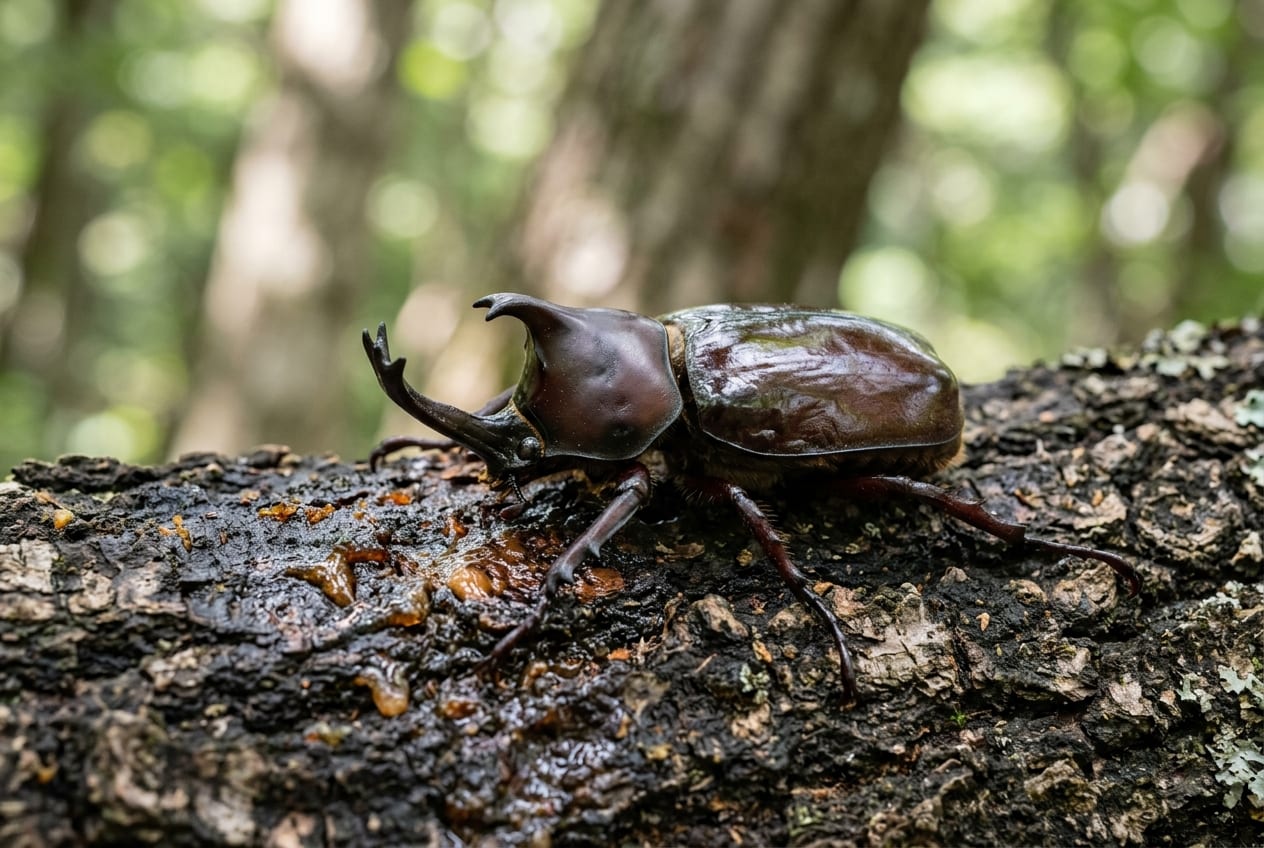
The Tsuchiya's Rhinoceros Beetle is a subspecies found only on Kuchinoerabu Island, Japan. Compared to the mainland form, it's smaller but noticeably broader-bodied, and males show off smooth, strongly glossy elytra — some individuals have almost no hair at all, giving them a sleek look. Suited to keepers with some prior experience, this beetle appeals to anyone who wants to observe a rare island subspecies up close. Since adult activity is relatively short-lived, plan to enjoy and care for it attentively from day one.
View Tsuchiya's Rhinoceros Beetle encyclopedia →Breeder Wanted!
List on BreederDirect and sell directly to customers nationwide!
BreederDirect's 6 Transparency Commitments
When listing Insects, Breeders disclose the following. We guarantee transparency on growth stage and breeding unit.
- Life Stage Clarity
- Generation Info
- Real Photos
- Breeding Unit
- Country of Origin
- Body Length (mm)
Browse all 336 breeds
Verified breeders wanted for Insects
Breeders are signing up now ahead of launch. Subscribe to be notified when new listings go live.
Getting alerts is free with a member account. When new listings match your saved search, we'll notify you by email and in-app.
Browse other categories
Verified breeders (preview)
Tsuchiya's Rhinoceros Beetle key facts
- Care level
- Intermediate
- Lifespan
- 1-3 months as an adult
- Size
- Males 33.9-48.8mm (excluding the head horn), females 31.6-43.6mm
- Diet
- Adults take sap of Machilus and other trees, plus beetle jelly; larvae feed on leaf mould
- Temperature & Humidity
- As with the mainland form, never let the substrate freeze solid, and note that constant warmth through the winter brings the beetles on early and produces out-of-season adults.
- Breeding & Egg-laying
- Breeding is done in an egg-laying set of packed fermented substrate. The larvae eat leaf mould and will not touch living wood or leaves that have not begun to break down. For the mainland form in central Japan, about 15 days are reported from hatching to the second instar, about 35 days to the third, and 150-200 days in the third instar.
- Cohabitation
- Males fight with their horns, so keep adults apart. The subspecies is endemic to Kuchinoerabujima and must not be housed or crossed with the mainland form or with subspecies from other islands.
- Lifespan & Rearing Period
- For about two weeks after eclosion the beetle stays underground without feeding before coming to the surface. Adults live one to three months, a span that depends heavily on temperature and food, and they do not overwinter as adults.
- Health & Notes
- It is an island endemic with a very narrow range. Do not treat beetles without locality data as belonging to it, and do not release captive stock into the wild. The 2025 edition of BE-KUWA lists only a wild record for this subspecies; no captive record is registered.
About Tsuchiya's Rhinoceros Beetle
Tsuchiya's Rhinoceros Beetle, a subspecies unique to Kuchinoerabu Island, known for its broad body and glossy elytra.
7 things to know before welcoming a Tsuchiya's Rhinoceros Beetle
1Enclosure and Substrate Setup
Adult beetles do best in a well-ventilated case with insect mat kept lightly moist. Add enough depth for them to burrow, which gives them a secure place to rest. Have the case, substrate, and a climbing branch ready before your beetle arrives.
2Care Level: Intermediate
This subspecies is considered suitable for keepers with intermediate experience. Beyond basic temperature and humidity control, there are moments where care specific to an island-origin subspecies matters, so some prior insect-keeping experience helps.
3Adult Lifespan of 1–3 Months
Adults are active for only about one to three months. Set up the enclosure as soon as possible after bringing your beetle home so it can spend that limited time in good condition.
4Size Difference Between Sexes
Adult body length runs 33.9–48.8mm for males and 31.6–43.6mm for females, excluding the horn, with males slightly larger on average. Comparing horn presence and body width between the sexes is part of the fun of keeping this beetle.
5Glossy, Nearly Hairless Elytra
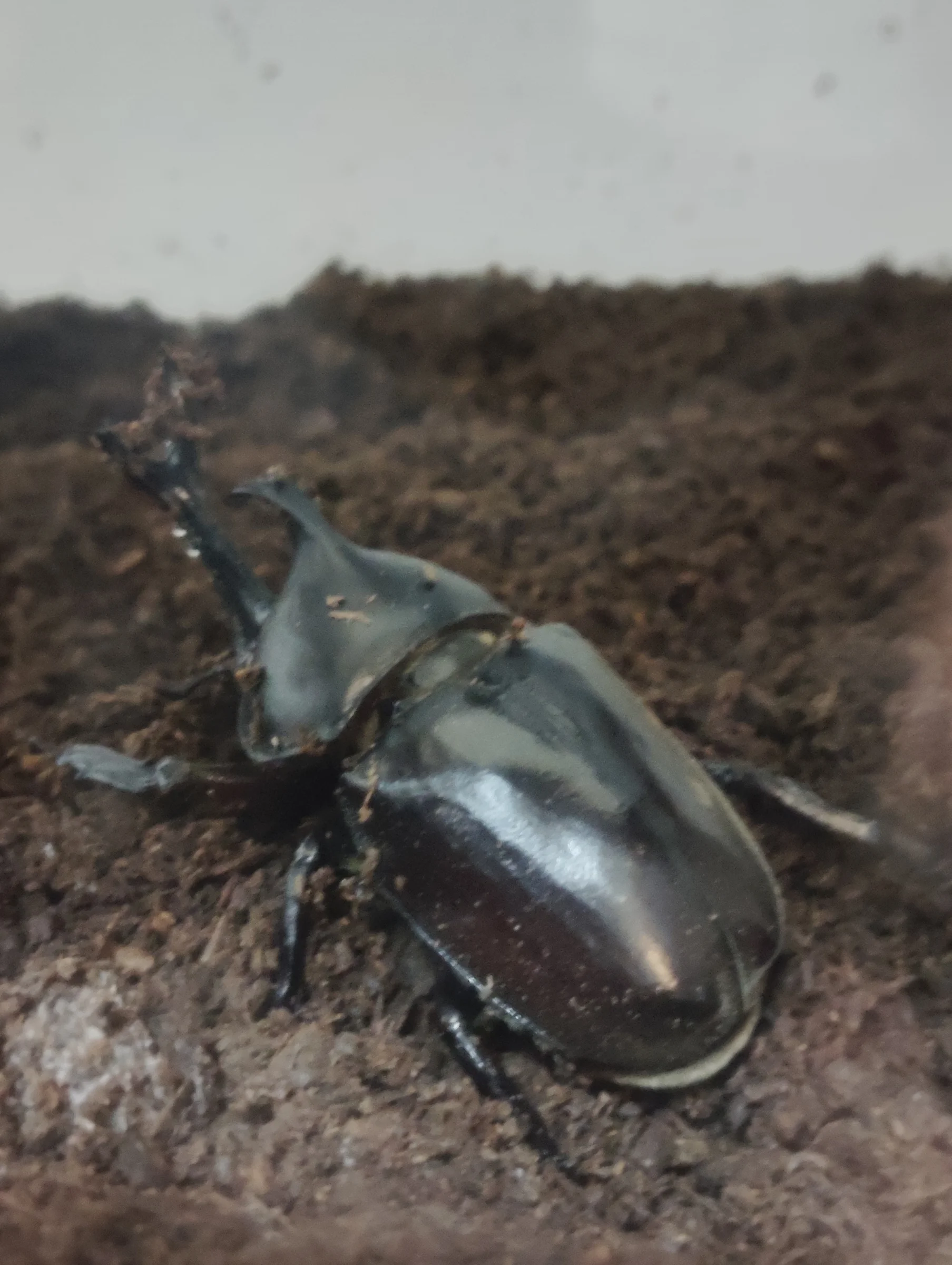
Hair on the pronotum and elytra is very short or, in some individuals, nearly absent, and males' elytra have a smooth, strongly glossy surface. This distinctive texture is worth a closer look when observing or photographing your beetle.
6Males Fight, So Keep Them Separately
As with rhinoceros beetles in general, males housed together in the same case may fight. For a calmer environment, it's generally best to keep one beetle per enclosure.
7Temperature Care After Arrival
Since this subspecies originates from an island environment, avoid extreme heat or cold and keep the enclosure out of direct sunlight in a stable spot. Pay extra attention to environmental changes right after your beetle arrives.
Frequently asked questions about Tsuchiya's Rhinoceros Beetle
- Q.Where does Tsuchiya's Rhinoceros Beetle live in the wild?
- A.It's a subspecies found only on Kuchinoerabu Island, having evolved independently in that island environment, distinct from mainland populations.
- Q.How does it look different from mainland rhinoceros beetles?
- A.It's smaller but broader-bodied than the mainland subspecies, with very short or nearly absent hair on the pronotum and elytra, and males have smooth, strongly glossy elytra.
- Q.Is this beetle suitable for beginners?
- A.It's classified as suitable for intermediate keepers. It suits those already comfortable with basic insect care like temperature and humidity management; first-time keepers should research thoroughly before bringing one home.
- Q.How long do adults live?
- A.Adults are active for roughly one to three months. Since this period is limited, set up the enclosure as soon as possible after arrival.
- Q.Are there legal restrictions on obtaining this species?
- A.Tsuchiya's Rhinoceros Beetle is not subject to CITES.
Useful tools for Tsuchiya's Rhinoceros Beetle care
Learn more about Tsuchiya's Rhinoceros Beetle in the encyclopedia
View Tsuchiya's Rhinoceros Beetle encyclopedia entry →
Care difficulty, lifespan, size and diet — all basics covered.
More in this category
Can't find the one you're looking for?
Post your wishes for free and breeders with matching animals will contact you with introductions.