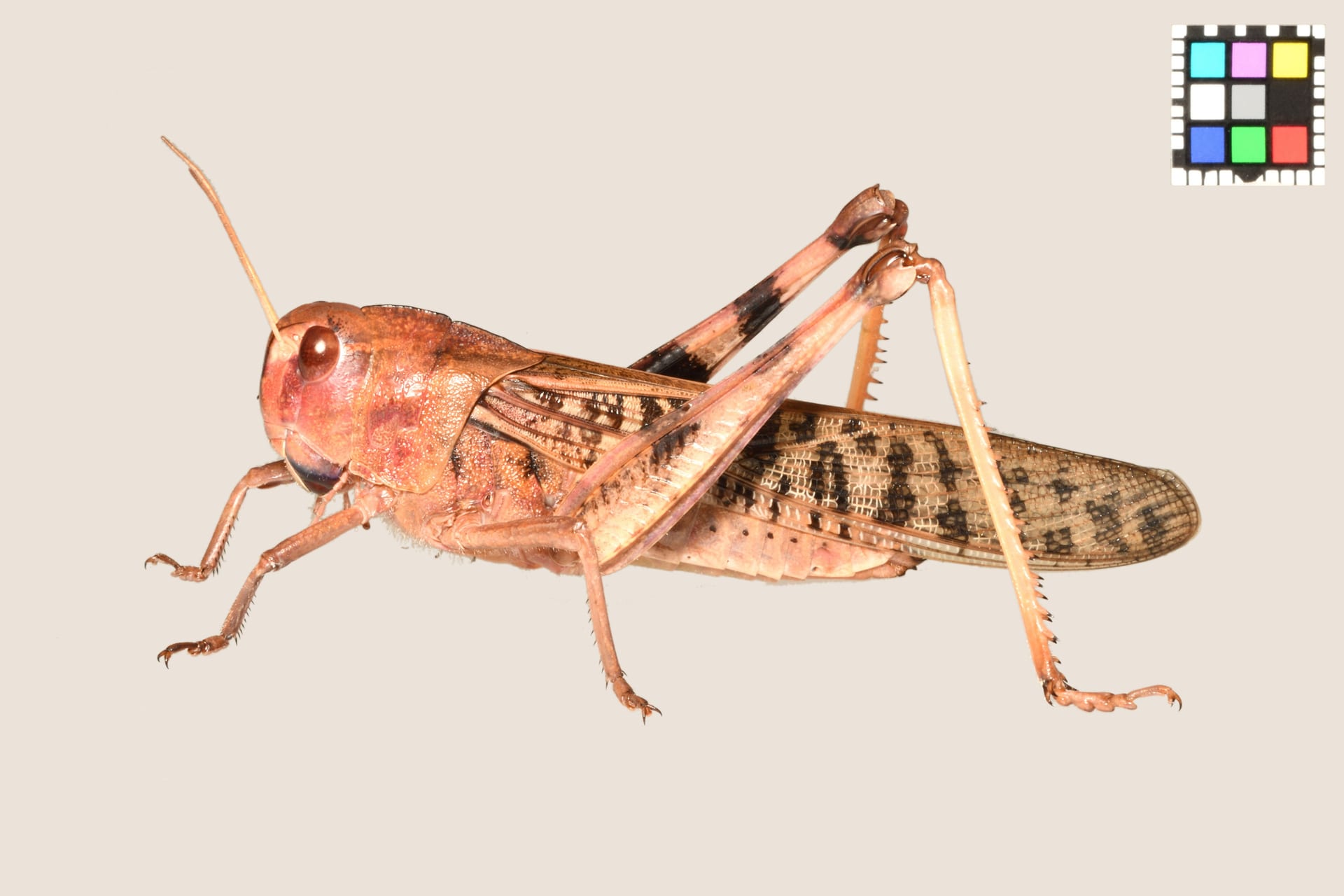
 © Ffish.asia / CC BY 4.0
Migratory locust
The migratory locust is a large grasshopper species reaching 35–65mm in body length, appearing in either a green or brown color form. Its forewings carry a mottled brown-and-white pattern, while the hindwings are plain. Quick and powerful jumpers with strong flight ability, they're fascinating to watch in action. Raised individually, they tend to be calm and easy to handle, making them a solid choice for first-time keepers. Under crowded conditions, migratory locusts can shift toward a "gregarious phase," changing both appearance and behavior — a striking example of how flexible insect life can be. Commonly kept for feeder or observation purposes, they combine hardiness with everyday familiarity.
View Migratory locust encyclopedia →0% commission on your first sales!Register by September 30, 2026 and your first 2 sales are commission-free!
Breeder Wanted!
List on BreederDirect and sell directly to customers nationwide!
BreederDirect's 6 Transparency Commitments
When listing Insects, Breeders disclose the following. We guarantee transparency on growth stage and breeding unit.
- Life Stage Clarity
- Generation Info
- Real Photos
- Breeding Unit
- Country of Origin
- Body Length (mm)
Browse all 336 breeds
Verified breeders wanted for Insects
Breeders are signing up now ahead of launch. Subscribe to be notified when new listings go live.
Getting alerts is free with a member account. When new listings match your saved search, we'll notify you by email and in-app.
Browse other categories
Verified breeders (preview)
Migratory locust key facts
- Care level
- Beginner-friendly
- Lifespan
- About 5 months as an adult (in captivity)
- Size
- 35-65mm (females larger)
- Temperature
- 25〜35℃
- Diet
- Herbivorous (mainly grass leaves)
- Temperature & Humidity
- Keep at 25-35C by day, letting it fall to about 15C at night. It needs warm, dry conditions; damp enclosures lead to disease and death. Use dry sand or coconut fibre and do not mist.
- Enclosure
- It chews through fabric and netting, so use a sturdy enclosure with metal mesh ventilation. Allow at least about 50x50x30cm for twelve adults, add dry twigs as perches and let light in.
- Food & Feeding
- Feed mainly fresh grasses; it takes its water from food, so at most lightly mist the grass before feeding. Grass treated with insecticide is deadly. Tama Zoo feeds maize leaves and sorghum.
- Breeding & Egg-laying
- Females push the abdomen into soil to lay egg pods, so provide a container of soil or sand. Eggs hatch in two to three weeks, nymphs reach adulthood in about four weeks and start breeding about two weeks later; cold slows everything. Moulting individuals are often eaten, so avoid overcrowding.
- Lifespan & Rearing Period
- Adults die of age about five months after the final moult. In the wild there are two generations a year, with autumn eggs overwintering to hatch in spring.
- Health & Notes
- In its gregarious phase it can erupt and damage crops, so keep feeder colonies escape-proof and never release them. The Tsushima population is on Nagasaki's Red List. Importing live foreign stock needs prior clearance from the Plant Protection Station.
About Migratory locust
A caresheet for the migratory locust, a large 35–65mm grasshopper with green and brown color forms. Covers temperament, adult lifespan, and what to know before bringing one home.
7 things to know before welcoming a Migratory locust
1Green or Brown Color Form
Migratory locusts come in two main color forms — a vivid green type and a duller brown type — giving the same species quite different looks. Which form an individual develops isn't something keepers can fully control.
2May Shift to a Swarm Phase
Raising nymphs at high density can push them toward a "gregarious phase," bringing changes in color and behavior. Keeping them singly or in small numbers helps maintain their typical solitary-phase look and temperament.
3Strong Jumper, Can Escape
Their hind legs give them powerful jumping ability and strong flight, so they can slip out through small gaps in an enclosure. Check that lids and ventilation mesh are secure to prevent escapes.
4Adult Lifespan of About 5 Months
Once they reach adulthood, migratory locusts typically live around 5 months in captivity. It helps to picture the whole life cycle, nymph stage included, before committing to keeping one.
5Feed Fresh Plant Matter
They're herbivores that favor fresh grasses and similar plants, eating readily when leaves are crisp and green. Keeping a steady supply of fresh food on hand takes regular attention.
6Females Grow Larger
Adults range from 35 to 65mm in body length, and females tend to grow larger than males even under the same conditions. Keep this size difference in mind if you're housing more than one together.
7Prepare the Cage First
Having a well-ventilated, appropriately sized enclosure ready in advance — along with substrate, hiding spots, and a feeding area — makes bringing one home go smoothly. Also check that the lid is sturdy and the cage tall enough to handle their jumping and flying.
Frequently asked questions about Migratory locust
- Q.Are migratory locusts suitable for beginners?
- A.Yes, they're generally considered a beginner-friendly species. Once you understand the basics of feeding and cage care, they're manageable even for first-time insect keepers.
- Q.How long do adult migratory locusts live?
- A.Adults typically live around 5 months in captivity. Including the nymph stage, the total time you'll spend caring for one is a bit longer.
- Q.Will mine be green or brown?
- A.Both the green and brown color forms occur, and it varies by individual. Rearing conditions can influence the tendency somewhat, but you can't reliably choose one color over the other.
- Q.Is it better to keep them alone or in a group?
- A.Keeping them singly or in small numbers helps maintain their typical solitary-phase traits. Raising them at high density can trigger gregarious-phase changes, so it's worth being mindful of numbers.
- Q.What should I feed them?
- A.They're herbivores that favor fresh grasses and similar plants. Keeping a steady supply on hand and avoiding gaps in feeding is important.
Useful tools for Migratory locust care
Learn more about Migratory locust in the encyclopedia
View Migratory locust encyclopedia entry →
Care difficulty, lifespan, size and diet — all basics covered.
More in this category
Can't find the one you're looking for?
Post your wishes for free and breeders with matching animals will contact you with introductions.