Source: Wikimedia Commons
Migratory locust
BeginnerLocusta migratoria
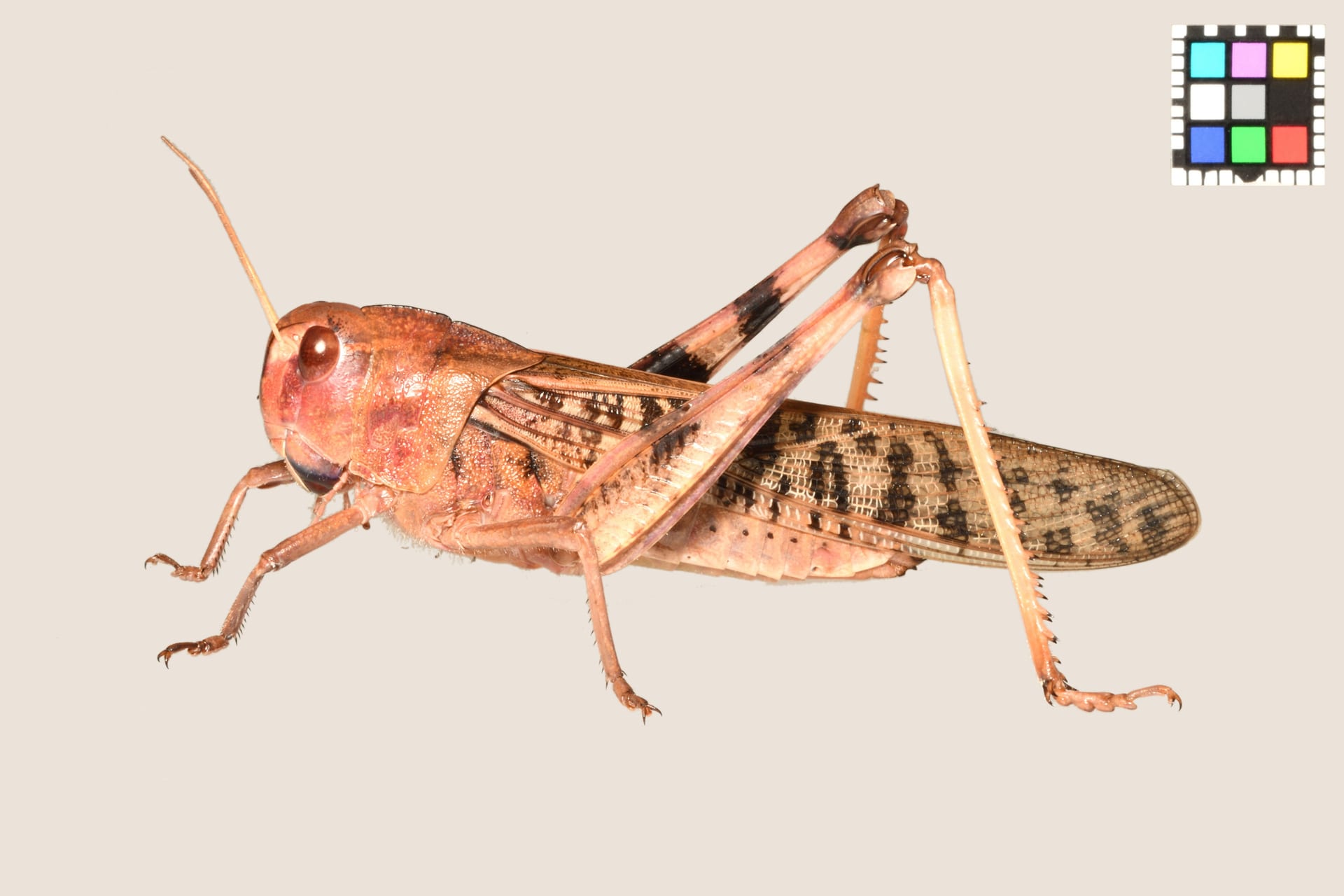
A large 35-65mm grasshopper in green or brown forms, with mottled brown-and-white forewings and plain hindwings. At high density it turns gregarious and swarms. It is kept and bred both as live food and for observation.
Difficulty
Beginner
Temperature
25〜35℃
Lifespan
About 5 months as an adult (in captivity)
Size
35-65mm (females larger)
Humidity
60〜80%
Diet
Herbivorous (mainly grass leaves)
About
Locusta migratoria (Linnaeus, 1758) is the only species in its genus and the most widespread locust, occurring across Africa, Europe, Asia, Australia and New Zealand; in Japan it is found nationwide. It is 35-65mm long, females being larger, with mottled brown-and-white forewings. It comes in green and brown forms, and develops a solitary phase at low density and a gregarious phase at high density; gregarious swarms can strip crops, and outbreaks have occurred in Japan, for example in Okinawa. It lives in sunny, grass-rich grassland from plains to low hills, mostly on riverbanks in Japan. It eats grass leaves but also dead insects, and often attacks members of its own species that are stuck mid-moult. Females push the abdomen into soil to lay a spongy egg pod. There are two generations a year: summer eggs hatch in about a month, while autumn eggs overwinter and hatch the next spring. The Tsushima population is on Nagasaki Prefecture's Red List. In Japan wild-caught insects are kept, and captive-bred locusts are sold as live food for reptiles and other pets.
Source: Wikipedia (CC BY-SA 4.0)
Lifespan of the Migratory locust
The Migratory locust lives About 5 months as an adult (in captivity).
Size of the Migratory locust
The Migratory locust grows to 35-65mm (females larger).
Temperature & humidity for the Migratory locust
The ideal temperature for the Migratory locust is 25〜35℃.
Basic Info
Origin
Africa, Europe, Asia, Australia and New Zealand (throughout Japan)
References & Sources
Edited & verified by: BreederDirect editorial team
The taxonomic, regulatory, and husbandry data on this page are compiled and verified against the authoritative primary sources below.
Taxonomy & Authority
Regulations & Conservation Status
Not CITES-listed
Not covered by CITES or the Invasive Alien Species Act. In its gregarious phase it damages crops, so keep feeder colonies escape-proof and never release them. Bringing live foreign stock into Japan requires checking with the Plant Protection Station first whether it counts as a pest.
Sources: Ministry of the Environment: List of invasive alien species (JA) / Plant Protection Station: Importing live insects (JA) / Species+ CITES query (no listing)
Regulations may change. Always verify the latest information with the relevant authorities.
Migratory locust Listings
Loading latest listingsFind listings for this species