Source: Wikimedia Commons
Two-spotted cricket
BeginnerGryllus bimaculatus
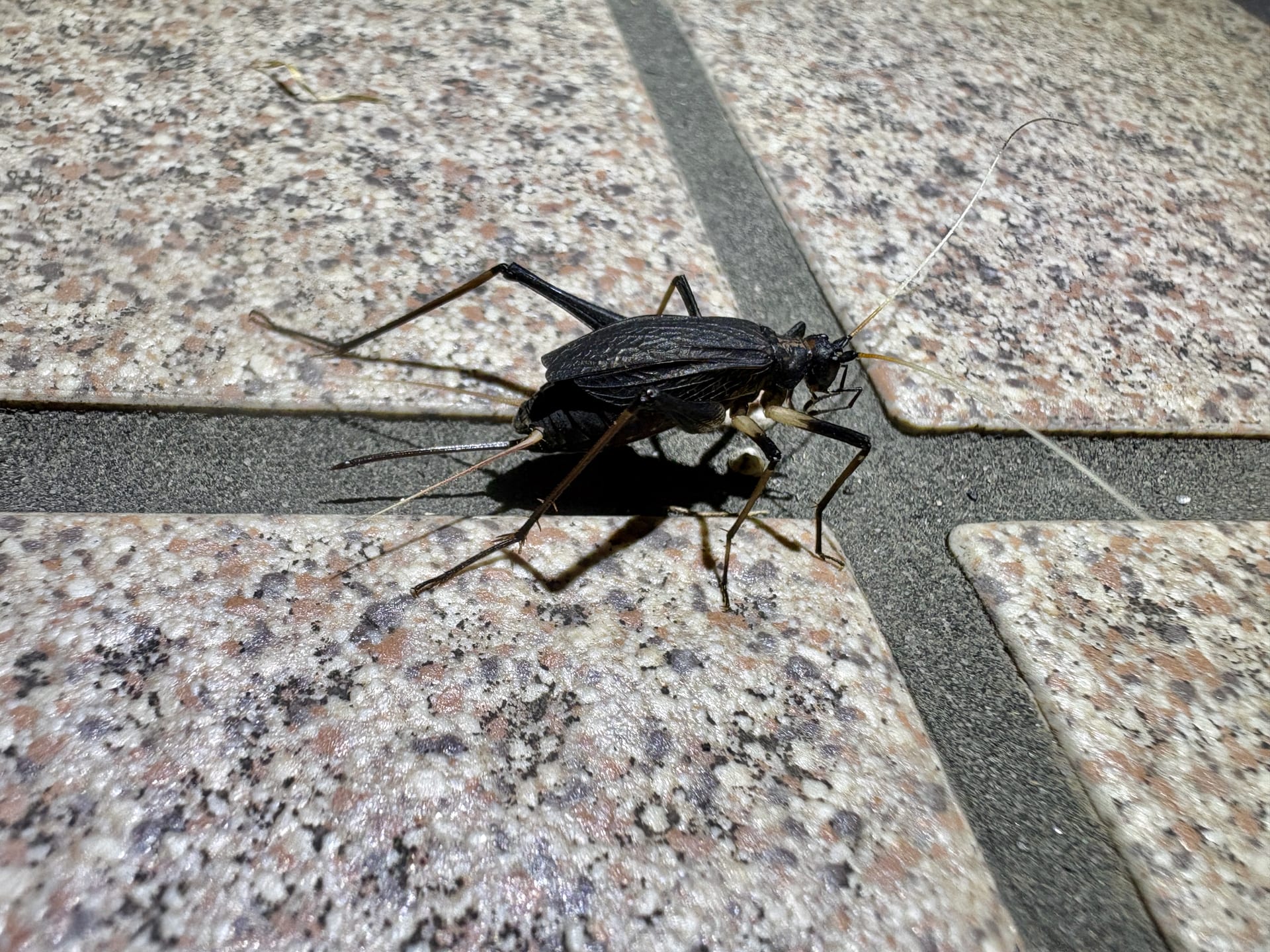
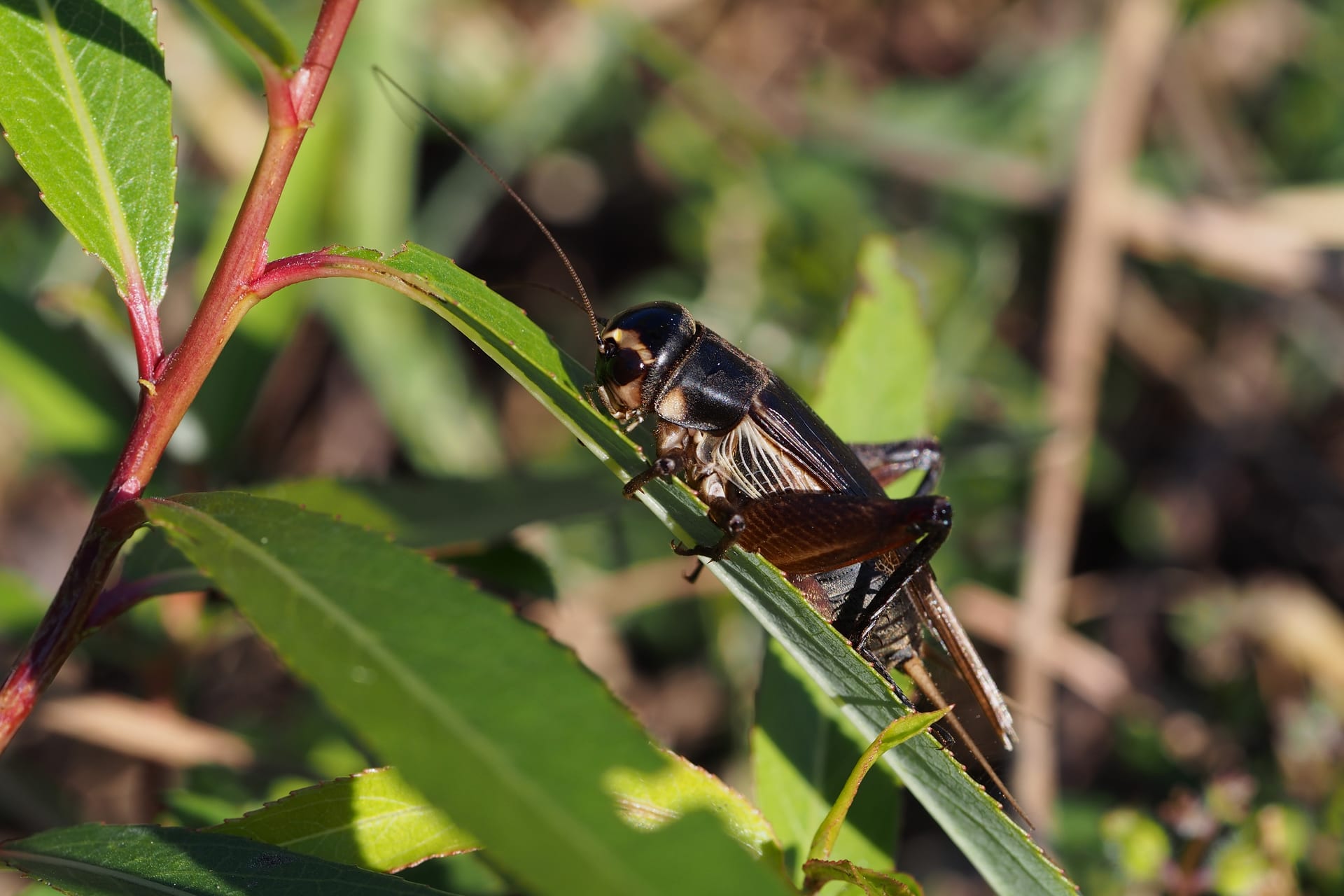
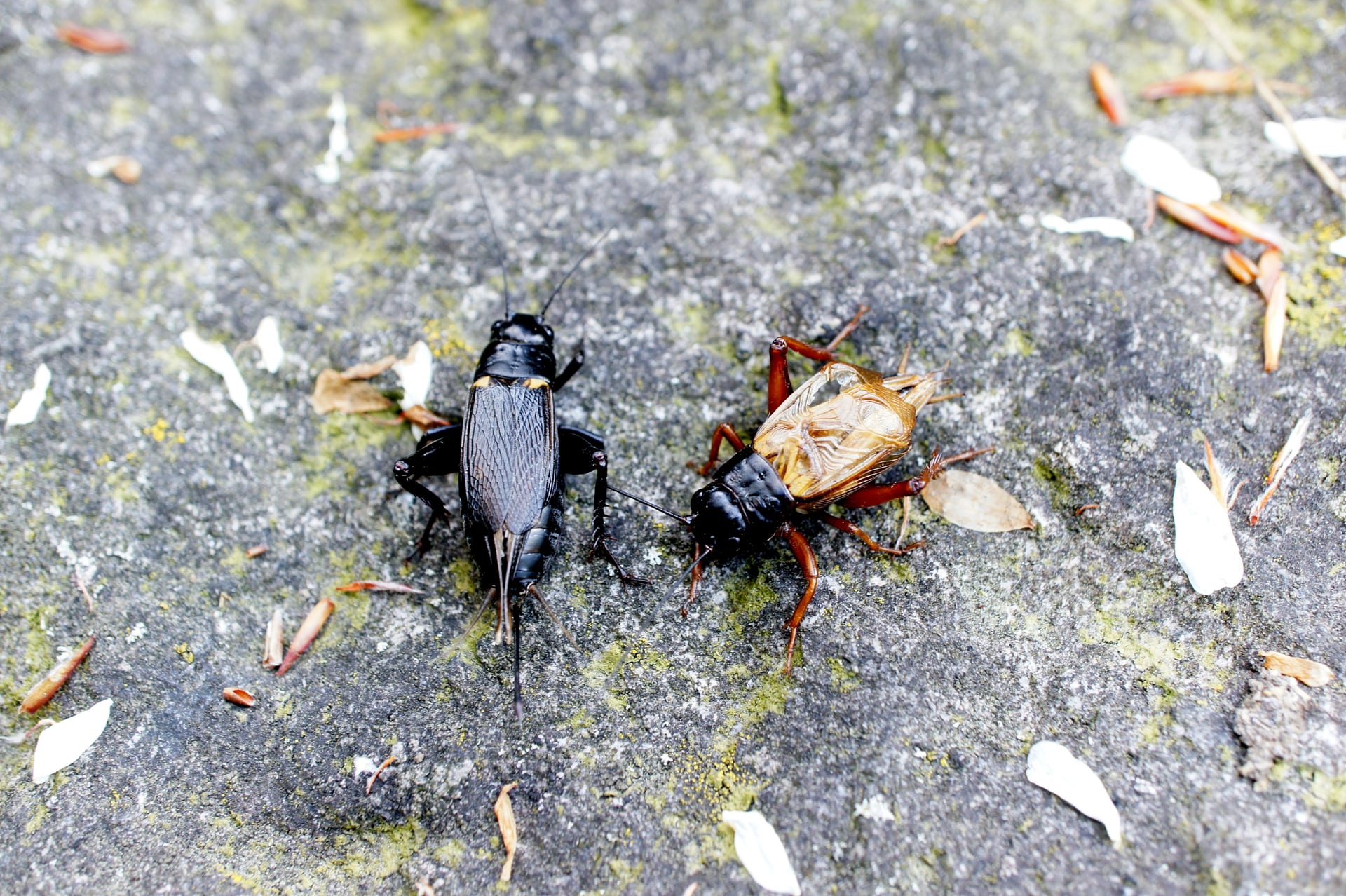
Named for the two pale spots at the base of its wings on an otherwise dark body. It has no diapause and breeds year-round when kept warm, making it one of the most widely bred live foods for reptiles and amphibians.
Difficulty
Beginner
Temperature
20〜28℃
Lifespan
Adult lifespan poorly documented (eggs hatch in about two weeks)
Size
3-4cm long
Humidity
60〜80%
Diet
Omnivorous (grains, dry foods, vegetables)
About
Gryllus bimaculatus De Geer, 1773 is a large field cricket (subfamily Gryllinae) 3-4cm long, told from other Gryllus by two spots at the wing bases. It ranges across Africa and southern Europe into Asia, through China and Indochina to Borneo; in Japan wild populations are known from Kagoshima Prefecture southwards (Amami, Okinawa and nearby islands). It has no diapause and needs no cold period to complete its life cycle, so it lays year-round above 30C and is widely used as a laboratory animal. Females push the ovipositor into moist soil or sand, and eggs hatch in about two weeks. Males are territorial, grappling with wide-open mandibles, and produce distinct calling, courtship and fighting songs. Cannibalism is rare, but females may eat males when food runs short. In Japan it is sold routinely as live food for reptiles, amphibians and large fish, and many keepers breed their own.
Source: Wikipedia (CC BY-SA 4.0)
Size of the Two-spotted cricket
The Two-spotted cricket grows to 3-4cm long.
Basic Info
Origin
Africa, southern Europe and Asia (in Japan, from Kagoshima Prefecture southwards)
Lifespan
Adult lifespan poorly documented (eggs hatch in about two weeks)
Size
3-4cm long
Temperature
20〜28℃
Humidity
60〜80%
Diet
References & Sources
Edited & verified by: BreederDirect editorial team
The taxonomic, regulatory, and husbandry data on this page are compiled and verified against the authoritative primary sources below.
Primary sources
- Wikipedia
- Ministry of the Environment: List of invasive alien species (JA)
- Species+ CITES query (no listing)
- Cricket - Wikipedia (JA), on farming and Japanese range of G. bimaculatus
- Hokkaido University, Dept. of Biological Sciences: Two-spotted cricket (JA)
- Japan Science Society experiment database: Keeping two-spotted crickets (JA)
- GBIF
Taxonomy & Authority
Accepted name: Gryllus bimaculatus De Geer, 1773
Synonyms: Acheta bimaculatus (De Geer, 1773), Acheta capensis Fabricius, 1775, Gryllus ater Saussure, 1877, Gryllus interruptus Walker, 1869, Gryllus lugubris Stål, 1855, Gryllus marginalis Walker, 1869
Authority databases: GBIF · GBIF
Nomenclature follows global taxonomic authority databases.
Regulations & Conservation Status
Not CITES-listed
Not covered by CITES or the Invasive Alien Species Act. In Japan it occurs wild only from Kagoshima southwards, so prevent escapes and never release or dump feeder crickets or their eggs.
Sources: Ministry of the Environment: List of invasive alien species (JA) / Species+ CITES query (no listing)
Regulations may change. Always verify the latest information with the relevant authorities.
Two-spotted cricket Listings
Loading latest listingsFind listings for this species