AI-generated image
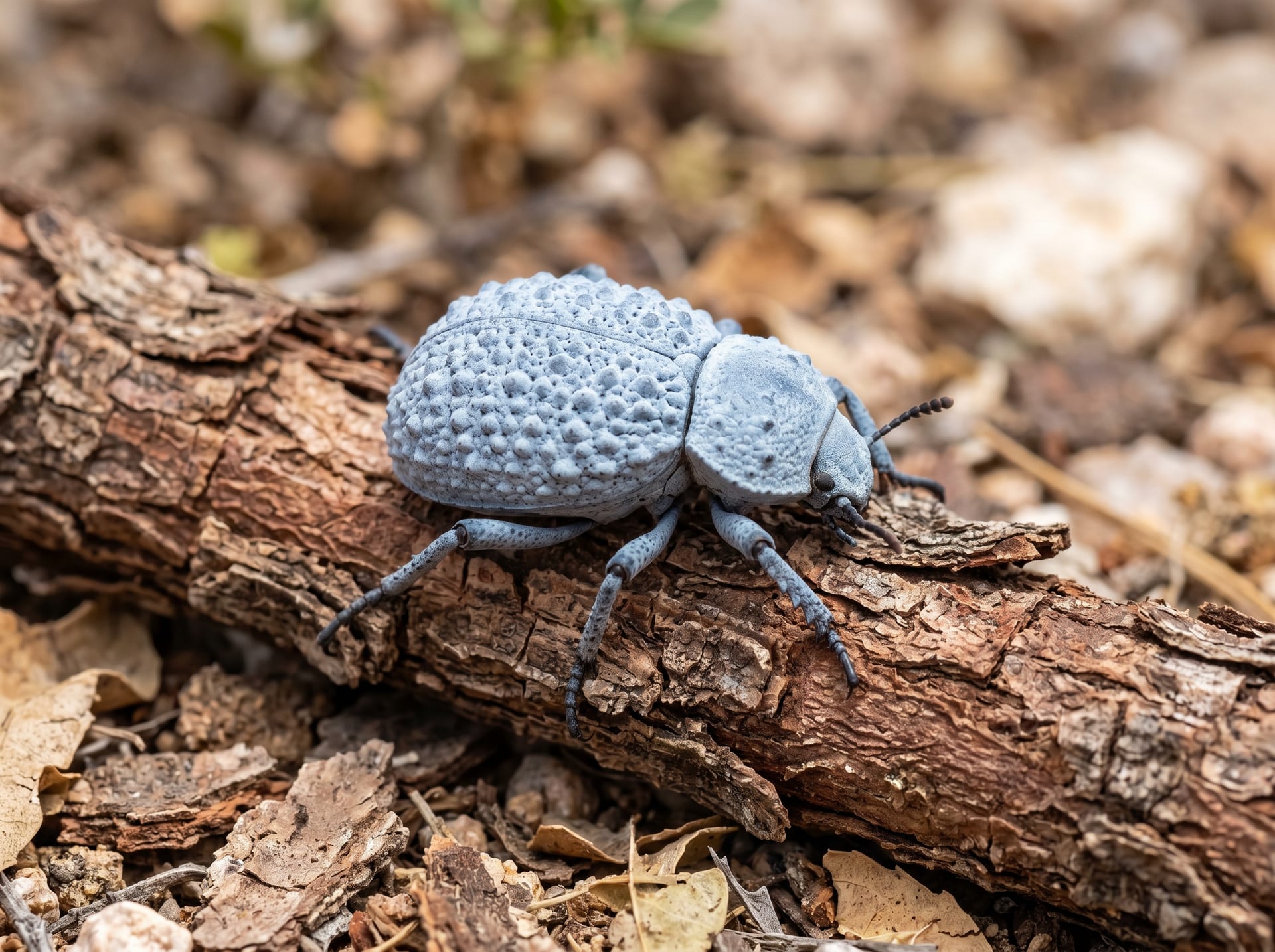
Blue Death-Feigning Beetle
BeginnerAsbolus verrucosus
Blue-white beetle from North American deserts. Named for its death-feigning defense behavior. Very hardy, long-lived, and extremely easy to keep.
Difficulty
Beginner
Temperature
22〜32℃
Lifespan
5-8 years
Size
18-22mm
Humidity
10〜30%
Diet
Vegetables, fruits, fish food
About
The blue death-feigning beetle (Asbolus verrucosus) is a darkling beetle native to the deserts of the southwestern United States. A waxy bloom gives it a bluish-white appearance, and its habit of going limp and motionless when threatened (thanatosis) inspires its common name. Adults are around 20 mm and favor dry conditions. Husbandry follows a desert setup with dry sand or coconut fiber as substrate and only sparing moisture from a shallow dish or light misting. It is omnivorous, accepting vegetable matter and dry foods. Hardy, long-lived, and low-maintenance, it is a good choice for beginners.
Source: Wikipedia (CC BY-SA 4.0)
Lifespan of the Blue Death-Feigning Beetle
The Blue Death-Feigning Beetle lives 5-8 years.
Size of the Blue Death-Feigning Beetle
The Blue Death-Feigning Beetle grows to 18-22mm.
Temperature & humidity for the Blue Death-Feigning Beetle
The ideal temperature for the Blue Death-Feigning Beetle is 22〜32℃. Ideal humidity is 10〜30%.
Basic Info
Origin
deserts of the southwestern United States
Lifespan
5-8 years
Size
18-22mm
References & Sources
Edited & verified by: BreederDirect editorial team
The taxonomic, regulatory, and husbandry data on this page are compiled and verified against the authoritative primary sources below.
Primary sources
Taxonomy & Authority
Accepted name: Asbolus verrucosus LeConte, 1851
Authority databases: GBIF
Nomenclature follows global taxonomic authority databases.
Regulations & Conservation Status
Not CITES-listed
Asbolus verrucosus (Tenebrionidae). Not CITES-listed. Not classified under Scarabaeoidea, so exempt from species identification certificate requirements.
Sources: CITES Appendix (checklist.cites.org)
Regulations may change. Always verify the latest information with the relevant authorities.
Blue Death-Feigning Beetle Listings
Loading latest listingsFind listings for this species