 © Lynette Clennell / CC BY 4.0
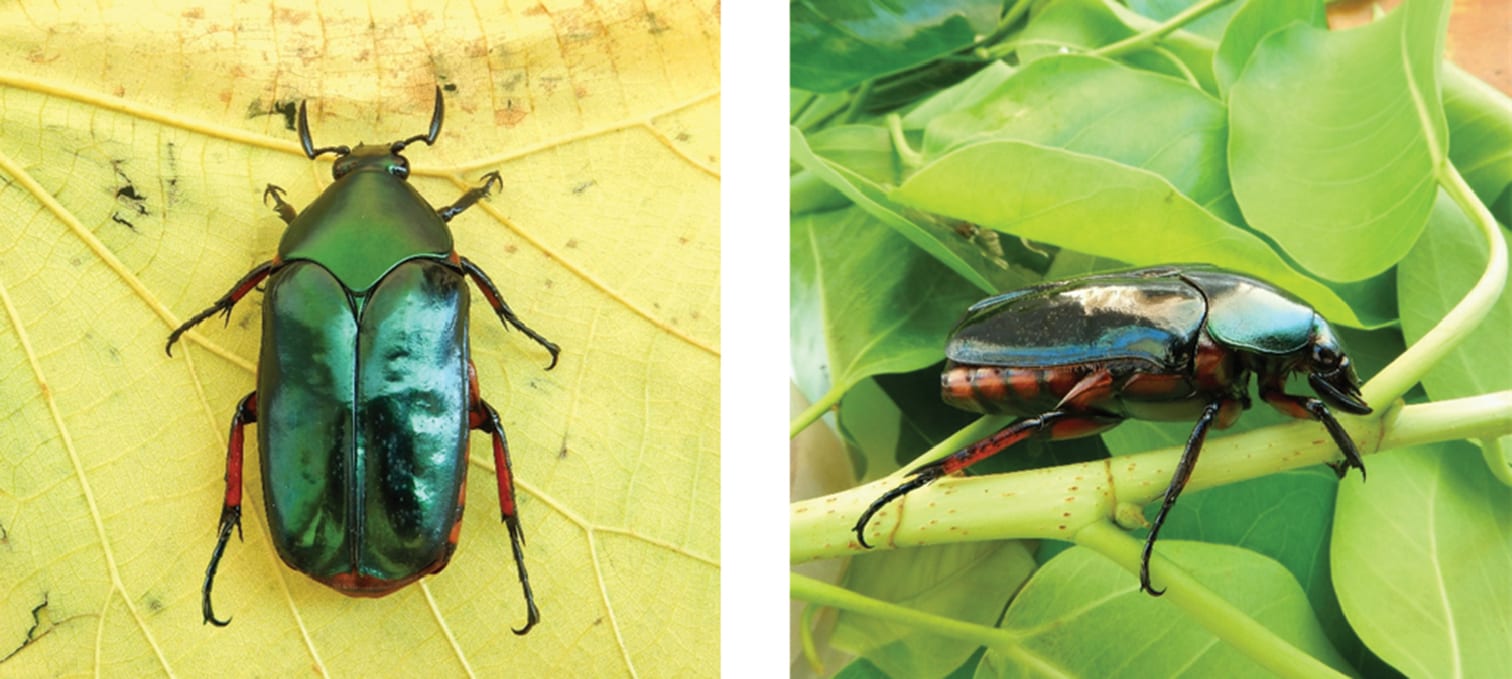
Orichalca flower beetle
The Orichalca flower beetle is a large chafer beetle native to a wide range stretching from northern India through southern China, Southeast Asia, and the Sunda Islands. Its broad, oblong, somewhat flattened body reaches roughly 55-60mm in length and is covered in a striking metallic green sheen that shifts and shimmers with the light. Its temperament isn't particularly demanding, but its solid build as a large beetle means keeping it well calls for a bit of hands-on knowledge, which is why it's considered suited to intermediate keepers. Little documentation exists on its lifespan, so no clear benchmark is currently available. It's a great choice for anyone who enjoys taking the time to appreciate a beetle's metallic beauty up close.
View Orichalca flower beetle encyclopedia →0% commission on your first sales!Register by September 30, 2026 and your first 2 sales are commission-free!
Breeder Wanted!
List on BreederDirect and sell directly to customers nationwide!
BreederDirect's 6 Transparency Commitments
When listing Insects, Breeders disclose the following. We guarantee transparency on growth stage and breeding unit.
- Life Stage Clarity
- Generation Info
- Real Photos
- Breeding Unit
- Country of Origin
- Body Length (mm)
Browse all 336 breeds
Verified breeders wanted for Insects
Breeders are signing up now ahead of launch. Subscribe to be notified when new listings go live.
Getting alerts is free with a member account. When new listings match your saved search, we'll notify you by email and in-app.
Browse other categories
Verified breeders (preview)
Orichalca flower beetle key facts
- Care level
- Intermediate
- Lifespan
- Little data
- Size
- About 55-60mm
- Diet
- Adults take fruit or beetle jelly; larvae eat humus-rich substrate
- Temperature & Humidity
- There is little numeric temperature data. As a tropical to subtropical Asian species, keep it out of winter cold and keep the substrate from drying out.
- Food & Feeding
- As with other flower chafers, give adults fruit or beetle jelly and remove leftovers before they spoil.
- Breeding & Egg-laying
- Little is published on breeding this species. Flower chafer larvae grow in humus-rich soil, so provide a deep layer of well-fermented substrate for laying.
- Lifespan & Rearing Period
- Larval duration and adult lifespan are poorly documented.
- Health & Notes
- Flower chafers are named among the insects whose live import the Plant Protection Act bans. Importing foreign stag and rhinoceros beetles is regulated by the Plant Protection Act and the Invasive Alien Species Act (species-name certificate), with each species needing clearance from the Plant Protection Station, so domestically bred stock is the safe choice. Never release captive beetles.
About Orichalca flower beetle
The Orichalca flower beetle is a large 55-60mm chafer with a striking metallic green sheen, native from northern India to Southeast Asia. An intermediate-level insect, well suited to keepers who enjoy close observation.
7 things to know before welcoming a Orichalca flower beetle
1Enclosure size to consider
Given its large 55-60mm body, choose an enclosure roomy enough for it to move around comfortably. Line it with insect substrate and add a piece of wood or bark so it can right itself if it tips over.
2Insect jelly as staple food
Commercial insect jelly is the standard food for adults. Replace jelly promptly once it dries out or spoils so fresh food is always available.
3Keep males separated
Large beetles like this one can scuffle when multiple males share a case. If keeping several, house them separately or watch them closely.
4Keep the lid secure
Flower chafers are capable of flying, so make sure the enclosure lid is securely fastened to prevent escapes.
5Temperature and humidity care
Avoid direct sunlight and sudden temperature swings, and mist the substrate occasionally so it doesn't dry out completely, which helps keep conditions stable.
6Lifespan data is limited
Little documentation exists on this species' lifespan, so no firm benchmark has been established. Rather than expecting a set timeframe, keep an eye on its day-to-day condition as you care for it.
7Prepare supplies beforehand
Gather the basics — enclosure, substrate, climbing branch, and insect jelly — before bringing one home so you can start care right away without scrambling.
Frequently asked questions about Orichalca flower beetle
- Q.How long does the Orichalca flower beetle live?
- A.Documentation on its lifespan is limited, so a clear benchmark isn't yet available. Individual variation likely plays a role too, making a one-size-fits-all figure hard to give.
- Q.Is it difficult to keep?
- A.It's considered suited to intermediate keepers, so some prior preparation and knowledge help if this is your first insect. Experience with large beetles in general makes it an easier fit.
- Q.How big does it get?
- A.It's a large chafer beetle, roughly 55-60mm in body length, with a broad, oblong, somewhat flattened build.
- Q.Is it subject to CITES regulation?
- A.The Orichalca flower beetle is not subject to CITES. Many live foreign Scarabaeoidea (stag beetles, rhinoceros beetles, flower chafers and relatives) are quarantine pests whose import is banned under Japan's Plant Protection Act, and even importable species require a species-name certificate from a foreign government body under the Invasive Alien Species Act (entry only via designated airports, never by international post). Whether a species may enter must be checked with the Plant Protection Station in advance, so choose domestically bred stock and never release captive beetles.
- Q.How does it differ from other chafer beetles?
- A.It stands out for its strong metallic green sheen and its broad, oblong, somewhat flattened body shape. Its range is also wide, spanning from northern India through southern China, Southeast Asia, and the Sunda Islands.
Useful tools for Orichalca flower beetle care
Learn more about Orichalca flower beetle in the encyclopedia
View Orichalca flower beetle encyclopedia entry →
Care difficulty, lifespan, size and diet — all basics covered.
More in this category
Can't find the one you're looking for?
Post your wishes for free and breeders with matching animals will contact you with introductions.