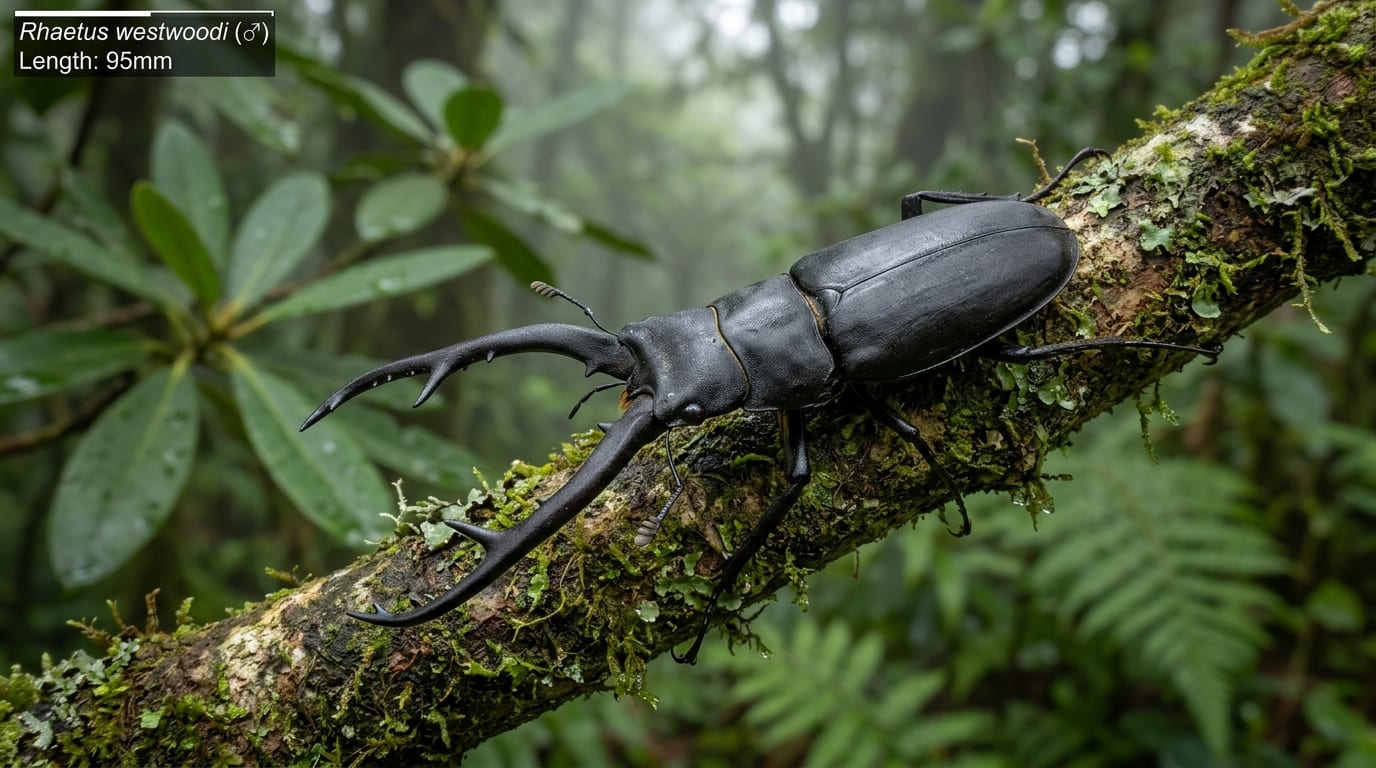
Westwood's Giant Deer Stag Beetle
Westwood's Giant Deer Stag Beetle is the largest species among the deer stag beetle group native to the eastern Himalayas, affectionately nicknamed "Woody" among Japanese enthusiasts. Both sexes are glossy black, but it's the male's magnificent antler-like mandibles that make this beetle so striking. Male body length ranges from around 50mm up to over 96mm, with larger specimens especially impressive. Adults are said to live from six months to about a year overall, though females often live only around two to three months once they become active. Because this species calls for real husbandry experience, it's best suited to keepers who are already comfortable raising stag beetles.
View Westwood's Giant Deer Stag Beetle encyclopedia →0% commission on your first sales!Register by September 30, 2026 and your first 2 sales are commission-free!
Breeder Wanted!
List on BreederDirect and sell directly to customers nationwide!
6 Transparency Standards You Can Trust
When listing Insects, Breeders disclose the following. We guarantee transparency on growth stage and breeding unit.
- Life Stage Clarity
- Generation Info
- Real Photos
- Breeding Unit
- Country of Origin
- Body Length (mm)
Browse all 296 breeds
Verified breeders wanted for Insects
Breeders are signing up now ahead of launch. Subscribe to be notified when new listings go live.
Getting alerts is free with a member account. When new listings match your saved search, we'll notify you by email and in-app.
Browse other categories
Verified breeders (preview)
Westwood's Giant Deer Stag Beetle key facts
- Care level
- Advanced
- Lifespan
- 6 months to a year as an adult (females 2-3 months once active)
- Size
- Nominate males 50.0-96.1mm, females 39.5-51.1mm (captive record 94.1mm, wild record 97.1mm)
- Temperature
- 18〜23℃
- Diet
- Adults take the sap of oaks and beetle jelly; larvae are reared in beech-based Coriolus or oyster-mushroom mycelium bottles
- Temperature & Humidity
- The rearing optimum is 18 to 23 degrees, and the species is described as hard to keep unless the environment stays below 20. Egg-laying is run at 21 to 23 degrees, the larval stage at 21, pupae and freshly eclosed adults at 20 to 22, and dormant new adults are cooled gradually to about 8 degrees by December. First instar larvae, however, stop growing below 20 degrees.
- Breeding & Egg-laying
- The female gnaws lightly at the end grain of the egg-laying log or at the join with the substrate before laying. Logs rotted by Coriolus mycelium, bacteria-treated wood and Vietnamese wood have all worked, while konara and sawtooth oak shiitake logs give poor results. Eggs hatch in 22 to 30 days at 22 degrees, and third instar larvae reach 18 to 28 g in males and 7 to 12 g in females; males over 25 g may eclose above 90 mm.
- Cohabitation
- In captivity large males are described as extremely savage and capable of crushing a female housed with them. The adults are kept singly, and pairings should be watched.
- Lifespan & Rearing Period
- Adults are said to live about a year, or six to ten months, but a female lives only two to three months once she becomes active. Larvae split between a one-year and a two-year cycle: at 21 degrees most females eclose in the first year while most males take two. After eclosion a dormancy of six months to a year follows, so a beetle emerging around August stays dormant until about April.
- Health & Notes
- The beetle does not come to lights, so collecting is difficult and worldwide supply is small. India, one of the source countries, in principle forbids the export of live animals, so very few reach Japan. There is concern that over-collecting could push the species towards extinction. Misidentified larvae sold online are said to be a problem every year, so the source matters. Importing live Scarabaeoidea requires the species identification certificate.
About Westwood's Giant Deer Stag Beetle
Westwood's Giant Deer Stag Beetle, the largest of the deer stag beetle group from the eastern Himalayas, is prized for its antler-like mandibles and known in Japan as "Woody" — a species best suited to experienced keepers.
7 things to know before welcoming a Westwood's Giant Deer Stag Beetle
1Antler-Like Mandibles
The male's biggest draw is its magnificent mandibles, reminiscent of a stag's antlers. Body size and jaw shape vary widely between individuals, with males ranging from around 50mm up to over 96mm. Large-jawed males can be aggressive toward each other, so caution is needed when housing more than one.
2Best for Experienced Keepers
This species is considered suitable for experienced keepers, requiring some skill in managing temperature, humidity, and monitoring the beetle's condition. It suits those who already have stag beetle keeping experience or enjoy observing subtle day-to-day changes. First-time keepers may want to build up experience with an easier species first.
3Lifespan and Activity Cycle
Adults are said to live from six months to about a year. Individual beetles vary, and some may stay relatively calm for a while after emerging, so it's worth observing their day-to-day condition patiently.
4Females Have a Shorter Active Span
Females often live only around two to three months once they become active, a somewhat shorter span than males. Because that window is limited, it's worth paying close attention to her condition day by day.
5Prefers Cool Conditions
Originating from the high elevations of the eastern Himalayas, this species tends to prefer cool, well-ventilated conditions over heat and humidity. Keep the enclosure out of direct sunlight and away from spots prone to high temperatures, and watch for seasonal temperature swings.
6Food and Substrate Care
Replace insect jelly regularly to keep food fresh, which helps maintain the beetle's health. Keep the substrate appropriately moist while checking it periodically to ensure good ventilation.
7Preparing Before You Bring One Home
With its large mandibles and sturdy build, this beetle needs a roomy enclosure where it can move freely. Housing is best done individually — if keeping multiple beetles, add dividers or extra space to prevent mandible-related injuries.
Frequently asked questions about Westwood's Giant Deer Stag Beetle
- Q.Can beginners keep this species?
- A.This species is considered suitable for experienced keepers rather than beginners. If you're new to stag beetles, it's best to build up basic husbandry experience first before taking one on.
- Q.How large do males grow?
- A.Males of the nominate subspecies range from 50.0mm to 96.1mm in body length. The largest captive-bred record is 94.1mm, while the wild record stands at 97.1mm.
- Q.How long do they live?
- A.Adults typically live from six months to about a year. Females often live only around two to three months once they become active, somewhat shorter than males.
- Q.Where does the nickname "Woody" come from?
- A.It comes from the English name, Westwood's Giant Deer Stag Beetle, shortened to "Woody" among Japanese enthusiasts. With its antler-like mandibles, it's one of the signature species within the deer stag beetle group.
- Q.Are males aggressive?
- A.Males with large mandibles can be aggressive and may fight fiercely if they come into contact with another male. It's best to house them individually, and if keeping multiple beetles, provide adequate space or dividers.
Useful tools for Westwood's Giant Deer Stag Beetle care
Learn more about Westwood's Giant Deer Stag Beetle in the encyclopedia
View Westwood's Giant Deer Stag Beetle encyclopedia entry →
Care difficulty, lifespan, size and diet — all basics covered.
More in this category
Can't find the one you're looking for?
Post your wishes for free and breeders with matching animals will contact you with introductions.