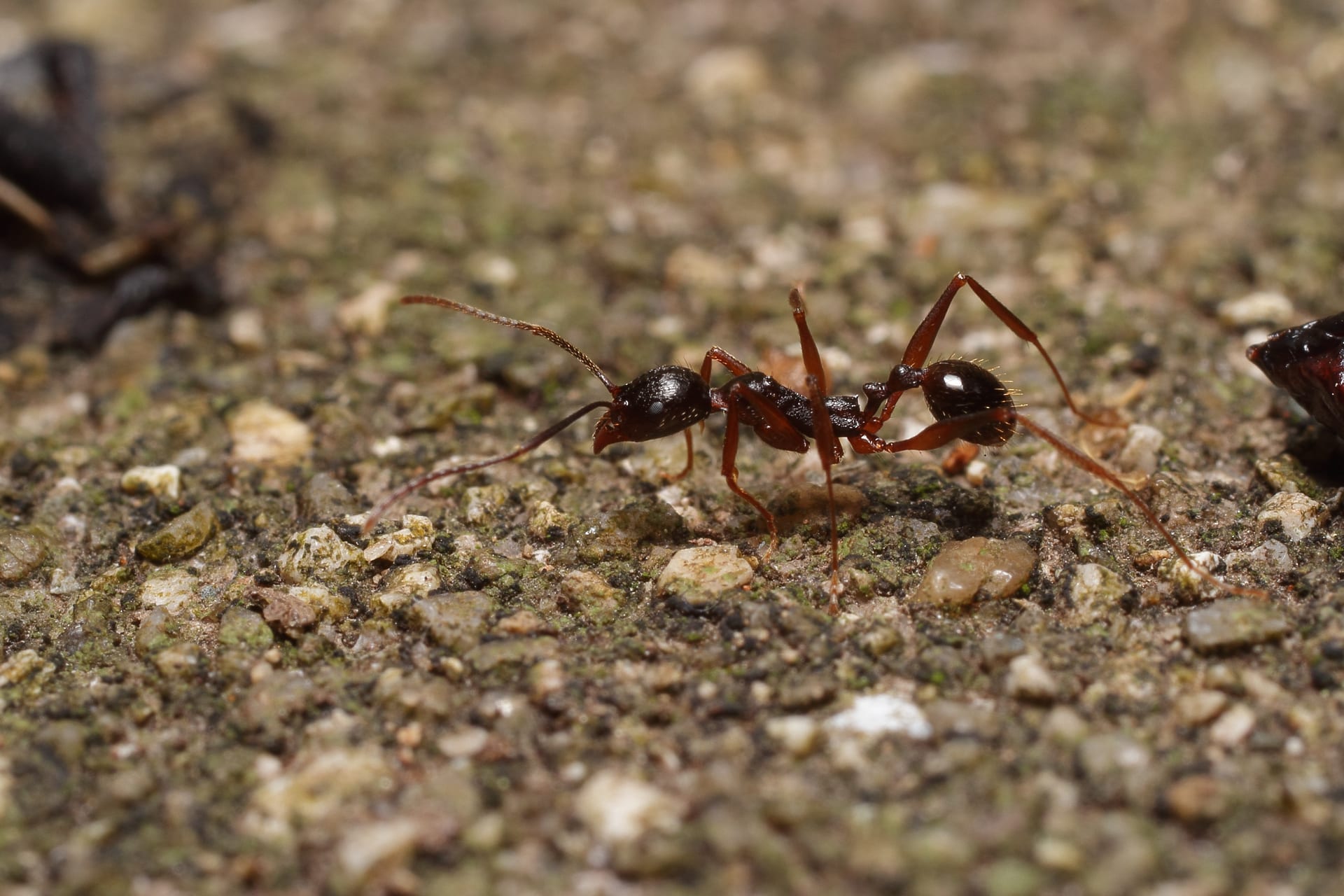
 © harum.koh / CC BY-SA 2.0
Long-legged Ant
The Long-legged Ant lives up to its name, with noticeably elongated legs and antennae set against a dark brown body. In the wild, it settles into moist soil or beneath stones at forest edges and within woodland, where workers cooperate to haul insect carcasses back to the nest. Workers measure roughly 3.5 to 8mm, while the queen grows somewhat larger at around 10mm. Best suited to keepers with some prior ant-keeping experience, it rewards patient attention with the chance to watch a genuinely social colony develop over time.
View Long-legged Ant encyclopedia →0% commission on your first sales!Register by September 30, 2026 and your first 2 sales are commission-free!
Breeder Wanted!
List on BreederDirect and sell directly to customers nationwide!
6 Transparency Standards You Can Trust
When listing Insects, Breeders disclose the following. We guarantee transparency on growth stage and breeding unit.
- Life Stage Clarity
- Generation Info
- Real Photos
- Breeding Unit
- Country of Origin
- Body Length (mm)
Browse all 296 breeds
Verified breeders wanted for Insects
Breeders are signing up now ahead of launch. Subscribe to be notified when new listings go live.
Getting alerts is free with a member account. When new listings match your saved search, we'll notify you by email and in-app.
Browse other categories
Verified breeders (preview)
Long-legged Ant key facts
- Care level
- Intermediate
- Lifespan
- Queens 5-10 years
- Size
- Workers 3.5-8mm, queens 10mm
- Temperature
- 23〜25℃
- Diet
- Mainly dead insects and other small animals; also sugars
- Temperature & Humidity
- Keep at 23-25C, never above 30C. A species of damp shaded ground, so keep the plaster nest on the moist side and never let it dry. Honshu stock overwinters indoors unheated.
- Breeding & Egg-laying
- Nuptial flights occur from June to late July. Start a dealated new queen alone in a test tube for founding.
- Cohabitation
- Monogynous; cannot be housed with other colonies or species.
- Lifespan & Rearing Period
- Workers are active and consume much food; expand the foraging area and nest as the colony grows.
- Health & Notes
- Being largely insectivorous it cannot be kept on sugars alone. Offer crickets or other insects regularly and remove remains promptly to prevent mold.
About Long-legged Ant
The Long-legged Ant is a dark brown species with elongated legs and antennae, nesting in moist soil near forest edges and under stones. Suited to intermediate keepers who enjoy watching colony growth.
7 things to know before welcoming a Long-legged Ant
1Managing Nest Humidity
In the wild, this species nests in moist soil or under stones at forest edges, so the enclosure needs a similarly humid microclimate. If it dries out too much, the nest structure can become unstable, so set up a layout with a partially moistened area.
2Size Gap Between Workers and Queen
Workers typically measure 3.5 to 8mm, while the queen is noticeably larger at around 10mm. Using this size difference as a visual cue makes it easier to tell roles apart within the colony.
3Cooperative Group Behavior
Workers cooperate to carry food such as insect carcasses back to the nest together. Watching this coordinated group behavior is one of the more interesting aspects of keeping this species.
4Best Suited to Intermediate Keepers
Some prior experience with basic ant-keeping helps this species go smoothly. First-time keepers may want to start with an easier species before taking this one on.
5Guarding Against Escapes
Because the ants are small, they can slip through tiny gaps, so check the seal on lids and connecting parts of the enclosure beforehand. Handle any transfers calmly in a quiet setting to keep the colony settled.
6Prepare the Enclosure in Advance
Since this species naturally nests under stones or underground, it helps to set up an enclosure that separates a humid nesting chamber from a drier foraging area before bringing the colony home.
7Diet Centers on Insect Prey
True to its habit of hauling insect carcasses back to the nest as a group, this species tends to favor animal-based food. Adjust the amount and frequency gradually to match the size of the colony.
Frequently asked questions about Long-legged Ant
- Q.Is the Long-legged Ant suitable for beginner keepers?
- A.This species is generally considered better suited to intermediate keepers with some ant-keeping experience. First-time keepers can ease into it after building up basic ant care knowledge.
- Q.How long do Long-legged Ants live?
- A.No specific lifespan figure is available in the reference data for this species. Since this can vary by individual and environment, it's best to monitor the colony's condition over time rather than rely on a fixed number.
- Q.How can I tell workers and the queen apart?
- A.Workers measure roughly 3.5 to 8mm, while the queen grows noticeably larger at around 10mm. This size difference is the easiest way to distinguish between them.
- Q.What is the Long-legged Ant's temperament like?
- A.Workers cooperate to carry food such as insect carcasses back to the nest, showing coordinated group behavior. The appeal here is less about any single ant and more about watching the colony move and organize as a whole.
- Q.What should I feed Long-legged Ants?
- A.Based on their natural habit of hauling insect carcasses back to the nest as a group, they appear to favor animal-based food. Adjust the amount to match the size of the colony as it grows.
Useful tools for Long-legged Ant care
Learn more about Long-legged Ant in the encyclopedia
View Long-legged Ant encyclopedia entry →
Care difficulty, lifespan, size and diet — all basics covered.
More in this category
Can't find the one you're looking for?
Post your wishes for free and breeders with matching animals will contact you with introductions.