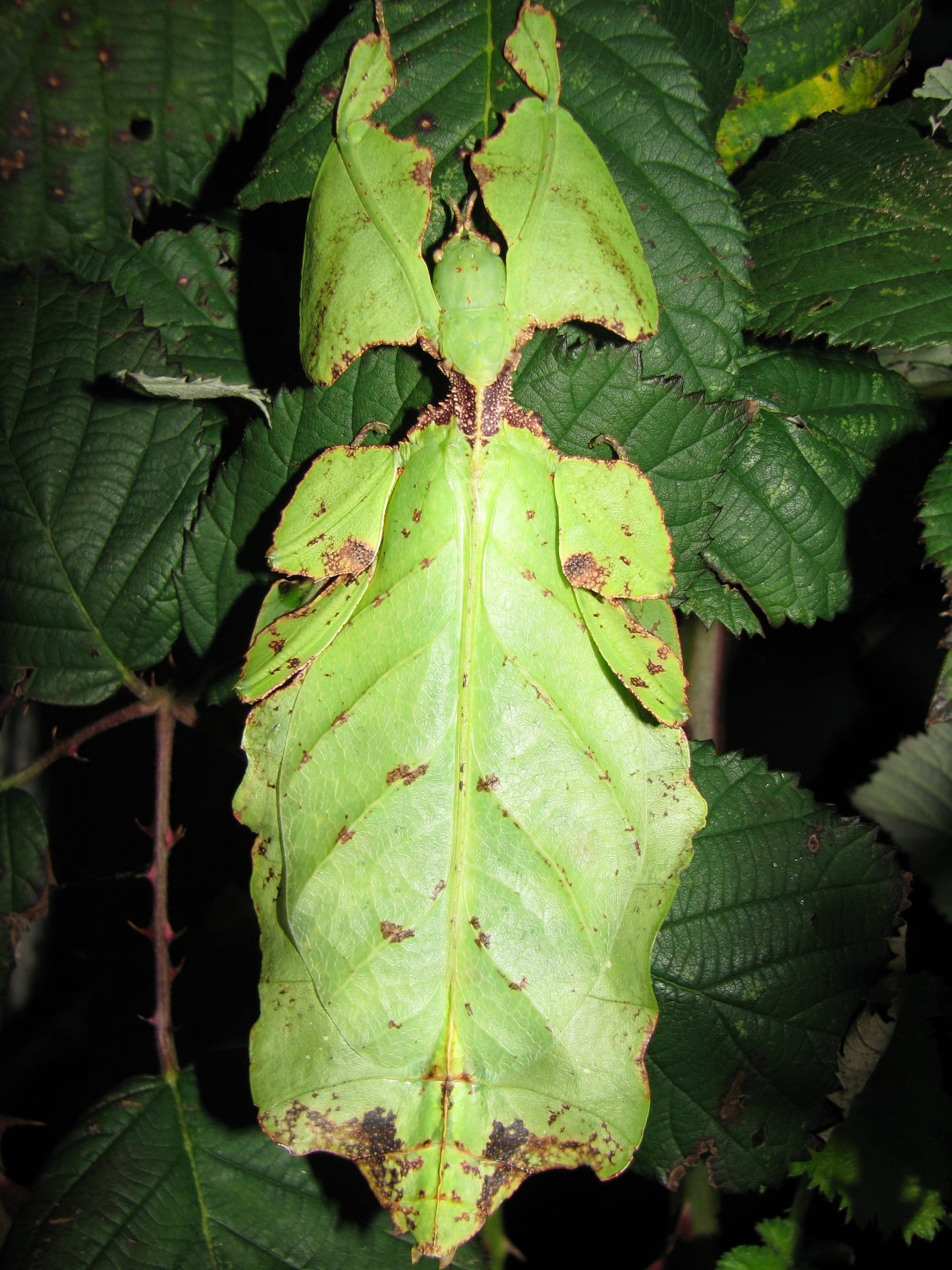
 © Drägüs / CC BY-SA 3.0
Giant Leaf Insect
The Giant Leaf Insect is one of the largest species in the leaf insect family, native to the Malay Peninsula and Borneo. Its body mimics a withering leaf so convincingly that even the leaf veins and insect-bite marks seem to be reproduced, making it a favorite among insect enthusiasts. It moves very slowly and spends most of its time motionless, blended into foliage, rewarding patient observation. Females grow to nearly 12 cm in length, one of the largest sizes among leaf insects, and can reproduce parthenogenetically in captivity, making breeding attainable even for hobbyists. While calm and docile, newly hatched nymphs are sensitive to dry conditions, which is part of why this species is considered better suited to intermediate keepers.
View Giant Leaf Insect encyclopedia →0% commission on your first sales!Register by September 30, 2026 and your first 2 sales are commission-free!
Breeder Wanted!
List on BreederDirect and sell directly to customers nationwide!
6 Transparency Standards You Can Trust
When listing Insects, Breeders disclose the following. We guarantee transparency on growth stage and breeding unit.
- Life Stage Clarity
- Generation Info
- Real Photos
- Breeding Unit
- Country of Origin
- Body Length (mm)
Browse all 296 breeds
Verified breeders wanted for Insects
Breeders are signing up now ahead of launch. Subscribe to be notified when new listings go live.
Getting alerts is free with a member account. When new listings match your saved search, we'll notify you by email and in-app.
Browse other categories
Verified breeders (preview)
Giant Leaf Insect key facts
- Care level
- Intermediate
- Lifespan
- Adult females 6-10 months, adult males a few weeks to three months
- Size
- Males up to 8.2cm, females about 12cm
- Temperature
- Humidity
- 70〜80%
- Diet
- Guava leaves are preferred, with oak in summer and bramble in winter
- Temperature & Humidity
- Hold the enclosure at 22 °C or more, 25-33 °C during the day, with humidity around 70-80 %. Newly hatched nymphs are very delicate and die quickly if those conditions are not kept precisely. Avoid spraying the insects themselves and raise humidity by wetting the leaves instead.
- Breeding & Egg-laying
- The species reproduces parthenogenetically in culture, though males appear rarely even in purely parthenogenetic stocks. Females start laying about four weeks after the final moult, simply dropping up to seven eggs a week onto the floor. The eggs are 8.5 mm long, 4 mm wide and average 34 mg, and hatch after six to eight months.
- Cohabitation
- The insects are leaf feeders and do not attack one another, so they can be kept together. Wild individuals are mostly female and cultures likewise consist chiefly of parthenogenetic females. Males reach adulthood after only four moults and are short-lived, so the window for pairing them is narrow if sexual breeding is the aim.
- Lifespan & Rearing Period
- Eggs hatch after six to eight months and a further seven to twelve months pass before adulthood. Adult females live six to ten months. Males become adult after four moults and live only a few weeks, at most three months. Plan for a generation to take more than a year.
- Health & Notes
- Trim the dried edges from leaves offered to small nymphs. Foreign phasmids count as quarantine pests under Japan's Plant Protection Act and live specimens may not be imported except with ministerial permission, so choose animals bred within Japan. They must never be released or abandoned outdoors.
About Giant Leaf Insect
One of the largest leaf insects, native to the Malay Peninsula and Borneo. Females reach nearly 12 cm, mimicking a withered leaf, a striking species best suited to intermediate keepers.
7 things to know before welcoming a Giant Leaf Insect
1Masterful Camouflage
Its whole body mimics the color and texture of a withering leaf, right down to vein-like lines and bite-mark patterns. Since it stays still for long periods, a calm, quiet setup lets you enjoy watching it.
2Intermediate-Level Care
The Giant Leaf Insect is considered suited to intermediate keepers. Basic care isn't difficult, but details like humidity control during the nymph stage call for some prior insect-keeping experience.
3Grows Fairly Large
Males reach up to 8.2 cm and females grow to about 12 cm. Choose an enclosure with enough height, and leave room for the insect to stretch out fully during molting.
4Lifespan Differs by Sex
Adult females typically live 6 to 10 months, while adult males live only a few weeks to about 3 months. Keep this difference in mind when planning your care routine after bringing one home.
5Nymphs Need Humidity
Newly hatched nymphs are sensitive to dryness and prone to health issues. Careful misting and ventilation to manage enclosure humidity make a real difference to survival during this early stage.
6Reproduces Parthenogenetically
In captivity, females can lay eggs and hatch offspring without a male present. While this makes it easy to continue a generation, it's worth planning enclosure space in advance in case numbers grow.
7A Calm, Quiet Insect
It moves slowly and tends to freeze in place to maintain its camouflage when it senses danger. Place its enclosure somewhere calm, away from loud noise and vibration.
Frequently asked questions about Giant Leaf Insect
- Q.Can beginners keep a Giant Leaf Insect?
- A.This species is generally considered suited to intermediate keepers rather than complete beginners. Basic care itself isn't complicated, but details like managing humidity during the nymph stage call for some prior experience.
- Q.What's the difference between males and females?
- A.Females grow into large individuals reaching nearly 12 cm, while males are somewhat smaller at up to 8.2 cm. Lifespans also differ, females live about 6 to 10 months as adults, while males live only a few weeks to around 3 months.
- Q.Can they breed without a male present?
- A.Yes. The Giant Leaf Insect reproduces parthenogenetically, meaning females can lay eggs that hatch even without a male in captivity. This makes it possible to continue a generation with females alone.
- Q.What should I watch for when raising nymphs?
- A.Newly hatched nymphs are sensitive to dry conditions and can easily lose condition. Keep enclosure humidity up with regular misting while maintaining good ventilation.
- Q.Is this a very active insect?
- A.No, the Giant Leaf Insect moves very slowly and has a calm temperament. When it senses danger, it tends to freeze in place, staying camouflaged among the leaves for long stretches.
Useful tools for Giant Leaf Insect care
Learn more about Giant Leaf Insect in the encyclopedia
View Giant Leaf Insect encyclopedia entry →
Care difficulty, lifespan, size and diet — all basics covered.
More in this category
Can't find the one you're looking for?
Post your wishes for free and breeders with matching animals will contact you with introductions.