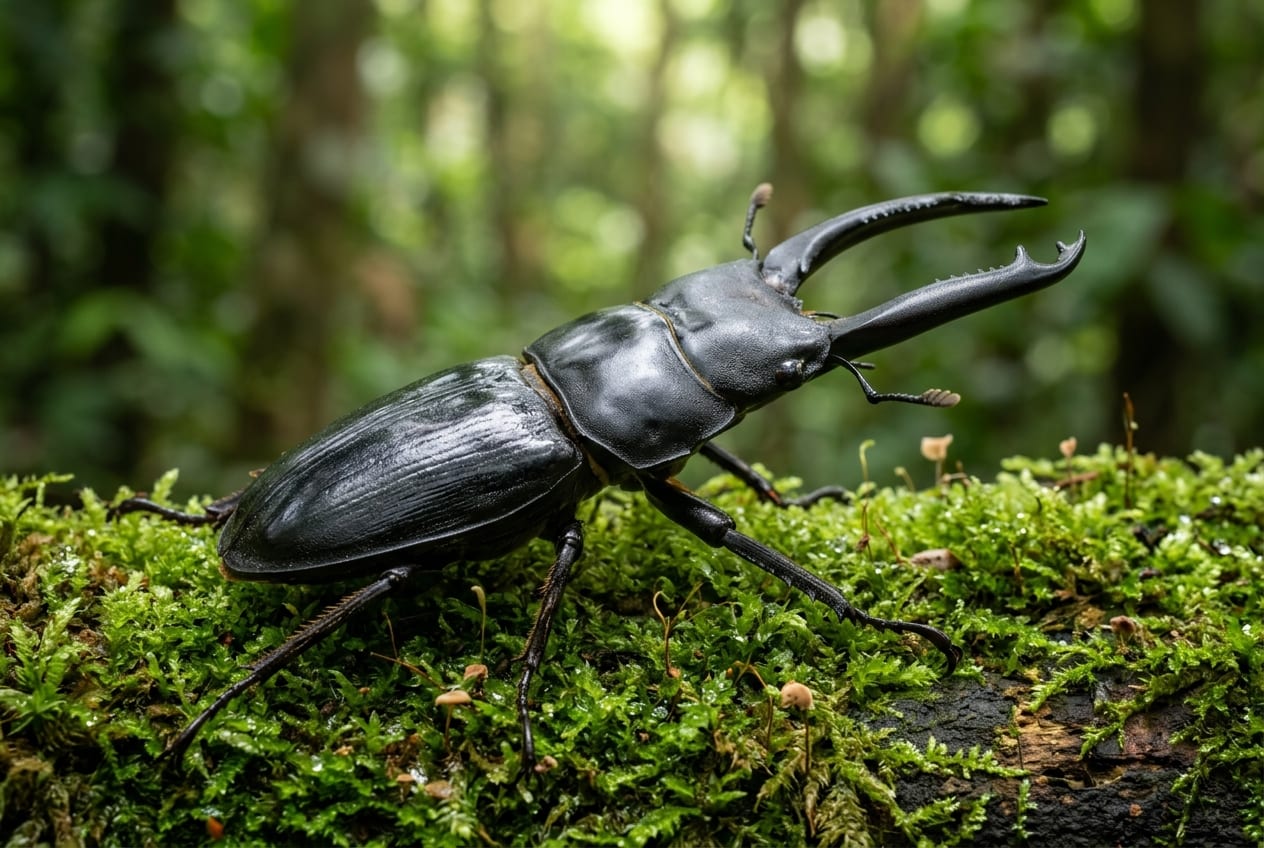
Eurycephalus Flat Stag Beetle
The Eurycephalus Flat Stag Beetle is a stag beetle found only on the island of Java, Indonesia. It resembles the closely related Alcides Flat Stag Beetle but stands out with a broader body and a glossier sheen. Wild individuals often develop the long-jawed form, with mandibles that curve dramatically for a striking silhouette. In captivity, though, beetles tend to develop the shorter-jawed form, and larvae can take a long time to mature. Egg-laying itself comes fairly easily, but raising specimens that approach wild-record size is genuinely challenging, making this a species better suited to keepers with some prior experience.
View Eurycephalus Flat Stag Beetle encyclopedia →0% commission on your first sales!Register by September 30, 2026 and your first 2 sales are commission-free!
Breeder Wanted!
List on BreederDirect and sell directly to customers nationwide!
6 Transparency Standards You Can Trust
When listing Insects, Breeders disclose the following. We guarantee transparency on growth stage and breeding unit.
- Life Stage Clarity
- Generation Info
- Real Photos
- Breeding Unit
- Country of Origin
- Body Length (mm)
Browse all 296 breeds
Verified breeders wanted for Insects
Breeders are signing up now ahead of launch. Subscribe to be notified when new listings go live.
Getting alerts is free with a member account. When new listings match your saved search, we'll notify you by email and in-app.
Browse other categories
Verified breeders (preview)
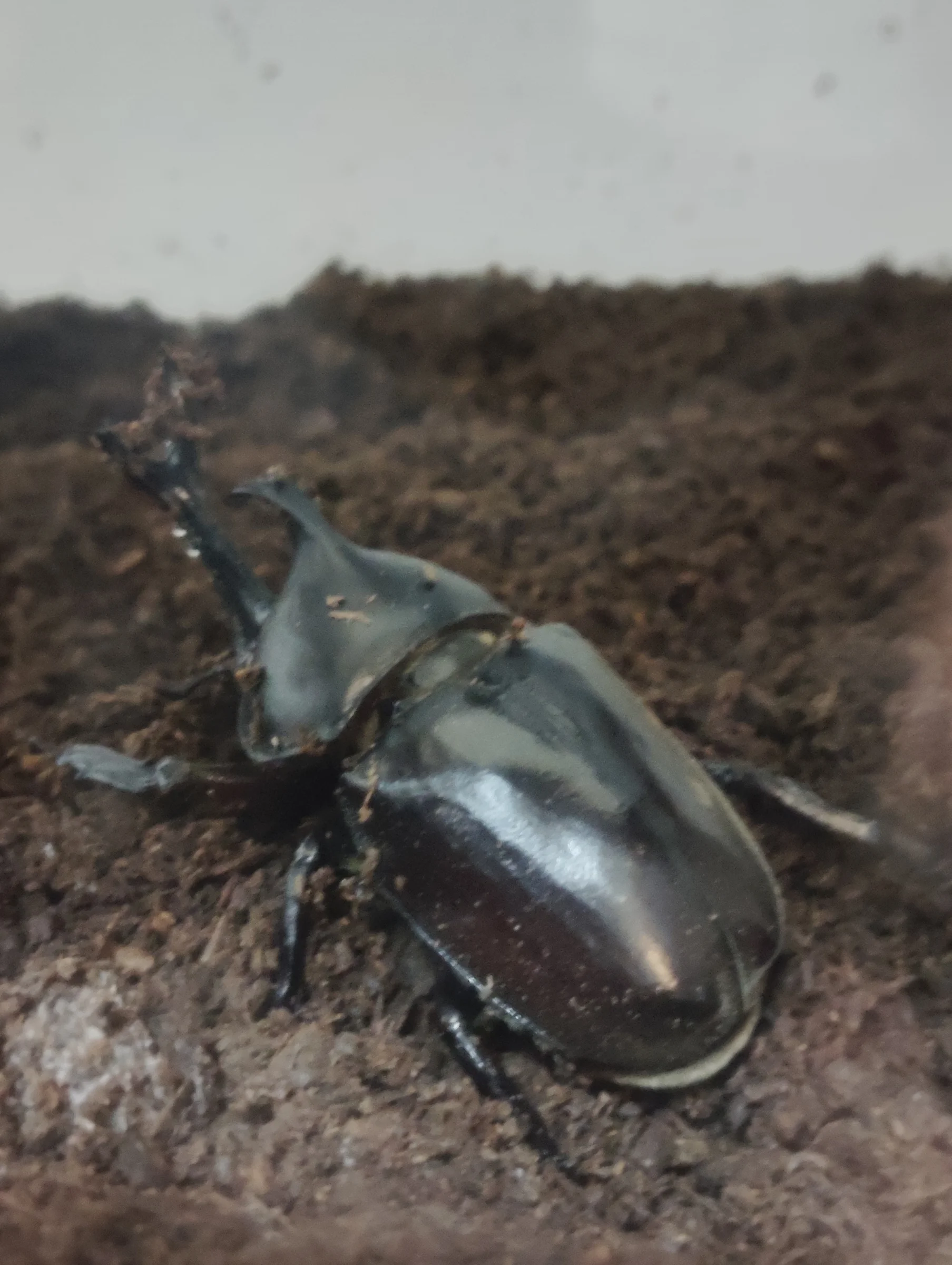
Eurycephalus Flat Stag Beetle key facts
- Care level
- Intermediate
- Lifespan
- Adults 1-3 years
- Size
- Males up to 78.6mm (wild record), females 30-35mm in captive examples
- Temperature
- 18〜23℃
- Diet
- Beetle jelly (adults); kinshi bottles or fermented substrate (larvae)
- Temperature & Humidity
- Keep at 18-23C. Holding larvae at 18C to lengthen mandibles stalls their growth, so rear early instars at about 23C and lower the temperature once they have bulked up. Heat during the prepupal stage caused failed emergences in one batch.
- Breeding & Egg-laying
- Laying is as for other flat stags: firmly packed laying substrate, with logs optional. Expect about 20 larvae per set, with eggs visible within two weeks.
- Cohabitation
- House singly as with any flat stag. Keep cohabitation pairing short and remove the male once laying is confirmed.
- Lifespan & Rearing Period
- No species-specific adult lifespan is published. Larvae are slow to reach third instar and some take 18 months. They grow on Kawara or oyster kinshi or fermented substrate, but wander often.
- Health & Notes
- Captive males are mostly short-mandibled, and even 20g pupae often give only 60mm-class adults. Late bottle changes cause wandering and shrinkage.
About Eurycephalus Flat Stag Beetle
The Eurycephalus Flat Stag Beetle is a Java-endemic species with a glossy, broad-bodied build. Egg-laying is easy, but raising large specimens is challenging, making it best suited to intermediate keepers.
7 things to know before welcoming a Eurycephalus Flat Stag Beetle
1Endemic to Java
This species is endemic to the island of Java in Indonesia. It closely resembles the related Alcides Flat Stag Beetle, but can be distinguished by its broader body and stronger glossy sheen.
2Short-Jawed Tendency
Wild long-jawed individuals show off dramatically curved mandibles, but captive-bred beetles tend to develop the shorter-jawed form instead. Conditions during the larval stage are thought to influence which form emerges.
3Slow Larval Growth
Larvae grow at a relatively slow pace, so raising a large adult requires patience over the long term. Approach their care with a steady, unhurried mindset.
4Egg-Laying Is Easy
When it comes to breeding, getting females to lay eggs is fairly straightforward. Growing those larvae into large adults, however, calls for more experience and careful technique.
5Intermediate Difficulty
Overall, this species is considered suitable for intermediate keepers. Having some basic stag beetle keeping experience beforehand makes the process, from egg-laying through larval rearing, much smoother.
6Temperature and Humidity Care
Flat stag beetles can be sensitive to heat and dryness, so check the enclosure's location and moisture level regularly. Try to avoid sudden temperature swings as well.
7Prepare Supplies First
Before bringing one home, it helps to have the basics ready: an adult enclosure, insect substrate, a food dish, and climbing branches. If you're planning to breed, prepare a separate breeding case and egg-laying wood in advance too.
Frequently asked questions about Eurycephalus Flat Stag Beetle
- Q.Where does the Eurycephalus Flat Stag Beetle live in the wild?
- A.It is endemic to the island of Java in Indonesia. Individuals available domestically are mostly captive-bred by hobbyist breeders.
- Q.How difficult is this species to keep?
- A.It's considered suitable for intermediate keepers. Egg-laying is easy, but raising the larvae into large adults takes experience and technique.
- Q.What determines the shape of the mandibles?
- A.In the wild, the long-jawed form with dramatically curved mandibles is common, but captive individuals tend toward the short-jawed form. Conditions during the larval stage are thought to play a role.
- Q.How large do adults typically grow?
- A.Males have a wild record of up to 78.6mm, while captive-bred females typically measure around 30 to 35mm. Size varies considerably between individuals and depending on rearing conditions.
- Q.Are there any legal restrictions on this species?
- A.This species is not subject to CITES.
Useful tools for Eurycephalus Flat Stag Beetle care
Learn more about Eurycephalus Flat Stag Beetle in the encyclopedia
View Eurycephalus Flat Stag Beetle encyclopedia entry →
Care difficulty, lifespan, size and diet — all basics covered.
More in this category
Can't find the one you're looking for?
Post your wishes for free and breeders with matching animals will contact you with introductions.