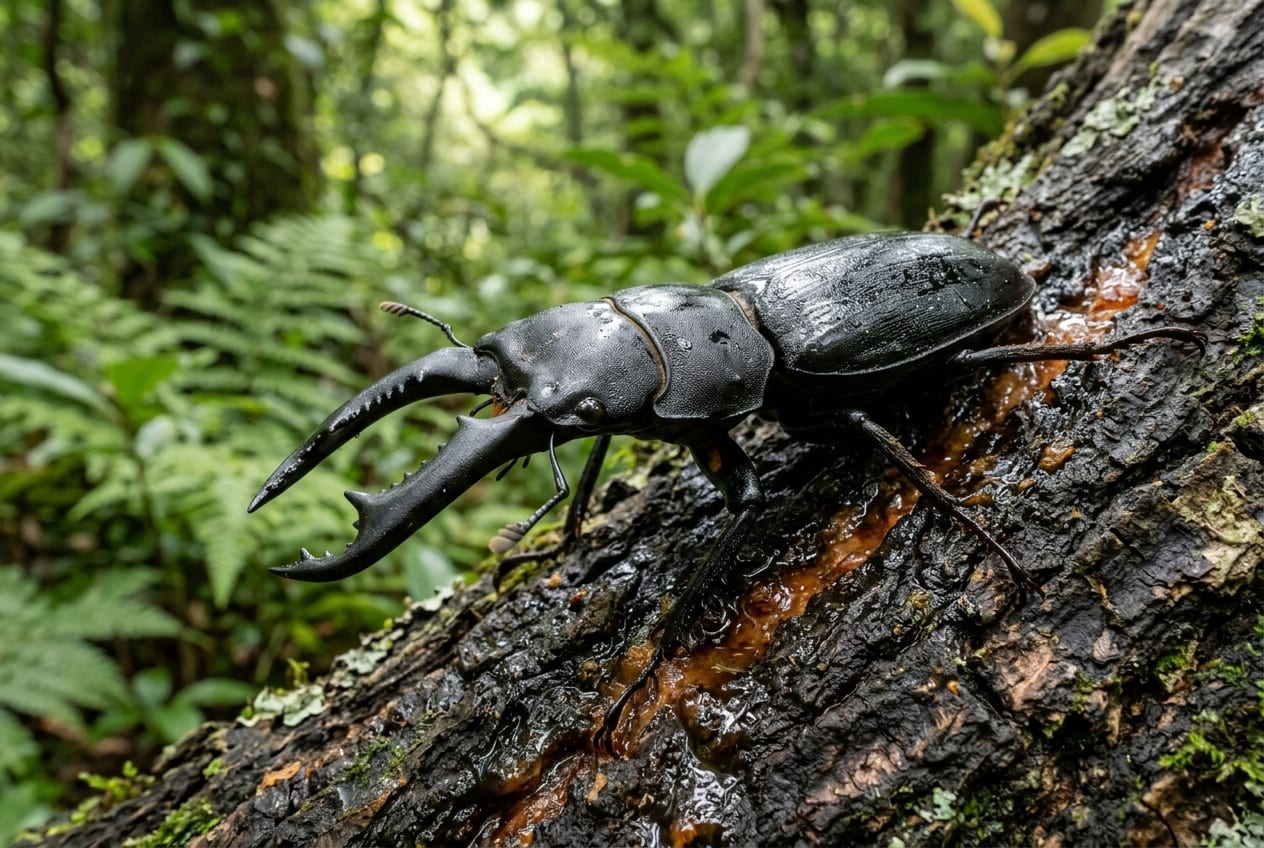
Goto Flat Stag Beetle
The Goto Flat Stag Beetle is a subspecies of flat stag beetle found only on the Goto Islands in Nagasaki Prefecture. It shares the long, striking mandibles of its close relative the Tsushima Flat Stag Beetle, but its body is somewhat thicker and shorter, giving it the solid, powerful look typical of island subspecies. Wild individuals reach up to about 78mm, while captive-bred ones have been recorded at up to 82mm, making this one of the larger bloodlines among Japan's native flat stag beetles. Its temperament is quite aggressive, so it's best kept singly rather than in groups — but that same feisty nature makes for an impressive sight when it flares its mandibles in a defensive display. Considered a beetle for intermediate keepers, it's a rewarding next challenge once you've gained some experience with stag beetle care.
View Goto Flat Stag Beetle encyclopedia →0% commission on your first sales!Register by September 30, 2026 and your first 2 sales are commission-free!
Breeder Wanted!
List on BreederDirect and sell directly to customers nationwide!
6 Transparency Standards You Can Trust
When listing Insects, Breeders disclose the following. We guarantee transparency on growth stage and breeding unit.
- Life Stage Clarity
- Generation Info
- Real Photos
- Breeding Unit
- Country of Origin
- Body Length (mm)
Browse all 296 breeds
Verified breeders wanted for Insects
Breeders are signing up now ahead of launch. Subscribe to be notified when new listings go live.
Getting alerts is free with a member account. When new listings match your saved search, we'll notify you by email and in-app.
Browse other categories
Verified breeders (preview)
Goto Flat Stag Beetle key facts
- Care level
- Intermediate
- Lifespan
- Adults 1-3 years
- Size
- Males 50-82 mm (including captive; wild up to 78.5 mm) / females 25-38 mm
- Temperature
- 20〜26℃
- Diet
- Tree sap, beetle jelly
- Temperature & Humidity
- Keep at about 20-26 C. A temperate beetle from the Goto Islands, but larvae do not survive below 0 C, so never let them freeze. Keep the substrate moist enough to clump when squeezed.
- Breeding & Egg-laying
- Females lay in the buried base of dead standing hardwood or under fallen logs. In captivity bury fairly soft logs in fermented substrate and rear larvae in substrate or fungus bottles. Larvae take 1-2 years.
- Cohabitation
- Very aggressive; males often kill females. Keep singly and pair only for a few days under supervision.
- Lifespan & Rearing Period
- Adults live 1-3 years and overwinter. Newly emerged adults stay in the pupal cell about a month before becoming active.
- Health & Notes
- The bite can draw blood, so handle with care. The population is unique to the Goto Islands, so never release captive beetles.
About Goto Flat Stag Beetle
A flat stag beetle subspecies native to Nagasaki's Goto Islands, known for its long mandibles and sturdy build. Wild males reach up to 78mm, captive-bred up to 82mm. Aggressive temperament; best suited to intermediate keepers.
7 things to know before welcoming a Goto Flat Stag Beetle
1Keep Them Solo
Because of their aggressive temperament, males will fight fiercely if housed together, so keep one beetle per enclosure. Even when pairing with a female, keep an eye on them to make sure they're getting along.
2Handle the Mandibles Carefully
Their large mandibles can deliver a painful pinch if you're not careful when handling them. Until you're used to it, it's safest to gently lift the beetle from behind rather than reaching for the front.
3Adults Live 1–3 Years
Once they reach adulthood, these beetles typically live for one to three years. Good temperature control and feeding can help you enjoy their company for as long as possible.
4Temperature Control Matters
They're sensitive to heat, so keep them out of direct sunlight and high humidity during summer, ideally in a cool spot. Be mindful of seasonal temperature changes as well.
5Easy Feeding with Insect Jelly
Their main food is commercially available insect jelly, so you can start keeping them without much special preparation. Remove leftover jelly regularly, since it can grow mold if left too long.
6Impressive Size for the Bloodline
Wild individuals reach up to about 78mm, and captive-bred ones have been recorded at up to 82mm, making this a notably large subspecies. You can fully enjoy the sturdy build and long mandibles typical of flat stag beetles.
7Prepare the Enclosure Before Arrival
Set up the insect substrate, perches, and climbing branches in advance so your beetle can settle in as soon as it arrives. After arrival, give it some quiet time to adjust before handling it.
Frequently asked questions about Goto Flat Stag Beetle
- Q.Is this beetle suitable for beginners?
- A.The Goto Flat Stag Beetle is considered a species for intermediate keepers. Because of its aggressive temperament and need for careful temperature management and solo housing, it's best to try it once you already have some stag beetle keeping experience.
- Q.Can it pinch me with its mandibles?
- A.Yes, its aggressive temperament combined with well-developed mandibles means it can pinch you during handling. Lifting it gently from behind rather than the front helps you handle it safely.
- Q.Can males and females be kept in the same enclosure?
- A.Because of their aggressive temperament, it's generally best to house them one per enclosure. If you do keep a pair together, monitor them closely to make sure they're doing well.
- Q.How long do the adults live?
- A.Adults typically live for about one to three years. Careful temperature control and feeding can help keep them healthy for as long as possible.
- Q.How large do they grow?
- A.Males typically reach 50–82mm and females 25–38mm. Wild individuals top out around 78mm, while captive-bred ones have been recorded at up to 82mm.
Useful tools for Goto Flat Stag Beetle care
Learn more about Goto Flat Stag Beetle in the encyclopedia
View Goto Flat Stag Beetle encyclopedia entry →
Care difficulty, lifespan, size and diet — all basics covered.
More in this category
Can't find the one you're looking for?
Post your wishes for free and breeders with matching animals will contact you with introductions.