Hercules Bleuzeni
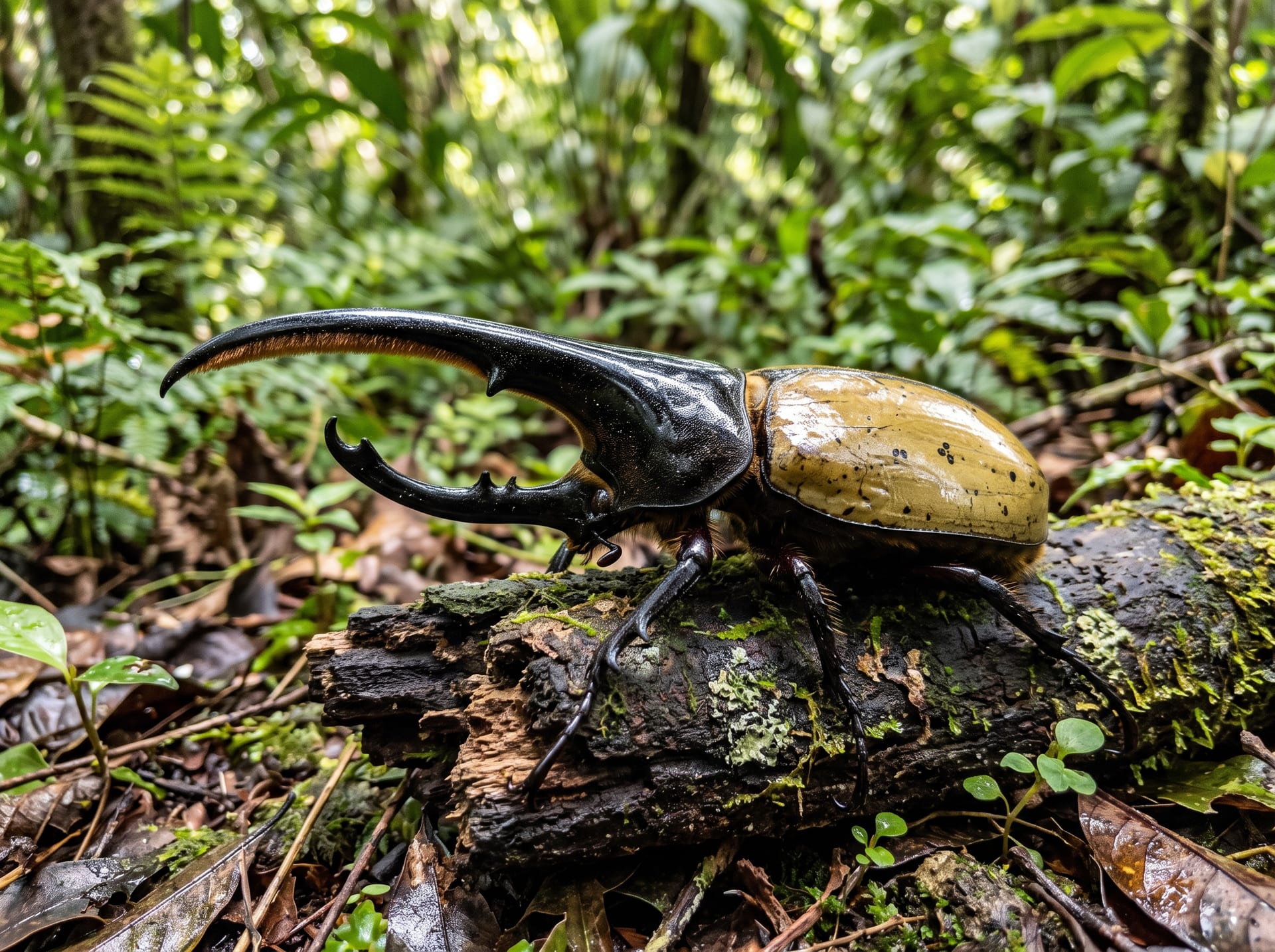
Hercules Bleuzeni is a subspecies of Hercules beetle native to eastern Venezuela's Bolívar state and northern Brazil. It's known for the two sharp projections at the base of its head horn and the striking pattern of large black blotches over a dull, ochre-yellow elytra. Mature males grow an impressive horn, giving them a commanding presence among rhinoceros beetles. While generally calm-natured, they are physically powerful, so handling takes some experience. Because their care calls for careful temperature and humidity management, this variety is best suited to experienced keepers who want to watch a beetle grow over time.
View Hercules Bleuzeni encyclopedia →0% commission on your first sales!Register by September 30, 2026 and your first 2 sales are commission-free!
Breeder Wanted!
List on BreederDirect and sell directly to customers nationwide!
6 Transparency Standards You Can Trust
When listing Insects, Breeders disclose the following. We guarantee transparency on growth stage and breeding unit.
- Life Stage Clarity
- Generation Info
- Real Photos
- Breeding Unit
- Country of Origin
- Body Length (mm)
Browse all 296 breeds
Verified breeders wanted for Insects
Breeders are signing up now ahead of launch. Subscribe to be notified when new listings go live.
Getting alerts is free with a member account. When new listings match your saved search, we'll notify you by email and in-app.
Browse other categories
Verified breeders (preview)
Hercules Bleuzeni key facts
- Care level
- Advanced
- Lifespan
- Adults 8-12 months
- Size
- Males 66-151 mm / females 55-66 mm
- Temperature
- 20〜26℃
- Diet
- Beetle jelly, banana
- Temperature & Humidity
- Keep at roughly 20-26 C and avoid Japanese summer heat. A montane subspecies that dislikes stuffy heat.
- Breeding & Egg-laying
- Females lay in fermented substrate packed 20 cm or deeper. Rear larvae singly in roughly 10 L containers; the larval period is long, 1-1.5 years for females and 1.5-2 years for males, and shortens at higher temperatures.
- Cohabitation
- Basically mild-tempered, but fights over food, so keep singly. Very rarely a male crushes and kills a female, so never leave a pair unattended.
- Lifespan & Rearing Period
- Adults live about 8-12 months. Egg to emergence takes 1.5-2.5 years, so patience is needed.
- Health & Notes
- The thoracic and cephalic horns pinch very hard, so keep fingers clear. A cramped enclosure stresses males and shortens their life. Long-horned males tip over easily, so add footholds.
About Hercules Bleuzeni
A Hercules beetle subspecies from eastern Venezuela and northern Brazil, known for its twin head-horn spurs and bold black-blotched elytra. Recommended for experienced keepers; adults live 8-12 months.
7 things to know before welcoming a Hercules Bleuzeni
1Space for a Large Beetle
Males can grow to 66-151mm, making them among the largest Hercules beetle subspecies. Once they reach adulthood, give them a roomy enclosure with enough depth and height to move around with their horn extended. Females are smaller at 55-66mm but still need adequate space to be active.
2An Advanced-Level Species
Hercules Bleuzeni is considered a challenging beetle to keep. From larva to adult, it requires attention to temperature, humidity, and diet, making it better suited to keepers with prior beetle-rearing experience.
3Adult Lifespan of 8-12 Months
Adults typically live around 8 to 12 months. After emerging, there's often a period before they start feeding actively, so don't worry if yours seems inactive at first - just give it time.
4Twin Spurs at the Horn's Base
A defining trait of this subspecies is the pair of sharp projections at the base of the head horn. Its elytra also display a distinctive pattern - large black blotches over a dull, ochre-yellow background - that sets it apart from other Hercules beetle subspecies.
5Powerful and Best Handled Carefully
Most individuals are calm-natured, but they're physically strong for their size. Males in particular have a powerful pinching grip with their horn, so handle them carefully to avoid injury.
6Notable Size Difference Between Sexes
Males range widely from 66-151mm, while females are comparatively smaller at 55-66mm. If keeping multiple beetles, consider adjusting enclosure space and layout differently for males and females.
7Prepare Your Setup Before Bringing One Home
Before bringing one home, prepare substrate, food such as insect jelly, and an enclosure where temperature can be managed. Since this is an advanced-level species, it's best to research proper care beforehand.
Frequently asked questions about Hercules Bleuzeni
- Q.Can beginners keep Hercules Bleuzeni?
- A.This is considered an advanced-level species, so it can be challenging for beginners. Since proper care requires knowledge of temperature and humidity management, we recommend researching thoroughly before bringing one home.
- Q.How much do males and females differ in size?
- A.Males reach 66-151mm while females are 55-66mm, with males growing notably larger. There's also considerable size variation among males themselves.
- Q.How long do adults live?
- A.Adults typically live around 8 to 12 months. It's a good idea to plan your care schedule around this lifespan, including the feeding-onset period after emergence.
- Q.Can you tell this subspecies apart by its head-horn spurs?
- A.Yes - Hercules Bleuzeni is distinguished by the two sharp projections at the base of its head horn. Combined with the large black blotches on its ochre-yellow elytra, this is a key identifying feature.
- Q.Do I need a permit to keep Hercules Bleuzeni?
- A.Hercules Bleuzeni falls outside CITES. Before bringing one home, focus on preparing a proper enclosure and the knowledge needed for its care.
Useful tools for Hercules Bleuzeni care
Learn more about Hercules Bleuzeni in the encyclopedia
View Hercules Bleuzeni encyclopedia entry →
Care difficulty, lifespan, size and diet — all basics covered.
More in this category
Can't find the one you're looking for?
Post your wishes for free and breeders with matching animals will contact you with introductions.