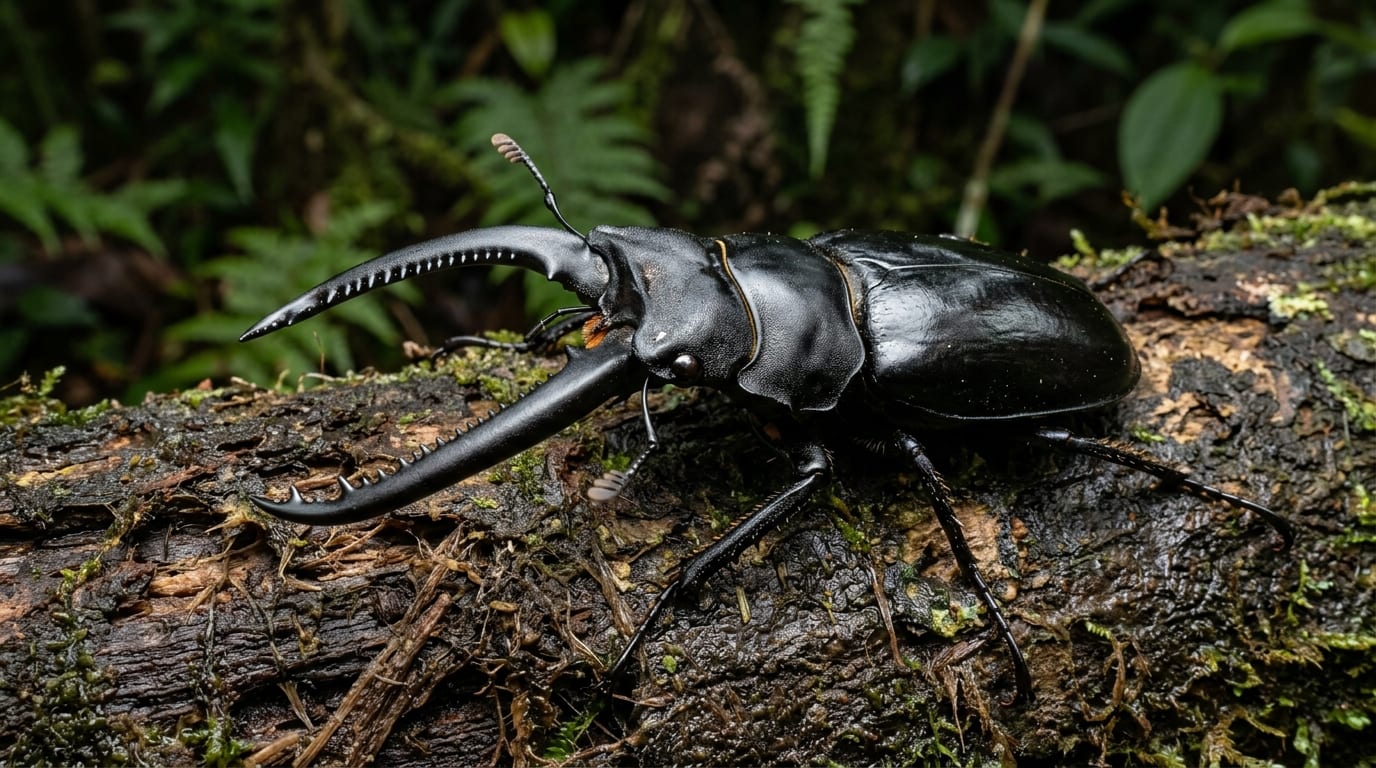
Leuthner's Shining Stag Beetle
Leuthner's Shining Stag Beetle is a stag beetle species native to the island of Borneo. Males are known for their gently arcing mandibles lined with fine, evenly spaced inner teeth, a smooth, sculptural look that draws in many stag beetle enthusiasts. The glossy sheen suggested by its name rewards close observation the more you study it. That said, husbandry information for this species remains limited and temperature and humidity need careful attention, making it best suited to experienced keepers rather than beginners.
View Leuthner's Shining Stag Beetle encyclopedia →0% commission on your first sales!Register by September 30, 2026 and your first 2 sales are commission-free!
Breeder Wanted!
List on BreederDirect and sell directly to customers nationwide!
BreederDirect's 6 Transparency Commitments
When listing Insects, Breeders disclose the following. We guarantee transparency on growth stage and breeding unit.
- Life Stage Clarity
- Generation Info
- Real Photos
- Breeding Unit
- Country of Origin
- Body Length (mm)
Browse all 336 breeds
Verified breeders wanted for Insects
Breeders are signing up now ahead of launch. Subscribe to be notified when new listings go live.
Getting alerts is free with a member account. When new listings match your saved search, we'll notify you by email and in-app.
Browse other categories
Verified breeders (preview)
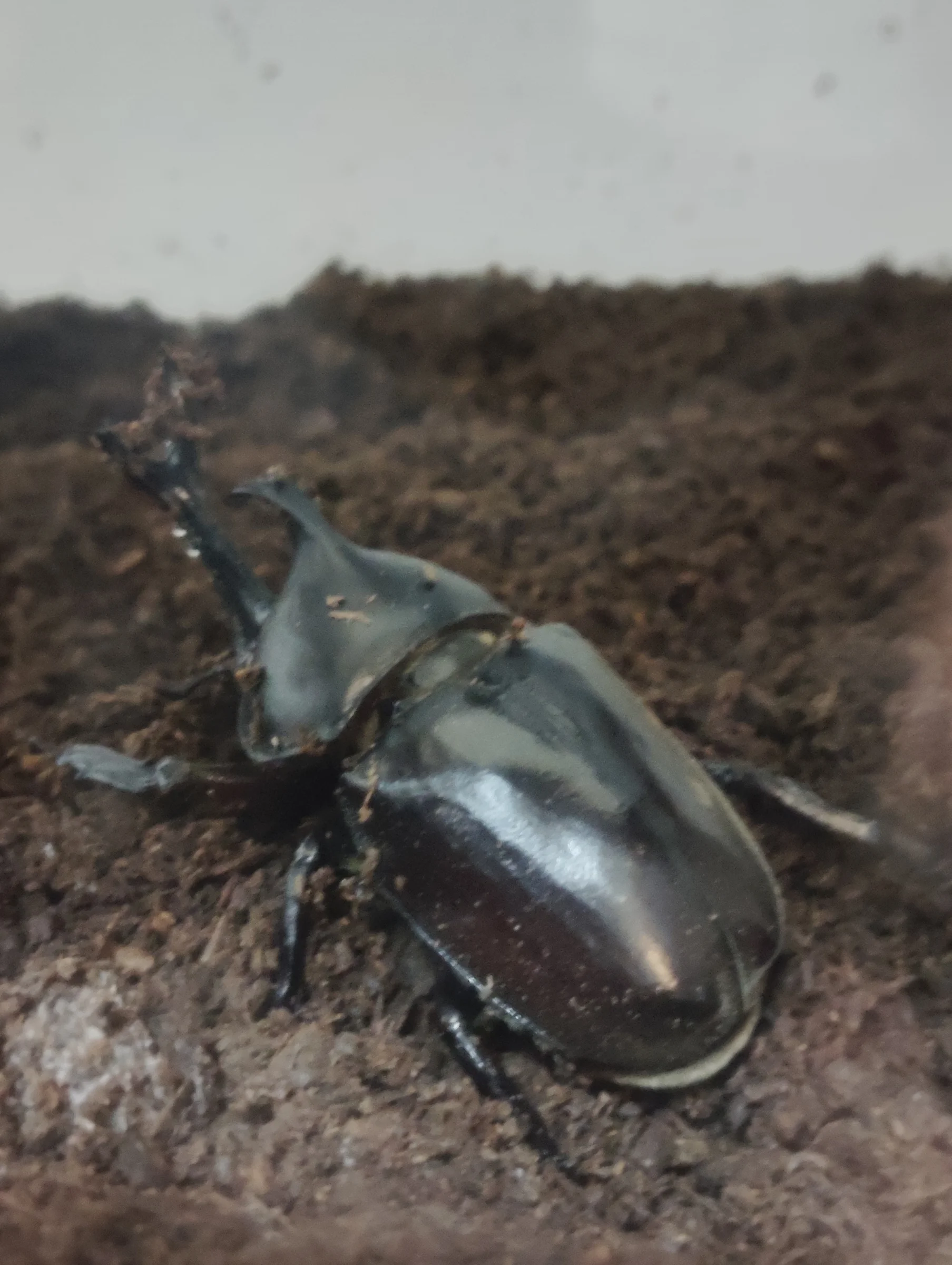
Leuthner's Shining Stag Beetle key facts
- Care level
- Advanced
- Lifespan
- A few months as an adult
- Size
- Captive record 59.6mm, wild record 78.3mm
- Diet
- Adults take fermented sap of broadleaf trees and beetle jelly; larvae eat humus close to soil
- Temperature & Humidity
- Odontolabis adults and larvae alike tolerate cold poorly and are said to be unable to survive a winter on mainland Japan or further north. Do not let the substrate dry out.
- Breeding & Egg-laying
- With a captive record of 59.6 mm against a wild record of 78.3 mm, the way to finish large individuals has not been worked out. The larvae eat humus close to soil, so the usual substrates for the genus apply, spent substrate mixed with the remains of mycelium or nitrogen-rich rhinoceros-beetle substrate, with red-rotted flake worth trying if no eggs are obtained.
- Cohabitation
- Male Odontolabis are for the most part short-tempered and combative, and a male will sometimes kill a female he does not take to. Several are never kept together and each beetle is housed alone. The larvae too hold their chamber in the humus as territory, attacking and sometimes eating intruders, so they are reared separately.
- Lifespan & Rearing Period
- For the genus, one to two years pass between hatching and pupation and the adults live a few months. Beetles that have been active for about a month and a half are said to start losing tarsi and antennal segments to necrosis at an increasing rate.
- Health & Notes
- It occurs on Borneo alongside the closely related O. datukpauli, which some treat as a subspecies of it, so beetles with vague locality or species labels should not be mixed in. Importing live Scarabaeoidea requires the species identification certificate. Odontolabis larvae compete strongly with other species, so the beetles must never be released or abandoned outdoors.
About Leuthner's Shining Stag Beetle
An overview of Leuthner's Shining Stag Beetle from Borneo, covering its arcing mandibles, husbandry difficulty, and key points to know before bringing one home.
7 things to know before welcoming a Leuthner's Shining Stag Beetle
1Best For Experienced Keepers
Husbandry information on Leuthner's Shining Stag Beetle is limited, and temperature and humidity need careful attention, so this species is best suited to experienced keepers. It's a good idea to have some general stag beetle keeping experience before taking one on.
2A Short Adult Lifespan
Adults are typically active for only a few months. Since that window is limited, it's worth keeping notes on daily changes and taking the time to appreciate each stage of its life.
3Distinctive Arcing Mandibles
Males have mandibles that curve in a gentle arc, lined on the inside with a row of fine, evenly spaced teeth. Comparing the subtle differences in mandible shape between individuals is part of the appeal of keeping this species.
4Notable Size Variation
The largest captive-bred specimen on record measures 59.6mm, well short of the 78.3mm wild record. Larval temperature and nutrition can have a major effect on the adult size a beetle grows to.
5Recreating Borneo's Climate
Since this species is native to Borneo, it helps to keep temperature and humidity stable rather than letting them swing widely. Choose a spot away from direct sunlight and sudden temperature changes for the enclosure.
6Substrate and Breeding Setup
Egg-laying and larval rearing call for a well-chosen fermented substrate and breeding wood. Since documented examples for this exact species are scarce, it helps to look at care reports for other Shining Stag Beetles as a general reference while setting up carefully.
7Getting Ready Before Arrival
Before bringing one home, prepare the basics such as an enclosure, substrate, and a feeding station, and make sure the spot you'll keep it in has a stable temperature. Give it some quiet time to settle into its new surroundings after arrival.
Frequently asked questions about Leuthner's Shining Stag Beetle
- Q.Is this species suitable for beginners?
- A.This species is generally considered one for experienced keepers. Documented care information is limited and temperature and humidity require careful attention, so it's best approached after you already have some stag beetle keeping experience.
- Q.How long can I expect to keep one?
- A.Adults are typically active for only a few months. It helps to plan ahead for the full process, including the larval stage, before taking one on.
- Q.How large does this species grow?
- A.The largest captive-bred specimen on record measures 59.6mm, compared to a 78.3mm wild record. Adult size in captivity can vary quite a bit depending on the conditions during the larval stage.
- Q.What's distinctive about its mandibles?
- A.Males have mandibles that curve in a gentle arc, lined on the inside with a row of fine, evenly spaced teeth. The exact curve and tooth arrangement can vary somewhat from one individual to another.
- Q.Do males and females differ in mandible size?
- A.Yes, males have large, well-developed mandibles, while females have smaller, simpler ones by comparison. This kind of size difference between the sexes is common across stag beetles in general.
Useful tools for Leuthner's Shining Stag Beetle care
Learn more about Leuthner's Shining Stag Beetle in the encyclopedia
View Leuthner's Shining Stag Beetle encyclopedia entry →
Care difficulty, lifespan, size and diet — all basics covered.
More in this category
Can't find the one you're looking for?
Post your wishes for free and breeders with matching animals will contact you with introductions.