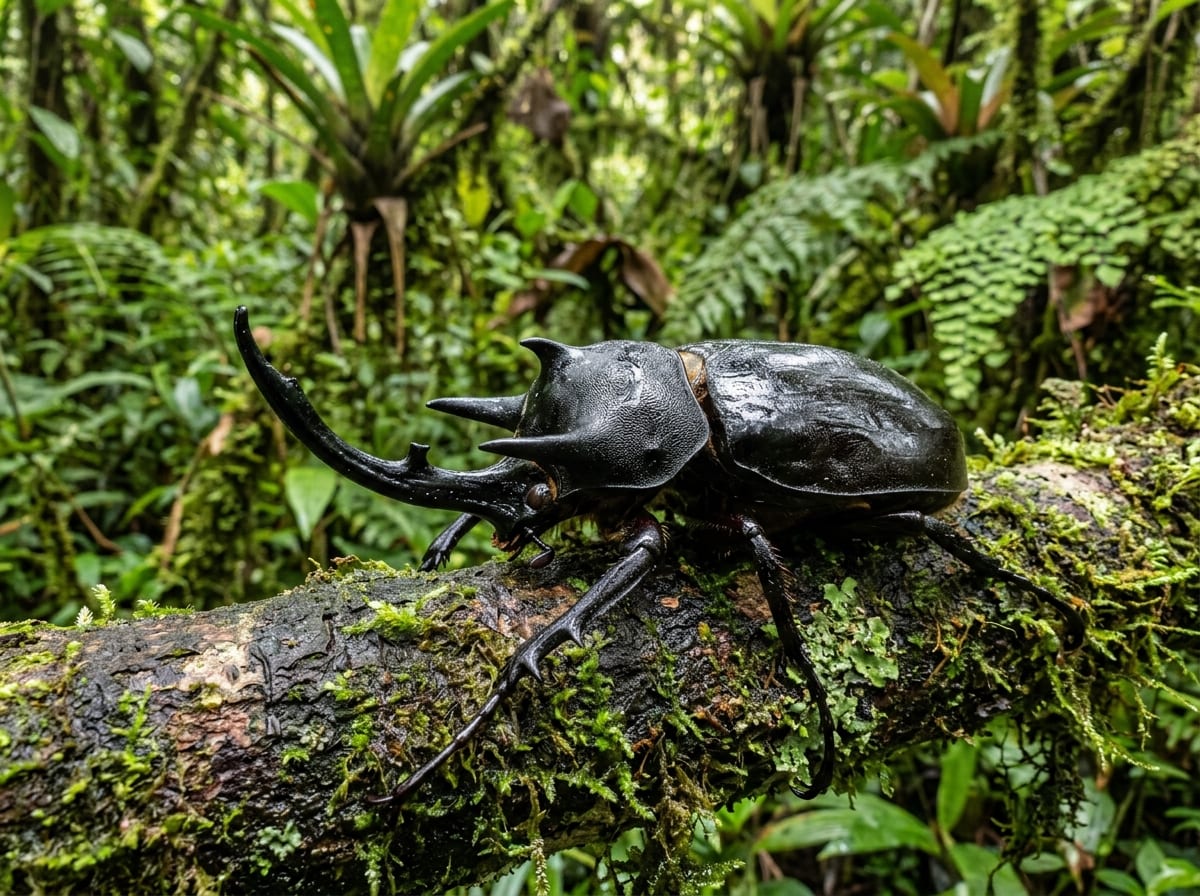
Ramirez's elephant beetle
Ramirez's elephant beetle is a large dynastine beetle found from northwestern South America—Ecuador and Colombia—through to Panama in Central America. Closely related to the Actaeon elephant beetle, males display an impressive set of enlarged horns on the head and thorax. Breeding records kept by BE-KUWA have documented individuals reaching 118.6mm, giving this species a real sense of scale and presence beyond typical domestic beetles. Because it demands careful attention to temperature and humidity, it's generally considered a beetle for experienced keepers, and makes a rewarding project for hobbyists ready for a bold, large-bodied species.
View Ramirez's elephant beetle encyclopedia →0% commission on your first sales!Register by September 30, 2026 and your first 2 sales are commission-free!
Breeder Wanted!
List on BreederDirect and sell directly to customers nationwide!
BreederDirect's 6 Transparency Commitments
When listing Insects, Breeders disclose the following. We guarantee transparency on growth stage and breeding unit.
- Life Stage Clarity
- Generation Info
- Real Photos
- Breeding Unit
- Country of Origin
- Body Length (mm)
Browse all 336 breeds
Verified breeders wanted for Insects
Breeders are signing up now ahead of launch. Subscribe to be notified when new listings go live.
Getting alerts is free with a member account. When new listings match your saved search, we'll notify you by email and in-app.
Browse other categories
Verified breeders (preview)
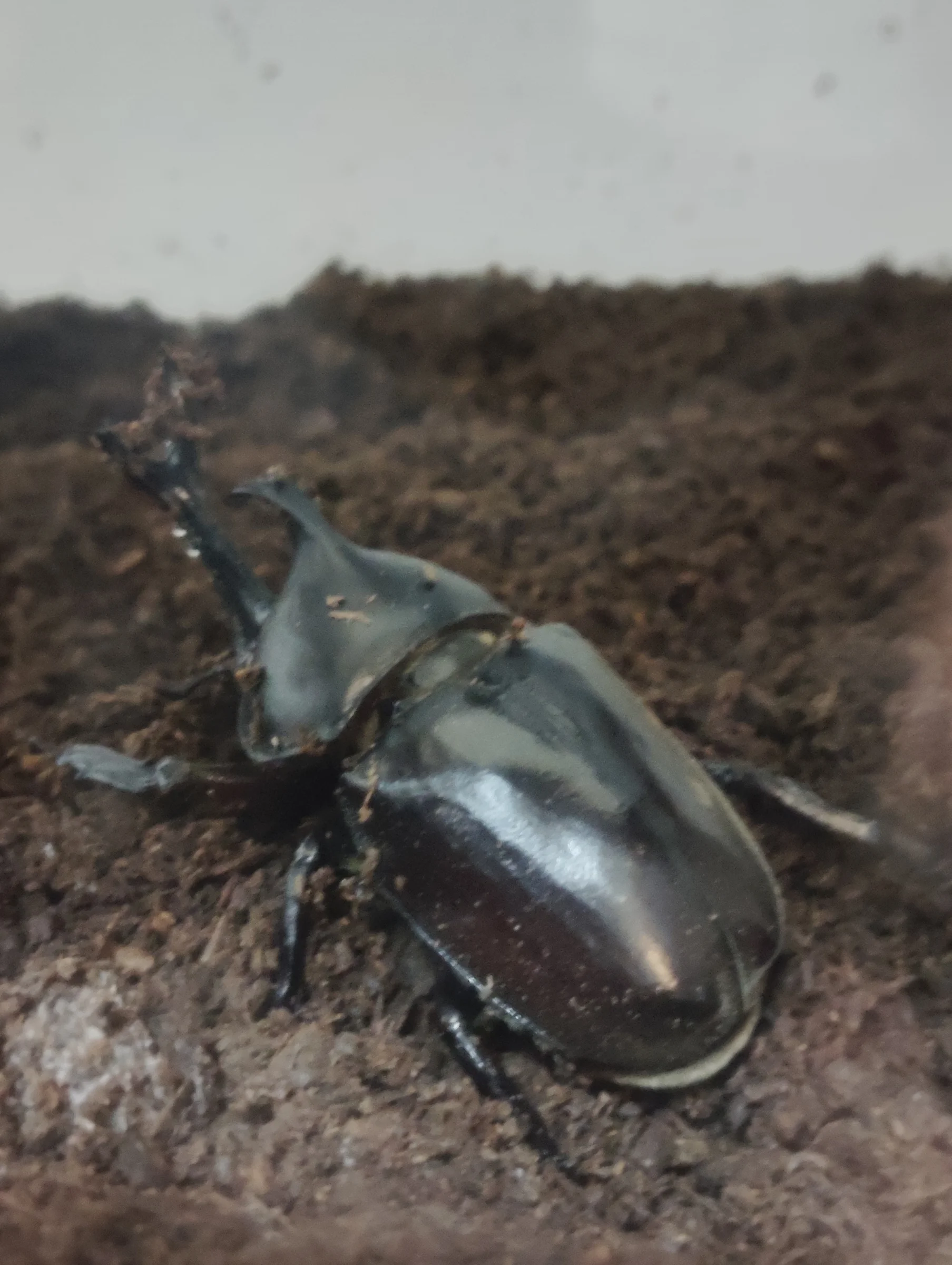
Ramirez's elephant beetle key facts
- Care level
- Advanced
- Lifespan
- Little data
- Size
- Captive record 118.6mm
- Diet
- Adults take sap, fruit juice or beetle jelly; larvae eat fermented substrate (tree roots in the wild)
- Temperature & Humidity
- There is little numeric temperature data. Avoid extremes of heat and cold and keep the substrate from drying out.
- Food & Feeding
- Adult Megasoma drink sap and fruit juice, so offer beetle jelly.
- Breeding & Egg-laying
- Little is published on breeding this species. Wild larvae feed on tree and shrub roots; in captivity rear them in large containers of deep fermented substrate.
- Cohabitation
- Large males fight with their horns and are very strong, so keep adults singly and together only for mating.
- Health & Notes
- It is treated either as a species or as a subspecies of M. janus, and the name Ramirez is sometimes used loosely for M. janus, so confirm the scientific name and locality. Importing foreign stag and rhinoceros beetles is regulated by the Plant Protection Act and the Invasive Alien Species Act (species-name certificate), with each species needing clearance from the Plant Protection Station, so domestically bred stock is the safe choice. Never release captive beetles.
About Ramirez's elephant beetle
A large dynastine beetle native to Ecuador, Colombia, and Panama, with breeding records reaching 118.6mm. Ramirez's elephant beetle is known for its advanced care requirements and the male's striking horns.
7 things to know before welcoming a Ramirez's elephant beetle
1Best for Experienced Keepers
Ramirez's elephant beetle requires specialized knowledge of temperature, humidity, and substrate management, making it a species best suited to experienced keepers. Because it's sensitive to environmental changes from the larval stage through to eclosion, it's best attempted after gaining experience with other beetle species.
2The Male's Striking Horns
Males develop large, well-formed horns on the head and thorax, giving them a powerful presence similar to their close relative, the Actaeon elephant beetle. Females lack horns and have a rounder body shape, making the sexes easy to tell apart.
3Native to Tropical Central & South America
This species occurs in tropical regions stretching from northwestern South America (Ecuador and Colombia) to Panama in Central America. Since it naturally lives in warm, humid forest environments, captive setups should aim to replicate similar conditions.
4Larval-Stage Care Matters
As a large beetle, the larval stage takes considerable time, and judging substrate condition and replacement timing is key to successful rearing. Deteriorating substrate can affect development, so regular checks are important.
5Prefers Warm, Humid Conditions
Given its tropical origins, keeping temperature and humidity elevated and stable is essential for this species. Large fluctuations can stress the beetle, so choose the enclosure's location carefully.
6Limited Lifespan Data
Because Ramirez's elephant beetle isn't widely kept, detailed lifespan data is still limited. It helps to refer to husbandry records of closely related species while closely observing your own beetle's condition day to day.
7Prepare a Roomy Enclosure
With recorded individuals reaching 118.6mm, this is a large species, so it's wise to prepare a roomy container and ample substrate from the larval stage onward. For adults, choose an enclosure sized to match their substantial build.
Frequently asked questions about Ramirez's elephant beetle
- Q.Can beginners keep this beetle?
- A.Ramirez's elephant beetle is generally considered a species for experienced keepers. It calls for specialized knowledge of temperature, humidity, and substrate management, so it's best to gain experience with other beetles first.
- Q.Is it subject to CITES?
- A.Ramirez's elephant beetle is not subject to CITES. Many live foreign Scarabaeoidea (stag beetles, rhinoceros beetles, flower chafers and relatives) are quarantine pests whose import is banned under Japan's Plant Protection Act, and even importable species require a species-name certificate from a foreign government body under the Invasive Alien Species Act (entry only via designated airports, never by international post). Whether a species may enter must be checked with the Plant Protection Station in advance, so choose domestically bred stock and never release captive beetles.
- Q.How large can adults grow?
- A.According to BE-KUWA breeding records, individuals have reached 118.6mm. That places it among the largest beetles, comparable to its close relative, the Actaeon elephant beetle.
- Q.How long do they live?
- A.Because Ramirez's elephant beetle isn't widely kept, there isn't much detailed data available on its lifespan. When keeping one, it's best to observe its condition closely on a day-to-day basis.
- Q.How can you tell males and females apart?
- A.Males have large, well-developed horns on the head and thorax, while females lack horns and have a rounder, more compact body shape. Checking for the presence of horns makes it fairly easy to distinguish the two.
Useful tools for Ramirez's elephant beetle care
Learn more about Ramirez's elephant beetle in the encyclopedia
View Ramirez's elephant beetle encyclopedia entry →
Care difficulty, lifespan, size and diet — all basics covered.
More in this category
Can't find the one you're looking for?
Post your wishes for free and breeders with matching animals will contact you with introductions.