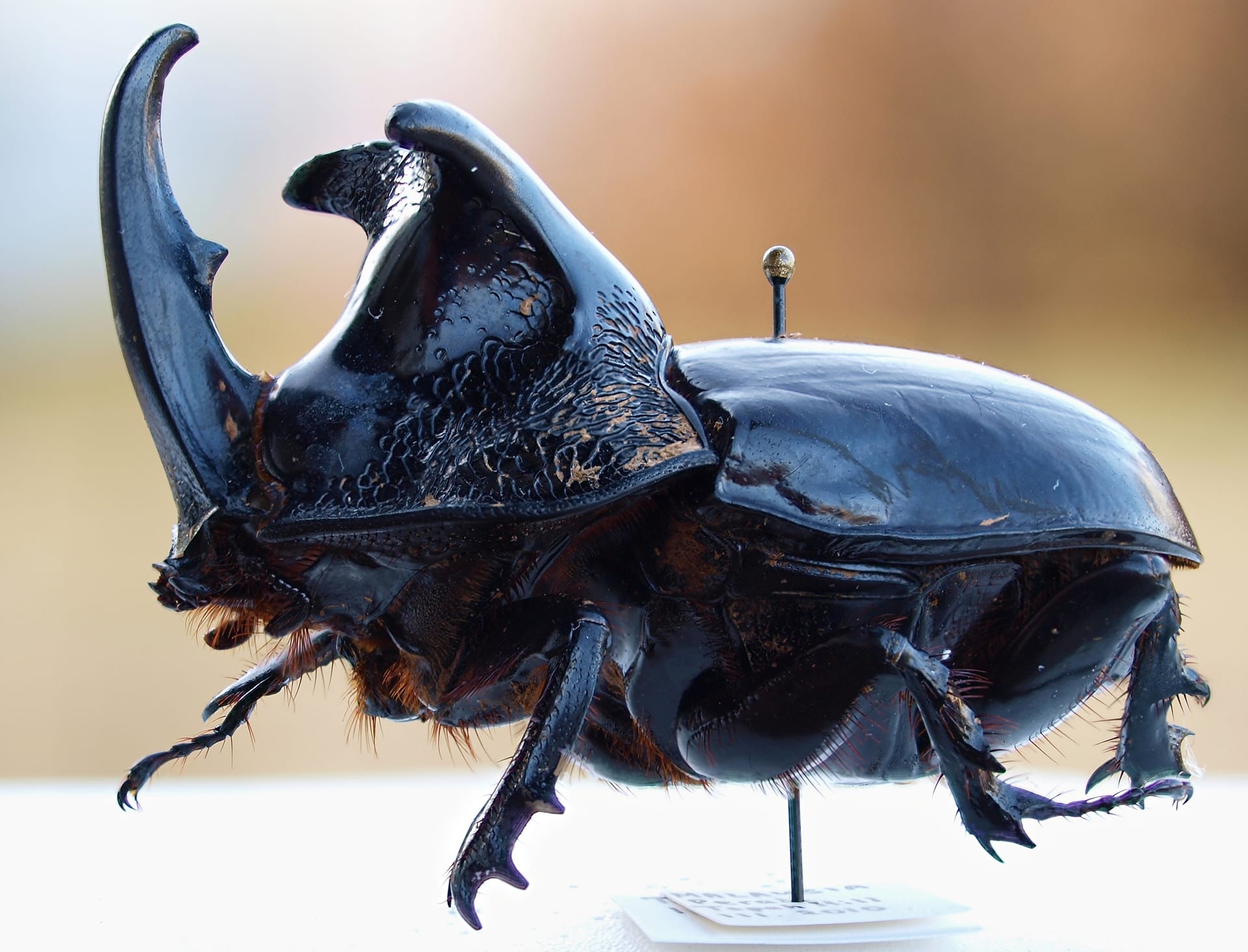
 © JohnSka / CC BY-SA 3.0
Lunicollis rhinoceros beetle
The Lunicollis rhinoceros beetle (known in Japanese as オオツノメンガタカブト) has been recorded on the Malay Peninsula and in Borneo. It belongs to the genus Trichogomphus, placed in the same tribe as the Oryctes rhinoceros beetles. Although the species was formally described back in 1847, there is still little detailed information on its size, diet or life history, so care guidance is patchy. It is not widely available in Japan, so confirming the scientific name when buying is the safest approach. Care is rated intermediate, so it suits keepers who can draw on general experience with exotic rhinoceros beetles and enjoy filling in the gaps themselves.
View Lunicollis rhinoceros beetle encyclopedia →Breeder Wanted!
List on BreederDirect and sell directly to customers nationwide!
BreederDirect's 6 Transparency Commitments
When listing Insects, Breeders disclose the following. We guarantee transparency on growth stage and breeding unit.
- Life Stage Clarity
- Generation Info
- Real Photos
- Breeding Unit
- Country of Origin
- Body Length (mm)
Browse all 336 breeds
Verified breeders wanted for Insects
Breeders are signing up now ahead of launch. Subscribe to be notified when new listings go live.
Getting alerts is free with a member account. When new listings match your saved search, we'll notify you by email and in-app.
Browse other categories
Verified breeders (preview)
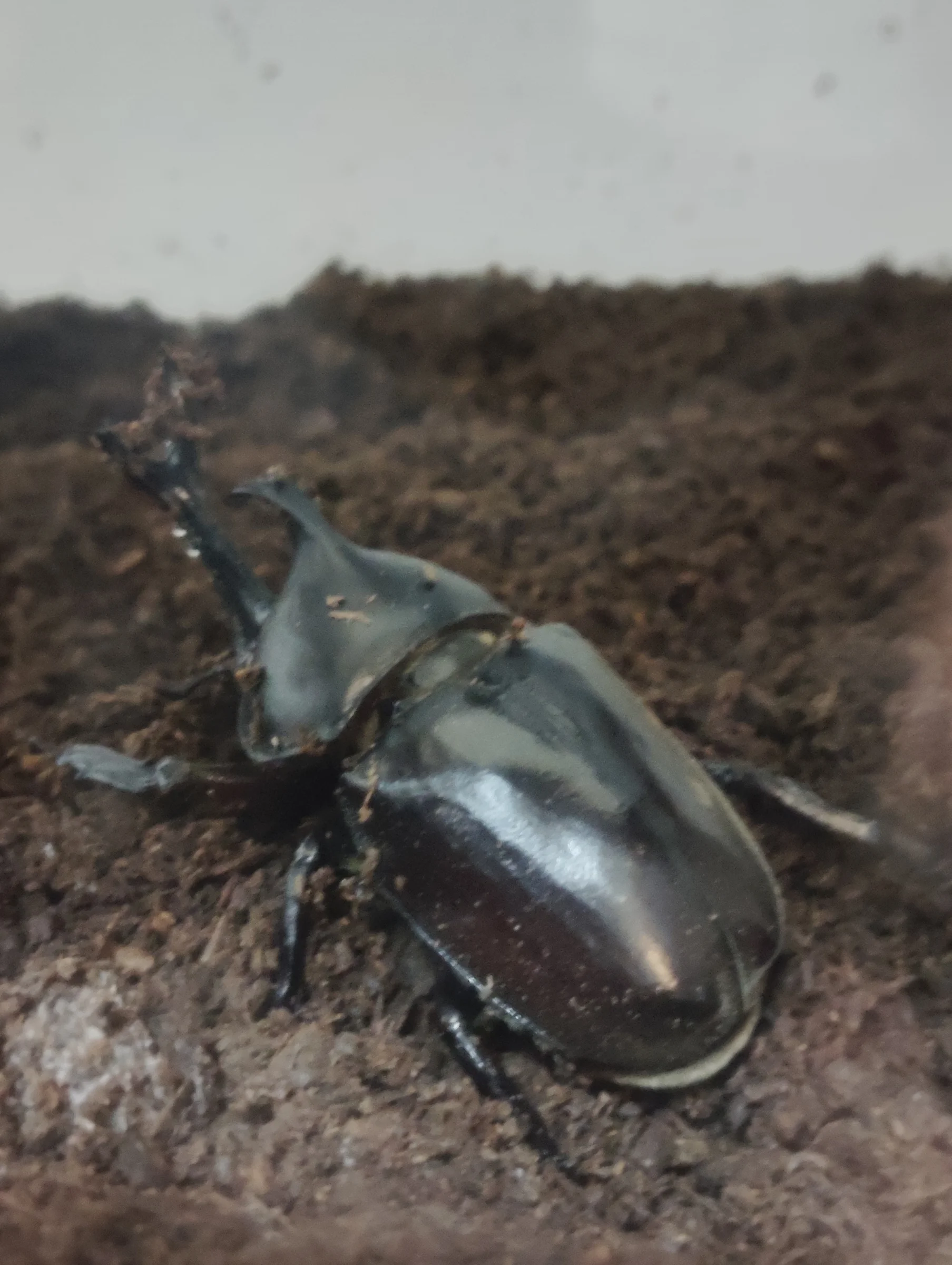
Lunicollis rhinoceros beetle key facts
- Care level
- Intermediate
- Diet
- Adults take beetle jelly; larvae eat fermented substrate
- Temperature & Humidity
- There is little numeric temperature data. As a tropical Asian species, keep it out of winter cold and keep the substrate from drying out.
- Breeding & Egg-laying
- Little is published on breeding. Provide deep fermented substrate for laying and rear larvae in the same.
- Cohabitation
- Keep adults singly and together only for mating.
- Lifespan & Rearing Period
- Larval duration and adult lifespan are poorly documented.
- Health & Notes
- Importing foreign stag and rhinoceros beetles is regulated by the Plant Protection Act and the Invasive Alien Species Act (species-name certificate), with each species needing clearance from the Plant Protection Station, so domestically bred stock is the safe choice. Never release captive beetles.
About Lunicollis rhinoceros beetle
An intermediate-level beetle recorded from the Malay Peninsula and Borneo, described in 1847, with still-limited documentation of its biology.
7 things to know before welcoming a Lunicollis rhinoceros beetle
1Distribution & Classification
The Lunicollis rhinoceros beetle is recorded from the Malay Peninsula and Borneo and belongs to the same tribe as the Sai-kabuto rhinoceros beetle. It was formally described in 1847, but details about its distribution and natural history are still not well understood.
2Little Documented Yet
Detailed Japanese-language material on this species' form and biology is limited, and keeping information is scattered at best. Because so much is still unknown, day-to-day observation notes from keepers become a valuable source of information.
3Why Intermediate Level
Care difficulty is rated intermediate, which assumes some basic experience with keeping rhinoceros beetles. Since so little is documented for this species, keepers who can apply their existing knowledge and adapt as they go will find it easier.
4Don't House Males Together
As with rhinoceros beetles generally, males may fight using their horns, so it's best to avoid housing multiple males in the same enclosure. Keeping adults singly is the safer approach to prevent injuries from fighting.
5Substrate-Based Larval Care
As with rhinoceros beetles generally, larvae live within the substrate and stay out of sight until they emerge as adults. Maintaining good substrate condition is the foundation of raising healthy larvae.
6Jelly Is the Main Adult Food
As with rhinoceros beetles generally, insect jelly is the typical food for adults. The same approach is a reasonable starting point for this species too, adjusted as you observe how the individual responds.
7Prepare Housing Before Arrival
Before bringing one home, set up a basic enclosure and substrate that will let adults or larvae settle in comfortably. Since documented information on this species is limited, choose a spot with stable temperatures and avoid sudden environmental changes.
Frequently asked questions about Lunicollis rhinoceros beetle
- Q.How difficult is it to keep?
- A.The Lunicollis rhinoceros beetle is rated as an intermediate-level species to keep. It's best approached with some basic experience in rhinoceros beetle care.
- Q.How long does it live?
- A.Documented information on this species' biology is limited, and no clear lifespan data has been confirmed. Keeping your own observation records and adjusting care to the individual is the best approach for now.
- Q.How big do adults get?
- A.Detailed size data for adult Lunicollis rhinoceros beetles hasn't been established, since documentation on the species is limited. Watching your own beetle grow is part of the appeal of keeping a species that's still not well documented.
- Q.Can males be housed together?
- A.As with rhinoceros beetles generally, males may fight using their horns, so housing them together isn't recommended. Keeping each adult male in its own enclosure helps prevent injury from fighting.
- Q.What do I need to raise the larvae?
- A.Larvae develop within a soil-like substrate, so a suitable enclosure and substrate are the basics you'll need. Since documentation on this species is limited, keep an eye on substrate condition and adjust care as you observe how the larva is doing.
Useful tools for Lunicollis rhinoceros beetle care
Learn more about Lunicollis rhinoceros beetle in the encyclopedia
View Lunicollis rhinoceros beetle encyclopedia entry →
Care difficulty, lifespan, size and diet — all basics covered.
More in this category
Can't find the one you're looking for?
Post your wishes for free and breeders with matching animals will contact you with introductions.