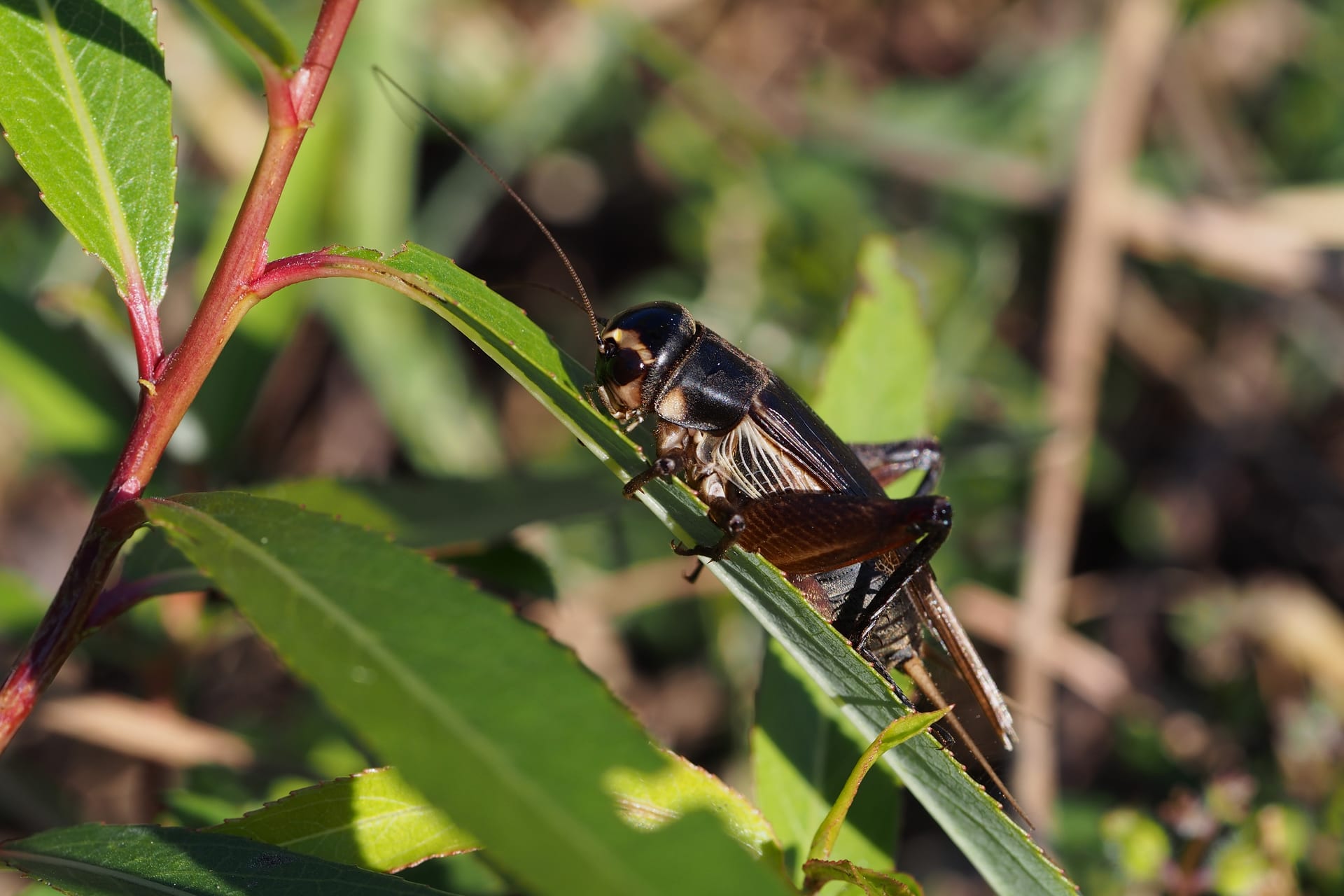
 © harum.koh / CC BY-SA 2.0
Emma Field Cricket
The Emma field cricket is the largest cricket species found on mainland Japan, with adults reaching 26 to 32 millimeters in length. Its Japanese name comes from the dark markings around its compound eyes, said to resemble the fierce, scowling face of Enma, the judge of the underworld in Japanese mythology. Among crickets, it's especially prized for its beautiful song, long celebrated as one of the classic sounds of a Japanese autumn evening. It completes just one generation per year, and adults live for only one to two months, making the short window to enjoy their chirping feel all the more special. With a generally calm temperament and beginner-friendly care requirements, it's a great starting point for anyone new to keeping insects.
View Emma Field Cricket encyclopedia →0% commission on your first sales!Register by September 30, 2026 and your first 2 sales are commission-free!
Breeder Wanted!
List on BreederDirect and sell directly to customers nationwide!
6 Transparency Standards You Can Trust
When listing Insects, Breeders disclose the following. We guarantee transparency on growth stage and breeding unit.
- Life Stage Clarity
- Generation Info
- Real Photos
- Breeding Unit
- Country of Origin
- Body Length (mm)
Browse all 296 breeds
Verified breeders wanted for Insects
Breeders are signing up now ahead of launch. Subscribe to be notified when new listings go live.
Getting alerts is free with a member account. When new listings match your saved search, we'll notify you by email and in-app.
Browse other categories
Verified breeders (preview)
Emma Field Cricket key facts
- Care level
- Beginner-friendly
- Lifespan
- One year (single-brooded; adults live 1-2 months)
- Size
- 26-32mm
- Diet
- Omnivorous: plant matter, carrion of small animals and seeds
- Temperature & Humidity
- After laying, keep the container in the shade and damp, and the eggs will hatch the following spring. In a warm room hatching can come as early as the new year, shifting every stage forward by about three months and producing a second brood in the same year.
- Breeding & Egg-laying
- In mating the female mounts the male. Once fertilised she drives her long ovipositor into the ground and lays sausage-shaped eggs of about 3 mm one at a time. The eggs overwinter in the soil, absorbing moisture as they develop, and hatch the following May or June.
- Cohabitation
- It is large, greedy and strongly built about the mouth, so keeping several together always carries a risk of cannibalism. Animal food such as dried bonito flakes lowers that risk considerably, though individuals are still lost while moulting. Smaller crickets such as the bell cricket will simply be eaten if housed with it.
- Lifespan & Rearing Period
- It lives one year and is single-brooded, in step with the Japanese seasons. Adults appear from about August to November and live one to two months, during which they breed. The adults die in winter and the eggs carry the population through.
- Health & Notes
- It is fairly easy to keep in a tank it cannot escape from, with a layer of soil, a flower pot or stones for shelter and a water source, and it is not fussy about food. Because it eats seeds it is treated as a pest in pasture and in autumn-sown leaf vegetables, so do not let captive stock escape near farmland.
About Emma Field Cricket
The Emma field cricket, Japan's largest native cricket species, grows to 26–32mm and is known for its beautiful song. Easy to keep for beginners, though adults live only 1–2 months.
7 things to know before welcoming a Emma Field Cricket
1Japan's Largest Singer
The Emma field cricket is the largest cricket species native to mainland Japan, with adults reaching 26 to 32 millimeters. It combines a sturdy build with an especially beautiful song, making it a favorite among singing insect enthusiasts.
2A Name Inspired by Enma
The dark markings around its compound eyes are said to resemble the fierce, scowling face of Enma, the judge of the underworld in Japanese mythology — the origin of its Japanese name. Its distinctive face is part of the fun of observing it.
3One of the Best Singers
Among cricket species, it's known for an especially beautiful song, long celebrated as one of the classic sounds of a Japanese autumn. Males produce the sound by rubbing their wings together.
4Short-Lived, About a Year
Its lifespan is roughly one year, but since it completes only one generation annually, adults are only around for about one to two months. Plan on enjoying its song during that limited seasonal window.
5Keep Males Apart
Crickets are territorial, and housing multiple males together often leads to fighting or aggressive chirping matches. If keeping more than one, separate enclosures or plenty of hiding spots help keep things calm.
6Setting Up the Habitat
Adding substrate, dried leaves, and shelters gives it the hiding spots it naturally prefers. Keep the enclosure well-ventilated while maintaining enough humidity to avoid it drying out.
7What to Prepare First
Before bringing one home, have an enclosure, substrate, a hiding spot, a water source, and food such as insect jelly ready to go. Since it's considered beginner-friendly, basic supplies are all you need to get started comfortably.
Frequently asked questions about Emma Field Cricket
- Q.Is the Emma field cricket suitable for beginners?
- A.Yes, it's generally considered beginner-friendly. With a basic enclosure, food, and a hiding spot, you can start keeping one without much difficulty.
- Q.How big does it get?
- A.Adults reach about 26 to 32 millimeters, making it the largest cricket species found on mainland Japan. It has a notably sturdy, robust build.
- Q.Do both males and females chirp?
- A.Only males chirp, producing sound by rubbing their wings together. They're known for an especially beautiful song among cricket species.
- Q.How long can I enjoy its song for?
- A.It completes just one generation per year, and adults are only around for about one to two months. Its overall lifespan is roughly a year, but the song can only be heard during that shorter adult stage.
- Q.Can I keep more than one together?
- A.Care is needed, especially with males, since their territorial nature can lead to fighting. If keeping several, separate enclosures or providing plenty of hiding spots helps keep them calmer.
Useful tools for Emma Field Cricket care
Learn more about Emma Field Cricket in the encyclopedia
View Emma Field Cricket encyclopedia entry →
Care difficulty, lifespan, size and diet — all basics covered.
More in this category
Can't find the one you're looking for?
Post your wishes for free and breeders with matching animals will contact you with introductions.