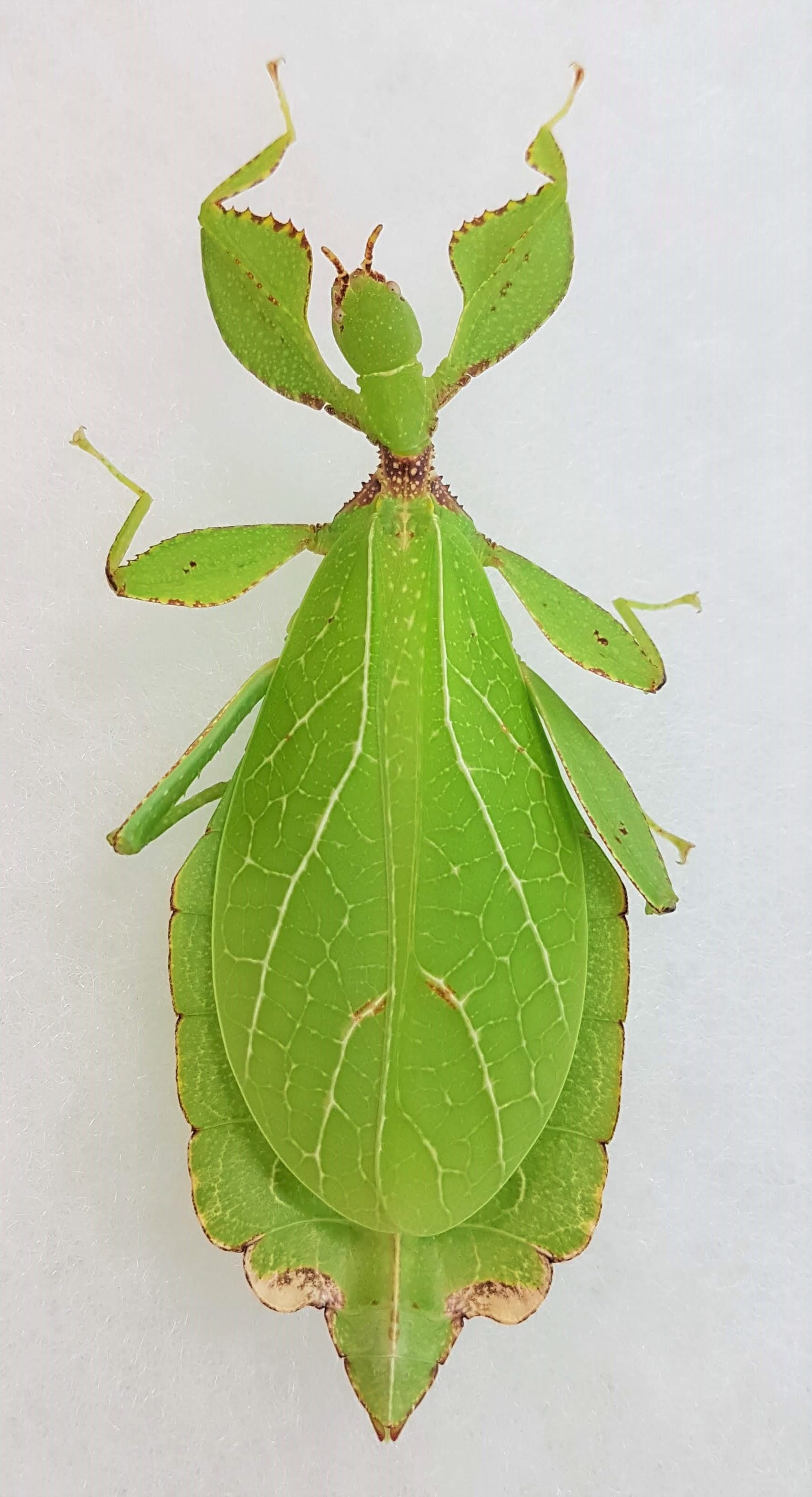
 © Doublebears / CC BY-SA 4.0
Philippine Leaf Insect
The Philippine Leaf Insect, native to Luzon Island, is known for its remarkable camouflage — females measure 65–98mm and look almost identical to a real leaf. Males are smaller and slimmer at 55–68mm and are capable of short flights. With their slow, calm movements, they make fascinating insects to simply watch, and this species is considered one of the easiest leaf insects to breed, making it a great pick for first-time keepers drawn to its quietly captivating, leaf-like appearance.
View Philippine Leaf Insect encyclopedia →0% commission on your first sales!Register by September 30, 2026 and your first 2 sales are commission-free!
Breeder Wanted!
List on BreederDirect and sell directly to customers nationwide!
6 Transparency Standards You Can Trust
When listing Insects, Breeders disclose the following. We guarantee transparency on growth stage and breeding unit.
- Life Stage Clarity
- Generation Info
- Real Photos
- Breeding Unit
- Country of Origin
- Body Length (mm)
Browse all 296 breeds
Verified breeders wanted for Insects
Breeders are signing up now ahead of launch. Subscribe to be notified when new listings go live.
Getting alerts is free with a member account. When new listings match your saved search, we'll notify you by email and in-app.
Browse other categories
Verified breeders (preview)
Philippine Leaf Insect key facts
- Care level
- Beginner-friendly
- Lifespan
- Adult females 6-9 months, exceptionally up to a year; adult males about three months
- Size
- Females 65-98mm, males 55-68mm
- Temperature
- 22〜27℃
- Humidity
- 60〜80%
- Diet
- Mainly bramble leaves, with oak or guava also taken
- Temperature & Humidity
- Keep the insects at 22-27 °C and 60-80 % humidity. Mist the food plant with lukewarm water every two or three days to raise the humidity. Rearing at lower, room-level temperatures yields a higher proportion of males at hatching.
- Breeding & Egg-laying
- Parthenogenesis plays essentially no part, so both sexes are needed. Adult males live up to four months, exceptionally long for Phyllium, and during mating they ride on the female's back for days at a time. The eggs are about 5 mm long, just under 3 mm wide and 10 mg in weight, and hatch after four to five months. Because the males are long-lived, fertilised eggs are easy to obtain, hatch rates are higher and the nymphs are more robust.
- Cohabitation
- They are leaf feeders and do not attack one another, so a group can share one enclosure. Adult males are active at night, walking and flying through the branches in search of a female. Because a handled insect will shed its legs, move the animals on a leaf or twig rather than picking them up.
- Lifespan & Rearing Period
- Eggs hatch after four to five months and the nymphs need a further four to five months to mature, males slightly faster. Adult males live about three months and females usually six to nine, exceptionally up to a year. From the second moult the sexes can be told apart by the abdomen, which narrows into a diamond shape in males and broadens in females.
- Health & Notes
- The culture was first circulated as Phyllium spec. (Philippines) or, incorrectly, as Phyllium siccifolium, and the old names still appear on photographs and labels. Foreign phasmids count as quarantine pests under Japan's Plant Protection Act and live specimens may not be imported except with ministerial permission, so choose animals bred within Japan. They must never be released or abandoned outdoors.
About Philippine Leaf Insect
A leaf-mimicking insect native to Luzon, Philippines. Females reach 65–98mm and closely resemble a leaf, while males are slimmer at 55–68mm and capable of short flights. Considered a beginner-friendly species to keep.
7 things to know before welcoming a Philippine Leaf Insect
1Enclosure & Ventilation
This species thrives in warm, humid conditions, so a well-ventilated enclosure misted regularly works best. If it gets too dry, molting can go wrong, so consistent misting is important.
2Keeping Food Plants Fresh
They favor leaves from the rose family, such as bramble, so a steady supply of fresh leaves is essential. Keeping the cut stems in water helps the leaves stay fresh longer.
3Male vs. Female Differences
Females are larger at 65–98mm, sturdily built, and unable to fly, while males are slimmer at 55–68mm and capable of short flights. Comparing these differences is part of the fun of keeping this species.
4A Calm Temperament
These insects move very slowly, show no aggression, and spend long stretches motionless while mimicking a leaf. They aren't suited to keepers wanting an active pet, but are ideal for quiet observation.
5Timing Around Molting
During the nymph stage, they molt several times as they grow, and their bodies are extremely delicate during this process. Avoid startling or handling them during or right after a molt.
6Typical Adult Lifespan
Adult females typically live around 6–9 months, with some individuals reaching close to a year. Adult males have a shorter lifespan, typically around 3 months.
7Ease of Breeding
This is considered one of the easier leaf insect species to breed. Combined with its beginner-friendly care level, it's an approachable species even for those new to keeping insects.
Frequently asked questions about Philippine Leaf Insect
- Q.Is the Philippine Leaf Insect suitable for beginners?
- A.Yes, this species is generally considered beginner-friendly. As long as you can maintain humidity and keep it supplied with fresh food leaves, it's approachable even for first-time insect keepers.
- Q.How do males and females differ in appearance and lifespan?
- A.Females measure 65–98mm and closely resemble a leaf, with adults typically living 6–9 months (occasionally up to a year). Males are smaller at 55–68mm and can fly short distances, but their adult lifespan is shorter, around 3 months.
- Q.What should I feed it?
- A.It mainly feeds on leaves from the rose family, such as bramble. Keeping a steady supply of fresh leaves on hand is key to successful care.
- Q.Is this species covered by CITES?
- A.The Philippine Leaf Insect is not covered by CITES.
- Q.Can it be kept in groups or bred at home?
- A.This is considered one of the easiest leaf insects to breed. With consistent care of the enclosure and food supply, it's a species keepers can reasonably try breeding themselves.
Useful tools for Philippine Leaf Insect care
Learn more about Philippine Leaf Insect in the encyclopedia
View Philippine Leaf Insect encyclopedia entry →
Care difficulty, lifespan, size and diet — all basics covered.
More in this category
Can't find the one you're looking for?
Post your wishes for free and breeders with matching animals will contact you with introductions.