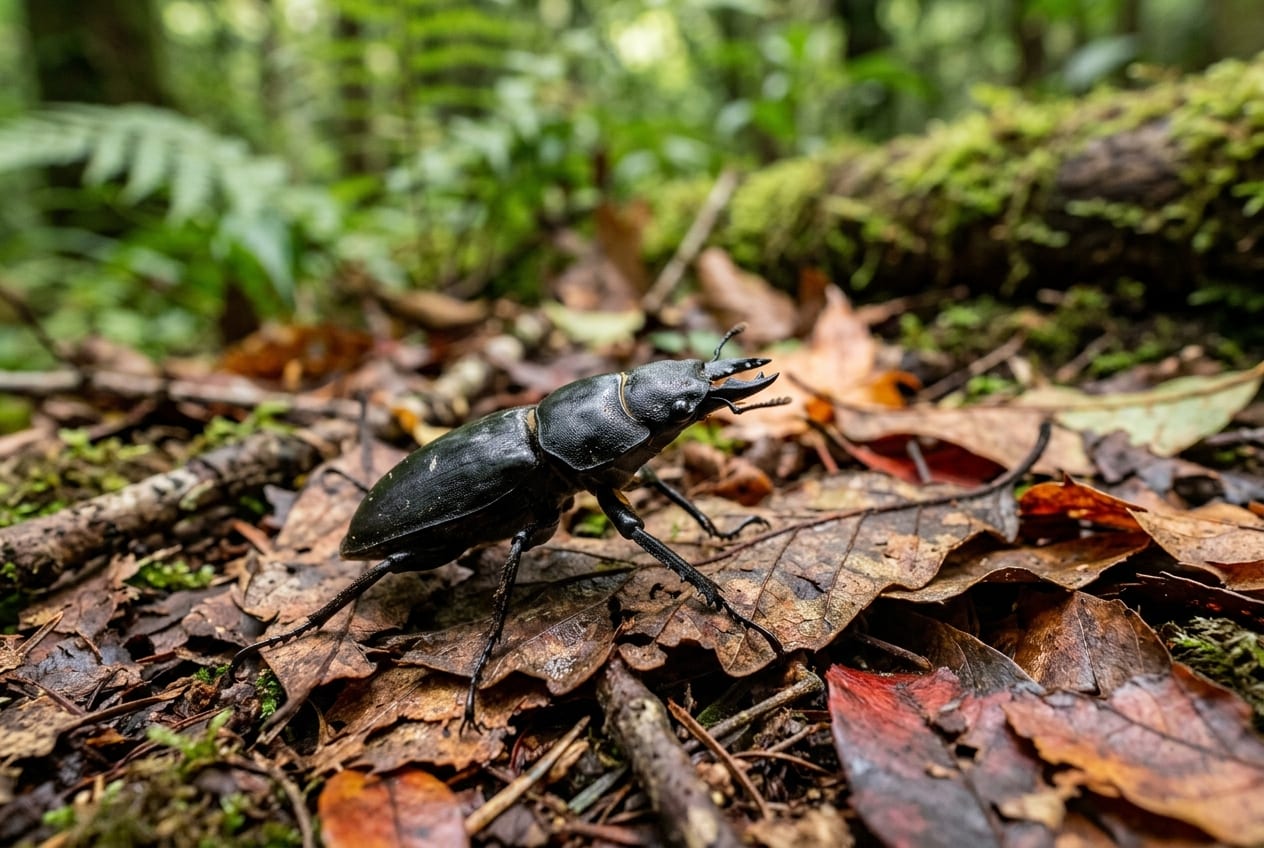
Hachijo Saw Stag Beetle
The Hachijo Saw Stag Beetle is a Japanese beetle found only on Hachijo Island in the Izu archipelago, making it a true island endemic. It's the smallest member of Japan's saw stag beetle group, and unlike its larger relatives, the male's mandibles stay short and straight rather than sweeping into a dramatic curve. Its glossy black body gives it a sleek, understated look. Unusually for a stag beetle, it rarely comes to tree sap or lights, instead spending its time walking along the forest floor — and what it actually eats in the wild is still not well understood. Keeping this species is considered a job for more experienced hobbyists, which only adds to its appeal as a beetle full of small mysteries.
View Hachijo Saw Stag Beetle encyclopedia →0% commission on your first sales!Register by September 30, 2026 and your first 2 sales are commission-free!
Breeder Wanted!
List on BreederDirect and sell directly to customers nationwide!
6 Transparency Standards You Can Trust
When listing Insects, Breeders disclose the following. We guarantee transparency on growth stage and breeding unit.
- Life Stage Clarity
- Generation Info
- Real Photos
- Breeding Unit
- Country of Origin
- Body Length (mm)
Browse all 296 breeds
Verified breeders wanted for Insects
Breeders are signing up now ahead of launch. Subscribe to be notified when new listings go live.
Getting alerts is free with a member account. When new listings match your saved search, we'll notify you by email and in-app.
Browse other categories
Verified breeders (preview)
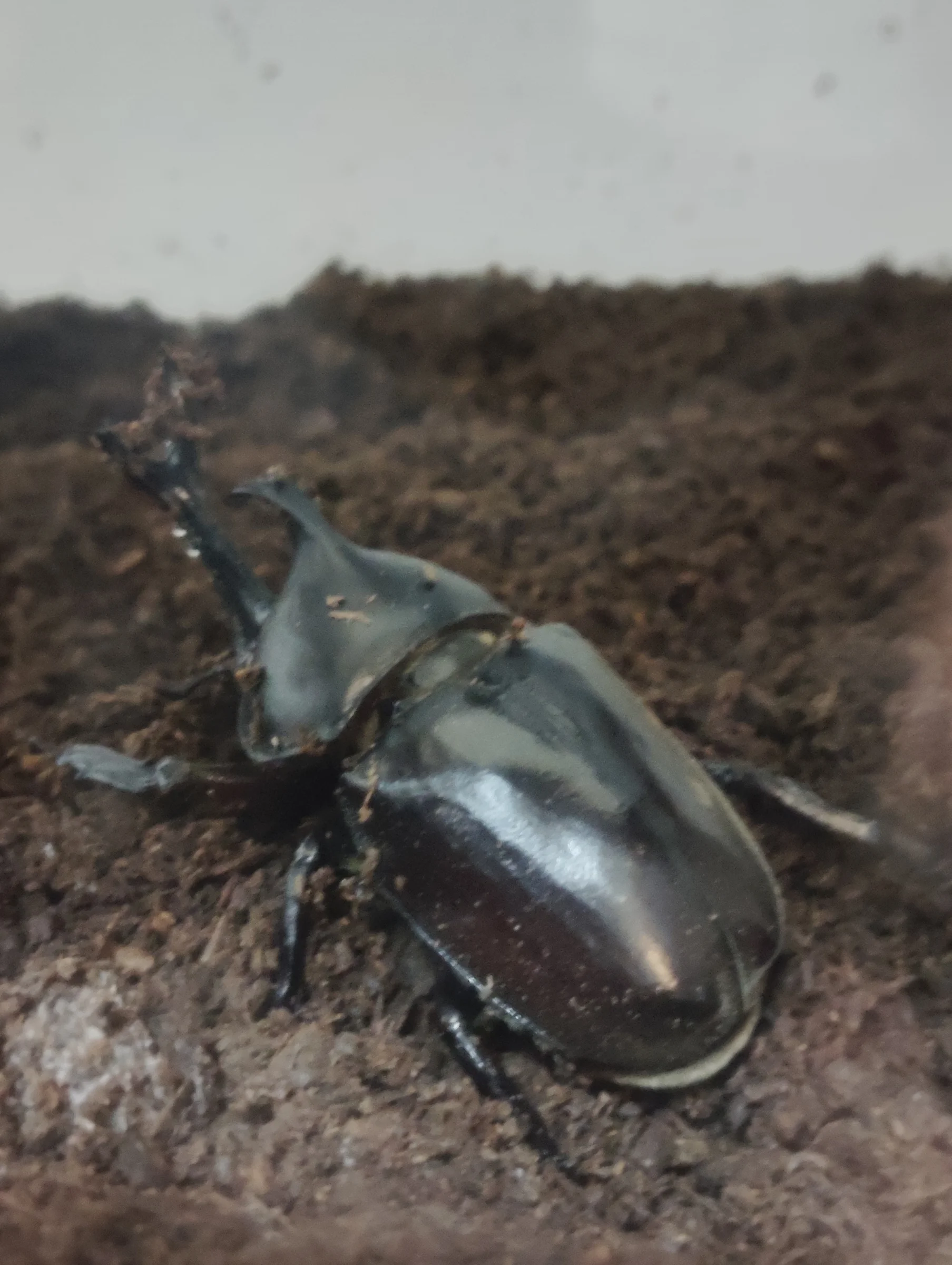
Hachijo Saw Stag Beetle key facts
- Care level
- Intermediate
- Lifespan
- 2-3 months once active (adults overwinter in the pupal cell after emergence)
- Size
- Males 27.5-59.2mm, females 23-35mm
- Temperature
- 18〜24℃
- Diet
- Beetle jelly (the wild diet is unknown); larvae on soft rotten wood or fermented substrate
- Temperature & Humidity
- As a Japanese species it can be kept at room temperature. For large adults the guideline for Prosopocoilus inclinatus is about 20C for young larvae, 18-20C in the third instar and 20-24C around pupation. Avoid summer heat and sudden swings.
- Breeding & Egg-laying
- Females lay in the buried parts of standing dead hardwood or fallen logs, and eggs hatch in about a month. In captivity use the standard saw stag set of a log buried in fermented substrate. Larvae take about one to two years.
- Cohabitation
- House singly. As with other Prosopocoilus the males are aggressive, so pair only briefly and under supervision.
- Lifespan & Rearing Period
- Adults overwinter in the pupal cell and emerge to activity around May. They then live only two to three months. Larvae take one to two years, with about a month each for pupation and emergence.
- Health & Notes
- Feeding is sluggish and the wild diet unknown, so offer beetle jelly and watch. The species is endemic to Hachijojima and reported to be declining, so prefer captive-bred stock over wild-caught.
About Hachijo Saw Stag Beetle
The Hachijo Saw Stag Beetle, found only on Japan's Hachijo Island, is one of the smallest saw stag beetles, with short, straight mandibles and a glossy black body. It rarely visits sap or lights.
7 things to know before welcoming a Hachijo Saw Stag Beetle
1Endemic to Hachijo Island
The Hachijo Saw Stag Beetle is found only on Hachijo Island in Japan's Izu archipelago. Its habitat and habits differ from mainland saw stag beetles, giving it a distinct character shaped entirely by this one island.
2One of Japan's Smallest
Adults measure about 27.5–59.2mm for males and 23–35mm for females, making this one of the smallest species in Japan's saw stag beetle group. Even large males have a compact, easy-to-handle size rather than an imposing one.
3Short, Straight Mandibles
Unlike many saw stag beetles, males don't develop a dramatically curved jaw — their mandibles stay short and straight. It's a subtler, more streamlined look than showier relatives.
4Avoids Sap and Lights
This species rarely shows up at sap sites or light traps, the usual ways beetle enthusiasts find stag beetles in the wild. Instead it walks along the forest floor, and what it actually eats out there is still not well understood.
5Overwinters in the Pupal Cell
Once active, adults typically live around 2–3 months, but after eclosion they first spend a stretch overwintering inside the pupal cell before emerging. If a newly acquired beetle stays inactive at first, that dormancy is normal rather than a cause for concern.
6Best Suited to Intermediate Keepers
This species is considered suitable for intermediate-level keepers. Having some prior experience with stag beetle care makes it easier to manage daily upkeep and notice changes in condition.
7Calm, Best Kept Alone
As with most stag beetles, housing multiple individuals together risks stress or injury from contact between them. Keeping one beetle per enclosure is recommended for calm, trouble-free observation.
Frequently asked questions about Hachijo Saw Stag Beetle
- Q.Where does this beetle live in the wild?
- A.This saw stag beetle is endemic to Hachijo Island in Japan's Izu archipelago. It isn't found anywhere else, and its habits are shaped by that single island.
- Q.Are the mandibles different from other saw stag beetles?
- A.Yes — while many saw stag beetles have dramatically curved jaws, this species keeps its mandibles short and straight. It gives the beetle a sleeker, more understated look.
- Q.Can it be found through sap or light trapping?
- A.No, this species rarely shows up at sap sites or light traps. It spends its time walking along the forest floor instead, and what it eats in the wild is still not well understood.
- Q.Why isn't it active right after I bring it home?
- A.After eclosion, adults typically spend a period overwintering inside the pupal cell before becoming active. Once active they're expected to live around 2–3 months, so this initial quiet stage is normal — just let it be.
- Q.Is this a good beetle for beginners?
- A.This species is generally considered suitable for intermediate-level keepers rather than complete beginners. Some prior stag beetle care experience makes day-to-day management easier.
Useful tools for Hachijo Saw Stag Beetle care
Learn more about Hachijo Saw Stag Beetle in the encyclopedia
View Hachijo Saw Stag Beetle encyclopedia entry →
Care difficulty, lifespan, size and diet — all basics covered.
More in this category
Can't find the one you're looking for?
Post your wishes for free and breeders with matching animals will contact you with introductions.