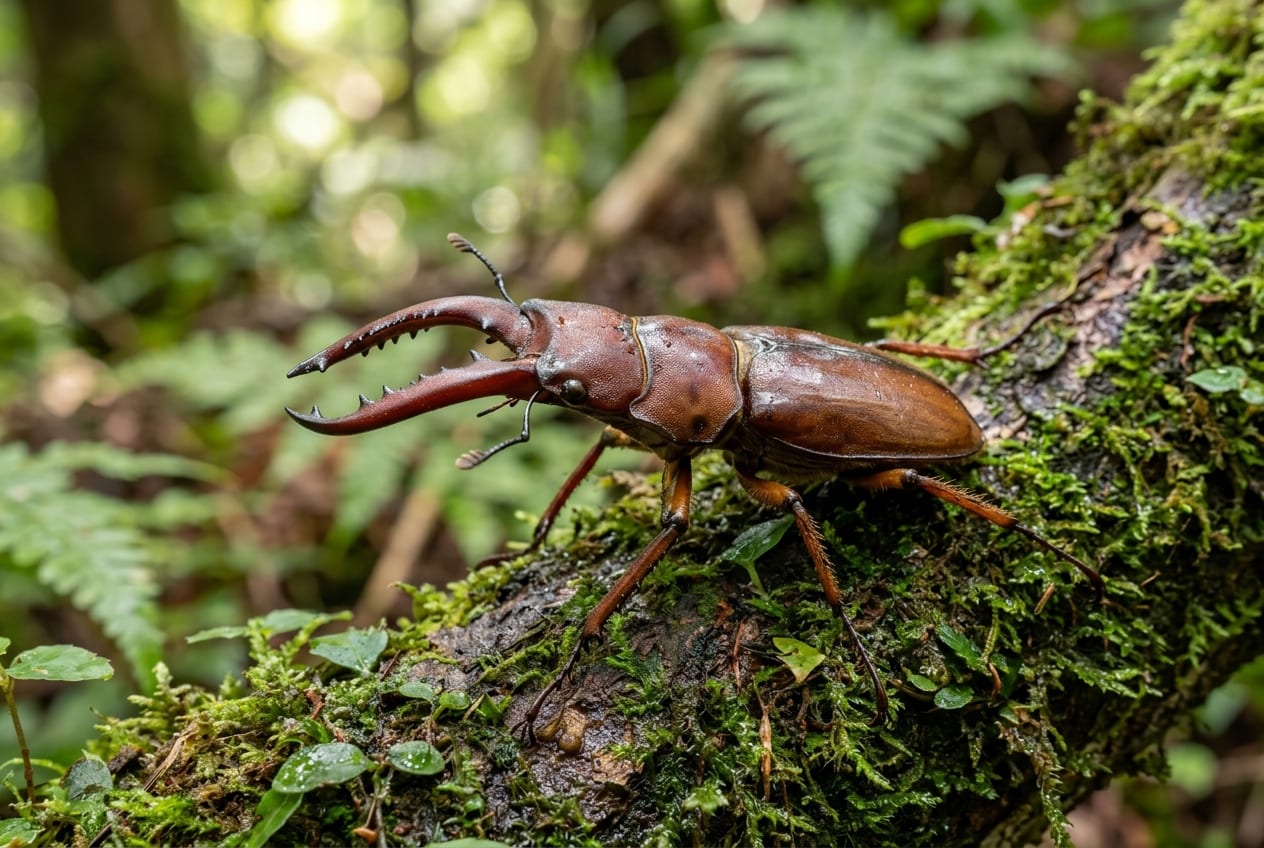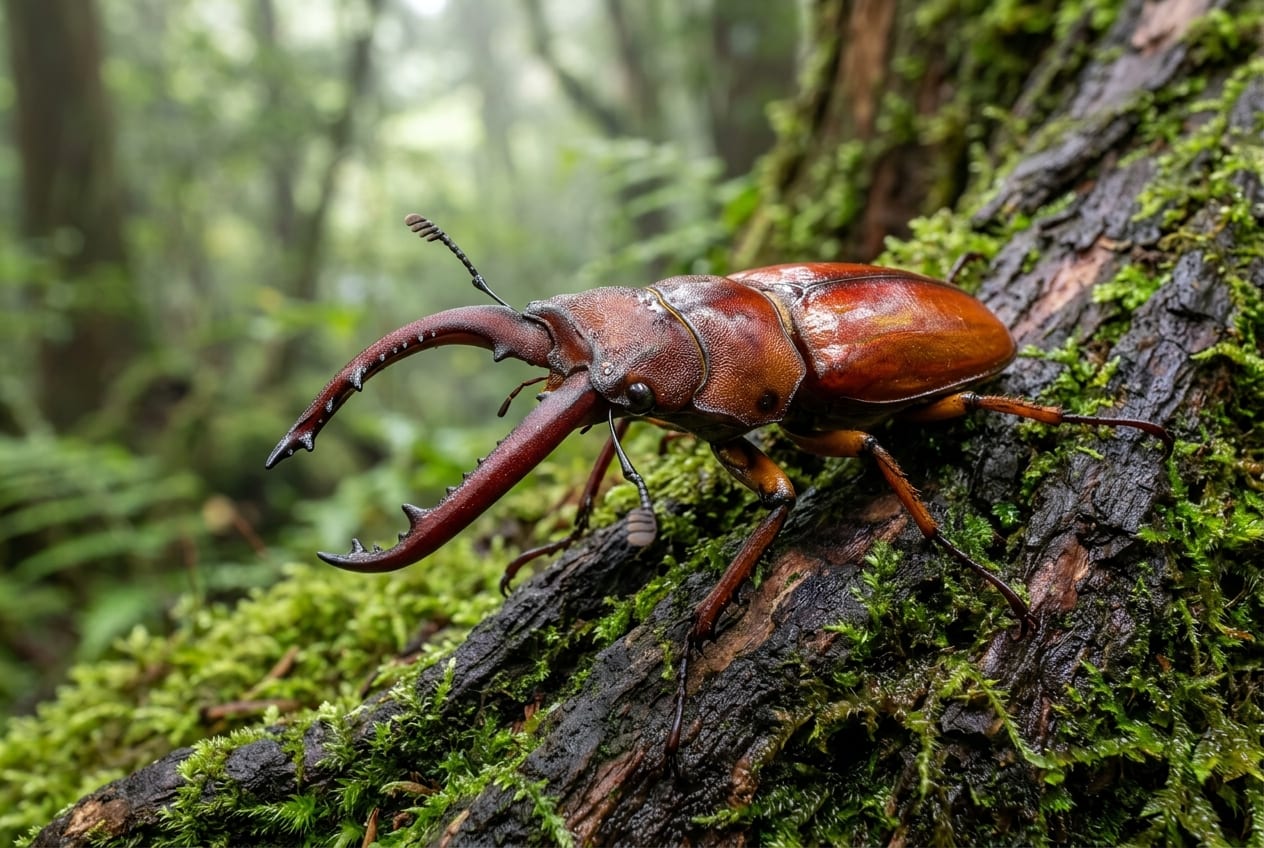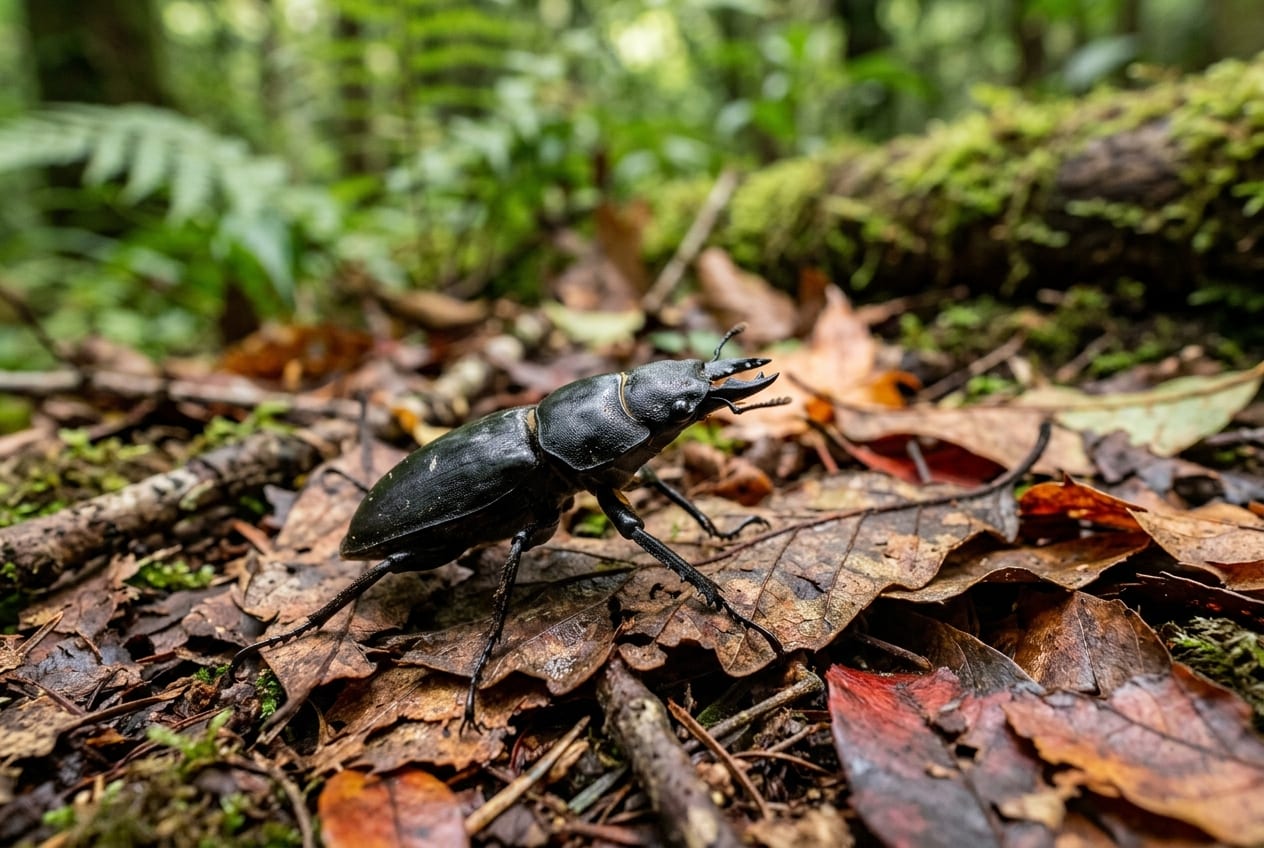
AI-generated image
Hachijo Saw Stag Beetle
IntermediateProsopocoilus inclinatus hachijoensis
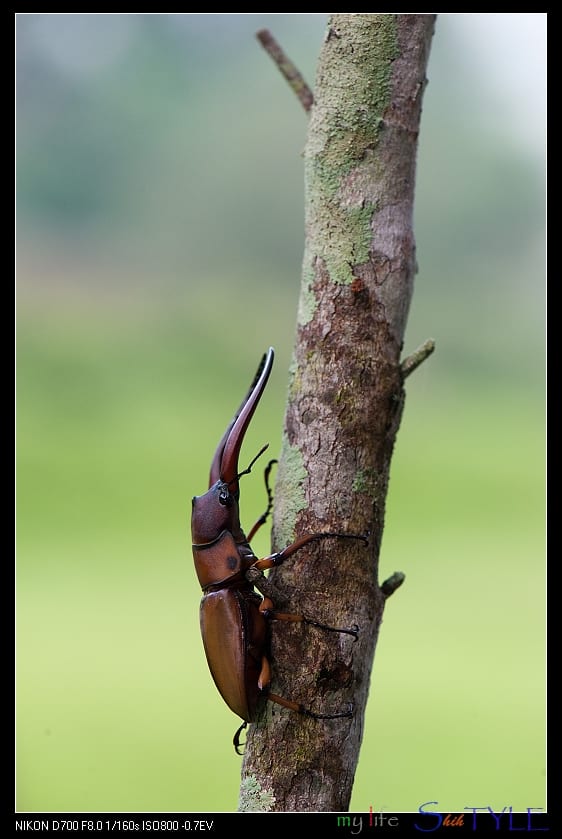
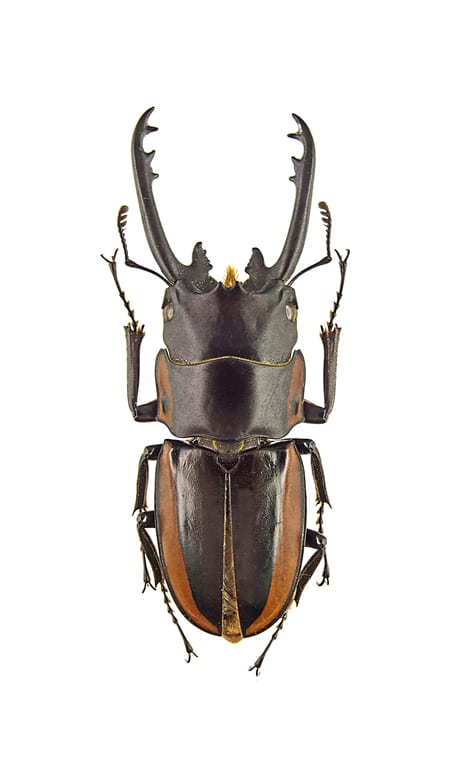
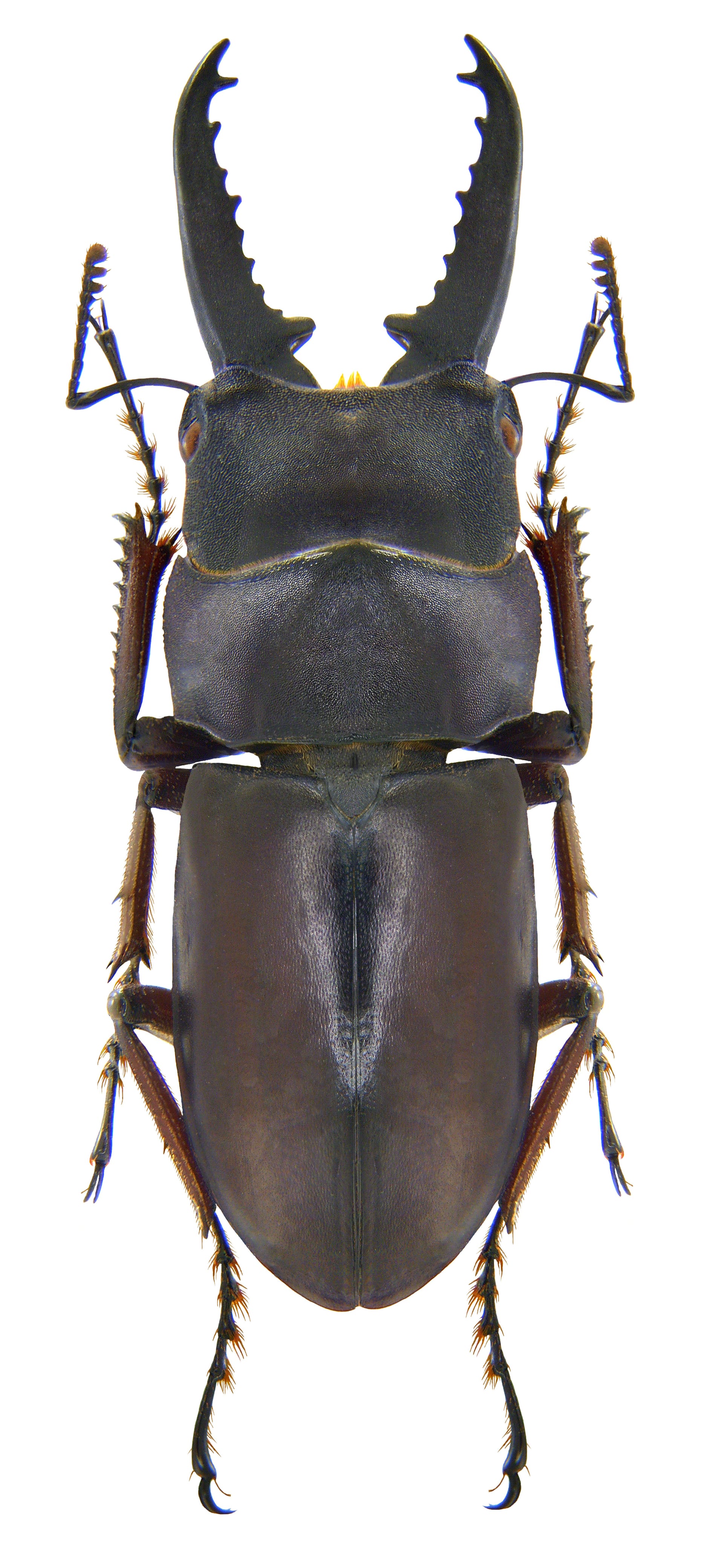
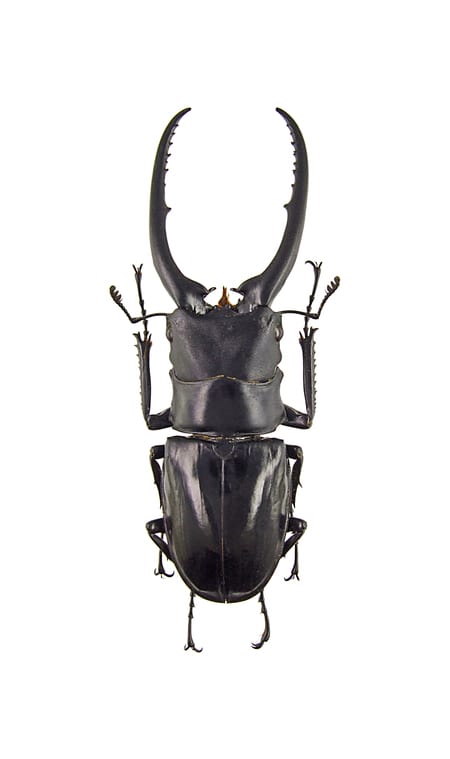
The smallest Japanese Prosopocoilus, found only on Hachijojima. The mandibles stay short and unbent and the body is black and glossy. It visits neither sap nor lights, walks the forest floor, and its wild diet is still unknown.
Difficulty
Intermediate
Temperature
18〜24℃
Lifespan
2-3 months once active (adults overwinter in the pupal cell after emergence)
Size
Males 27.5-59.2mm, females 23-35mm
Humidity
60〜80%
Diet
Beetle jelly (the wild diet is unknown); larvae on soft rotten wood or fermented substrate
About
The Hachijo saw stag beetle (Prosopocoilus inclinatus hachijoensis) occurs only on Hachijojima in the Izu Islands and is the smallest of the Japanese saw stag beetles. Males measure 27.5-59.2mm and females 23-35mm. Even large males never develop the strongly bent mandibles typical of the species; the legs and tarsi are short and the body is black and highly glossy. Nomura described it in 1960 as the Hachijojima subspecies, Ichikawa raised it to a full species in 1985, and as of 2022 some authors still argue the difference is not enough to separate them. Adults are active from late April to July with a peak in May and June. They have functional hindwings but rarely fly, come to neither lights nor sap, and walk the forest floor instead. Feeding is sluggish and their wild diet remains unknown. Newly emerged adults overwinter inside the pupal cell and become active around May of the following year. Larvae take one to two years in soft rotten wood or soil.
Source: Wikipedia (CC BY-SA 4.0)
Lifespan of the Hachijo Saw Stag Beetle
The Hachijo Saw Stag Beetle lives 2-3 months once active (adults overwinter in the pupal cell after emergence).
Size of the Hachijo Saw Stag Beetle
The Hachijo Saw Stag Beetle grows to Males 27.5-59.2mm, females 23-35mm.
Temperature & humidity for the Hachijo Saw Stag Beetle
The ideal temperature for the Hachijo Saw Stag Beetle is 18〜24℃.
Basic Info
Origin
Care Specifications
Semi-aggressiveSolitaryBreeding: Moderate
Sources: Wikipedia (Prosopocoilus hachijoensis, ja) / Wikipedia (Prosopocoilus inclinatus, ja) / BE-KUWA rearing records (2025 edition, Mushi-sha)
Breeding Records & Localities
Captive record (♂)
60.7 mm
Wild record (♂)
59.2 mm
Record source: BE-KUWA 2025 edition (Hachijo saw stag: captive 60.7 mm, Sato Yoshikazu, registered 2017; wild 59.2 mm, Kikuchi Jun)
Notable localities
Hachijojima
Generation codes
- WD
- Wild-caught
- WF1
- Offspring of a wild-caught female
- F1〜
- Captive generations (same locality)
- CBF1
- Cross-locality captive-bred (reset)
Sources: BE-KUWA rearing records (2025 edition, Mushi-sha) / Wikipedia (Prosopocoilus hachijoensis, ja)
References & Sources
Edited & verified by: BreederDirect editorial team
The taxonomic, regulatory, and husbandry data on this page are compiled and verified against the authoritative primary sources below.
Taxonomy & Authority
Accepted name: Prosopocoilus inclinatus hachijoensis Nomura, 1960
Synonyms: Prosopocoilus hachijoensis Nomura, 1960
Authority databases: GBIF
Nomenclature follows global taxonomic authority databases.
Regulations & Conservation Status
Not CITES-listed
The species is not on Japan's MOE Red List 2020 (Insects); from Hachijojima that list carries Dorcus titanus hachijoensis as Vulnerable. It is nonetheless endemic to the island and reported to be declining, with over-collection and habitat loss cited as pressures.
Sources: CITES Appendix (checklist.cites.org) / MOE Japan Red List 2020 (Insects)
Regulations may change. Always verify the latest information with the relevant authorities.
Hachijo Saw Stag Beetle Listings
Loading latest listingsFind listings for this species