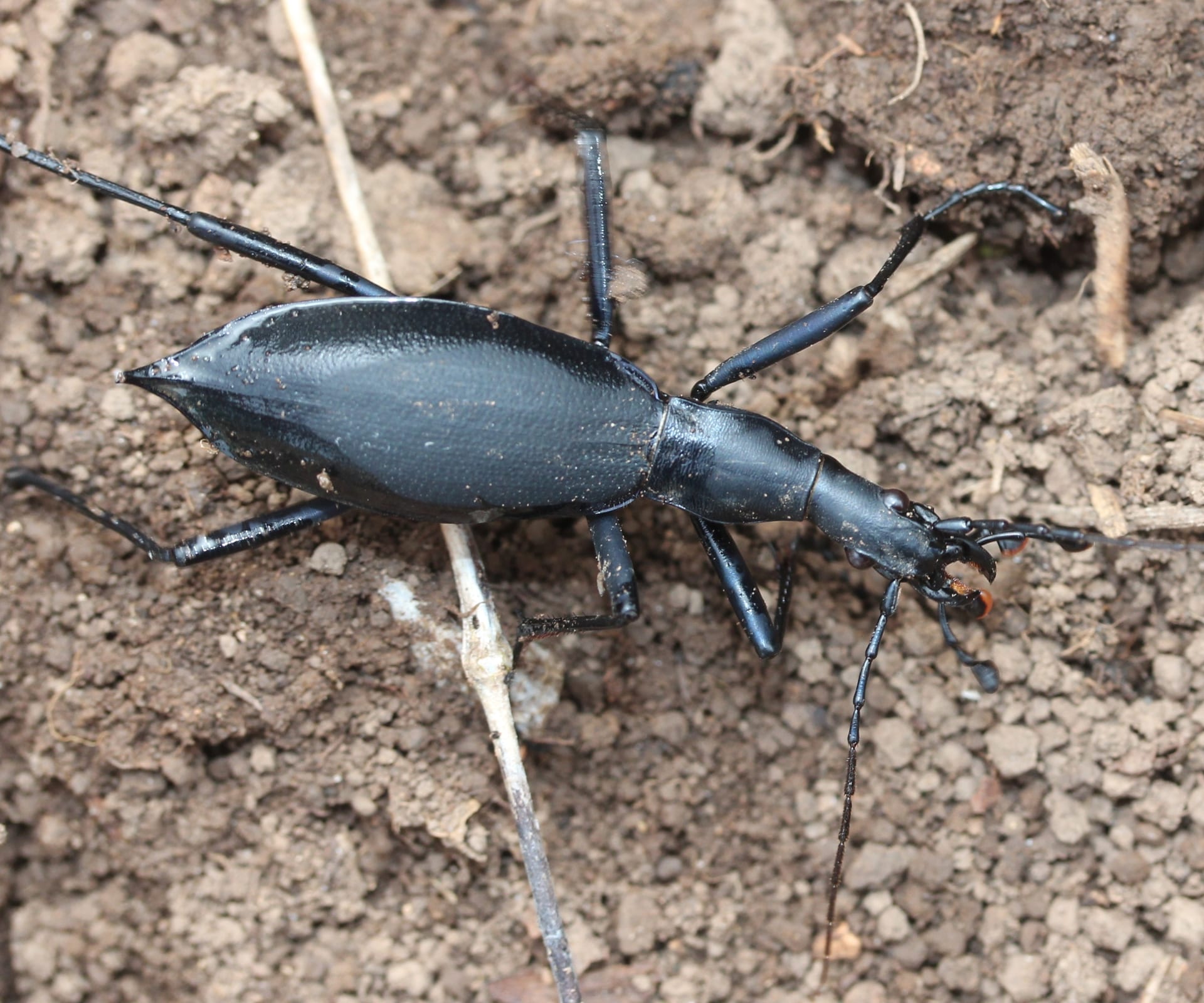
 © Alpsdake / CC BY-SA 4.0
Snail-eating Ground Beetle
The snail-eating ground beetle is a large beetle found only in Japan, instantly recognizable by its strikingly elongated head and pronotum. As its name suggests, it specializes in hunting snails, reaching deep inside their shells with that long head to feed on the soft body — a feeding style unlike almost any other insect. Its forewings are fused shut, so it can't fly and instead makes its way entirely on foot. Regional subspecies vary noticeably in color, giving beetles from different parts of Japan their own distinct look, which is part of the appeal for collectors. Generally calm and nocturnal, preferring to stay tucked away in hiding, it still has a wild side, releasing a defensive secretion if it feels threatened.
View Snail-eating Ground Beetle encyclopedia →0% commission on your first sales!Register by September 30, 2026 and your first 2 sales are commission-free!
Breeder Wanted!
List on BreederDirect and sell directly to customers nationwide!
BreederDirect's 6 Transparency Commitments
When listing Insects, Breeders disclose the following. We guarantee transparency on growth stage and breeding unit.
- Life Stage Clarity
- Generation Info
- Real Photos
- Breeding Unit
- Country of Origin
- Body Length (mm)
Browse all 336 breeds
Verified breeders wanted for Insects
Breeders are signing up now ahead of launch. Subscribe to be notified when new listings go live.
Getting alerts is free with a member account. When new listings match your saved search, we'll notify you by email and in-app.
Browse other categories
Verified breeders (preview)
Snail-eating Ground Beetle key facts
- Care level
- Intermediate
- Lifespan
- Adults 1-2 years
- Size
- 30-70mm
- Diet
- Land snails, insects, earthworms, fallen fruit and tree sap
- Temperature & Humidity
- It lives in and around forest and overwinters inside rotten wood, under leaf litter or under stones, so a container should offer a damp layer of leaf mould it can burrow into and somewhere to hide.
- Breeding & Egg-laying
- After mating the female makes a small chamber in the soil with the tip of her abdomen and lays her eggs one at a time. The eggs are white and jellybean-shaped, about a centimetre long, among the largest of any insect. Larvae eat snails in both the first and second instars, the second being the last, after which they build a pupal chamber deep in the soil. Feeding on snails is said to be necessary for the ovaries to mature.
- Cohabitation
- It is strongly predatory and will eat others of its kind if housed together, so keep it singly and do not put it with other insects.
- Lifespan & Rearing Period
- Because it overwinters as an adult or as a final-instar larva, adults live from one year into the next. At the insectarium of Tama Zoological Park small snails for the young larvae proved hard to obtain, and ramshorn snails breeding in the park's tanks were reported to work well as a substitute.
- Health & Notes
- The secretion sprayed from the tip of the abdomen contains methacrylic acid and can cause dermatitis. It can be aimed upward as well as backward, so do not pin the beetle down by hand or bring your face close. Because the local subspecies are strongly differentiated, do not house or cross beetles from different localities.
About Snail-eating Ground Beetle
A guide to the snail-eating ground beetle, a large beetle found only in Japan. Learn about its unique snail-hunting behavior, flightless body, and the striking regional color variation between subspecies.
7 things to know before welcoming a Snail-eating Ground Beetle
1Nocturnal and secretive
Snail-eating ground beetles are nocturnal, spending daylight hours tucked away under leaf litter, stones, or in gaps in the soil. Not seeing much activity during the day doesn't necessarily mean something is wrong — check on them after dark instead. Providing hiding spots in the enclosure helps them feel secure.
2Snails are its main food
True to its name, this beetle specializes in preying on snails, using its elongated head to reach deep inside the shell and consume the soft body within. In captivity, keepers need to keep a steady supply of snails on hand as food. Securing this food source is one of the key challenges of keeping this species.
3Flightless body
This beetle's forewings are fused together and its hind wings are reduced, so it cannot fly. It gets around entirely by walking, moving briskly across the ground. While there's no risk of it flying off, keep it in a securely lidded container so it can't climb out through a gap.
4Releases a defensive secretion
When startled or handled roughly, it may release a pungent-smelling defensive secretion from its abdomen. Avoid grabbing it forcefully with bare hands, and handle it gently to keep the secretion off your skin or eyes. This secretion, rather than biting, is its main line of defense.
5Color varies by region
Found across Japan, this beetle has distinct regional subspecies that vary in color. Even within the same species, the metallic sheen can look quite different depending on where the beetle comes from, which is part of why some enthusiasts enjoy comparing individuals from different regions.
6Humid but well-ventilated setup
Since this species favors damp forest floors in the wild, the enclosure should have substrate that holds moisture while still allowing enough airflow to prevent it from becoming stagnant. Both excessive dryness and excessive humidity can affect its condition, so adjust based on how it's doing.
7Slows down in cold weather
As temperatures drop, activity slows and the beetle spends more time resting in hiding. This is a natural seasonal response for an insect that originates outdoors, so avoid sudden temperature swings and simply keep an eye on it.
Frequently asked questions about Snail-eating Ground Beetle
- Q.What should I feed it?
- A.This beetle specializes in preying on snails, so you'll need to keep a steady supply of snails on hand as its main food source. It's worth knowing this ahead of time, since sourcing and managing snails takes some extra effort.
- Q.Is it safe to handle with bare hands?
- A.When startled, it may release a defensive secretion, so avoid gripping it tightly or handling it roughly with bare hands. Handling it gently also helps reduce its stress.
- Q.It barely moves during the day — is that normal?
- A.Yes, it's nocturnal, so staying still in a hiding spot during the day is completely normal behavior. Check on its activity level after dark instead.
- Q.Can it be housed with other insects?
- A.It's strongly predatory and may fight with other insects or even its own kind, so it should be kept alone. Avoid housing multiple individuals together.
- Q.What should I watch for in winter?
- A.Activity slows down as temperatures drop, and it spends more time resting in place. This is a natural seasonal change, so just avoid sudden temperature swings and keep an eye on it.
Useful tools for Snail-eating Ground Beetle care
Learn more about Snail-eating Ground Beetle in the encyclopedia
View Snail-eating Ground Beetle encyclopedia entry →
Care difficulty, lifespan, size and diet — all basics covered.
More in this category
Can't find the one you're looking for?
Post your wishes for free and breeders with matching animals will contact you with introductions.