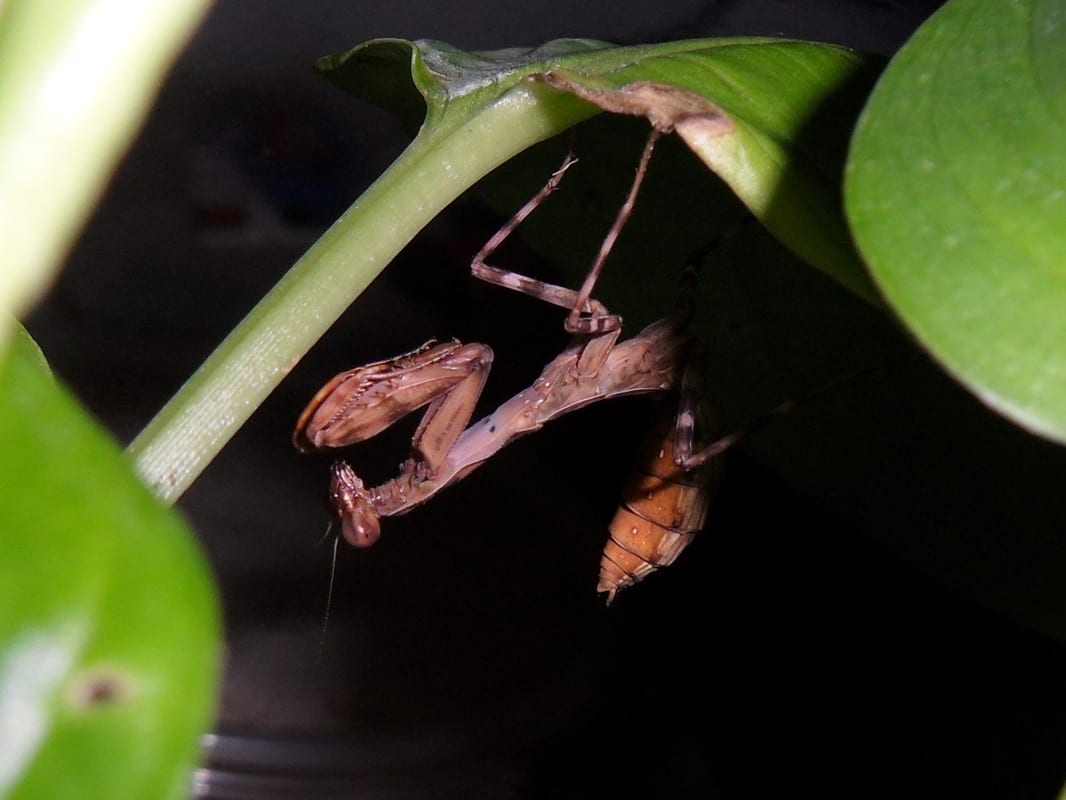
 © Happy1892 / CC BY-SA 3.0
Double shield mantis
The Double Shield Mantis is a large mantis species found only on Flores Island in Indonesia. Its name comes from the two-tiered, shield-like ridges that develop on its thorax after the fifth instar. In captivity it is powerful and aggressive, actively chasing down its prey, and when it takes a threat posture it flashes blue-purple patches on the insides of its forelegs and a red band across its abdomen. Individual coloration varies widely, so no two mantises look quite the same. That said, this is considered a species for experienced keepers, so it's best approached after you've built up some mantis-keeping experience.
View Double shield mantis encyclopedia →0% commission on your first sales!Register by September 30, 2026 and your first 2 sales are commission-free!
Breeder Wanted!
List on BreederDirect and sell directly to customers nationwide!
BreederDirect's 6 Transparency Commitments
When listing Insects, Breeders disclose the following. We guarantee transparency on growth stage and breeding unit.
- Life Stage Clarity
- Generation Info
- Real Photos
- Breeding Unit
- Country of Origin
- Body Length (mm)
Browse all 336 breeds
Verified breeders wanted for Insects
Breeders are signing up now ahead of launch. Subscribe to be notified when new listings go live.
Getting alerts is free with a member account. When new listings match your saved search, we'll notify you by email and in-app.
Browse other categories
Verified breeders (preview)
Double shield mantis key facts
- Care level
- Advanced
- Lifespan
- Little data
- Size
- Males about 79mm, females 86-89mm
- Diet
- Live insects and other small animals (fruit flies for first instars)
- Temperature & Humidity
- There is little numeric temperature or humidity data. Being from a tropical island, keep it out of the cold.
- Enclosure
- It is a large species that passes through nine (female) or eight (male) instars, so use a tall enclosure where it can hang at full length to moult.
- Food & Feeding
- Strongly built, it chases down its prey. First instars readily take fruit flies such as Drosophila hydei; move to larger prey as it grows.
- Breeding & Egg-laying
- Breeding is somewhat difficult because females are aggressive and each ootheca produces few males. Feed the female well before mating and supervise throughout.
- Cohabitation
- It is aggressive, so keep it singly.
- Health & Notes
- In the wild it is confined to Flores. Bringing live insects in from abroad requires checking with the Plant Protection Station first whether they count as pests. Choose domestically bred stock and never release captive animals.
About Double shield mantis
Double Shield Mantis, a large mantis endemic to Flores Island, Indonesia, known for its shield-like thorax and vivid threat display. An advanced-level species for experienced keepers.
7 things to know before welcoming a Double shield mantis
1Advanced-Level Care
The Double Shield Mantis is considered a species best suited to experienced keepers. It calls for attentive management of temperature, humidity, and feeding schedules. It's best to have some mantis-keeping experience before taking one on.
2Endemic to Flores Island
This species is found only on Flores Island in Indonesia, giving it a notably limited natural range. Recreating a similar temperature and humidity to its native habitat is an important part of care.
3Shields Appear After 5th Instar
The two-tiered, shield-like ridges that give this species its name begin to appear on the thorax after the fifth instar. Younger nymphs don't yet show this feature, so watching the change across growth stages is part of the appeal.
4Warning Colors When Threatened
In a threat posture it reveals blue-purple patches on the insides of its forelegs and a red band across its abdomen. It is aggressive by nature and actively chases down prey, so keep it singly and avoid stressing it unnecessarily when handling.
5Coloration Varies by Individual
This species is known for wide individual variation in body color, so no two mantises look quite alike. Choosing an individual is part of the fun, and coloration can also shift somewhat as the mantis matures.
6Limited Lifespan Data
There isn't yet much documented information on this species' lifespan. If planning for long-term care, it helps to keep your own notes and observe how your individual develops over time.
7Prepare Housing in Advance
As a large species, it needs a tall enclosure sized for its adult proportions, so set this up before bringing one home. Branches or perches for climbing and equipment to maintain proper temperature and humidity will help it settle in smoothly.
Frequently asked questions about Double shield mantis
- Q.Is this mantis suitable for beginners?
- A.The Double Shield Mantis is considered an advanced-level species. It's best to gain some mantis-keeping experience before taking one on.
- Q.How large does it grow?
- A.Adults reach around 79mm for males and 86–89mm for females. Females grow noticeably larger than males.
- Q.How long does it live?
- A.There isn't yet much documented data on this species' lifespan. Keeping your own notes as you observe your mantis is a good approach.
- Q.What does its coloring and pattern look like?
- A.After the fifth instar, a two-tiered, shield-like ridge appears on the thorax. When threatening, it shows blue-purple on the insides of its forelegs and a red band on its abdomen, and individual coloration varies widely.
- Q.Are there legal restrictions on keeping or importing this species?
- A.The Double Shield Mantis is not subject to CITES. It is not designated under the Invasive Alien Species Act (Ministry of the Environment list, September 2026). Anyone bringing live insects from abroad must first check with the Plant Protection Station whether they count as pests. Choose domestically bred stock and never release captive animals.
Useful tools for Double shield mantis care
Learn more about Double shield mantis in the encyclopedia
View Double shield mantis encyclopedia entry →
Care difficulty, lifespan, size and diet — all basics covered.
More in this category
Can't find the one you're looking for?
Post your wishes for free and breeders with matching animals will contact you with introductions.