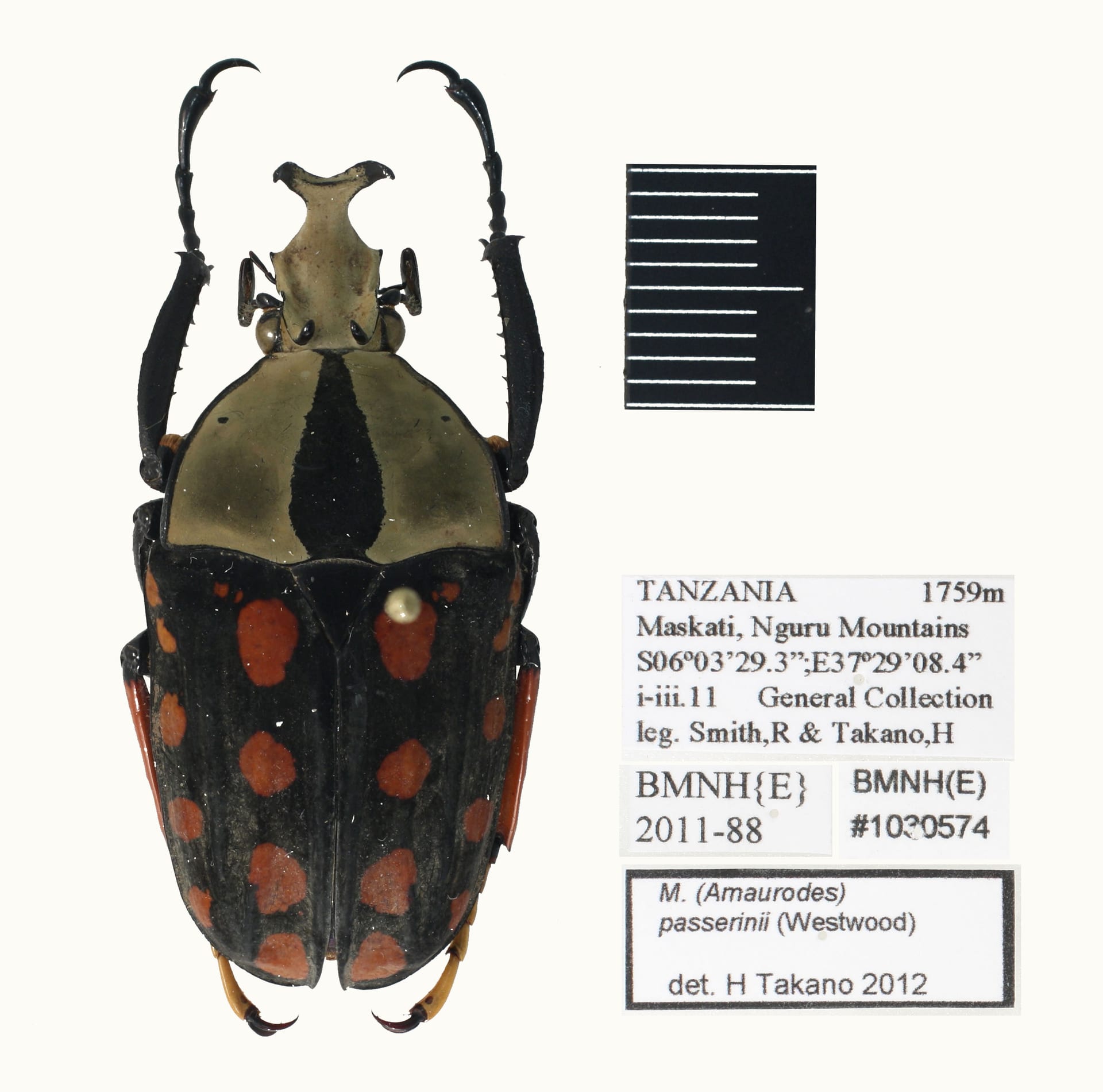
 © NHM Beetles and Bugs (photography by Lucia Chmurova) / CC BY 2.0
Passerini's Flower Beetle
Passerini's Flower Beetle is an African species of flower beetle known for its cream-colored pronotum marked with a bold black stripe and its black elytra dotted with round, reddish-brown spots. Adults are drawn to flowers and tree sap, and their striking color contrast makes them a popular choice among insect keepers. Care is considered suitable for intermediate keepers, calling for some experience with temperature, humidity, and feeding routines. One point deserves special attention: the larvae are highly prone to cannibalism, so newly hatched larvae must be separated into individual containers right away. With careful, patient rearing, keepers are rewarded with striking adults whose distinctive pattern makes this a rewarding species for insect enthusiasts.
View Passerini's Flower Beetle encyclopedia →0% commission on your first sales!Register by September 30, 2026 and your first 2 sales are commission-free!
Breeder Wanted!
List on BreederDirect and sell directly to customers nationwide!
6 Transparency Standards You Can Trust
When listing Insects, Breeders disclose the following. We guarantee transparency on growth stage and breeding unit.
- Life Stage Clarity
- Generation Info
- Real Photos
- Breeding Unit
- Country of Origin
- Body Length (mm)
Browse all 296 breeds
Verified breeders wanted for Insects
Breeders are signing up now ahead of launch. Subscribe to be notified when new listings go live.
Getting alerts is free with a member account. When new listings match your saved search, we'll notify you by email and in-app.
Browse other categories
Verified breeders (preview)
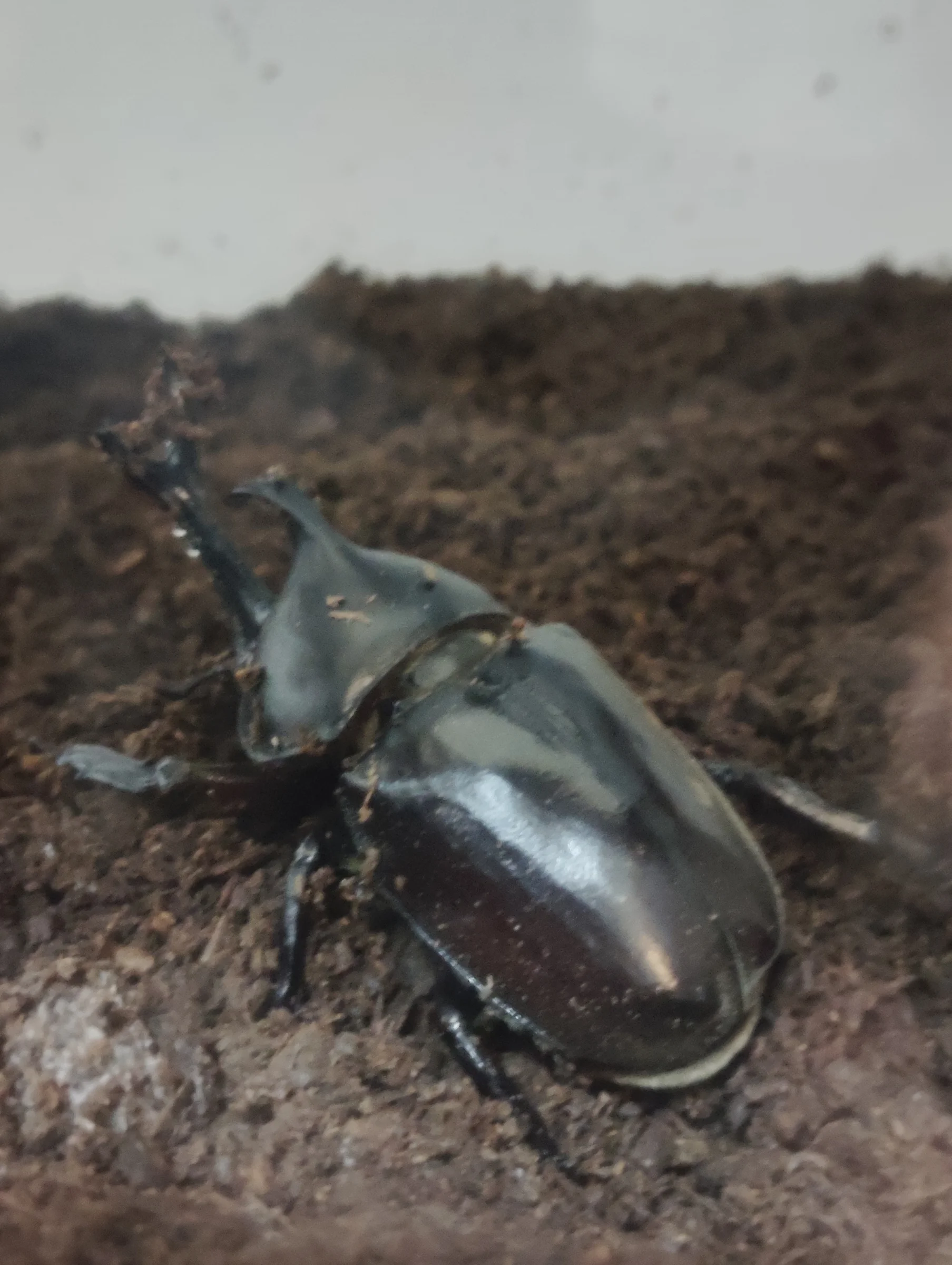
Passerini's Flower Beetle key facts
- Care level
- Intermediate
- Lifespan
- Adults 3-6 months
- Diet
- Adults take fruit and beetle jelly; larvae feed on a leaf-based substrate with added protein
- Temperature & Humidity
- Slightly drier leaf litter is said to give good results for laying, so the point is to avoid keeping it too wet.
- Breeding & Egg-laying
- Females lay in ordinary flower-beetle substrate. The larvae are strongly cannibalistic and must be separated one per container as soon as they hatch. Plain substrate yields only small adults, so protein such as silkworm powder or casein is added when large specimens are wanted. Adding larvae of non-cannibalistic species as feeders is described as the method least likely to bring mites or mould.
- Cohabitation
- Larvae must be reared singly. Adult males also fight, so keep them apart except for pairing.
- Lifespan & Rearing Period
- The subspecies nigricans appears to have been lost from European breeding stock in the late 1990s, so maintaining a line is not straightforward.
- Health & Notes
- Protein given to the larvae easily brings mould and mites, so remove anything uneaten. Importing live stock requires the species identification certificate demanded for Scarabaeoidea. Several subspecies exist, so do not cross beetles from different localities.
About Passerini's Flower Beetle
An African flower beetle with a cream pronotum, black stripe, and reddish-brown spotted elytra. Suited to intermediate keepers — the larvae are highly cannibalistic and must be reared separately from hatching.
7 things to know before welcoming a Passerini's Flower Beetle
1Separate larvae at hatching
The larvae of Passerini's Flower Beetle are known for extremely strong cannibalistic tendencies. As soon as eggs hatch, move each larva into its own separate container rather than keeping them together. Housing multiple larvae in one enclosure is likely to end badly.
2Suited to intermediate keepers
This species is rated suitable for intermediate keepers. Beyond basic substrate and temperature management, the labor-intensive step of rearing larvae individually means some prior insect-keeping experience is recommended.
3Cream and black contrast
The biggest visual draw of this beetle is its cream-colored pronotum marked with a bold black stripe, paired with black elytra scattered with round, reddish-brown spots. The placement and shade of these spots vary between individuals, making close observation part of the fun.
4Native to Africa
Passerini's Flower Beetle is native to the African continent. When setting up an enclosure, aim to replicate temperature and humidity conditions that reflect its native climate.
5Prepare multiple containers
Since larvae must be separated individually, it helps to have several small containers ready in advance, sized to the number of eggs you expect to hatch. Plan for different enclosure sizes and care routines for adults versus larvae.
6Feeds on flowers and sap
As adults, these beetles are drawn to flowers and tree sap in the wild. In captivity, feeding is typically based on insect jelly, and it's important to monitor how much they're eating as part of daily care.
7Watch for health changes
Beetles can be hard to read when something is wrong. Keep an eye on subtle changes like sluggish movement or reduced interest in food, and review your husbandry setup promptly if something seems off.
Frequently asked questions about Passerini's Flower Beetle
- Q.Why do the larvae need to be kept separately?
- A.Because the larvae of this species have an unusually strong tendency toward cannibalism. Housing several together greatly increases the risk, so it's recommended to separate each larva into its own container right after hatching.
- Q.Can beginners keep this species?
- A.This species is generally considered suitable for intermediate keepers rather than beginners. The individual larval rearing process requires some prior insect-keeping experience.
- Q.What does this beetle look like?
- A.It has a cream-colored pronotum marked with a bold black stripe, and black elytra scattered with round, reddish-brown spots. There's some individual variation, which makes comparing patterns part of the appeal.
- Q.Where is this beetle originally from?
- A.Passerini's Flower Beetle is native to the African continent. It helps to manage temperature and humidity with its native climate in mind.
- Q.Is this species subject to CITES?
- A.No, Passerini's Flower Beetle is not subject to CITES.
Useful tools for Passerini's Flower Beetle care
Learn more about Passerini's Flower Beetle in the encyclopedia
View Passerini's Flower Beetle encyclopedia entry →
Care difficulty, lifespan, size and diet — all basics covered.
More in this category
Can't find the one you're looking for?
Post your wishes for free and breeders with matching animals will contact you with introductions.