Source: Wikimedia Commons
Passerini's Flower Beetle
IntermediateAmaurodes passerinii
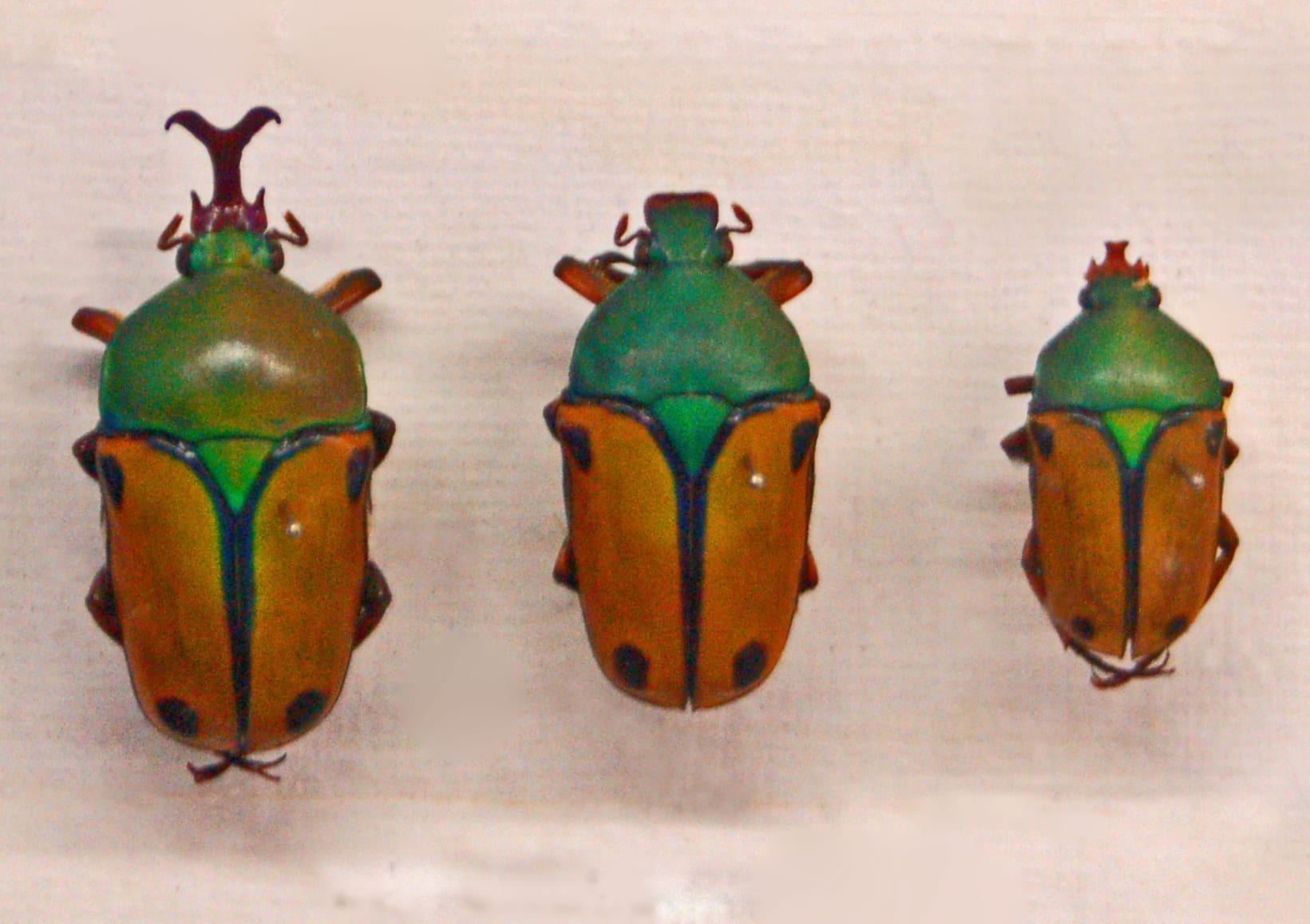
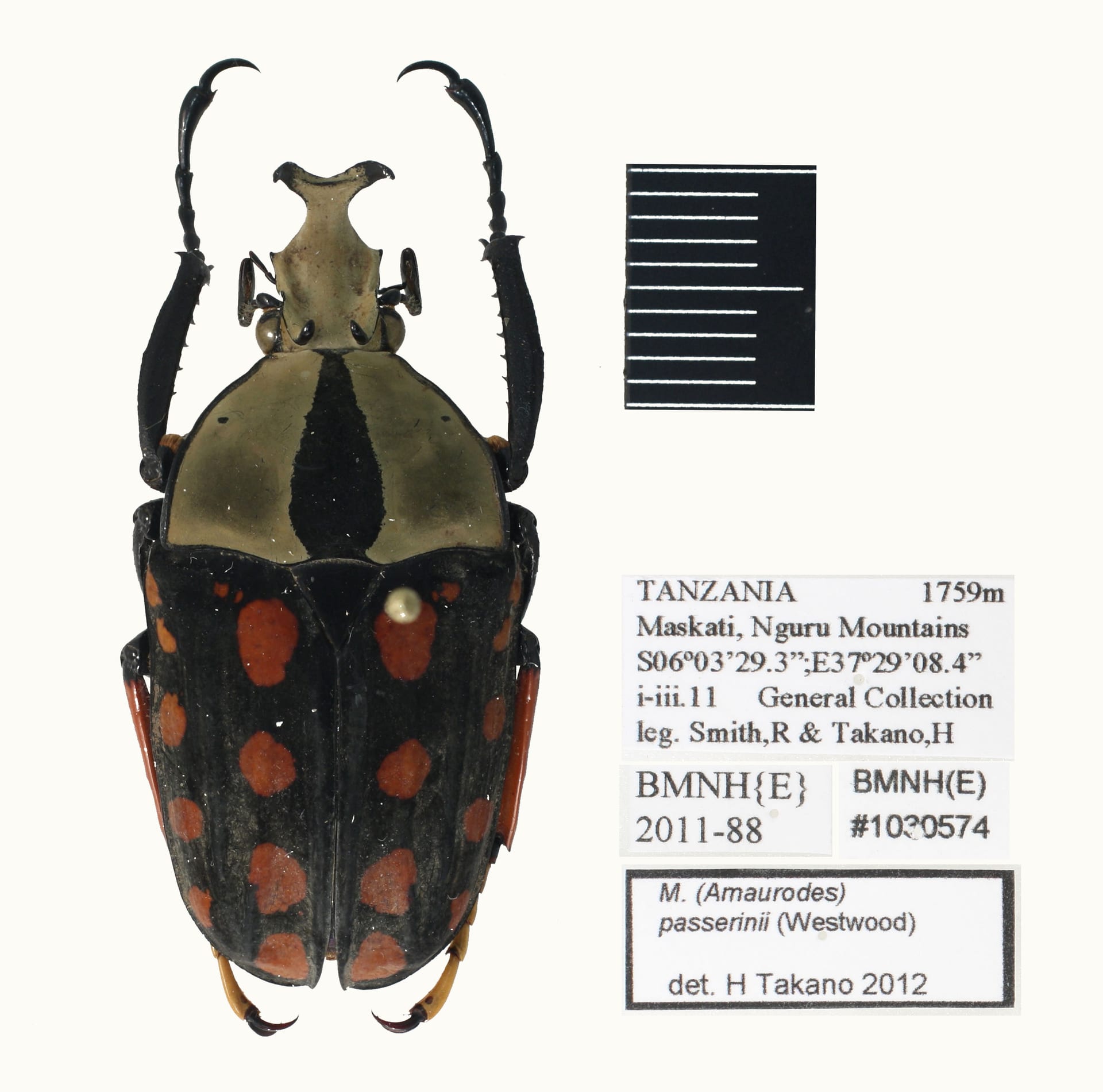
An African flower beetle with a cream pronotum crossed by a broad black stripe and black elytra scattered with rounded reddish-brown spots. The larvae are strongly cannibalistic and must be separated one per container as soon as they hatch.
Difficulty
Intermediate
Temperature
20〜28℃ (typical for Insect)
Lifespan
Adults 3-6 months
Humidity
60〜80%
Diet
Adults take fruit and beetle jelly; larvae feed on a leaf-based substrate with added protein
About
Amaurodes passerinii is a flower beetle centred on east Africa, and Ben's Beetle Breeding Pages treats it as Tanzanian. GBIF records for the genus come mainly from South Africa (96), Malawi (40) and Tanzania (28), so the range runs from east to southern Africa. The same page rates it fairly easy to breed: females lay in ordinary substrate and slightly drier leaf litter gives good results. The larvae, however, are strongly cannibalistic and must be separated as soon as they hatch. Raised on plain substrate they produce rather small adults, and added protein is needed for large specimens. Cat food was used in the early days, while silkworm powder and casein now give better results. A Natural History Museum specimen from the Nguru Mountains of Tanzania shows a cream pronotum crossed by a broad black stripe and black elytra bearing rounded reddish-brown spots. Two subspecies are known, linnei and nigricans.
Source: beetlebreeding.ch
Lifespan of the Passerini's Flower Beetle
The Passerini's Flower Beetle lives Adults 3-6 months.
Basic Info
Origin
East and southern Africa (Tanzania, Malawi, Zimbabwe, Zambia, Mozambique, South Africa)
Lifespan
Adults 3-6 months
Temperature
20〜28℃ (typical for Insect)
Humidity
60〜80%
Diet
Care Specifications
SolitaryBreeding: Moderate
Sources: Ben's Beetle Breeding Pages - Amaurodes passerini linnei (Tanzania, fairly easy to breed, slightly drier leaf litter, highly cannibalistic larvae, protein feeding for larger adults) / Ben's Beetle Breeding Pages - Amaurodes passerini nigricans (a subspecies whose European captive stock seems to have died out in the late 1990s) / Catalogue of Life - Amaurodes (Amaurodes) passerinii (Westwood, 1843) (accepted name, author and year) / GBIF occurrence records for the genus Amaurodes (counts by country) / Wikimedia Commons - Amaurodes passerinii Westwood, 1844 (Natural History Museum specimen from the Nguru Mountains, Tanzania; colours of pronotum and elytra)
References & Sources
Edited & verified by: BreederDirect editorial team
The taxonomic, regulatory, and husbandry data on this page are compiled and verified against the authoritative primary sources below.
Primary sources
- beetlebreeding.ch
- Ministry of the Environment, Invasive Species Act: "Guidance for Those Importing Live Insects in Scarabaeoidea"
- CITES Appendix (checklist.cites.org)
- Ben's Beetle Breeding Pages - Amaurodes passerini nigricans (a subspecies whose European captive stock seems to have died out in the late 1990s)
- Catalogue of Life - Amaurodes (Amaurodes) passerinii (Westwood, 1843) (accepted name, author and year)
- GBIF occurrence records for the genus Amaurodes (counts by country)
- Wikimedia Commons - Amaurodes passerinii Westwood, 1844 (Natural History Museum specimen from the Nguru Mountains, Tanzania; colours of pronotum and elytra)
Taxonomy & Authority
Accepted name: Amaurodes passerinii (Westwood, 1843)
Synonyms: Ceratorhina (Amaurodes) passerinii Westwood, 1843
Nomenclature follows global taxonomic authority databases.
Regulations & Conservation Status
Not CITES-listed
Plant Protection Act: When importing live specimens of Scarabaeoidea (including rhinoceros beetles, stag beetles, flower beetles, etc.), a species identification certificate issued by the exporting country government agency or equivalent must be attached in accordance with the Invasive Species Act (import ports are limited to Narita, Chubu, Kansai, Fukuoka, and Kagoshima airports). This species itself is not a designated invasive species, and import is possible upon submission of the certificate.
Sources: Ministry of the Environment, Invasive Species Act: "Guidance for Those Importing Live Insects in Scarabaeoidea" / CITES Appendix (checklist.cites.org)
Regulations may change. Always verify the latest information with the relevant authorities.
Passerini's Flower Beetle Listings
Loading latest listingsFind listings for this species