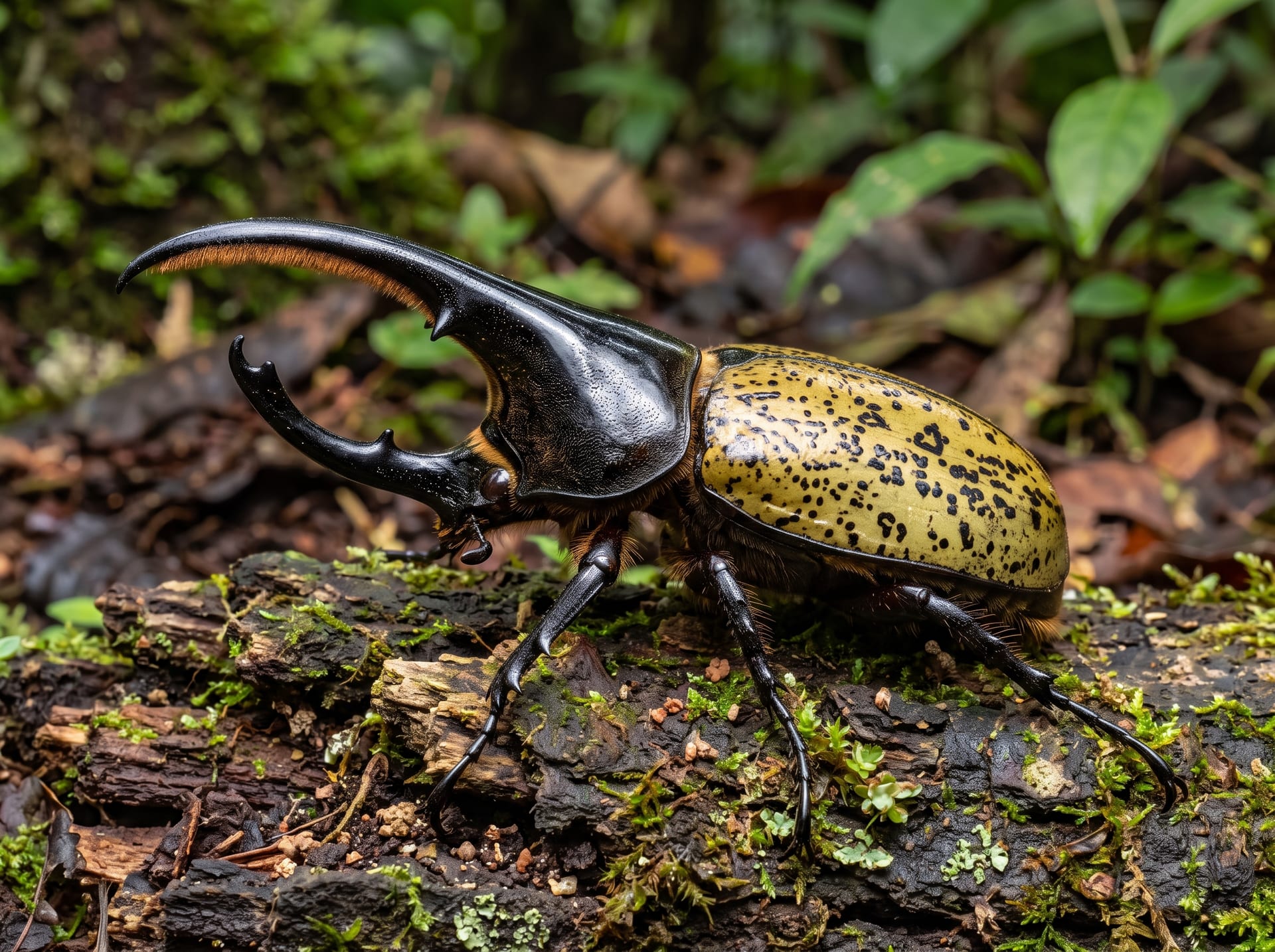
Hercules Morishimai
Hercules Morishimai is a subspecies of Hercules beetle found in the mountainous regions of La Paz Department in western Bolivia. Despite its compact build, it has a remarkably powerful frame, and males carry a sturdy horn with a pronounced downward curve at the tip that gives them a striking presence. The glossy sheen of the elytra adds to its visual appeal as light catches it from different angles. Females are solid black, offering a more understated but equally distinctive look. With an adult lifespan of roughly 8 to 12 months, keepers can enjoy watching this species over an extended period, though its care needs make it best suited to experienced hobbyists.
View Hercules Morishimai encyclopedia →0% commission on your first sales!Register by September 30, 2026 and your first 2 sales are commission-free!
Breeder Wanted!
List on BreederDirect and sell directly to customers nationwide!
6 Transparency Standards You Can Trust
When listing Insects, Breeders disclose the following. We guarantee transparency on growth stage and breeding unit.
- Life Stage Clarity
- Generation Info
- Real Photos
- Breeding Unit
- Country of Origin
- Body Length (mm)
Browse all 296 breeds
Verified breeders wanted for Insects
Breeders are signing up now ahead of launch. Subscribe to be notified when new listings go live.
Getting alerts is free with a member account. When new listings match your saved search, we'll notify you by email and in-app.
Browse other categories
Verified breeders (preview)
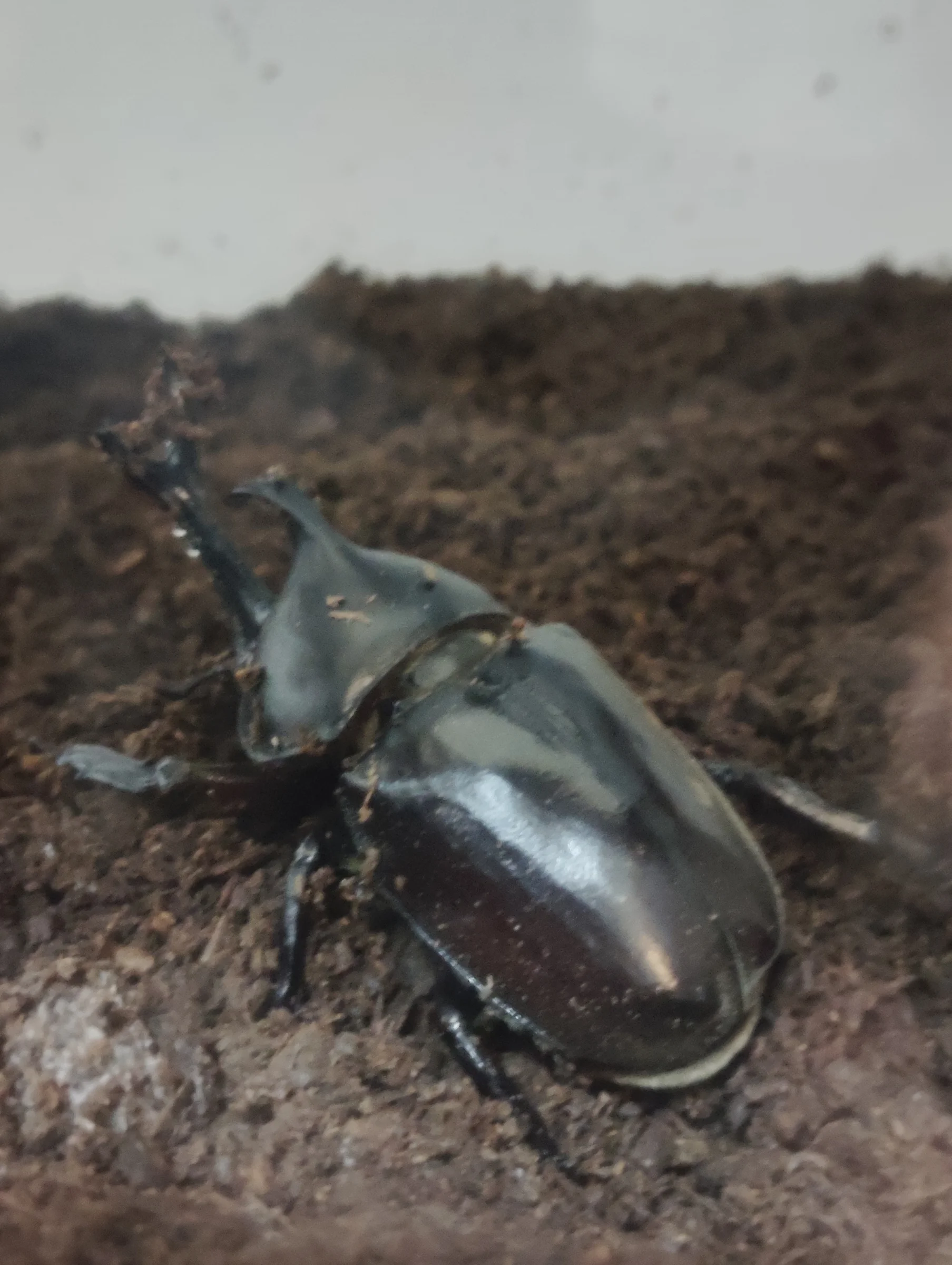
Hercules Morishimai key facts
- Care level
- Advanced
- Lifespan
- Adults 8-12 months
- Size
- Males 70-143 mm / females 50-60 mm
- Temperature
- 20〜26℃
- Diet
- Beetle jelly, banana
- Temperature & Humidity
- Keep at roughly 20-26 C and avoid Japanese summer heat. From the mountains of western Bolivia; it dislikes stuffy heat.
- Breeding & Egg-laying
- Females lay in fermented substrate packed 20 cm or deeper. Rear larvae singly in roughly 10 L containers; the larval period is long, 1-1.5 years for females and 1.5-2 years for males, and shortens at higher temperatures.
- Cohabitation
- Basically mild-tempered, but fights over food, so keep singly. Very rarely a male crushes and kills a female, so never leave a pair unattended.
- Lifespan & Rearing Period
- Adults live about 8-12 months. Egg to emergence takes 1.5-2.5 years, so patience is needed.
- Health & Notes
- The thoracic and cephalic horns pinch very hard, so keep fingers clear. A cramped enclosure stresses males and shortens their life. Long-horned males tip over easily, so add footholds.
About Hercules Morishimai
Hercules Morishimai is a Hercules beetle subspecies from La Paz, Bolivia, known for its compact yet powerful build and sturdy, curved horn. Learn about its care difficulty, lifespan, size, and appeal.
7 things to know before welcoming a Hercules Morishimai
1Best Suited to Experienced Keepers
Hercules Morishimai is considered an advanced-level species, requiring specialized knowledge of temperature and humidity control as well as selecting suitable breeding wood. First-time beetle keepers are encouraged to gain experience with easier species before taking this one on.
2A Powerful, Curved Horn
Males have a horn with a pronounced downward curve at the tip, giving them a striking and powerful appearance. Because the horn is a delicate structure, take care to avoid bumping it against enclosure decorations or during handling.
3Females Have a Sleek Black Coloration
Females are solid black, offering a distinct and understated appeal compared to males. They also tend to be shorter and more compact in build, so consider enclosure layout carefully if keeping a pair.
4An 8–12 Month Adult Lifespan
Adults typically remain active for about 8 to 12 months, longer than many other beetle species, allowing keepers to enjoy time with them. Individual lifespan can vary with temperature and feeding management, so daily observation matters.
5A Notable Size Difference Between Sexes
Adult size ranges from 70–143mm in males to 50–60mm in females, a substantial difference between the sexes. Choose an enclosure size that comfortably fits the individual you plan to bring home.
6Cool Temperatures Reflect Its Mountain Origins
Native to the cool mountain regions of western Bolivia, this species does best when kept away from high temperatures. Pay special attention to keeping the enclosure cool during the summer months.
7Prepare Supplies Before Bringing One Home
Before your beetle arrives, it helps to have substrate, breeding wood, and insect jelly ready in advance. Set up an enclosure sized appropriately for the individual beforehand for a smooth transition.
Frequently asked questions about Hercules Morishimai
- Q.Is Hercules Morishimai suitable for beginners?
- A.This species is considered best suited to experienced keepers, so it can be challenging for first-time beetle owners. It's recommended to build up knowledge of temperature control and breeding care before taking one on.
- Q.How long do adults typically live?
- A.Adults remain active for roughly 8 to 12 months. That's longer than many other beetle species, giving keepers extended time to enjoy observing them.
- Q.What are the visual differences between males and females?
- A.Males have a sturdy horn with a pronounced downward curve at the tip, giving them a powerful appearance. Females, by contrast, are solid black with a more understated look.
- Q.How large do they grow?
- A.Adult males typically reach 70–143mm, while females reach 50–60mm, a notable size difference between the sexes. Choose an enclosure that fits the size of the individual you bring home.
- Q.What should I be especially careful about when keeping one?
- A.Since this species originates from the mountains of western Bolivia, avoiding high temperatures is especially important. As an advanced-level species, it also helps to have your setup fully prepared before bringing one home.
Useful tools for Hercules Morishimai care
Learn more about Hercules Morishimai in the encyclopedia
View Hercules Morishimai encyclopedia entry →
Care difficulty, lifespan, size and diet — all basics covered.
More in this category
Can't find the one you're looking for?
Post your wishes for free and breeders with matching animals will contact you with introductions.