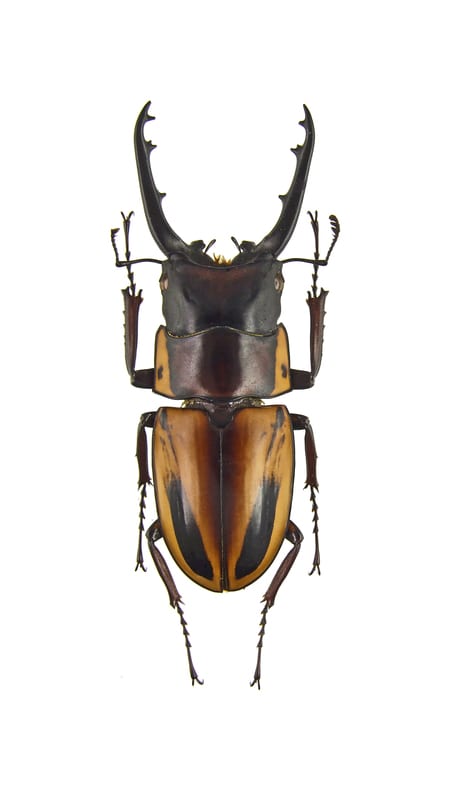
 © Noël Mal / CC BY-SA 4.0
Fabrice's Saw Stag Beetle
Fabrice's Saw Stag Beetle is a large stag beetle native to Peleng Island and other islands east of Sulawesi, Indonesia. It's known for its long, curved mandibles and powerful, robust build — captive-bred specimens of the takakuwai subspecies have reached 88.8mm. Like many saw stag beetles, males can be territorial and combative, so care is needed when housing multiple individuals together, but that same feistiness is part of what makes watching their mandible duels so captivating. Considered an intermediate-level species, it's a striking beetle best suited to keepers who already have some stag beetle experience.
View Fabrice's Saw Stag Beetle encyclopedia →0% commission on your first sales!Register by September 30, 2026 and your first 2 sales are commission-free!
Breeder Wanted!
List on BreederDirect and sell directly to customers nationwide!
6 Transparency Standards You Can Trust
When listing Insects, Breeders disclose the following. We guarantee transparency on growth stage and breeding unit.
- Life Stage Clarity
- Generation Info
- Real Photos
- Breeding Unit
- Country of Origin
- Body Length (mm)
Browse all 296 breeds
Verified breeders wanted for Insects
Breeders are signing up now ahead of launch. Subscribe to be notified when new listings go live.
Getting alerts is free with a member account. When new listings match your saved search, we'll notify you by email and in-app.
Browse other categories
Verified breeders (preview)
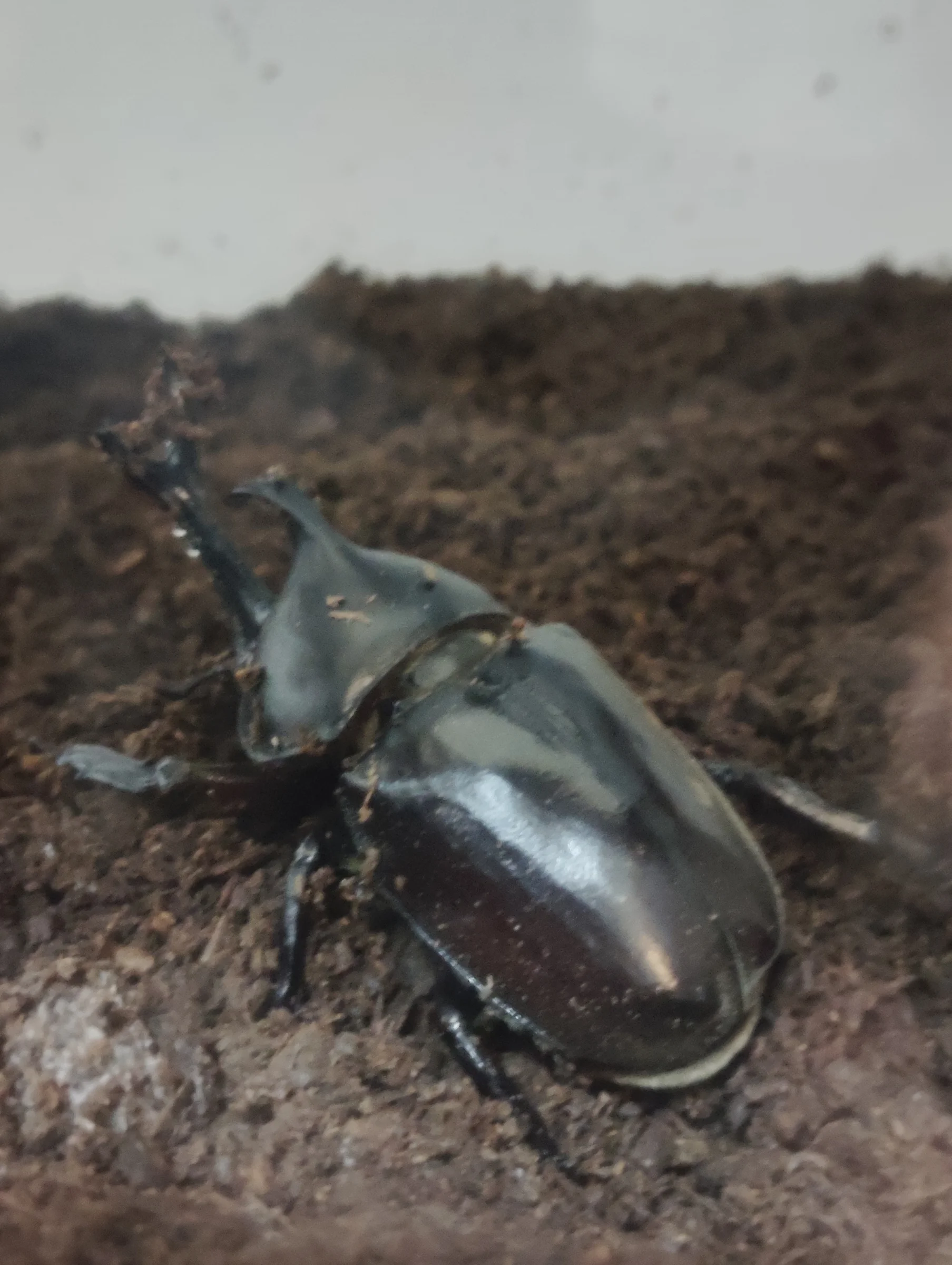
Fabrice's Saw Stag Beetle key facts
- Care level
- Intermediate
- Lifespan
- About 8-10 months as adults, the general rule for foreign saw stag beetles
- Size
- Males: captive record 88.8mm (subspecies takakuwai), wild 86.0mm; females: captive record 42.6mm
- Temperature
- 20〜24℃
- Diet
- Beetle jelly; larvae on fermented substrate or fungus bottles
- Temperature & Humidity
- Follow the standard routine for foreign saw stags and keep adults and larvae around 20-24C. Do not let winter temperatures fall below 18C or summer temperatures exceed 30C.
- Breeding & Egg-laying
- Use the standard set of a log buried in fermented substrate at around 23-25C. Larvae grow on either fermented substrate or fungus bottles; fungus bottles suit those aiming for size.
- Cohabitation
- House both sexes singly. The male's mandibles are powerful and can crush a female during pairing, so keep them together only briefly and under supervision.
- Lifespan & Rearing Period
- As a general rule for foreign saw stags adults live about 8-10 months. Expect a larval period of roughly six months to a year depending on temperature and food.
- Health & Notes
- The nominate form and the subspecies takakuwai are traded with locality data, so do not mix them. Little is known of its wild ecology, and most husbandry information comes from captive-bred lines.
About Fabrice's Saw Stag Beetle
A large saw stag beetle from islands east of Sulawesi, Indonesia. Captive-bred males have reached 88.8mm (takakuwai subspecies), with powerful curved mandibles. Considered an intermediate-level species to keep.
7 things to know before welcoming a Fabrice's Saw Stag Beetle
1Powerful, oversized mandibles
Males have been recorded reaching 88.8mm in captivity (takakuwai subspecies), with long, curved mandibles as their defining feature. Wild-caught males have reached 86.0mm, while females are noticeably smaller at around 42.6mm.
2Best suited to intermediate keepers
Successful care calls for some understanding of temperature, humidity, and breeding setups, making this a step up from beginner-friendly species. It's a good choice once you already have some stag beetle keeping experience.
3Adults live about 8–10 months
As with most foreign saw stag beetles, adults typically live roughly 8 to 10 months. Including the larval stage, keeping this species is a long-term commitment, so plan accordingly before bringing one home.
4Never house males together
Saw stag beetles are naturally combative, and males will fight fiercely with their mandibles. Housing two males in the same enclosure can lead to serious injury, so individual housing is standard practice.
5Sensitive to heat — manage temperature
Coming from islands east of Sulawesi, this species doesn't tolerate extreme heat, high humidity, or cold well. Keep the enclosure out of direct sunlight and in a spot with stable room temperature.
6Insect jelly is the staple food
Adults feed mainly on store-bought insect jelly, which should be replaced regularly so it never runs out. Because of their large size, provide sturdy perches or substrate so they can right themselves if they flip over.
7Prepare the setup before you bring one home
Have an enclosure, insect substrate, and climbing branches ready before your beetle arrives so it can settle in smoothly. If you're planning to breed them, it also helps to research spawning logs and breeding setups in advance.
Frequently asked questions about Fabrice's Saw Stag Beetle
- Q.How large does this species get?
- A.Captive-bred males have reached 88.8mm (takakuwai subspecies), and wild males have been recorded at 86.0mm. Females are considerably smaller, reaching around 42.6mm.
- Q.Is this beetle suitable for beginners?
- A.It's generally considered an intermediate-level species, so it can be challenging for someone with no prior stag beetle experience. We'd recommend building some basic keeping experience first.
- Q.How long do adults live?
- A.As a general rule for foreign saw stag beetles, adults live roughly 8 to 10 months. Individual lifespans can vary, so treat this as an approximate guide.
- Q.Can I keep two males together?
- A.This isn't recommended. Saw stag beetles are naturally aggressive, and two males housed together will fight fiercely with their mandibles, which can result in fatal injuries.
- Q.Is this species subject to any regulations?
- A.Fabrice's Saw Stag Beetle is not subject to CITES. There's no regulatory concern to worry about when keeping this species.
Useful tools for Fabrice's Saw Stag Beetle care
Learn more about Fabrice's Saw Stag Beetle in the encyclopedia
View Fabrice's Saw Stag Beetle encyclopedia entry →
Care difficulty, lifespan, size and diet — all basics covered.
More in this category
Can't find the one you're looking for?
Post your wishes for free and breeders with matching animals will contact you with introductions.