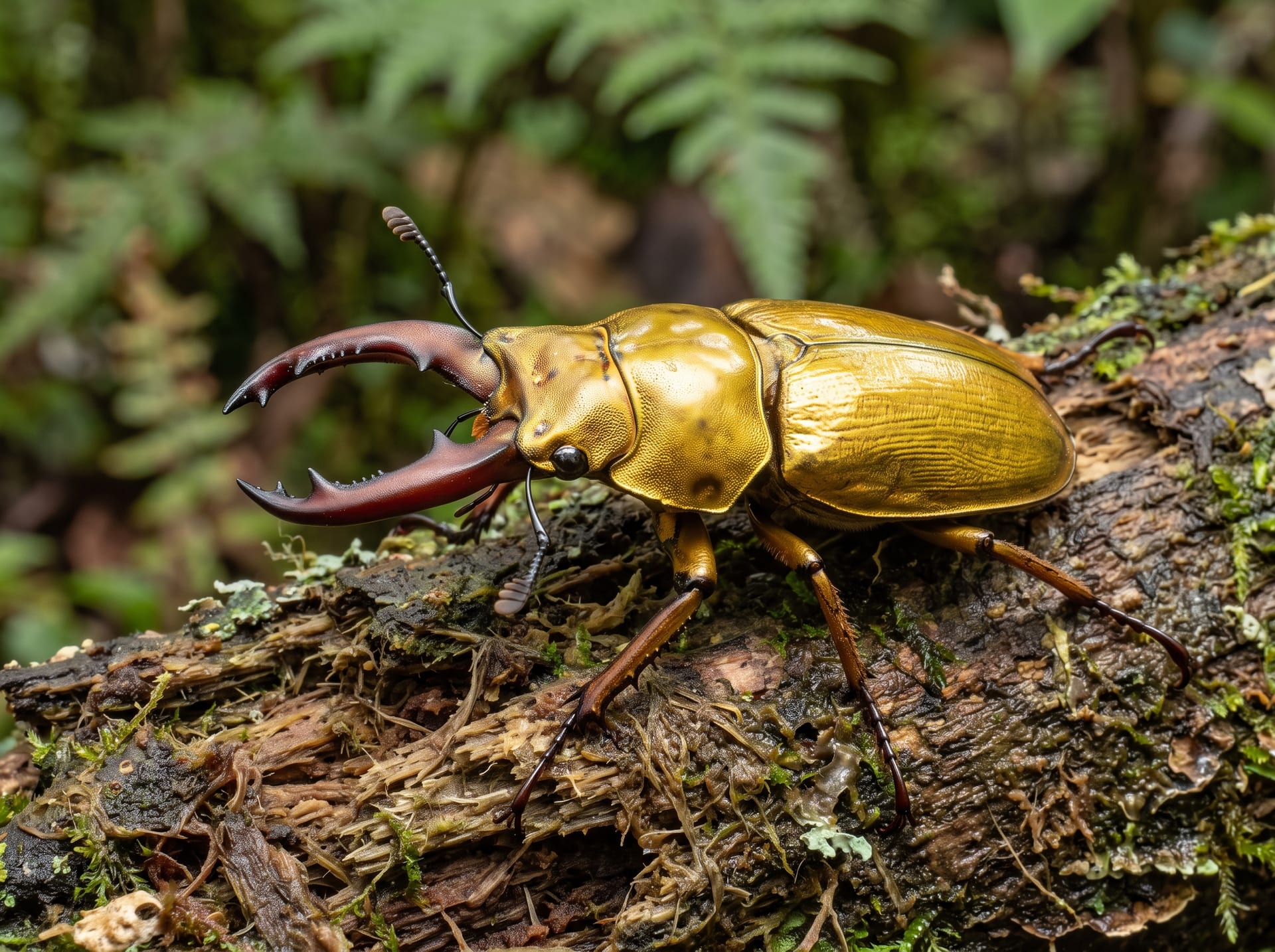
Baba's Golden Stag Beetle
Baba's Golden Stag Beetle is a subspecies of the Moellenkamp's Golden Stag Beetle native to Tanintharyi State in Myanmar. Within the golden stag beetle group, it stands out for its especially gold-toned body and glossy elytra that seem to shift in brilliance depending on the angle of light, making it a favorite among collectors who prize its striking appearance. It's also the most commonly available of the golden stag beetles, so keepers have a relatively good chance of finding one. That said, keeping this species well calls for careful attention to temperature and humidity, and it's generally considered suited to experienced keepers rather than beginners. For hobbyists ready to commit real attention to husbandry, it's a rewarding species to work with.
View Baba's Golden Stag Beetle encyclopedia →0% commission on your first sales!Register by September 30, 2026 and your first 2 sales are commission-free!
Breeder Wanted!
List on BreederDirect and sell directly to customers nationwide!
6 Transparency Standards You Can Trust
When listing Insects, Breeders disclose the following. We guarantee transparency on growth stage and breeding unit.
- Life Stage Clarity
- Generation Info
- Real Photos
- Breeding Unit
- Country of Origin
- Body Length (mm)
Browse all 296 breeds
Verified breeders wanted for Insects
Breeders are signing up now ahead of launch. Subscribe to be notified when new listings go live.
Getting alerts is free with a member account. When new listings match your saved search, we'll notify you by email and in-app.
Browse other categories
Verified breeders (preview)
Baba's Golden Stag Beetle key facts
- Care level
- Advanced
- Lifespan
- Adults 3-6 months
- Size
- Males up to 83.4 mm (captive record)
- Diet
- Beetle jelly
- Temperature & Humidity
- The genus lives in high-altitude forest, is sensitive to heat and needs strict temperature control. Keep it in a cool spot where summer temperatures do not climb. High humidity darkens the gold; it returns as the beetle dries.
- Breeding & Egg-laying
- Use reishi-inoculated logs or Trametes (kawara) fungus bottles for egg laying, and rear larvae on kawara fungus too; ordinary fermented substrate works poorly. It is the easiest of the moellenkampi subspecies to breed and readily grows large in captivity.
- Cohabitation
- Keep singly and put the pair together only briefly for mating. Do not mix subspecies: moseri lives nearby and hybridisation is suspected.
- Lifespan & Rearing Period
- Kept cool, the genus lives a reasonably long adult life.
- Health & Notes
- The golden colour changes with humidity, so a darkened beetle is not sick. Purity of captive lines has been questioned and hybridisation with moseri is suspected, so check locality data when buying.
About Baba's Golden Stag Beetle
Baba's Golden Stag Beetle, a Myanmar subspecies prized for its golden sheen and glossy elytra, is the most widely available golden stag beetle — though it demands advanced keeping skills.
7 things to know before welcoming a Baba's Golden Stag Beetle
1Needs Stable Temp and Humidity
This species comes from the hot, humid climate of Tanintharyi State in Myanmar, so keeping temperature and humidity stable is essential in captivity. Japan's seasonal swings mean you may need heating or cooling equipment to maintain suitable conditions.
2Best Suited to Experienced Keepers
This species is rated as suited to experienced keepers rather than beginners. Its temperature, humidity, and feeding needs call for attentive, hands-on care.
3Gold-Toned, Glossy Elytra
Among golden stag beetles, this subspecies has an especially gold-toned body color, with glossy elytra that shift in brilliance depending on the light. Individual beetles can vary in the depth of their coloring.
4Males Reach Up to 83.4mm
Males have reached a recorded maximum of 83.4mm. Larval nutrition and rearing conditions can influence how large an individual grows.
5Larvae Need Rotten Wood and Mat
Larvae are raised on moisture-retaining rotten wood and substrate mat. They're sensitive to drying out or sudden environmental changes, so regular condition checks matter.
6Handle Carefully, Mind the Jaws
Males have substantial mandibles, so take care not to get pinched when handling them bare-handed. Use proper handling technique and avoid unnecessary stress to the beetle.
7Prepare the Setup Before Arrival
Before bringing one home, set up an enclosure with proper humidity and temperature control, ventilation, and substrate mat. Since this species is sensitive to environmental change, keep it in a calm, quiet spot right after arrival.
Frequently asked questions about Baba's Golden Stag Beetle
- Q.Is this beetle suitable for beginners?
- A.It's rated as suited to experienced keepers, so first-time beetle keepers may find the temperature and humidity management challenging. It's best attempted after gaining some experience or thorough research.
- Q.How large does it grow?
- A.Males have reached a recorded maximum of 83.4mm. Growth size varies by individual and rearing conditions.
- Q.What should I watch for when raising larvae?
- A.Larvae are sensitive to humidity, so check the condition of the rotten wood and mat regularly to prevent drying out. Avoid sudden temperature changes as well.
- Q.How does it differ from other golden stag beetles?
- A.It's a subspecies of the Moellenkamp's Golden Stag Beetle, known for an especially gold-toned body and glossy elytra within the genus. It's currently the most widely available golden stag beetle.
- Q.Is it subject to any legal regulations?
- A.Baba's Golden Stag Beetle is not subject to CITES.
Useful tools for Baba's Golden Stag Beetle care
Learn more about Baba's Golden Stag Beetle in the encyclopedia
View Baba's Golden Stag Beetle encyclopedia entry →
Care difficulty, lifespan, size and diet — all basics covered.
More in this category
Can't find the one you're looking for?
Post your wishes for free and breeders with matching animals will contact you with introductions.