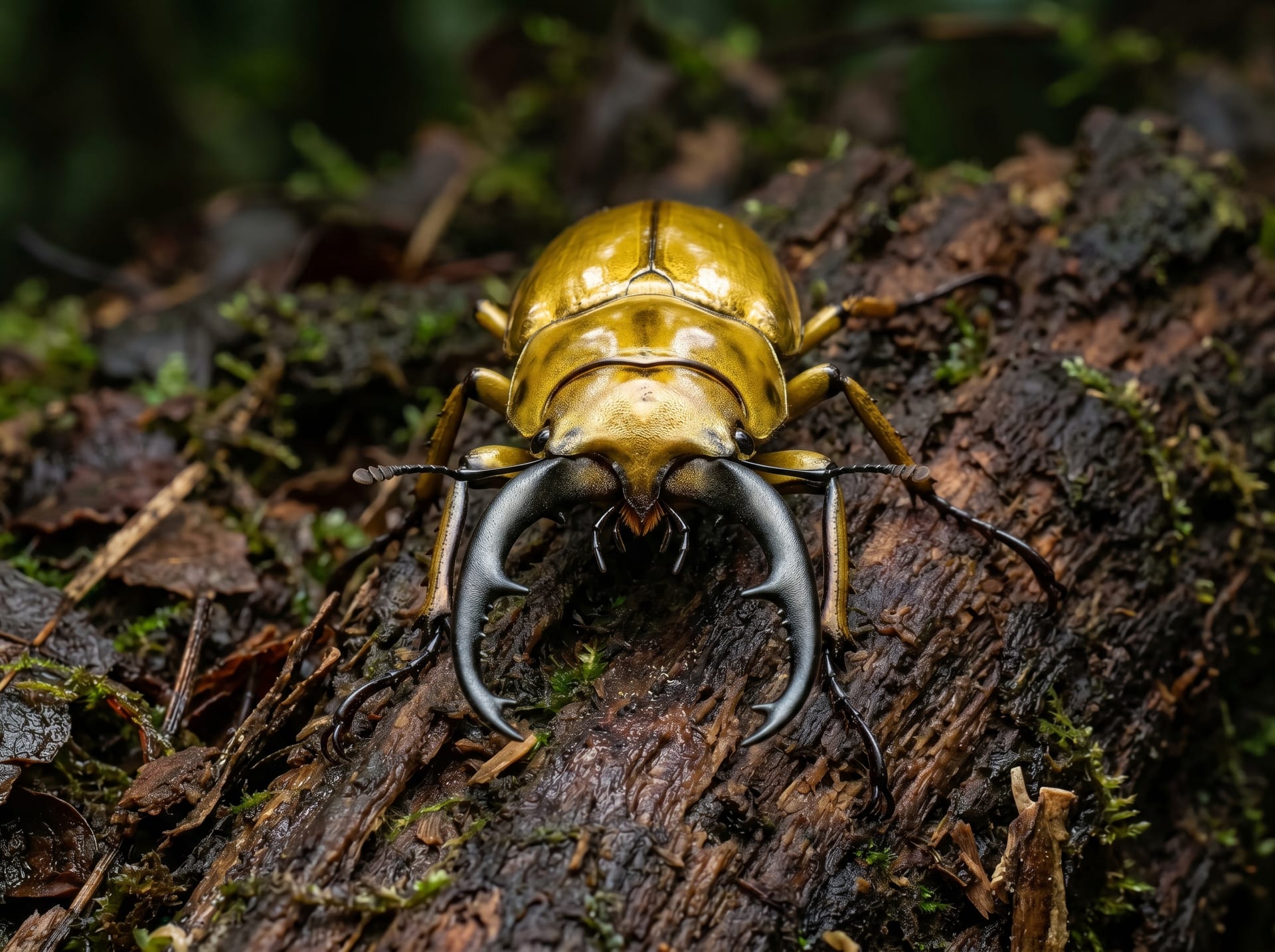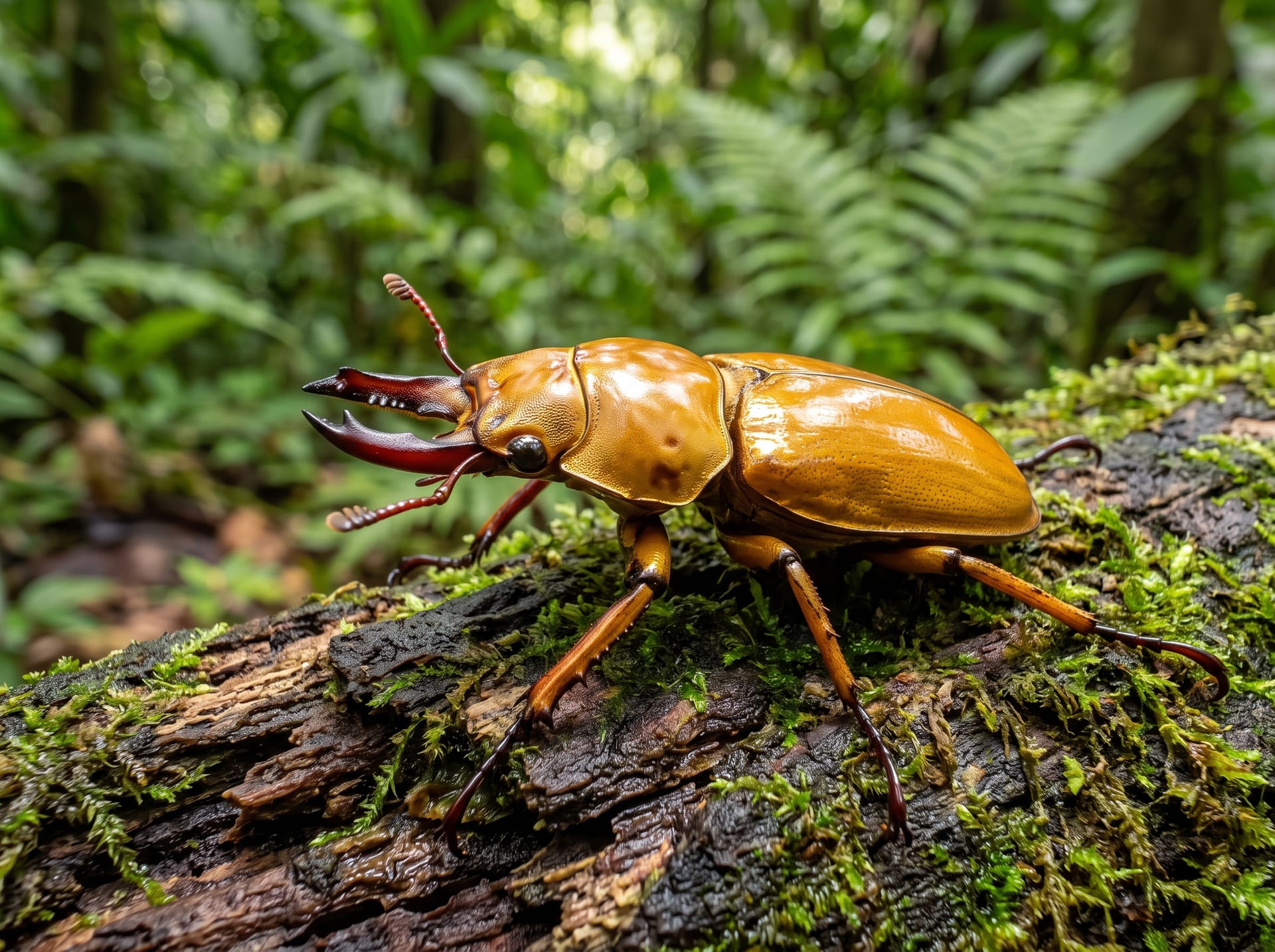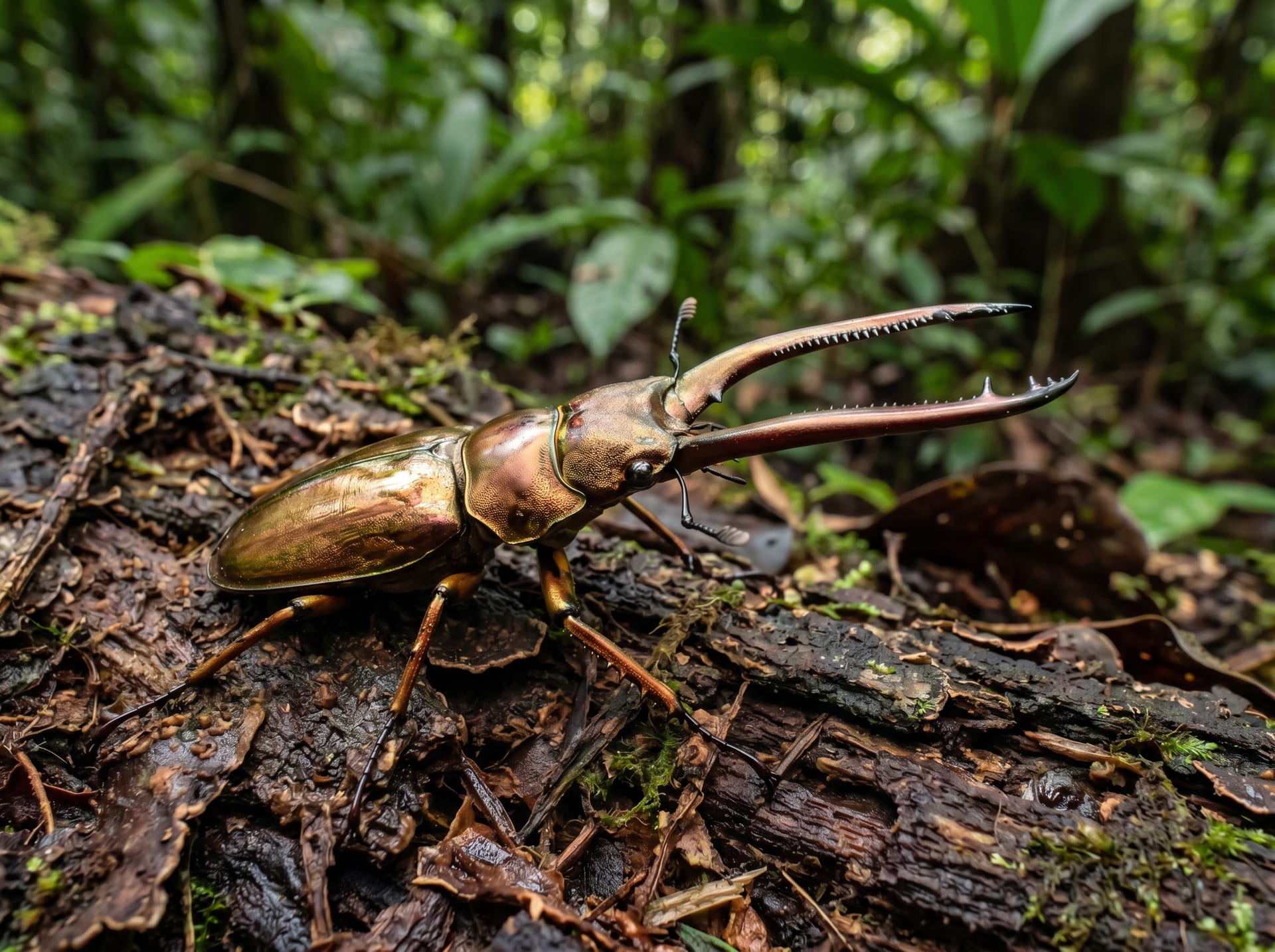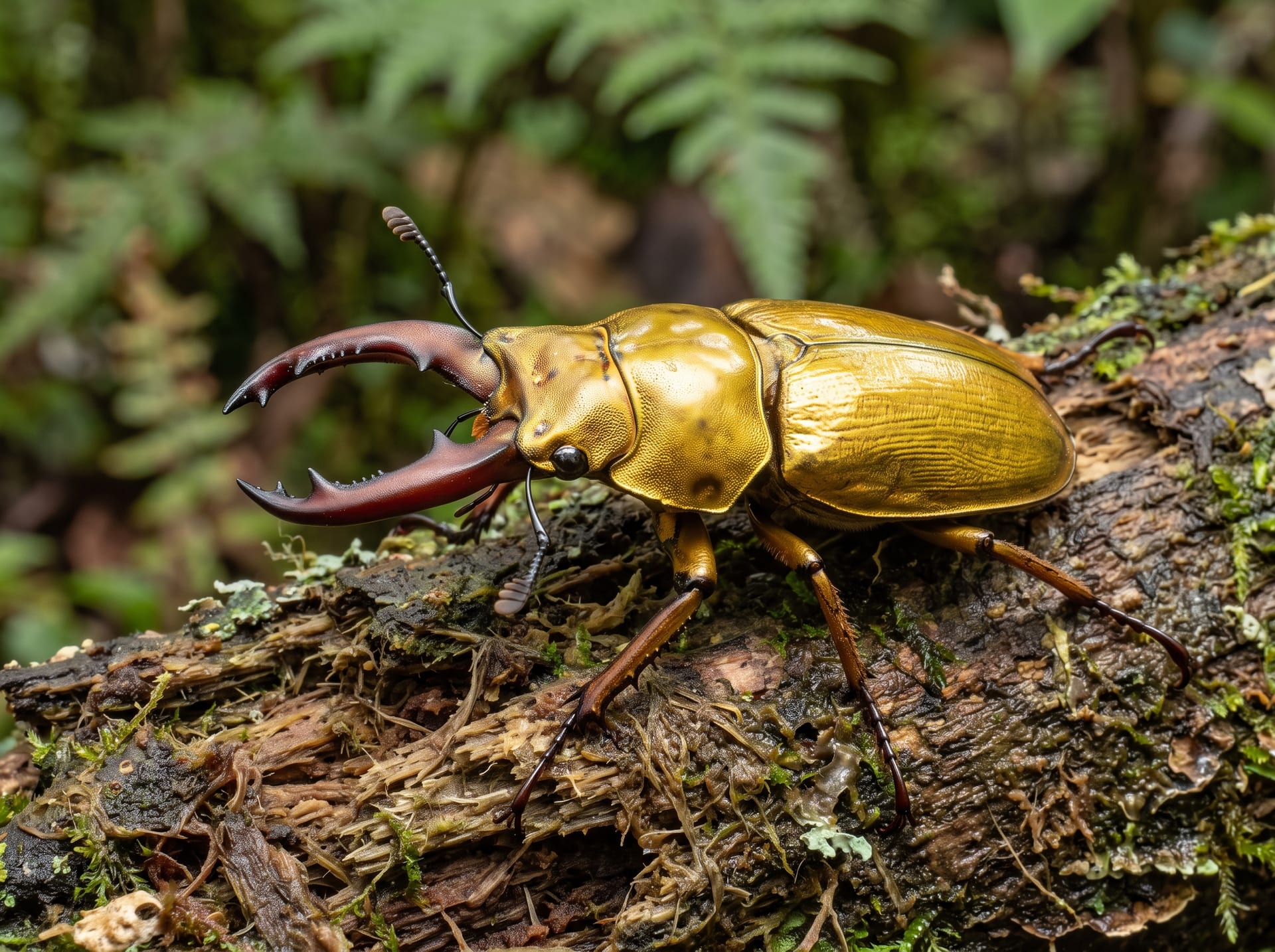
AI-generated image
Baba's Golden Stag Beetle
AdvancedAllotopus moellenkampi babai
A subspecies of Allotopus moellenkampi from Tanintharyi, Myanmar. It has the most golden colour and glossiest elytra in the genus and is currently the most widely traded golden stag.
Difficulty
Advanced
Temperature
20〜28℃
Lifespan
Adults 3-6 months
Size
Males up to 83.4 mm (captive record)
Humidity
60〜80%
Diet
Beetle jelly
About
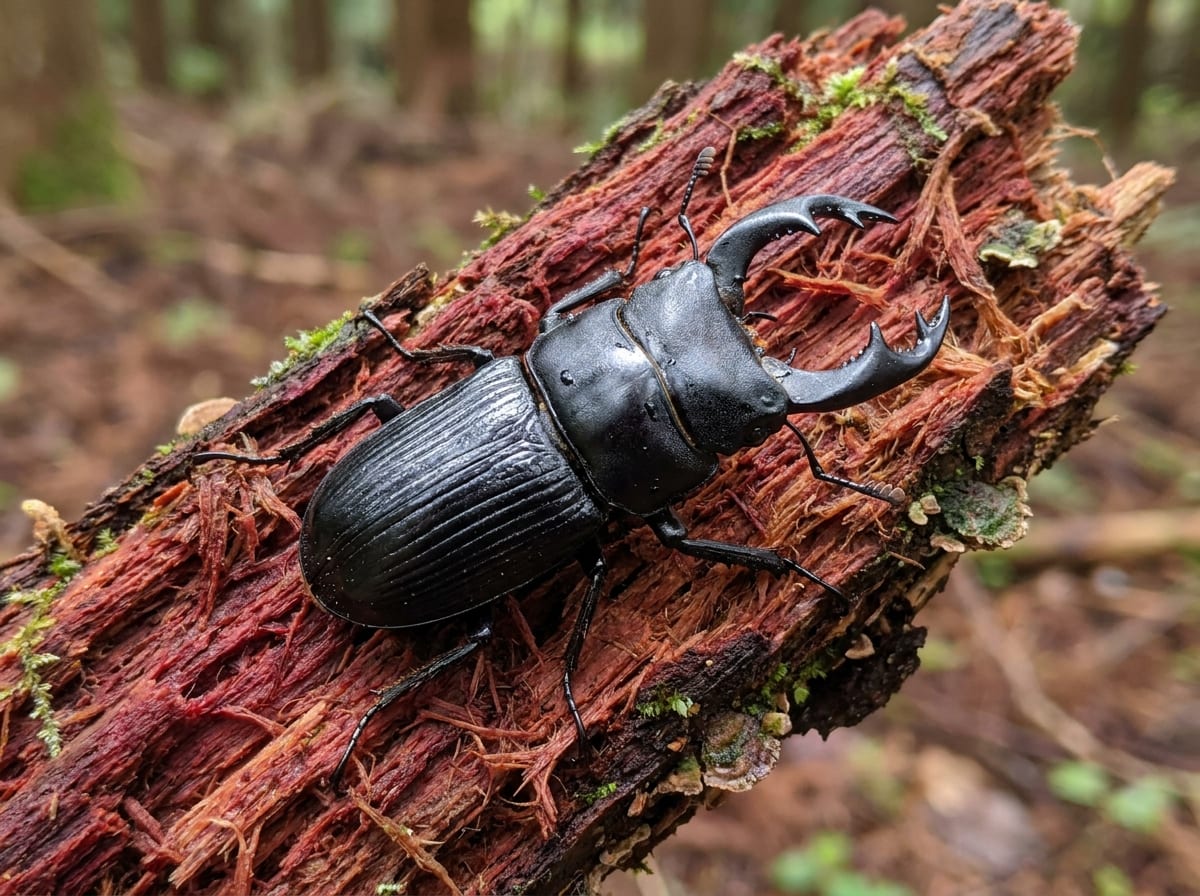
Baba's golden stag (Allotopus moellenkampi babai) is a subspecies of A. moellenkampi restricted to a small area of Tanintharyi (formerly Tenasserim), Myanmar. Of the four subspecies it is the closest to pure gold; compared with moseri the mandibles splay slightly outward and the elytra are glossy, and it is considered the most beautiful in the genus. Captive beetles can exceed wild moseri in size; the BE-KUWA captive record is 83.4 mm (2008; wild 80.0 mm). Golden stags were long considered almost impossible to breed because the egg-laying medium and larval food were unknown, until reishi-inoculated wood and Trametes (kawara) fungus bottles proved effective. Babai in particular turned out to breed relatively easily and became the mainstream form, to the point that keeping golden stags now means keeping babai. Because its range is so small, doubts have been raised about whether traded stock is truly babai, and hybridisation with moseri is suspected. It is a highland beetle sensitive to heat, so summer temperature control is the key to success. The gold darkens in high humidity and returns as the beetle dries.
Source: Wikipedia (CC BY-SA 4.0)
Lifespan of the Baba's Golden Stag Beetle
The Baba's Golden Stag Beetle lives Adults 3-6 months.
Size of the Baba's Golden Stag Beetle
The Baba's Golden Stag Beetle grows to Males up to 83.4 mm (captive record).
Basic Info
Origin
Myanmar (Tanintharyi Region)
Lifespan
Adults 3-6 months
Size
Care Specifications
SolitaryBreeding: Moderate
Sources: Allotopus (genus) - Wikipedia (JA) / beetlebreeding.ch - Allotopus moellenkampi fruhstoferi
Breeding Records & Localities
Captive record (♂)
83.4 mm
Wild record (♂)
80 mm
Record source: BE-KUWA 2025 edition (Golden stag Baba's, captive 83.4 mm, 石原昇三 2008 / wild 80.0 mm)
Notable localities
Myanmar (Tanintharyi)
Regional subspecies
- Allotopus moellenkampi babai — Tanintharyi, Myanmar
Currently the most traded golden stag; captive beetles sometimes exceed wild moseri in size.
Generation codes
- WD
- Wild-caught
- WF1
- Offspring of a wild-caught female
- F1〜
- Captive generations (same locality)
- CBF1
- Cross-locality captive-bred (reset)
Sources: BE-KUWA Certified Breeding Records (Mushi-sha, FY2025 edition PDF, JA) / Allotopus (genus) - Wikipedia (JA)
References & Sources
Edited & verified by: BreederDirect editorial team
The taxonomic, regulatory, and husbandry data on this page are compiled and verified against the authoritative primary sources below.
Taxonomy & Authority
Accepted name: Allotopus moellenkampi babai Mizunuma, 1994
Authority databases: GBIF
Nomenclature follows global taxonomic authority databases.
Regulations & Conservation Status
Not CITES-listed
Plant Protection Act: When importing live specimens of Scarabaeoidea (including rhinoceros beetles, stag beetles, flower beetles, etc.), a species identification certificate issued by the exporting country government agency or equivalent must be attached in accordance with the Invasive Species Act (import ports are limited to Narita, Chubu, Kansai, Fukuoka, and Kagoshima airports). This species itself is not a designated invasive species, and import is possible upon submission of the certificate.
Sources: Ministry of the Environment, Invasive Species Act: "Guidance for Those Importing Live Insects in Scarabaeoidea" / CITES Appendix (checklist.cites.org)
Regulations may change. Always verify the latest information with the relevant authorities.
Baba's Golden Stag Beetle Listings
Loading latest listingsFind listings for this species