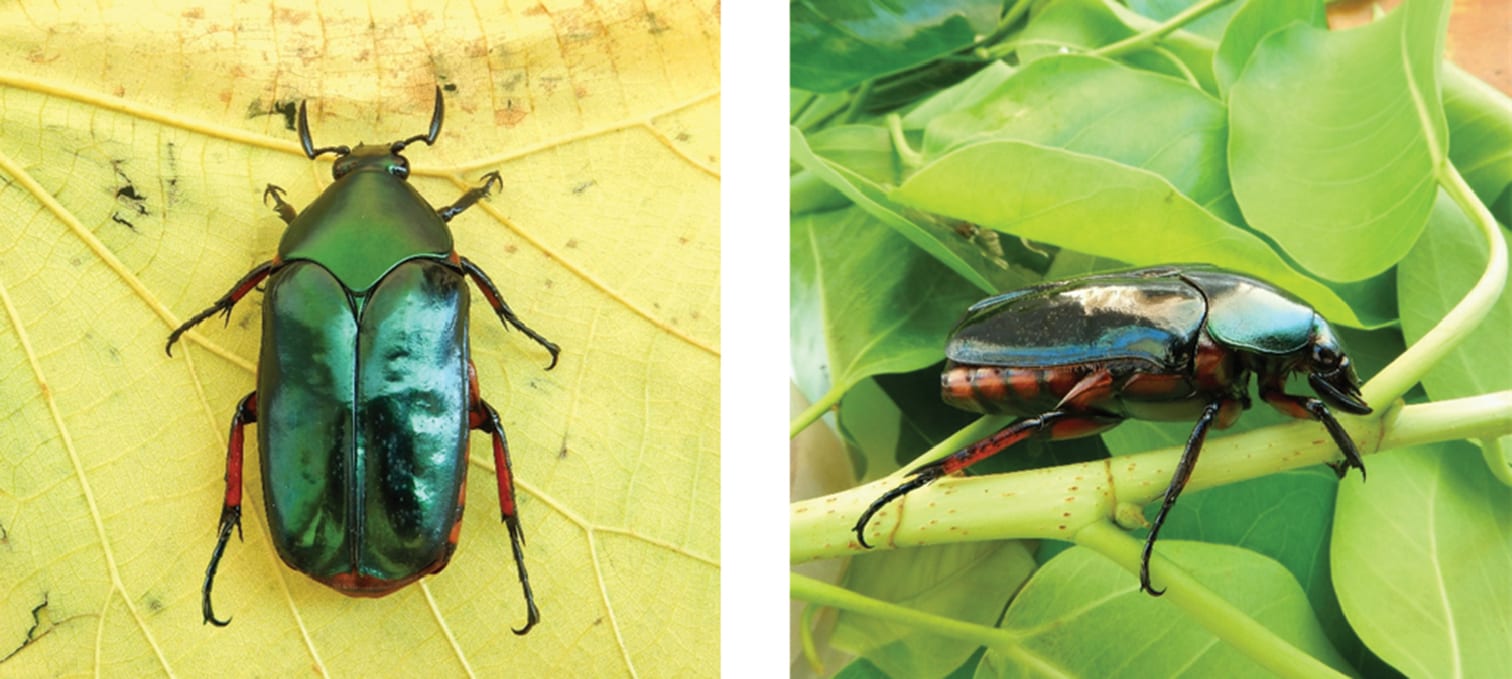
Source: Wikimedia Commons
Orichalca flower beetle
IntermediateAgestrata orichalca
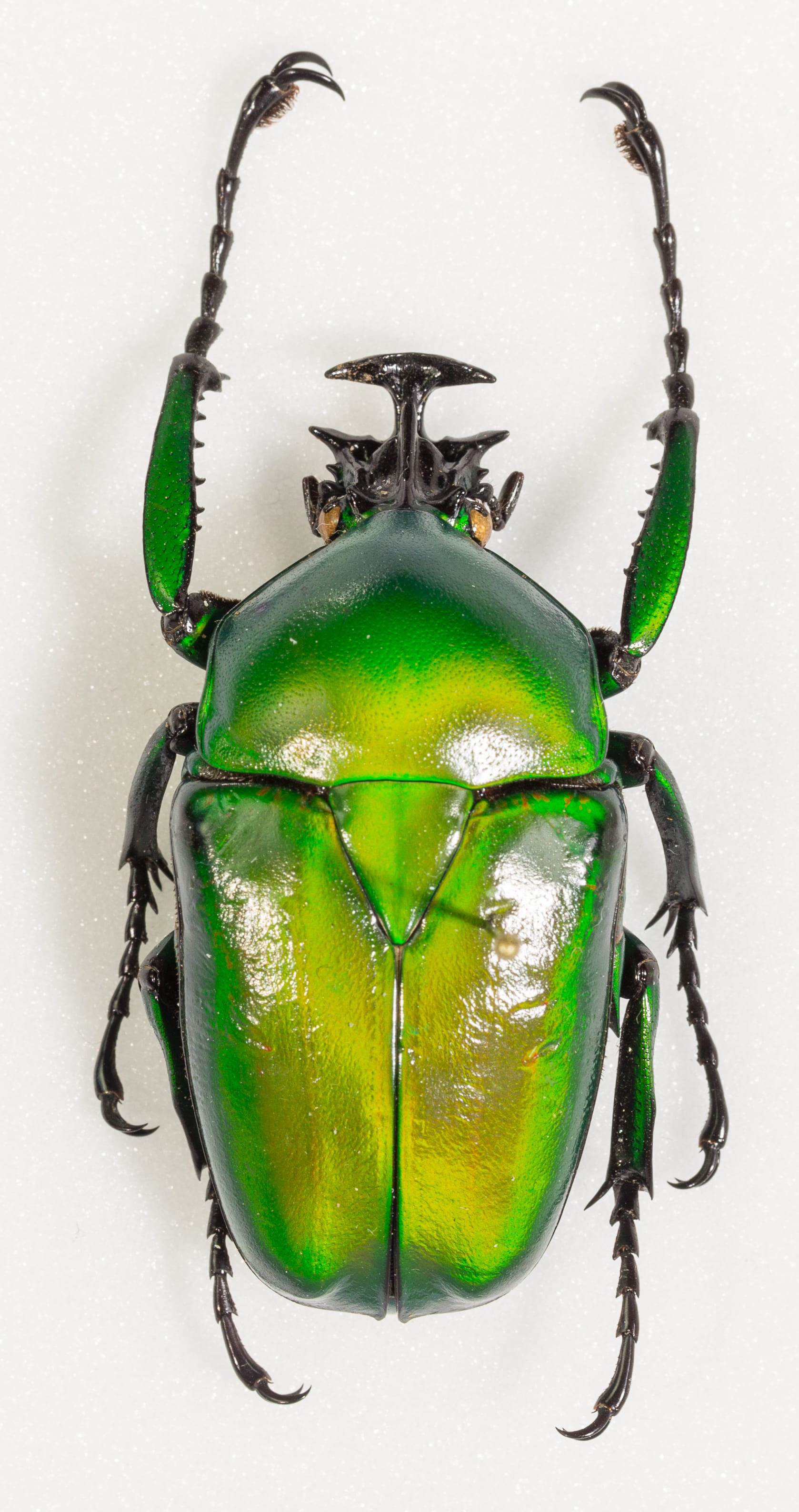
A large flower chafer with a broad, oblong, somewhat flattened body in shiny metallic green, about 55-60mm long. It ranges from northern India and southern China through Southeast Asia to the Lesser Sunda Islands.
Difficulty
Intermediate
Temperature
20〜28℃ (typical for Insect)
Size
About 55-60mm
Humidity
60〜80%
Diet
Adults take fruit or beetle jelly; larvae eat humus-rich substrate
About
Agestrata orichalca (Linnaeus, 1769) is a large flower chafer (Scarabaeidae: Cetoniinae) originally described as Scarabaeus orichalcus. It reaches about 55-60mm, with a broad, oblong, somewhat flattened body in shiny metallic green. Its range is wide, from northern India, Sri Lanka, China, Thailand and Vietnam to Sulawesi, Flores, Komodo and Lombok. GBIF records are most numerous from Hong Kong, Indonesia, Malaysia, China and Thailand, and the nominate subspecies appears in a ZooKeys census of the flower chafers of Macau. As a flower chafer, adults presumably visit flowers, ripe fruit and sap while larvae grow in humus-rich soil and decaying plant matter, but much of this species' life history is unclear. Its body is far larger and flatter than any Japanese kanabun. In Japan wild-caught Southeast Asian specimens appear only occasionally at specialist shops.
Source: Wikipedia (CC BY-SA 4.0)
Size of the Orichalca flower beetle
The Orichalca flower beetle grows to About 55-60mm.
Basic Info
Origin
Northern India, Sri Lanka, China, Indochina to Sulawesi and the Lesser Sunda Islands
Size
About 55-60mm
Temperature
20〜28℃ (typical for Insect)
Humidity
60〜80%
Diet
Adults take fruit or beetle jelly; larvae eat humus-rich substrate
Care Guide
Temperature & Humidity
The ideal temperature is unclear, but as a tropical to subtropical Asian species, keep it out of winter cold and keep the substrate from drying out.
Food & Feeding
As with other flower chafers, give adults fruit or beetle jelly and remove leftovers before they spoil.
Breeding & Egg-laying
The detailed conditions for breeding this species are unclear. Flower chafer larvae grow in humus-rich soil, so provide a deep layer of well-fermented substrate for laying.
Lifespan & Rearing Period
Larval duration and adult lifespan are unclear.
Health & Notes
Many flower chafers and their relatives are banned from live import under the Plant Protection Act (this species is listed as "unregulated" in the Plant Protection Station database). Importing foreign stag and rhinoceros beetles is regulated by the Plant Protection Act and the Invasive Alien Species Act (species-name certificate), with each species needing clearance from the Plant Protection Station, so domestically bred stock is the safe choice. Never release captive beetles.
Flower chaferCetoniinaeSoutheast AsiaMetallic
Orichalca flower beetle FAQ
QHow difficult is it to keep Orichalca flower beetle?
A
Intermediate. This is an intermediate-level species. Some prior experience and knowledge of environmental management are recommended.
QHow large does Orichalca flower beetle get?
A
Orichalca flower beetle typically reaches About 55-60mm as an adult. Size may vary depending on care conditions and individual genetics.
QWhat should I feed Orichalca flower beetle?
A
Orichalca flower beetle feeds on: Adults take fruit or beetle jelly; larvae eat humus-rich substrate. Aim for a balanced diet with appropriate feeding frequency.
QWhat is the typical price for Orichalca flower beetle?
A
The price of Orichalca flower beetle varies significantly depending on bloodline, size, captive-bred generation, and sex. Check our market price page for the latest pricing information.
Last updated: October 2, 2026
References & Sources
Edited & verified by: BreederDirect editorial team
The taxonomic, regulatory, and husbandry data on this page are compiled and verified against the authoritative primary sources below.
Primary sources
- Wikipedia
- Plant Protection Station: Importing Scarabaeoidea (JA)
- Plant Protection Station: Importing live insects (JA)
- Ministry of the Environment: List of invasive alien species (JA)
- Species+ CITES query (no listing)
- GBIF: Agestrata orichalca (Linnaeus, 1769) /国別の記録
- ZooKeys 1026: Census of the fruit and flower chafers of the Macau SAR
Taxonomy & Authority
Regulations & Conservation Status
Not CITES-listed
Many live foreign Scarabaeoidea (stag beetles, rhinoceros beetles, flower chafers and relatives) are quarantine pests whose import is banned under Japan's Plant Protection Act, and even importable species require a species-name certificate from a foreign government body under the Invasive Alien Species Act (entry only via designated airports, never by international post). Whether a species may enter must be checked with the Plant Protection Station in advance, so choose domestically bred stock and never release captive beetles.
Sources: Plant Protection Station: Importing Scarabaeoidea (JA) / Plant Protection Station: Importing live insects (JA) / Ministry of the Environment: List of invasive alien species (JA) / Species+ CITES query (no listing)
Regulations may change. Always verify the latest information with the relevant authorities.
Related Species
Orichalca flower beetle Listings
Loading latest listingsFind listings for this species
Related Articles
Ladybug Rearing Guide | Species Types and Care Methods for Seven-Spotted and Twenty-Eight-Spotted Ladybugs
A detailed guide to keeping the common insect, the ladybug. A complete guide covering how to catch Seven-Spotted Ladybugs, feeding, breeding, and how to distinguish beneficial insects from pests—useful for children's independent research projects.
Flower Chafer Care Guide | How to Raise White-spotted, Blue-green, and Small Blue-green Flower Chafers and Larval Management
Beginner's guide to raising flower chafers that gather on flowers. Detailed explanation of various species such as white-spotted flower chafers and blue-green flower chafers, as well as management of adults and larvae, and how to set up an egg-laying setup.
DIY Fermented Substrate Guide | How to Make Your Own Substrate for Rhinoceros Beetle and Stag Beetle Larvae
Learn how to make your own fermented substrate for breeding rhinoceros beetle and stag beetle larvae. We explain material selection, fermentation procedures, and breeder tips to avoid common mistakes in easy-to-understand language.
Electricity Costs and Energy-Saving Tips for Insect Keeping | Energy-Efficient Temperature Management and Annual Cost Guide
Explains electricity costs for temperature management of stag beetles and rhinoceros beetles, and provides concrete methods to save electricity costs through smart use of wine chillers, temperature-controlled cabinets, and air conditioning.